How to Clean Outdoor Cushions and Remove Mildew
Outdoor cushions work hard all summer. They collect pollen, dust, sunscreen, crumbs, bird mess, rain spots, and sometimes that telltale musty mildew smell after a damp week.
The good news: most patio cushions do not need fancy cleaners. With mild soap, careful rinsing, and a smart drying setup, you can make them look and smell much better without driving water deep into the cushion fill.
Before You Start: Check the Care Tag
First, look for a sewn-in care tag or the furniture maker’s cleaning instructions. Outdoor cushions are made from different fabrics, including polyester, acrylic, olefin, vinyl-coated fabric, and branded performance fabrics like Sunbrella. Some removable covers can be machine washed; others should be cleaned by hand only.
If the tag is missing, use the gentlest method first: mild dish soap, lukewarm water, a soft brush, and a thorough rinse. Save bleach solutions for mildew on colorfast outdoor fabric only, and always test a hidden spot first. Sunbrella’s own care guidance recommends mild soap and water for general cleaning and a diluted bleach-and-soap mix for stubborn mildew on its fabrics. ([global.sunbrella.com](https://global.sunbrella.com/en-us/how-to-clean/clean-sunbrella-shade-fabrics?utm_source=openai))
What You’ll Need
- Vacuum with brush attachment or a dry hand brush
- Bucket
- Mild dish soap or gentle laundry soap
- Soft-bristle brush or sponge
- Garden hose with a gentle spray setting
- Clean towels
- Spray bottle, optional
- White vinegar, optional for light musty odors
- Household bleach, optional for mildew on approved colorfast fabrics
- Rubber gloves if using bleach
Step 1: Brush and Vacuum the Cushions Dry
Do not start by blasting dirty cushions with water. Dry dirt turns muddy fast and can settle deeper into the weave.
Take the cushions off the furniture and stand them on a clean patio, driveway, or deck. Brush off loose leaves, cobwebs, dried mud, and pollen. If you have a vacuum, use the brush attachment along seams, piping, buttons, and zipper areas where crumbs and grit collect.
Step 2: Mix a Gentle Cleaning Solution
For regular dirt and everyday grime, fill a bucket with about 1 gallon of lukewarm water and add 1 to 2 tablespoons of mild dish soap. You want sudsy water, not a slippery soap bath. Too much soap is harder to rinse out and can leave residue that attracts more dirt.
If you are cleaning just a few spots, put the same mild solution in a spray bottle. This helps you wet the fabric without soaking the cushion core.
Step 3: Scrub Lightly, Working One Side at a Time
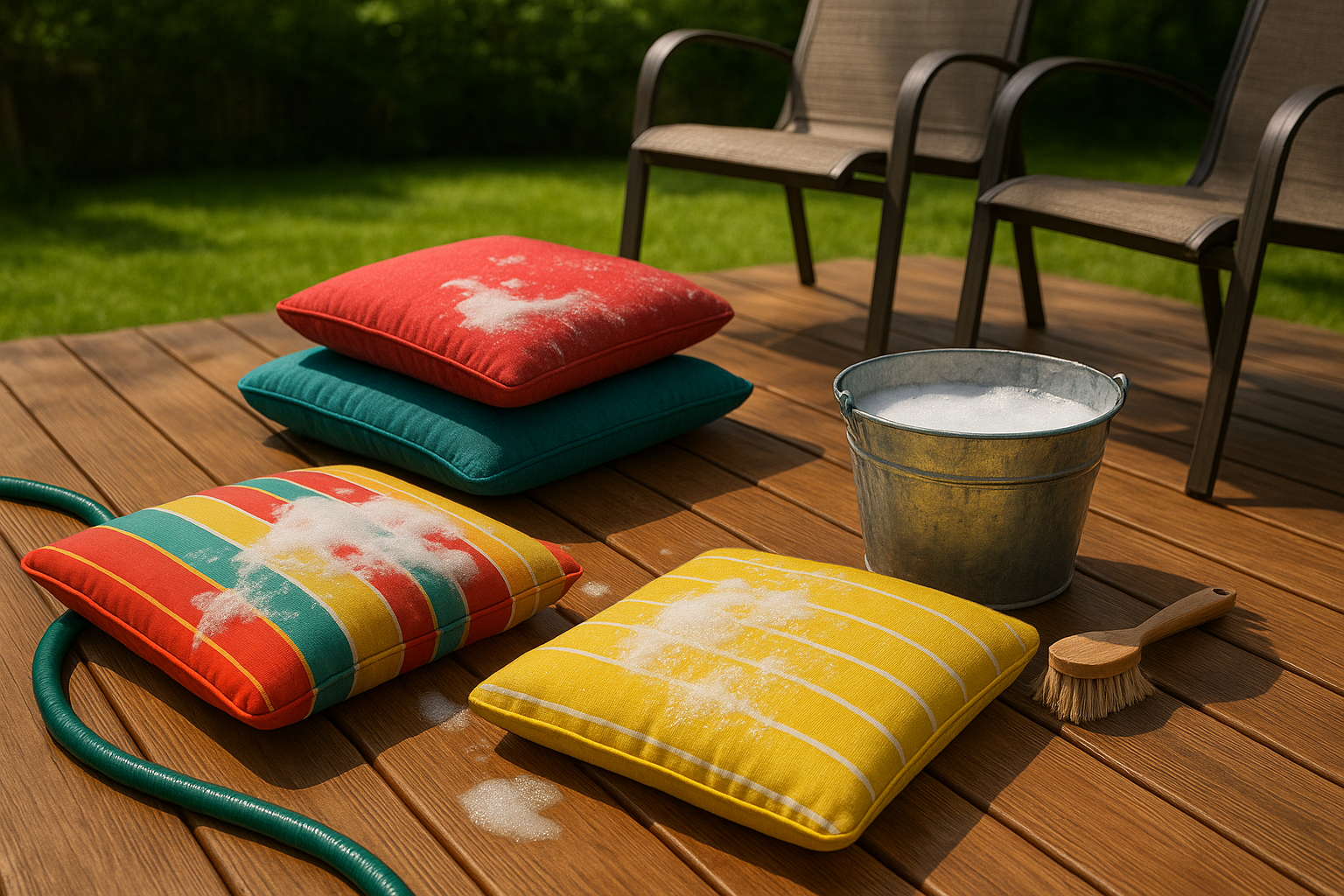
Dip your soft brush or sponge into the soapy water and scrub the cushion fabric in small sections. Use gentle circular motions, especially around seams. Outdoor fabric is sturdy, but aggressive scrubbing can fuzz the surface or push water into the filling.
For food spots, sunscreen marks, or dirty edges, let the soapy water sit on the fabric for 5 to 10 minutes before brushing again. Do not let the soap dry on the cushion. Work in shade if possible so you have more time to clean and rinse.
Step 4: Rinse Until the Water Runs Clear
Use a garden hose on a gentle setting and rinse thoroughly. Aim across the surface rather than forcing water straight into the cushion. Flip and rinse the other side if needed.
This step matters more than people think. Soap left in fabric can make cushions feel stiff, hold odors, and attract new grime. Sunbrella’s instructions also emphasize rinsing thoroughly until soap residue is removed, then air drying. ([global.sunbrella.com](https://global.sunbrella.com/en-us/how-to-clean/clean-sunbrella-shade-fabrics?utm_source=openai))
Step 5: Dry Cushions Completely
Press clean towels against the cushions to pull out extra moisture. Then stand the cushions upright on an edge in a sunny, breezy spot. If they have zippers, open them slightly so air can move, but do not remove covers unless the care label says it is okay and you are confident you can get them back on smoothly.
Do not put cushions back on the furniture while they are damp. Trapped moisture is one of the main reasons cushions develop mildew odors. Let them dry fully on both sides, flipping them once or twice as they dry.
How to Remove Mildew from Outdoor Cushions
Mildew often appears as gray, black, or greenish specks and usually comes with a musty smell. On many outdoor fabrics, mildew grows on dirt and organic material sitting on the fabric surface, not necessarily on the fabric itself. Sunbrella notes that its fabric does not promote mildew growth, but mildew can grow on dirt or other substances that have not been removed. ([global.sunbrella.com](https://global.sunbrella.com/en-us/how-to-clean/clean-sunbrella-shade-fabrics?utm_source=openai))
Option 1: Vinegar Spray for Light Musty Odors
For light odor or a few small mildew spots, mix equal parts white vinegar and water in a spray bottle. Spray the affected area, let it sit for 10 to 15 minutes, then scrub gently with soapy water. Rinse well and dry completely.
Vinegar is a good first try when you want to avoid bleach, but it may not fully remove dark mildew staining. Never mix vinegar with bleach or any bleach-containing cleaner.
Option 2: Bleach Solution for Stubborn Mildew on Colorfast Fabric
For stubborn mildew on outdoor fabric that is labeled bleach-safe or colorfast, use a diluted bleach solution. Sunbrella recommends 1 cup bleach plus 1/4 cup mild soap per gallon of clean water for heavy cleaning of mildew, with up to 15 minutes of soak time before rinsing thoroughly. ([global.sunbrella.com](https://global.sunbrella.com/en-us/how-to-clean/clean-sunbrella-shade-fabrics?utm_source=openai))
- Move cushions to a well-ventilated outdoor area away from plants, grass, rugs, and clothing.
- Wear gloves and old clothes.
- Test the solution on a hidden area and wait a few minutes to check for color change.
- Apply the solution with a spray bottle or sponge to the mildewed fabric.
- Let it sit up to 15 minutes, keeping the fabric damp.
- Scrub gently with a soft brush.
- Rinse very thoroughly with clean water.
- Air dry completely before using.
If the cushion has a removable cover, avoid soaking the foam insert with bleach solution. Clean the cover carefully, rinse well, and let it dry fully before putting it back on.
Should You Pressure Wash Outdoor Cushions?
Usually, no. A pressure washer can force water deep into cushion fill, stress seams, and rough up fabric fibers. It may look satisfying in the moment, but a soaked cushion can take a long time to dry and may smell worse later.
If you are tempted to use one, check the manufacturer’s instructions first. For most home patio cushions, a hose, soap, and soft brush are safer.
Common Stains and What to Do
- Pollen: Brush it off dry first. Wet pollen can smear and stain.
- Bird droppings: Let dry, scrape off gently, then clean with soapy water.
- Sunscreen: Use mild dish soap and warm water. Let it sit a few minutes to loosen oily residue.
- Tree sap: Check the fabric maker’s stain guide if available. Avoid harsh solvents unless the label allows them.
- Rust marks: These may need a fabric-safe rust remover. Test carefully and keep it away from metal frames unless the product says otherwise.
How to Keep Cushions Cleaner Longer
- Brush off pollen and crumbs once a week during heavy use.
- Stand cushions upright after rain so water drains faster.
- Store cushions in a dry place during long rainy stretches.
- Do not cover damp cushions tightly; they need to dry first.
- Clean spills as soon as you notice them.
- Use breathable storage bags instead of trapping moisture in plastic.
If your cushions have lost their water resistance after heavy cleaning, check the fabric manufacturer’s guidance before applying a fabric guard. Sunbrella notes that retreatment for water and stain resistance is needed after using a bleach solution on its fabric. ([global.sunbrella.com](https://global.sunbrella.com/en-us/how-to-clean/clean-sunbrella-shade-fabrics?utm_source=openai))
When Cushions May Be Too Far Gone
Cleaning can remove a lot, but it cannot fix everything. If the fabric is tearing, the foam smells musty even after a full dry, or black mildew staining keeps returning from inside the cushion, replacement may be the better choice.
For cushions that are still structurally sound, a careful wash and a full day of drying can make a big difference. The key is simple: remove dry debris first, use mild soap, rinse longer than you think you need to, and never put cushions away damp.