How to Clean a Dryer Vent Without Making a Mess
If your towels need two cycles to dry, your dryer may not be the problem. A clogged dryer vent can trap hot, damp air, waste energy, and create a real fire risk.
The good news: many straight, short dryer vents can be cleaned at home with a vacuum and an inexpensive dryer vent brush kit. Here is how to clean a dryer vent safely, with less lint flying around your laundry room.
Why dryer vent cleaning matters
Lint does not all stay in the lint screen. Some of it moves into the dryer duct and vent, where it can build up and restrict airflow. The U.S. Fire Administration reports an estimated 2,900 clothes dryer fires in residential buildings each year, and “failure to clean” is the leading factor in those fires. ([usfa.fema.gov](https://www.usfa.fema.gov/downloads/pdf/statistics/v13i7.pdf?utm_source=openai))
A blocked vent can also make the dryer run longer and hotter. ENERGY STAR recommends cleaning the lint filter after every load to improve air circulation and dryer efficiency. ([energystar.gov](https://www.energystar.gov/products/clothes_dryers?utm_source=openai))
How often should you clean a dryer vent?
For most homes, plan to clean the dryer vent at least once a year. If you do a lot of laundry, have pets, wash lint-heavy items like towels and blankets often, or your vent run is long, check it every 6 months.
Also make a habit of cleaning the lint screen after every load. Once every couple of months, step outside while the dryer is running and check that the exterior vent flap opens freely and air is moving out.
Signs your dryer vent is clogged
You do not need to wait for your calendar reminder if the dryer is already giving you clues. Clean the vent soon if you notice:
- Clothes are still damp after a normal cycle.
- Towels, jeans, or bedding take much longer than they used to.
- The top of the dryer feels unusually hot.
- The laundry room feels humid or warmer than normal.
- You see lint around the outside vent opening.
- The outside vent flap barely opens while the dryer runs.
- You smell a hot or slightly scorched odor when drying.
If you smell burning, stop using the dryer until you inspect and clean the vent. When in doubt, call an appliance technician or dryer vent professional.
Tools and supplies
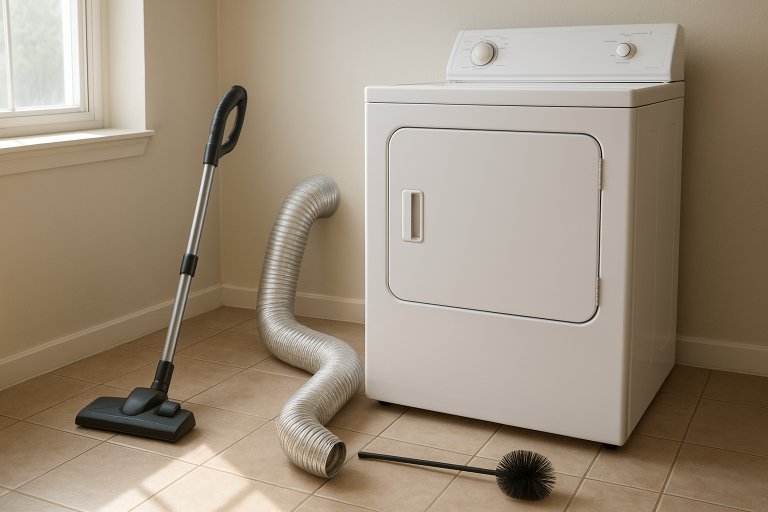
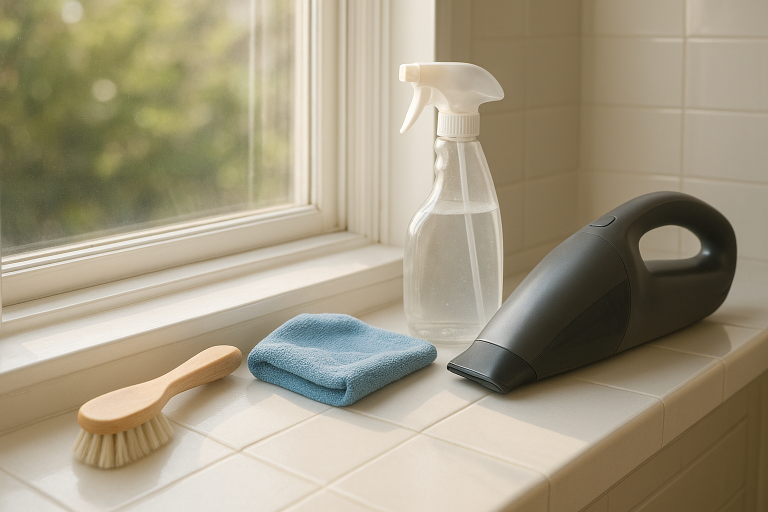
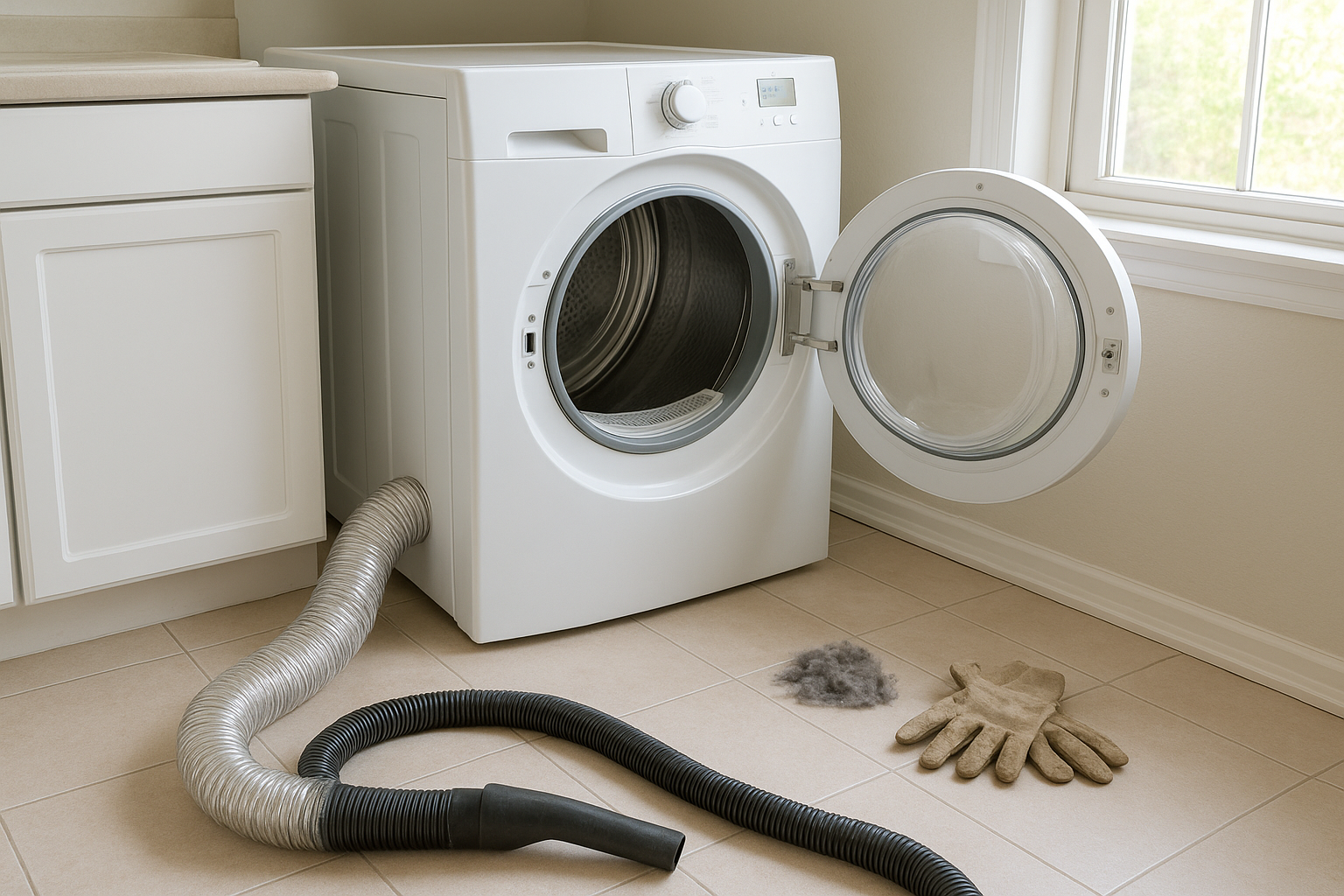
- Vacuum with hose and crevice tool
- Dryer vent cleaning brush kit with flexible rods
- Screwdriver or nut driver, depending on the vent clamp
- Work gloves
- Dust mask, optional but helpful
- Trash bag
- Flashlight
- Foil HVAC tape, if the vent connection needs resealing
A quick safety note: Do not use screws to fasten dryer duct joints. Screw tips can catch lint inside the duct. Use foil HVAC tape where needed, not regular cloth duct tape.
Before you start: check your vent setup
Pull the dryer out just enough to see behind it. Most homes have a short transition duct from the dryer to the wall, then a duct that runs to the exterior of the house.
This DIY job is easiest when the vent is short and fairly straight. If your dryer vents through the roof, runs a long distance, disappears into a tight crawlspace, or has several bends, a professional cleaning is usually the safer and more thorough choice.
How to clean a dryer vent step by step
1. Unplug the dryer
For an electric dryer, unplug it from the wall. For a gas dryer, unplug the dryer and be careful not to disturb the gas line as you move the appliance. If you are not comfortable moving a gas dryer, stop here and call a pro.
2. Pull the dryer away from the wall
Move it slowly, just far enough to reach the vent connection. Avoid crushing, kinking, or yanking the flexible duct. If the laundry room is tight, set a towel under the dryer feet to help it slide without scratching the floor.
3. Disconnect the vent hose
Loosen the clamp at the back of the dryer with a screwdriver or nut driver. Gently remove the duct from the dryer outlet. If it is taped, peel or cut the tape carefully so you do not damage the duct.
4. Vacuum the dryer outlet and the hose ends
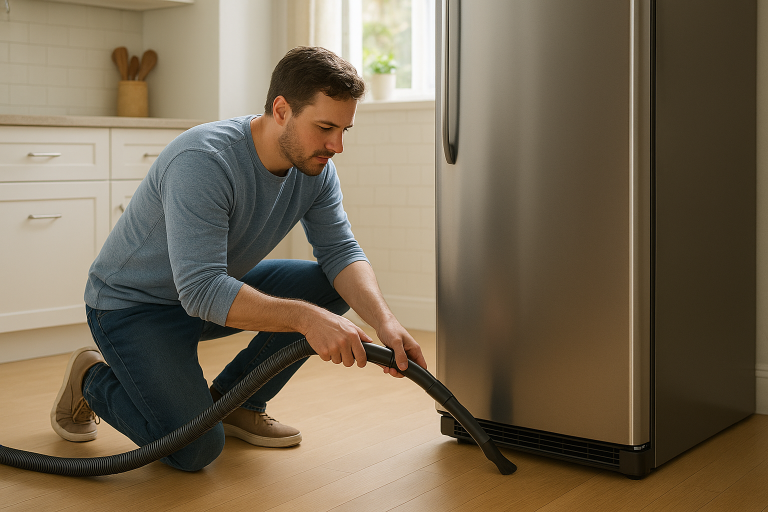
Use the crevice attachment to remove loose lint from the dryer outlet, the open end of the transition duct, and the wall opening. Do not shove the vacuum hose deep into the duct where it could get stuck.
5. Brush the duct from inside
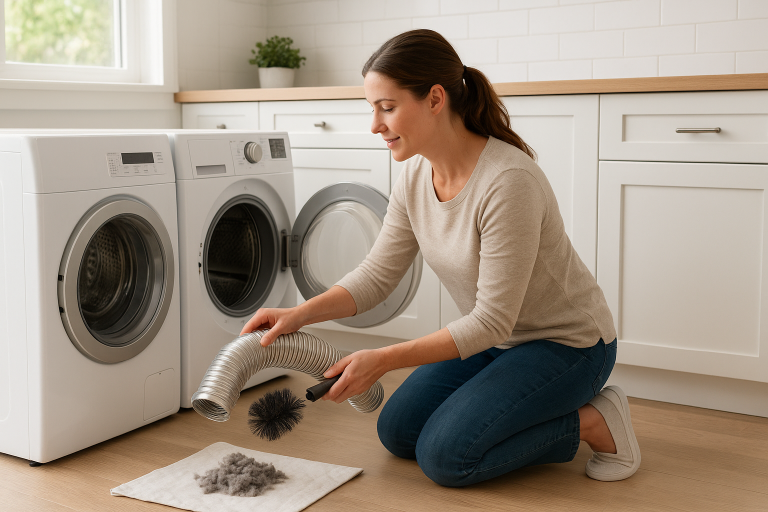
Attach the dryer vent brush to one flexible rod. Feed it into the wall duct and rotate it gently as you push forward. Add rods one at a time if your kit allows it. Pull the brush back out slowly and remove the lint from the bristles into a trash bag.
If you use a drill attachment, use low speed and keep a firm grip. Do not reverse the drill direction if your rods screw together; that can loosen a rod inside the duct.
6. Clean from the outside vent
Go outside and remove any lint, leaves, or debris around the vent cover. If the cover has a flap, make sure it moves freely. Feed the brush in from the outside and loosen more lint, then vacuum or collect what comes out.
Avoid bird screens or mesh covers on dryer vents unless your local code or a specific pest solution requires them; fine mesh can clog quickly with lint. A proper exterior vent hood with a working damper is usually the better setup.
7. Reconnect the duct
Reattach the transition duct to the dryer outlet and the wall connection. Tighten the clamp so it is snug but not crushing the duct. If you need to seal a joint, use foil HVAC tape.
Take a moment to check the duct shape. A crushed or sharply bent hose will restrict airflow even if it is clean. Replace flimsy plastic or damaged foil duct with a safer rigid or semi-rigid metal duct when possible.
8. Test the dryer
Plug the dryer back in. Run it on an air-only or low-heat setting for a few minutes. Go outside and confirm strong airflow from the vent. Back inside, check behind the dryer for air leaks or rattling at the connection.
How to keep the vent cleaner longer
- Clean the lint screen after every load. This is the simplest habit and the one manufacturers and energy experts stress most. ([energystar.gov](https://www.energystar.gov/products/clothes_dryers?utm_source=openai))
- Wash the lint screen occasionally. If you use dryer sheets, residue can build up. Wash the screen with warm water and a little dish soap, rinse, and dry it fully before replacing.
- Do not overload the dryer. Clothes need room to tumble so air can move through the load.
- Keep the area behind the dryer clear. Dust, pet hair, and dropped dryer sheets can collect around the vent connection.
- Check the outside vent seasonally. Make sure snow, mulch, leaves, vines, or nests are not blocking airflow.
When to call a professional
Call a dryer vent cleaner or appliance pro if the vent run is long, vents through the roof, has multiple elbows, or you cannot get strong airflow after cleaning. You should also call if the dryer shows an error code, repeatedly overheats, shuts off mid-cycle, or gives off a burning smell after the vent has been cleaned.
A clean vent will not fix every dryer problem, but it is one of the most useful maintenance jobs you can do. If your dryer suddenly works faster afterward, add a yearly reminder to your calendar and keep that lint screen clean between loads.