How to Clean a Dishwasher Filter in 15 Minutes
If your dishwasher smells funky or leaves gritty bits on glasses, the filter is the first place to look. Learning how to clean a dishwasher filter takes about 15 minutes, costs almost nothing, and often solves the problem before you need a repair call.
Most modern dishwashers have a removable filter in the bottom of the tub. It catches food particles so they do not recirculate onto your dishes, and manufacturers including Whirlpool and GE note that a clean filter helps the dishwasher wash efficiently. ([producthelp.whirlpool.com](https://producthelp.whirlpool.com/Dishwashers/Dishwasher/Other/Cleaning_and_Odor/Cleaning_and_Maintenance/Cleaning_the_Filter/Cleaning_the_Filter_-_Dishwasher?utm_source=openai))
How Often Should You Clean a Dishwasher Filter?
A good everyday rule is to check the filter once a month if you run the dishwasher most days. If you scrape plates well, run it only a few times a week, and do not notice odors or grit, every two to three months may be enough.
Clean it sooner if you notice any of these signs:
- Glasses come out sandy or speckled.
- Food bits are stuck to bowls or the top rack.
- The dishwasher smells sour, musty, or like old food.
- Water drains slowly or pools more than usual in the bottom.
- You can see debris around the round filter area.
One note: not every dishwasher filter removes the same way. If the filter feels stuck or you cannot tell which part twists out, look up your model’s owner’s manual before forcing it. Whirlpool’s filter guidance, for example, explains that filters protect the pump and keep food particles from recirculating, but designs vary by model. ([whirlpool.ca](https://www.whirlpool.ca/en_ca/blog/kitchen/fixing-removing-and-replacing-dishwasher-filters.html?utm_source=openai))
What You’ll Need
- Warm water
- A few drops of mild dish soap
- Soft-bristle brush, old toothbrush, or non-scratch sponge
- Paper towel or rag
- Small bowl or sink basin
- Optional: white vinegar for mineral film
Skip bleach, harsh scouring pads, and anything sharp. The CDC warns not to mix household bleach with other cleaners or disinfectants, and dishwasher interiors often have residue from detergent, rinse aid, and food acids. ([cdc.gov](https://www.cdc.gov/hygiene/about/cleaning-and-disinfecting-with-bleach.html?utm_source=openai))
Step-by-Step: How to Clean a Dishwasher Filter
1. Empty the lower rack
Remove clean or dirty dishes and slide out the lower rack. Set it aside so you can comfortably reach the bottom of the dishwasher tub.
2. Find the filter
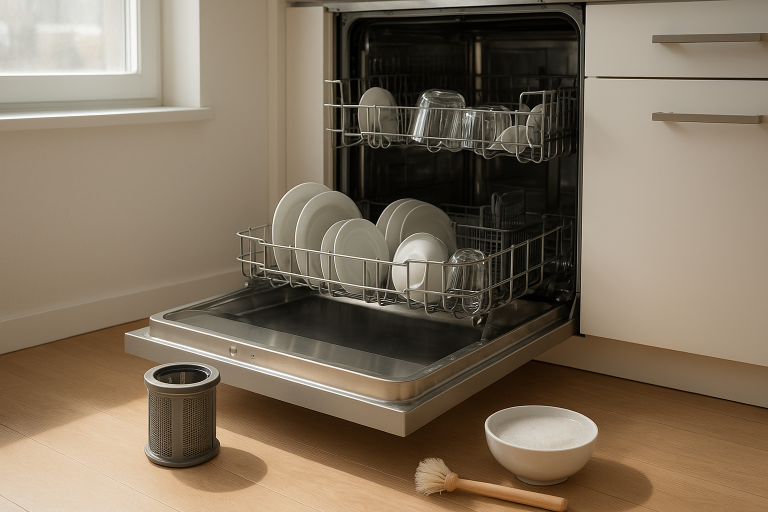
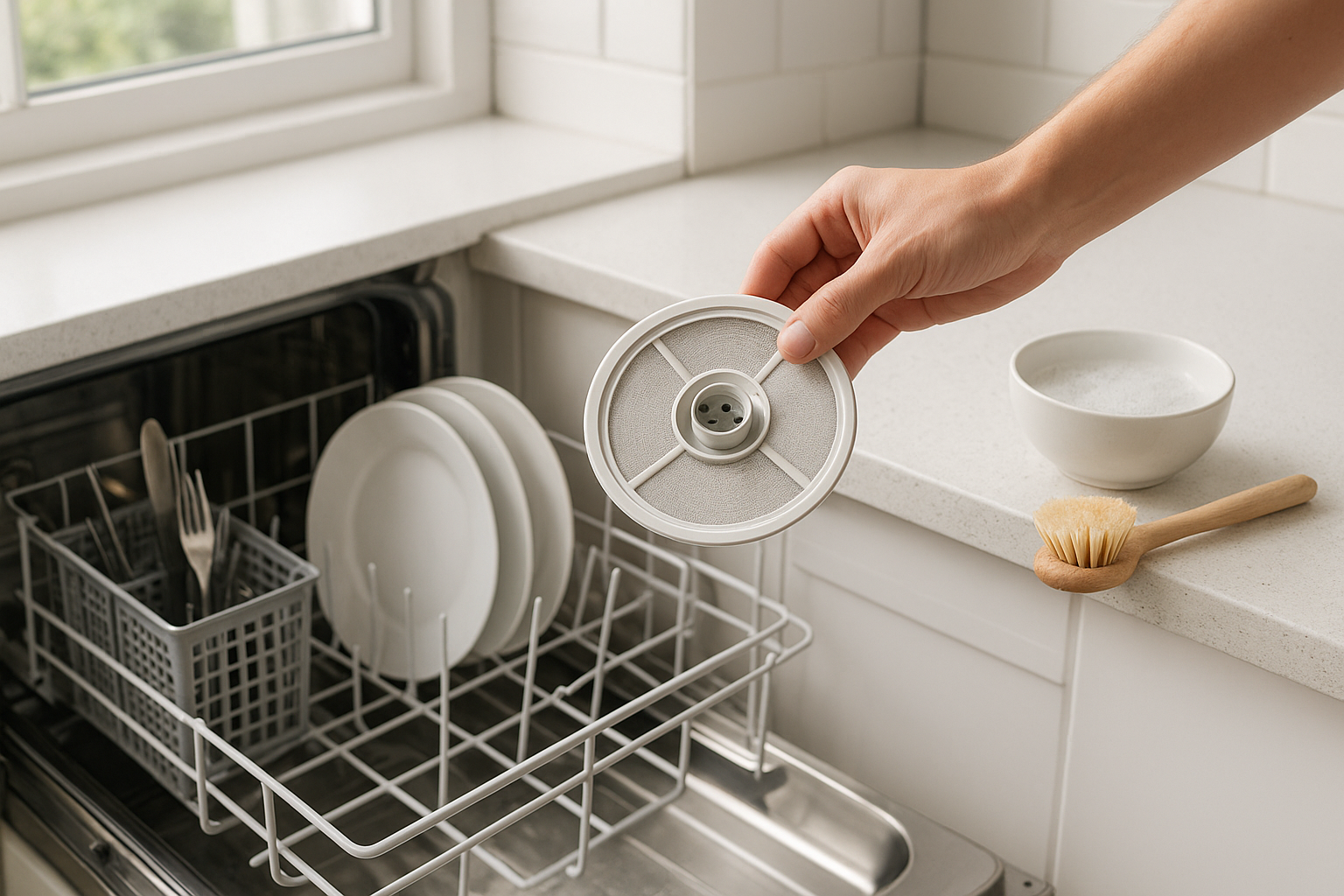
Look at the bottom center of the dishwasher, usually near the lower spray arm. Most removable filters are round or cylindrical and may have a flat mesh screen around them. Some twist counterclockwise and lift out; others have a cup-style filter plus a flat fine filter.
3. Remove the filter gently
Turn or lift the filter according to your dishwasher’s design. Do not yank. If it does not move easily, stop and check the manual. Breaking a tab can turn a quick cleaning job into a parts order.
4. Clear loose debris first
Dump crumbs, labels, seeds, noodles, glass chips, or bones into the trash. Do not rinse big debris down the sink if you can avoid it, especially if you do not have a garbage disposal.
5. Wash with warm, soapy water
Rinse the filter under warm running water. Add a little mild dish soap and gently scrub the mesh and plastic frame with a soft brush or sponge. Whirlpool recommends a soft brush for hard-to-remove soils or calcium deposits, which is helpful if you have hard water. ([producthelp.whirlpool.com](https://producthelp.whirlpool.com/Dishwashers/Dishwasher/Other/Cleaning_and_Odor/Cleaning_and_Maintenance/Cleaning_the_Filter/Cleaning_the_Filter_-_Dishwasher?utm_source=openai))
6. Check the filter well
Before reinstalling the filter, wipe the opening where it sits. Use a paper towel to remove anything obvious: lemon seeds, popcorn kernels, broken glass, bits of plastic wrap, or a soggy food label. Be careful and wear gloves if you suspect glass.
7. Rinse and lock it back in place
Rinse the filter until water runs through it easily. Put every piece back exactly where it came from and lock it securely. A loose filter can let food particles move around the dishwasher and may interfere with cleaning.
8. Run a short rinse or normal cycle
After the filter is back in, run a rinse cycle or a normal wash with the dishwasher empty. This helps flush anything loosened during cleaning.
If the Filter Smells Bad
If the filter has a sour smell, let it soak for 10 minutes in warm, soapy water, then scrub and rinse. You can also wipe the rubber gasket around the door with a damp cloth and a little mild soap, because grime often hides there. Whirlpool’s odor troubleshooting includes cleaning the filter and wiping buildup from gasket seals as practical first steps. ([whirlpool.com](https://www.whirlpool.com/blog/kitchen/dishwasher-smells-bad.html?fmt=png-alpha&utm_source=openai))
For mineral film, place a dishwasher-safe cup of white vinegar upright on the top rack and run a hot cycle with the dishwasher empty, unless your manufacturer’s manual says not to use vinegar. Do not use vinegar in the same cycle as bleach or other cleaners.
What Not to Do
- Do not run the dishwasher without the filter installed. The filter helps protect internal parts and keeps debris from moving through the wash water.
- Do not use steel wool. It can damage fine mesh and leave rust-prone fragments behind.
- Do not force a stuck filter. Check the manual by model number instead.
- Do not mix cleaners. Bleach should not be mixed with other cleaning products, including acidic cleaners. ([cdc.gov](https://www.cdc.gov/hygiene/about/cleaning-and-disinfecting-with-bleach.html?utm_source=openai))
- Do not ignore broken glass. Turn off the dishwasher, wear thick gloves, and remove pieces carefully.
Why Your Dishes May Still Be Dirty After Cleaning the Filter
If the filter is clean but dishes still look cloudy or gritty, check these common issues next.
Spray arms are clogged
Spin the lower and upper spray arms by hand. They should move freely. If the holes are clogged with seeds or mineral deposits, clean them gently with a toothpick or soft brush, then rinse if your model allows removal.
Water is not hot enough
Run the kitchen sink hot for a minute before starting the dishwasher, especially if the dishwasher is far from the water heater. This helps the machine begin with hot water instead of a long stretch of cool water sitting in the pipe.
The detergent is not right for your water
Hard water can leave white film on glasses and inside the tub. Try a rinse aid, use the detergent amount recommended on the package, and avoid overfilling the dispenser. Too much detergent can leave residue, especially in soft water.
The dishwasher is overloaded
Bowls nested tightly together and tall pans blocking the spray arm will not clean well, no matter how clean the filter is. Load items so water can reach the dirty surfaces and the spray arms can spin.
A Simple Monthly Dishwasher Filter Routine
- Pull the lower rack out.
- Remove and rinse the filter.
- Scrub with warm, soapy water.
- Wipe the filter well and door gasket.
- Reinstall the filter securely.
- Run an empty rinse or cleaning cycle if needed.
That small habit can prevent odors, reduce gritty dishes, and help your dishwasher do the job it was built to do. If you clean the filter regularly and still have standing water, loud grinding, leaks, or cycles that do not run correctly, it is time to check the manual or call an appliance technician.