How to Deadhead Petunias for More Summer Blooms
Petunias are generous summer bloomers, but by midseason they can start looking sticky, stringy, and tired. The good news is that a few minutes of deadheading and light pruning can help many petunias put their energy back into fresh flowers instead of seed pods.
This guide shows exactly where to pinch or cut, what to do with leggy stems, and how to help your petunias recover afterward. It works for pots, window boxes, hanging baskets, and garden beds.
What Deadheading Petunias Means
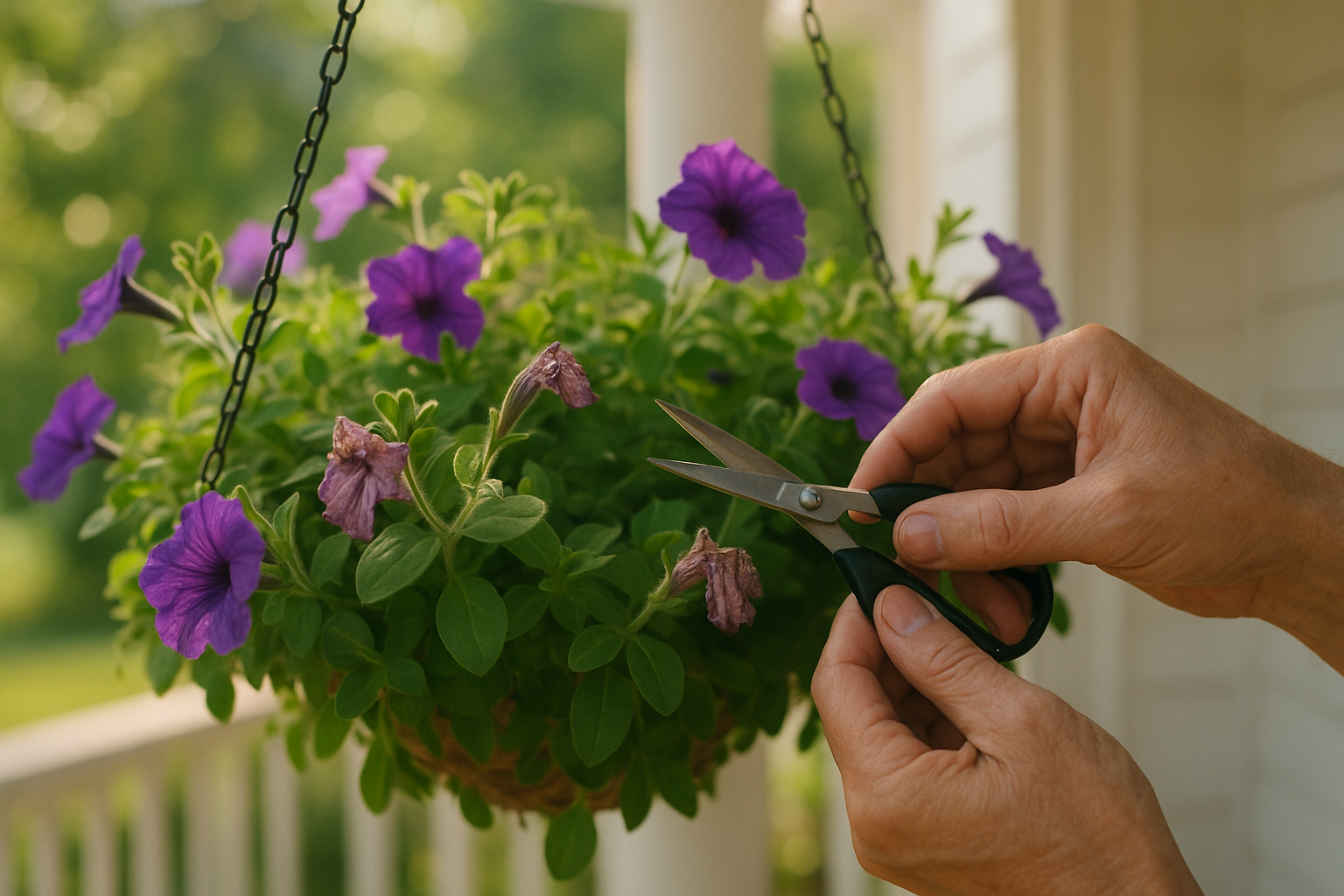
Deadheading simply means removing faded flowers after they finish blooming. For petunias, the goal is not just to pull off the limp petals. You want to remove the whole spent flower and the small green seed-forming part behind it.
University of Minnesota Extension notes that deadheading encourages blooming by preventing seed formation, and says it is especially important for flowering annuals in containers. ([extension.umn.edu](https://extension.umn.edu/gardening-minnesota/growing-petunias?utm_source=openai)) That matters because petunias in baskets and pots have limited soil, limited nutrients, and very little room to waste energy.
Do All Petunias Need Deadheading?
Not always. Older or seed-grown petunias usually benefit the most from regular deadheading. Some newer spreading or self-cleaning types drop old blooms more neatly and may keep flowering without much help.
Even so, self-cleaning does not mean no care at all. If the plant looks thin, has bare stems, or has stopped blooming heavily, a trim can still help it branch and fill back in. Penn State Extension lists petunias among annuals that respond well when leggy midsummer growth is cut back, leaving several nodes where new branches can grow. ([extension.psu.edu](https://extension.psu.edu/pruning-herbaceous-plants?utm_source=openai))
When to Deadhead Petunias
Start deadheading as soon as individual flowers look wilted, faded, soggy, or papery. In hot weather, that may mean checking hanging baskets every couple of days. In cooler stretches, once a week may be enough.
The easiest routine is to deadhead while you water. Look over the plant, remove the spent blooms you can see, and then give the basket or pot a turn so you do not miss the back side.
Tools You’ll Need
- Your fingers: Fine for a few soft stems and quick touch-ups.
- Small scissors or garden snips: Better for sticky stems, thick growth, or large baskets.
- A small bucket: Keeps faded blooms from piling up on the soil surface.
- Gloves: Optional, but petunia stems can feel sticky.
Use clean, sharp snips so you do not crush the stems. If you are moving between plants, wipe your blades, especially if one plant looks diseased.
How to Deadhead Petunias Step by Step
1. Find a spent bloom
Look for flowers that are limp, shriveled, brown around the edges, or hanging down. Avoid cutting off tight buds; those are the next flowers.
2. Follow the flower stem back
Trace the faded flower back to the point where its short stem meets a leaf joint, side shoot, or main stem. Right behind the petals, you may see a small green swollen base. That is the part that can form seed, so do not leave it behind.
3. Pinch or snip above a healthy leaf joint
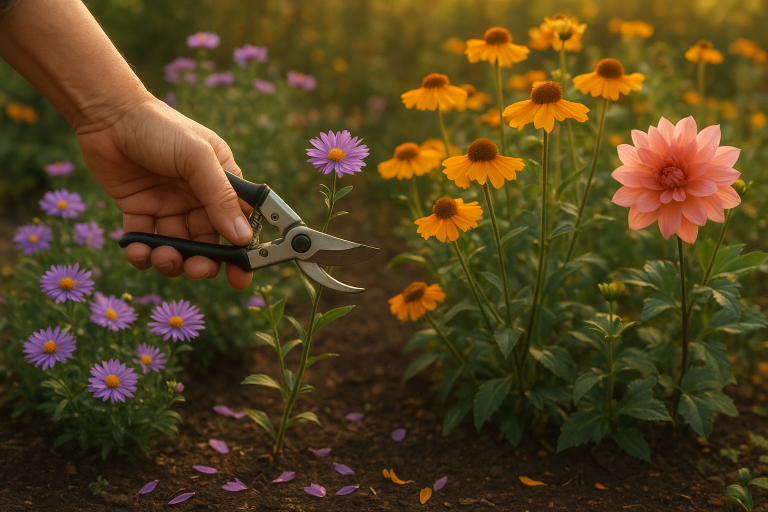
Use your thumbnail and forefinger to pinch the little stem cleanly, or use snips for a neater cut. Aim to remove the flower, its stem, and the seed-forming base while keeping as many healthy leaves as possible.
4. Collect the trimmings
Drop old blooms into a bucket instead of letting them sit on top of the potting mix. This keeps the basket tidier and reduces mushy debris around the crown of the plant.
The Common Mistake: Pulling Off Only the Petals
If you tug away only the soft colored petals, the plant may still be left with the green seed pod. That does not give you the full benefit of deadheading. The plant can continue putting energy into seed production instead of new buds.
A good rule: if you still see a little green knob where the flower used to be, go back and pinch a bit lower.
How to Fix Leggy Petunias
Deadheading helps with spent blooms, but it will not always fix long, bare, floppy stems. For leggy petunias, give the plant a haircut.
- Choose the longest, thinnest stems first.
- Cut each stem back to a healthy leaf joint or branching point.
- Remove about one-third of the plant at a time if it is still fairly healthy.
- For very overgrown annuals, a harder cutback can work if you leave several inches of stem with leaf nodes.
Penn State Extension advises that leggy annuals can be cut back so 3 to 5 inches remain, with about four or five nodes or leaf axils for new growth; petunias are one annual that responds well to this practice. ([extension.psu.edu](https://extension.psu.edu/pruning-herbaceous-plants?utm_source=openai)) If that feels drastic, do it in stages: trim one-third now, another third in a week or two, and leave some blooming stems for color while the plant regrows.
What to Do After Deadheading or Pruning
After a light deadheading session, your petunias do not need special treatment. After a bigger trim, give them a little support.
- Water deeply: Containers dry quickly in summer, especially hanging baskets.
- Check drainage: Petunias dislike sitting in soggy soil. Make sure water can run out freely.
- Feed lightly: A balanced or bloom-friendly fertilizer, used according to the label, can support new growth in containers.
- Give them sun: Petunias bloom best with plenty of direct light, though baskets may need extra water during hot spells.
Do not fertilize a bone-dry plant. Water first, let the plant perk up, and then feed as directed. Overfeeding can lead to lots of soft leafy growth, so more is not better.
How Often Should You Deadhead Petunias?
For neat pots and baskets, check petunias two or three times a week. You do not need to remove every old bloom the second it fades, but regular attention prevents seed pods from building up and keeps the plant looking fresh.
If you are busy, focus on a weekly cleanup. Remove spent blooms, trim the longest stems, pick out yellow leaves, and rotate the pot so all sides get light.
Quick Troubleshooting
The plant is sticky
That is normal for many petunias. Wear gloves or use snips if you dislike the feel.
The basket looks worse right after pruning
That can happen. A leggy basket may look sparse for a week or two after a needed haircut, but new side shoots should help it fill in.
The leaves are yellow
Yellow leaves can come from inconsistent watering, depleted potting mix, poor drainage, or normal aging near the base of the plant. Remove yellow leaves and review your watering and feeding routine.
The flowers disappear overnight
If buds or petals look chewed rather than faded, deadheading is not the main issue. Check for pests such as budworms, especially if you see small droppings or holes in buds.
Bottom Line
To deadhead petunias, remove the whole faded flower, including the small seed-forming base, and cut or pinch back to a healthy leaf joint. For tired midsummer plants, combine deadheading with a modest trim of leggy stems, then water well and keep up with regular container care.
It is a small chore, but it pays off. A few minutes here and there can turn a tired petunia basket back into a full, colorful porch plant for the rest of summer.