How to Water Tomato Plants in Hot Weather
Tomatoes can look perfectly happy in June and suddenly wilt by lunch in July. When the weather turns hot, the goal is not to drown the plants—it is to keep the root zone evenly moist so the plant can keep moving water and nutrients into the fruit.
Here is a practical way to water tomato plants in hot weather, whether they are growing in raised beds, in-ground rows, or containers.
How Much Water Do Tomatoes Need?
As a general starting point, tomato plants need about 1 inch of water per week from rain or irrigation in normal summer weather. University of Minnesota Extension notes that one inch of water wets sandy soil about 10 inches deep and heavy clay soil about 6 inches deep, which is a helpful reminder that soil type matters. ([extension.umn.edu](https://extension.umn.edu/vegetables/growing-tomatoes?utm_source=openai))
During a real heat wave, tomatoes may need more frequent watering. University of Minnesota Extension recommends watering daily or every other day during extremely hot weather, especially when daytime temperatures are above 90°F and nights stay above 70°F. ([extension.umn.edu](https://extension.umn.edu/planting-and-growing-guides/gardening-hot-weather?utm_source=openai))
Instead of watering by the calendar alone, use this rule: water when the soil is dry 1 to 2 inches below the surface. If it is still damp at that depth, wait and check again later.
The Best Time of Day to Water Tomatoes
The best time to water tomatoes in hot weather is early morning. Morning watering gives the roots a full supply before the hottest part of the day and lets any splashed leaves dry quickly.
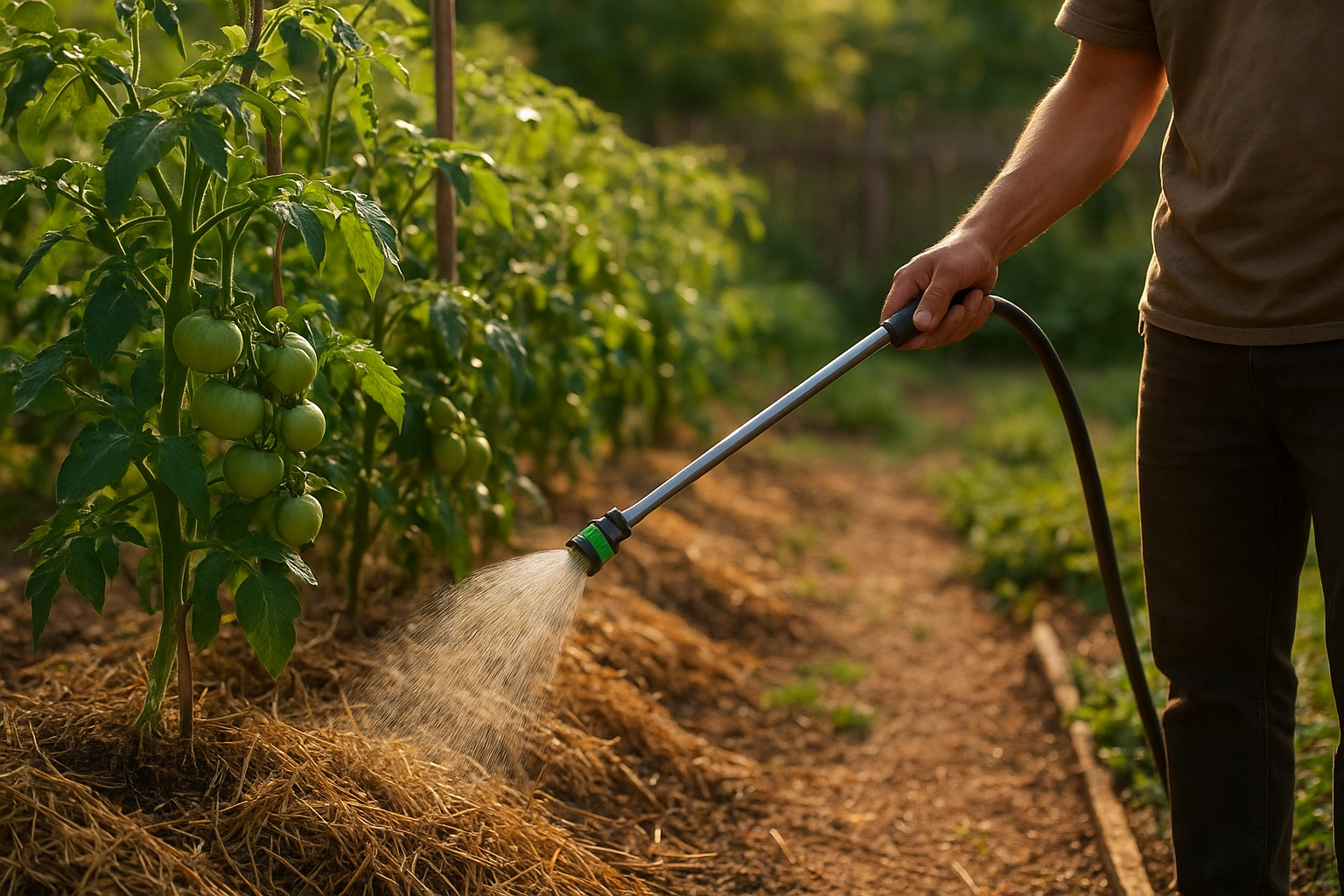
If a plant is badly wilted in late afternoon and the soil is dry, do not wait until morning. Water at the soil line, slowly and deeply. Avoid blasting the leaves, and skip overhead sprinklers if you can. Wet foliage can encourage disease, and sprinklers lose more water to evaporation and wind than a hose, watering wand, drip line, or soaker hose.
Water Deeply, Not Just Often
A quick sprinkle every day can train roots to stay near the surface, where soil heats and dries fastest. A better approach is to water long enough to moisten the root zone, then let the top inch or two begin to dry before watering again.
For in-ground tomatoes and raised beds, try this simple method:
- Water slowly at the base of the plant until the soil is evenly damp, not puddled.
- Wait 20 to 30 minutes so the water can soak in.
- Check with a trowel or your finger 4 to 6 inches down near the root area.
- If it is dry below the surface, water again more slowly.
If water runs off before it soaks in, your soil may be compacted or very dry. Use several shorter watering rounds instead of one hard blast.
Use Mulch to Keep Moisture Steady
Mulch is one of the easiest ways to help tomatoes through hot weather. A 2- to 3-inch layer of straw, shredded leaves, untreated grass clippings, or fine wood chips helps slow evaporation and keeps soil temperatures more even.
Keep mulch a couple of inches away from the tomato stem so moisture does not sit against it. Spread the mulch out to cover the root zone, which often extends wider than the visible plant.
Consistent soil moisture is also one of the best ways to reduce blossom-end rot. Oregon State University Extension explains that blossom-end rot is tied to calcium deficiency in the plant and moisture stress, and recommends mulching and watering enough to wet the root zone. ([extension.oregonstate.edu](https://extension.oregonstate.edu/catalog/fs-139-blossom-end-rot-tomatoes?utm_source=openai))
How to Water Tomatoes in Containers
Container tomatoes dry out much faster than tomatoes in the ground. In hot weather, a potted tomato may need water every day, and during a heat wave it may need water twice a day.
Check containers by pushing your finger into the potting mix. If the top 1 to 2 inches are dry, water until excess drains from the bottom. That full flush matters because a small splash on top may never reach the lower roots.
For better results with container tomatoes:
- Use the largest pot you can manage; 5 gallons is a bare minimum, and larger is easier in heat.
- Make sure the pot has drainage holes.
- Add mulch on top of the potting mix.
- Move pots where they get morning sun and light afternoon shade during extreme heat.
- Group containers together so they shade each other’s sides.
Signs Your Tomato Needs Water
Tomatoes naturally droop a little in fierce afternoon heat, even when the soil is moist. The key is whether they recover in the evening.
Your tomato likely needs water if:
- The leaves are wilted in the morning.
- The soil is dry 1 to 2 inches down.
- Leaves feel thin, limp, or slightly curled.
- Container plants feel unusually light when lifted.
- Fruit is cracking after dry spells followed by heavy watering or rain.
If the plant wilts but the soil is wet, do not add more water right away. Roots need air as well as moisture. Soggy soil can stress roots and make the plant look wilted even though water is present.
What About Blossom-End Rot?
Blossom-end rot looks like a dark, sunken, leathery patch on the bottom end of a tomato. It is frustrating, but it is not a contagious disease spreading from fruit to fruit.
The most useful fix is usually steady watering, not a quick calcium spray. Penn State Extension notes that blossom-end rot is related to calcium deficiency and wide fluctuations in available moisture; steady moisture helps maintain calcium movement from soil to fruit. ([extension.psu.edu](https://extension.psu.edu/tomato-diseases-and-disorders-in-the-home-garden?utm_source=openai))
Remove badly damaged fruit so the plant can put energy into healthier tomatoes. Then focus on even watering, mulch, and avoiding heavy nitrogen fertilizer, which can push leafy growth at the expense of fruit.
A Simple Hot-Weather Tomato Watering Routine
Use this routine when temperatures climb and rain is scarce:
- Check soil every morning. Push a finger into the soil near the plant, not right against the stem.
- Water when the top 1 to 2 inches are dry. Soak slowly at the base.
- Use mulch. Keep 2 to 3 inches over the root zone.
- Watch containers closely. Check pots again in late afternoon during heat waves.
- Skip major pruning during extreme heat. Hot-weather stress is already hard on the plant; University of Minnesota Extension advises waiting to prune tomatoes until a heat wave passes. ([extension.umn.edu](https://extension.umn.edu/planting-and-growing-guides/gardening-hot-weather?utm_source=openai))
Common Tomato Watering Mistakes to Avoid
- Watering only the leaves: Aim for the soil, where the roots can use it.
- Giving tiny daily sips: Shallow watering encourages shallow roots.
- Letting plants swing from bone-dry to soaked: Big moisture swings can contribute to fruit cracking and blossom-end rot.
- Ignoring soil type: Sandy soil dries quickly; clay soil holds water longer but may absorb it slowly.
- Forgetting the wind: Hot, windy days dry plants and containers faster than hot, still days.
Bottom Line
In hot weather, tomatoes need consistent moisture more than a perfect schedule. Check the soil, water deeply at the base, mulch well, and give container plants extra attention. If you keep the root zone evenly moist through the hottest stretch of summer, your tomato plants will have a much better chance of setting and ripening healthy fruit.