How to Clean a Dishwasher Filter and Stop Odors
If your dishwasher smells musty or leaves grit on glasses, the filter is one of the first places to check. Learning how to clean a dishwasher filter takes only a few minutes, and it can help your machine drain better, smell fresher, and wash more evenly.
Most newer dishwashers are designed to work without pre-rinsing every plate, but they still need basic care. The U.S. Department of Energy recommends scraping loose food instead of rinsing before loading, and notes that modern dishwashers and detergents are made to handle the wash from there. ([energy.gov](https://www.energy.gov/energysaver/dishwashers?utm_source=openai))
Why the Dishwasher Filter Gets Gross
The filter catches food bits, labels, seeds, broken glass, and greasy residue before they can recirculate or clog the drain area. Over time, that trapped gunk can smell sour, slow drainage, or leave sandy specks on clean dishes.
Not every dishwasher filter looks the same. Many newer models have a removable manual filter in the bottom of the tub, while some older machines have a self-cleaning grinder-style system. Whirlpool advises checking your product manual for the exact filter design and instructions for your model. ([whirlpool.ca](https://www.whirlpool.ca/en_ca/blog/kitchen/fixing-removing-and-replacing-dishwasher-filters.html?utm_source=openai))
What You’ll Need
- Dish soap
- Warm water
- Soft-bristle brush or old toothbrush
- Microfiber cloth or sponge
- Toothpick or small skewer for spray arm holes
- White vinegar or a dishwasher cleaner, if allowed by your manual
- Rubber gloves, optional
Avoid steel wool, harsh scouring pads, drain cleaner, and bleach unless your dishwasher manual specifically says they are safe. Strong chemicals can damage seals, stainless finishes, or internal parts.
Step 1: Empty the Dishwasher and Remove the Bottom Rack
Start with a cool, empty dishwasher. Pull out the bottom rack and set it aside so you can reach the floor of the machine. If there is standing water in the bottom, pause here and check for a clog, kinked drain hose, or blocked garbage disposal connection before running another cycle.
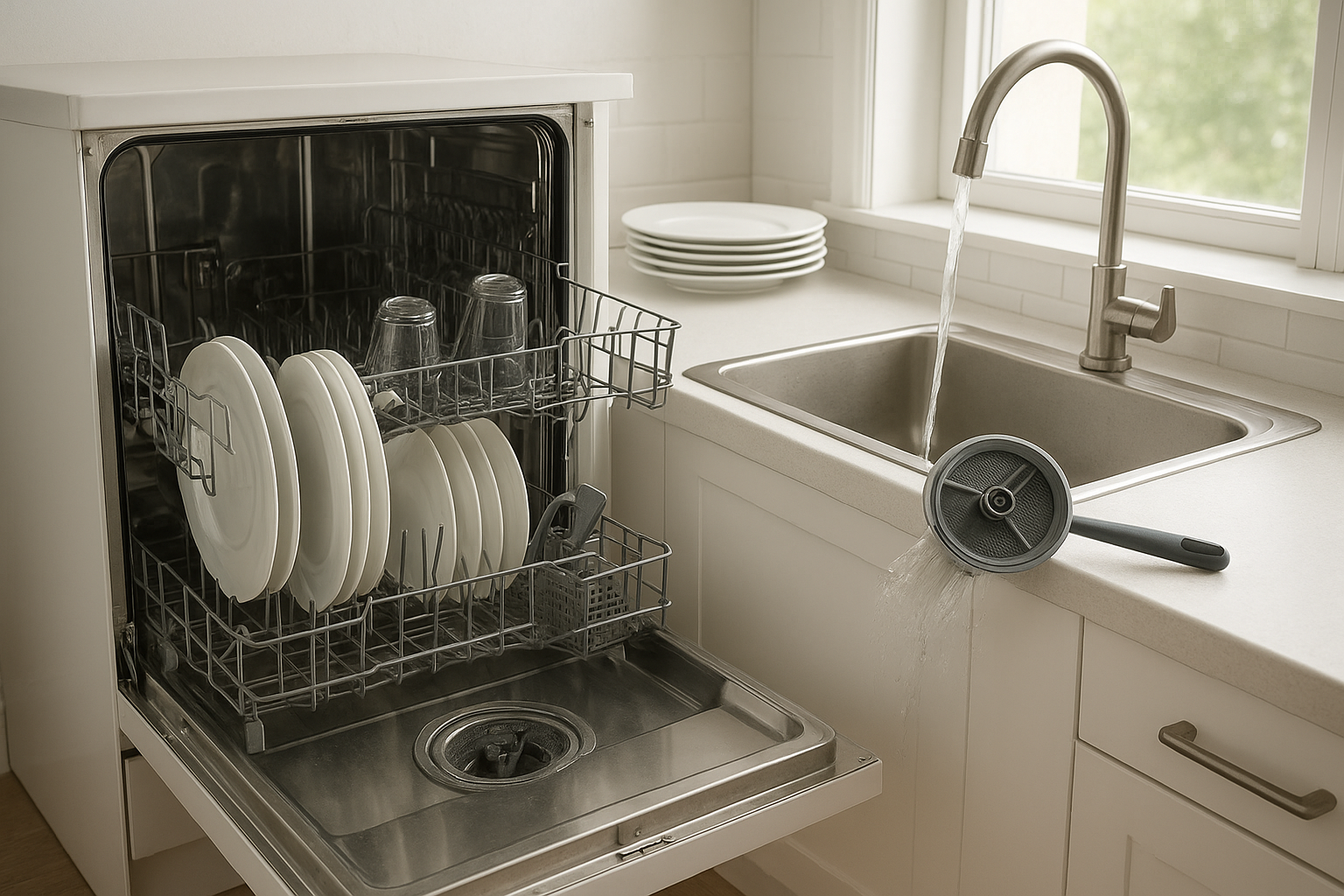
Look for a round or oval filter assembly near the spray arm. It may twist out, lift out, or have a separate coarse filter and fine mesh screen. If you are unsure, search your model number before forcing anything.
Step 2: Take Out the Filter Carefully
Most removable filters unlock with a short counterclockwise twist, then lift straight up. Some have two parts: a cylinder-shaped upper filter and a flat lower screen. Keep track of how the pieces fit together so you can reinstall them correctly.
Check the sump area underneath for bones, popcorn kernels, twist ties, fruit stickers, bits of plastic, or glass. Use gloves if needed. Do not reach blindly if you suspect broken glass; use a paper towel or small tool and work slowly.
Step 3: Wash the Filter with Warm Soapy Water
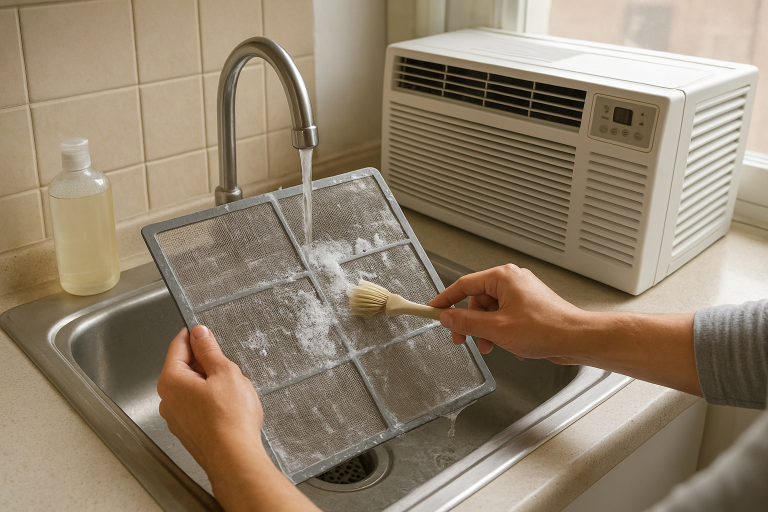
Rinse loose debris into the trash first if there are large food pieces. Then wash the filter under warm running water with a few drops of dish soap. Use a soft brush to loosen greasy buildup from the mesh, seams, and plastic ridges.
Do not scrub so hard that you bend or tear the mesh. A damaged filter can let debris back into the dishwasher, which defeats the whole point. If the filter is cracked, warped, or won’t lock back into place, order a replacement made for your exact model.
Step 4: Wipe the Filter Well, Door Gasket, and Edges
Before reinstalling the filter, wipe the area where it sits. Gunk often hides around the drain well, under the lower spray arm, along the door gasket, and at the bottom edge of the door where water and detergent residue collect.
Use a damp cloth and mild dish soap. For the rubber gasket, wipe gently rather than pulling hard. If you see black mildew-like staining that does not wipe off, clean what you can and keep the door cracked between cycles so the tub can dry.
Step 5: Check the Spray Arms
Dirty dishes are not always a detergent problem. If the spray arm holes are clogged, water cannot reach everything in the racks. Spin the lower spray arm by hand and make sure it moves freely. If your upper spray arm is removable, take it off according to the manual.
Use a toothpick or small skewer to clear visible mineral bits or food from the holes. Rinse the arm under the faucet if it comes off easily. Reinstall it securely so it spins without hitting tall dishes, cutting boards, or pan handles.
Step 6: Reinstall the Filter the Right Way
Put the lower screen back first if your dishwasher has one, then insert and lock the upper filter. It should sit flat and feel secure. If it is crooked, loose, or not fully turned into position, food can bypass the filter and end up on dishes.
Slide the bottom rack back in and make sure it rolls smoothly. This is also a good time to check that nothing has fallen under the rack wheels.
Step 7: Run a Cleaning Cycle
After the filter is clean, run the dishwasher empty on a hot or heavy cycle. Use a dishwasher cleaning tablet or liquid cleaner if your manual allows it. Some manufacturers recommend periodic cleaning to remove grease and limescale from hidden areas, not just the visible filter. ([finish.co.za](https://www.finish.co.za/ultimate-dishwashing-guide/maintenance-and-care/?utm_source=openai))
If you prefer vinegar, check your manual first. Many people use a cup of white vinegar in a dishwasher-safe bowl on the top rack, but vinegar is acidic and repeated heavy use may not be ideal for every machine or seal material. Never mix vinegar with bleach or other cleaning chemicals.
How Often Should You Clean a Dishwasher Filter?
For many households, a quick filter rinse every two to four weeks is a good starting point. Clean it more often if you run the dishwasher daily, cook greasy foods, have hard water, or notice odors, gritty glasses, poor drainage, or food flecks after a cycle.
LG recommends periodically cleaning the dishwasher filter to keep the appliance operating at peak performance, and filter-cleaning frequency can vary by use and model. ([lg.com](https://www.lg.com/us/support/help-library/lg-dishwashers-how-to-clean-your-dishwasher-filter–20150210517756?utm_source=openai)) If your manual gives a schedule, follow that first.
Simple Habits That Prevent Odors
- Scrape, don’t rinse. The EPA also recommends scraping food waste into the trash or compost instead of rinsing dishes before loading. ([epa.gov](https://www.epa.gov/watersense/home-maintenance?utm_source=openai))
- Run full loads. Full loads make better use of the water and energy the cycle already uses.
- Use the right detergent amount. Too much detergent can leave residue; too little can leave grease behind.
- Let the tub dry. After unloading, leave the door slightly open for a while if your kitchen setup allows it.
- Load so water can move. Keep tall pans, trays, and cutting boards from blocking the spray arms or detergent dispenser.
When Cleaning the Filter Isn’t Enough
If the dishwasher still smells bad after the filter, gasket, and spray arms are clean, look deeper. Check for a clogged air gap if you have one, a backed-up garbage disposal, a kinked drain hose, or food trapped under removable parts. A sewage-like smell can also point to a drain connection problem rather than a dirty dishwasher.
If dishes come out cold, greasy, or wet after every cycle, the issue may be water temperature, a failing heating element, a bad detergent dispenser, or a pump problem. At that point, cleaning is still useful, but it may not solve the root cause.
Quick Monthly Dishwasher Maintenance Checklist
- Remove and rinse the filter.
- Scrub the mesh gently with warm soapy water.
- Wipe the drain well and door gasket.
- Clear spray arm holes.
- Check that the filter locks back in place.
- Run an empty hot cleaning cycle if needed.
A clean dishwasher filter is a small chore with a big payoff. Keep it on a simple schedule, scrape plates instead of rinsing them, and your dishwasher will have a much easier time doing the job it was built to do.