How to Harvest Basil So It Keeps Growing
Basil is one of those herbs that rewards you for picking it often—as long as you cut it the right way. A few careful snips can turn one tall, spindly plant into a bushy little basil machine for pesto, pasta, salads, and sandwiches.
The trick is to harvest stems, not just random leaves, and to stay ahead of flower buds. Here is how to harvest basil so it keeps growing through summer.
When Basil Is Ready to Harvest
You can start harvesting once the plant is sturdy and has several sets of true leaves. Utah State University Extension recommends beginning when basil plants have about 6 to 8 leaves, cutting enough stem to leave only 2 to 4 leaves behind so the plant branches and regrows. ([extension.usu.edu](https://extension.usu.edu/yardandgarden/research/basil-in-the-garden?utm_source=openai))
For the best flavor, harvest before the plant flowers. Several extension sources note that herbs, including basil, are best gathered before bloom because flowering can reduce leaf production and change the plant’s growth habit. ([extension.umd.edu](https://extension.umd.edu/resource/harvesting-and-preserving-herbs?utm_source=openai))
The Best Time of Day to Pick Basil
Pick basil on a dry morning after the dew has dried, especially if you plan to dry or freeze it. Purdue Extension’s herb guidance recommends harvesting herbs on a calm, dry morning, just after dew has evaporated from the leaves. ([ag.purdue.edu](https://ag.purdue.edu/department/hla/extension/extension-publications-library/ext-pubs/ho-28-w.html?utm_source=openai))
If you only need a few leaves for dinner, do not overthink it. Snip what you need whenever you need it. But for a bigger harvest, morning is ideal because the leaves are fresh, hydrated, and less wilted from afternoon heat.
How to Harvest Basil So It Keeps Growing
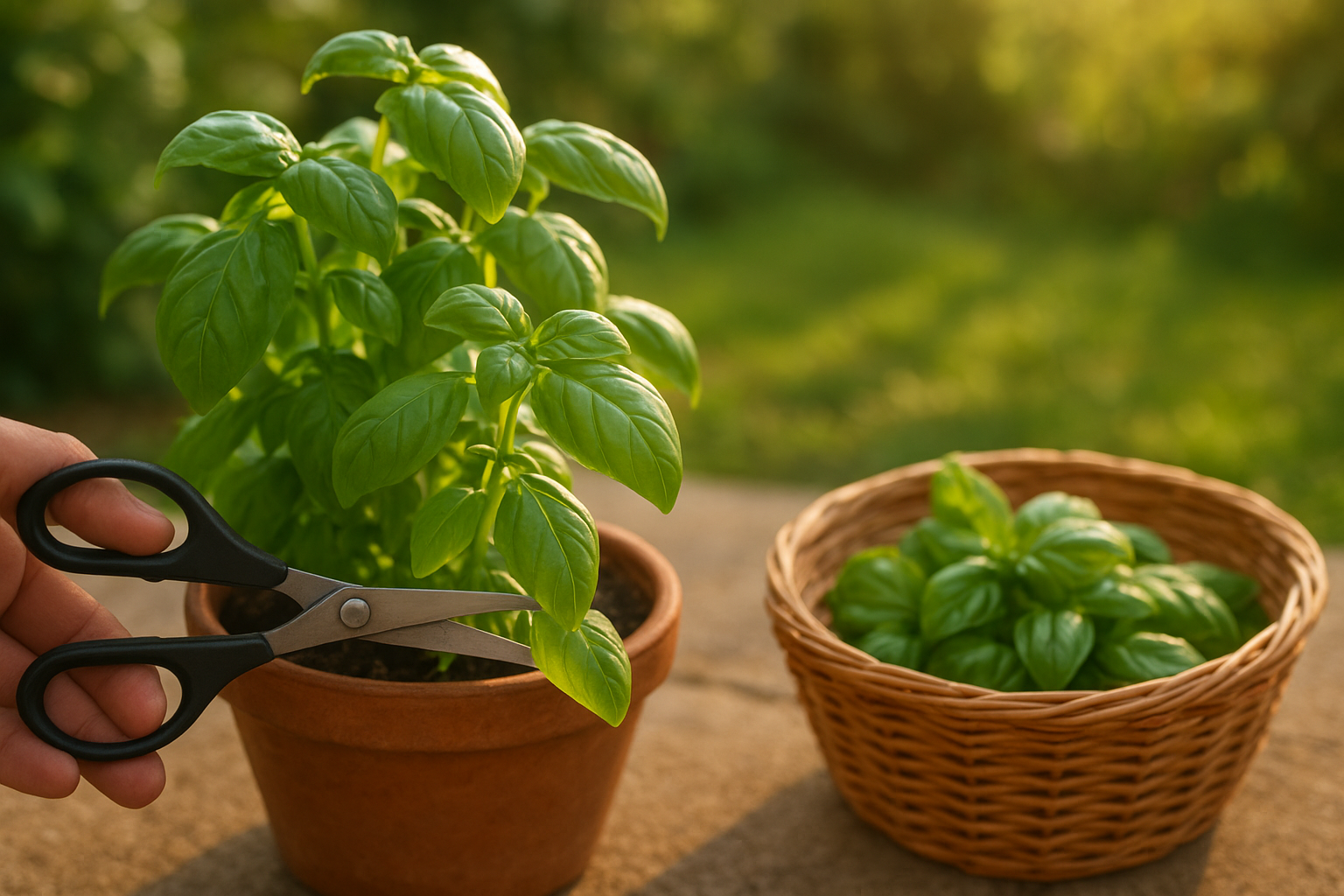
The most common mistake is plucking the biggest lower leaves one at a time. That gives you basil today, but it does not encourage the plant to branch. Instead, cut the stem just above a pair of leaves.
- Find a healthy stem. Look for a stem with at least two or three sets of leaves.
- Look for a leaf pair. This is where two leaves grow opposite each other on the stem.
- Cut just above that pair. Use clean scissors, herb snips, or your fingernails for tender stems.
- Leave leaves behind. Do not strip the whole plant bare. Leave enough green growth so the plant can keep feeding itself.
- Repeat on other stems. Take a little from several stems instead of chopping one side of the plant down to nothing.
Cutting above a leaf node matters because new side shoots can grow from that point. Over time, one cut stem becomes two new stems, which gives you a fuller plant and more leaves to harvest later. Utah State University Extension also recommends cutting stems just above a leaf node and leaving a few leaves behind to promote new growth and branching. ([extension.usu.edu](https://extension.usu.edu/yardandgarden/research/basil-in-the-garden?utm_source=openai))
How Much Basil Can You Harvest at Once?
For routine picking, take no more than about one-third of the plant at a time. That leaves enough foliage for recovery and helps prevent a stressed, woody plant.
If your basil is large and vigorous, you can be a little bolder, especially before making pesto or freezing a batch. Just make sure each remaining stem has leaves below the cut. A bare stem may not bounce back well, especially in hot, dry weather.
Pinch Off Flowers Early
Basil naturally wants to flower as summer heat builds. High temperatures and water stress can push basil toward flowering and seed production, according to Utah State University Extension. ([extension.usu.edu](https://extension.usu.edu/yardandgarden/research/basil-in-the-garden?utm_source=openai))
As soon as you see a tight cluster of buds at the top of a stem, pinch or cut it off. Penn State Extension notes that basil flower buds should be removed through summer to keep the plant bushy and producing a continual harvest. ([extension.psu.edu](https://extension.psu.edu/basil-a-summer-favorite?utm_source=openai))
If your basil has already bloomed, do not panic. Cut off the flower stems and trim the plant back to a healthy leaf pair. The leaves may taste a little stronger or less sweet, but the plant can often put out fresh growth if the weather is still warm.
How Often to Harvest Basil
In warm weather, check basil every few days. A small plant may only need light pinching once a week. A fast-growing container or garden plant may need trimming two or three times a week, especially once it starts sending up flower buds.
Regular harvesting is not just about using the herb. It is plant care. If basil is left alone too long, it often grows tall, flowers, and slows down leaf production.
How to Harvest Basil Without Hurting the Plant
- Use clean tools. Dirty scissors can spread disease from plant to plant.
- Avoid harvesting wet leaves for storage. Wet leaves spoil faster and can mold during drying.
- Water stressed plants first. If the plant is wilted from heat, water it and harvest later when it perks up.
- Do not cut into old woody stems unless needed. Tender green stems usually regrow more readily.
- Rotate your cuts. Harvest from the top and sides to keep the plant balanced.
What to Do With Freshly Cut Basil
Fresh basil bruises easily, so handle it gently. Do not crush the leaves unless you are using them right away. If the stems are long, you can treat them a bit like cut flowers: place them in a small jar with water and keep them on the counter for short-term use.
Avoid putting fresh basil in the coldest part of the refrigerator if you can help it. Purdue Extension FoodLink recommends storing basil at 50 to 65°F, wrapped in a damp paper towel inside a loosely closed plastic bag. ([extension.purdue.edu](https://extension.purdue.edu/foodlink/food.php?food=basil&utm_source=openai))
How to Store Extra Basil
For a few days
Trim the stem ends and place basil stems in a jar with a little water, like a bouquet. Keep it out of harsh sun and use the leaves while they are perky.
For freezing
Freezing is one of the best ways to preserve basil’s fresh flavor. Rinse the leaves, pat them very dry, then freeze them in a freezer bag, or chop them and freeze in an ice cube tray with water or olive oil. University of Maryland Extension recommends freezing herb sprigs or leaves in a single layer before packing them for storage. ([extension.umd.edu](https://extension.umd.edu/resource/harvesting-and-preserving-herbs?utm_source=openai))
For drying
Basil can be dried, but it has a high moisture content and can mold if it dries too slowly. Penn State Extension notes that tender-leaf herbs such as basil need faster drying methods than sturdier herbs. ([extension.psu.edu](https://extension.psu.edu/lets-preserve-drying-herbs?utm_source=openai)) Use a dehydrator, microwave method, or a warm, airy spot with good circulation. Store fully dried leaves in an airtight container in a cool, dark cabinet.
Common Basil Harvesting Mistakes
- Picking only the lower leaves: This leaves a tall, bare plant and does not encourage branching.
- Waiting too long: Once basil flowers, leaf production can slow.
- Cutting too low: Always leave healthy leaves below your cut.
- Harvesting a struggling plant hard: Heat-stressed, dry, or pest-damaged basil needs recovery time.
- Letting flower buds stay: Pinch them early and often for more leafy growth.
Quick Basil Harvesting Plan
If you want the simplest routine, do this: once your basil has several sets of leaves, cut the tallest stems just above a leaf pair. Check every few days for flower buds and pinch them off. Harvest lightly and often, and the plant will stay bushier, more productive, and easier to use in the kitchen.
By midsummer, a well-cut basil plant can provide steady handfuls without needing much fuss. Keep it watered, keep it trimmed, and keep a pair of scissors nearby—you will use them often.