How to Start a Compost Bin Without Smells or Pests
Learning how to start a compost bin is one of the easiest ways to turn kitchen scraps and yard waste into something useful for your garden. The trick is not buying a fancy bin—it is getting the balance right so the pile breaks down without turning smelly, slimy, or attractive to pests.
Use this beginner-friendly method for a backyard bin, whether you garden in raised beds, containers, or a small suburban yard. You will need a mix of “greens,” “browns,” air, and moisture—the same basics recommended by the EPA and university extension composting guides. ([epa.gov](https://www.epa.gov/recycle/composting-home?utm_source=openai))
What Compost Needs to Work
A compost pile is a living system. Microbes and small soil organisms break down organic materials when they have four things: carbon-rich browns, nitrogen-rich greens, water, and oxygen. The EPA describes browns as carbon sources, greens as nitrogen sources, and water as the moisture needed to help organic matter break down. ([www3.epa.gov](https://www3.epa.gov/recyclecity/compost.htm?utm_source=openai))
For beginners, the easiest rule is this: use more browns than greens. UConn Extension notes that most home compost piles should contain noticeably more brown materials than green materials. That extra dry material helps absorb moisture, reduce odors, and keep the pile airy instead of soggy. ([extension.uconn.edu](https://extension.uconn.edu/publication/composting-at-home-guide/?utm_source=openai))
Choose the Right Spot
Pick a spot that is convenient enough that you will actually use it. If the bin is hidden too far behind the garage, food scraps may never make it outside.
- Look for partial shade. A dry, shady spot near a water source is recommended by the EPA because it helps manage moisture and makes the bin easier to maintain. ([www3.epa.gov](https://www3.epa.gov/recyclecity/compost.htm?utm_source=openai))
- Keep it on soil if possible. Direct ground contact lets worms and soil organisms move in and helps drainage.
- Leave room to work. You need enough space to lift the lid, add materials, and turn or fluff the pile.
- Be neighbor-aware. A well-run compost bin should not smell, but it is still smart to avoid placing it directly under a neighbor’s window or beside an outdoor dining area.
Pick a Bin That Matches Your Yard
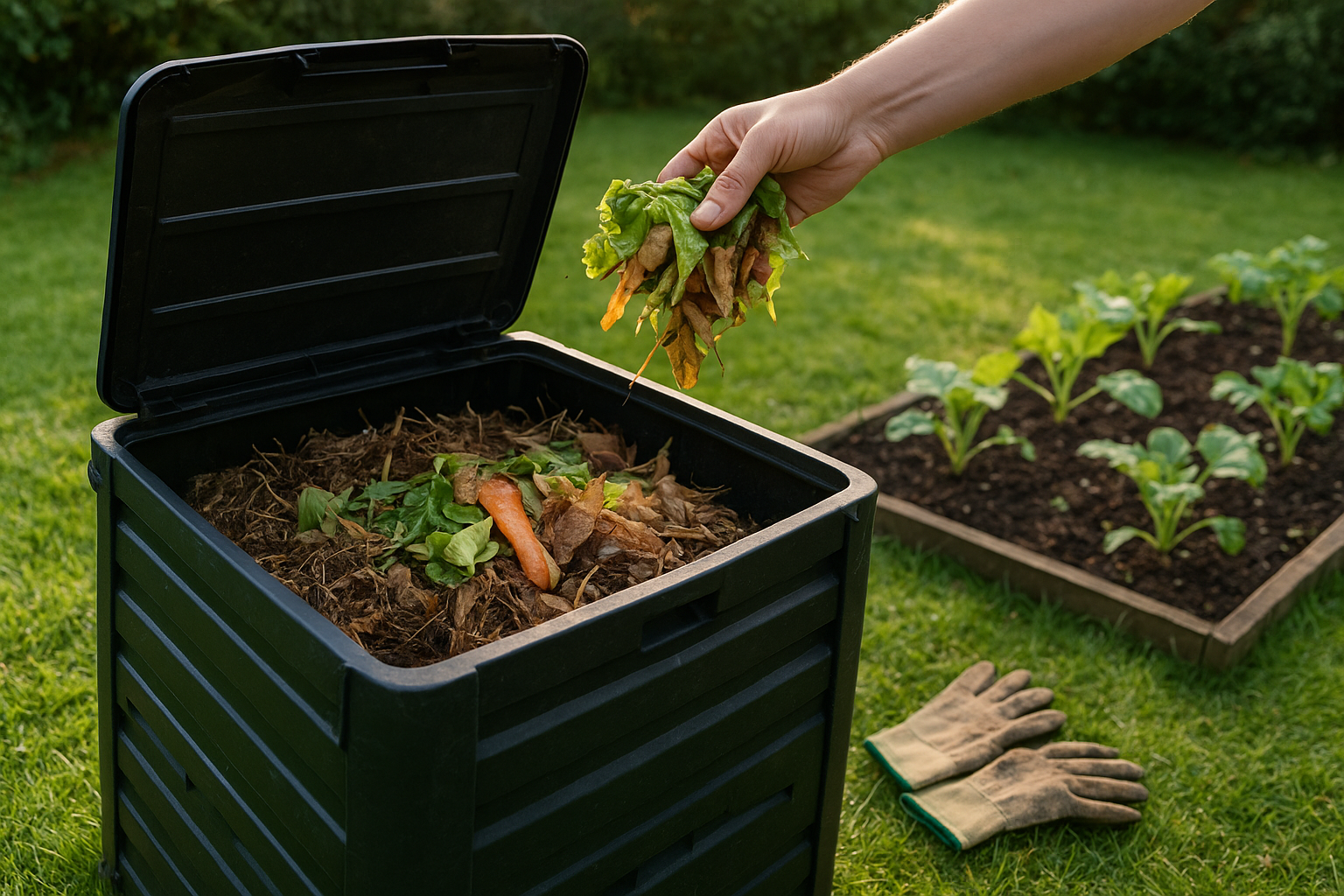
You can compost in a purchased plastic bin, a wire cylinder, a wooden three-bin system, or a simple open pile. For most beginners, an enclosed bin is the neatest choice. UConn Extension points out that enclosed bins can be useful for small suburban lots because they look tidier, save space, and help retain heat and moisture. ([extension.uconn.edu](https://extension.uconn.edu/publication/composting-at-home-guide/?utm_source=openai))
If pests are a concern, choose a bin with a locking lid and small ventilation holes. If you mainly compost leaves and garden debris, an open wire bin may be enough. If you want faster compost and have room, a three-bin setup lets you keep fresh scraps, active compost, and finished compost separate.
Know Your Greens and Browns
Think of greens as the wet, fresh materials and browns as the dry, absorbent materials. You do not need to measure every handful, but you do need both.
Good greens
- Fruit and vegetable scraps
- Coffee grounds and paper coffee filters
- Tea leaves and plain tea bags without plastic
- Fresh grass clippings in thin layers
- Spent annual plants that are not diseased
Good browns
- Dry leaves
- Shredded plain cardboard
- Torn paper egg cartons
- Small twigs and dry plant stems
- Straw
- Untreated wood chips or sawdust in small amounts
The most practical beginner mix is two to three handfuls of browns for every handful of greens. If the pile smells sour or looks wet, add more browns. If it sits unchanged for weeks and looks bone-dry, add greens and a little water.
What Not to Put in a Backyard Compost Bin
Most odor and pest problems come from adding the wrong foods. The EPA advises against adding meat, dairy, or greasy foods to a home compost pile. ([epa.gov](https://www.epa.gov/recycle/composting-home?utm_source=openai))
Avoid these in a regular backyard bin:
- Meat, bones, and fish scraps
- Milk, cheese, yogurt, and butter
- Cooking oil, grease, and oily leftovers
- Pet waste from cats or dogs
- Diseased plants
- Weeds that have gone to seed
- Glossy or heavily coated paper
- Large branches that will take years to break down
Also be cautious with “compostable” plates, cups, and bags. Many need commercial composting conditions and may not break down well in a backyard pile. When in doubt, leave them out.
How to Start the Bin Step by Step
- Start with coarse browns. Add a loose 4- to 6-inch layer of twigs, dry stems, or crunchy leaves at the bottom. UConn Extension recommends starting with coarse browns to improve airflow. ([extension.uconn.edu](https://extension.uconn.edu/publication/composting-at-home-guide/?utm_source=openai))
- Add greens. Put in fruit and vegetable scraps, coffee grounds, or fresh plant trimmings.
- Cover with browns. Every time you add food scraps, cover them completely with dry leaves, shredded cardboard, or straw. This is the simplest pest-prevention habit.
- Moisten if needed. The pile should feel like a wrung-out sponge: damp, not dripping.
- Mix lightly. Use a garden fork or compost aerator to fluff the pile every week or two. Aeration helps the pile break down faster and reduces anaerobic odors. ([19january2017snapshot.epa.gov](https://19january2017snapshot.epa.gov/sustainable-management-food/types-composting-and-understanding-process_.html?utm_source=openai))
- Keep feeding in layers. Add greens, then browns, then a little water only if the pile is dry.
How to Prevent Smells
A healthy compost bin should smell earthy, not rotten. If yours smells bad, it is usually too wet, too packed down, or too heavy on food scraps.
- Rotten or sour smell: Mix in dry leaves, shredded cardboard, or straw. Fluff the pile to add air.
- Ammonia smell: You have too many greens, especially grass clippings or food scraps. Add browns generously.
- Swampy texture: Leave the lid open on a dry day if pests are not an issue, or mix in bulky browns to create air pockets.
Do not keep dumping food scraps on top. Always bury them in the center of the pile or cover them well with browns.
How to Keep Pests Away
Pests are looking for easy food. Your job is to make the compost bin boring to them.
- Skip meat, dairy, fats, and greasy leftovers. These are the big pest magnets.
- Bury produce scraps. CalRecycle recommends burying produce scraps in the pile center or under 8 to 10 inches of material when pests or flies are a problem. ([calrecycle.ca.gov](https://calrecycle.ca.gov/organics/homecompost/?utm_source=openai))
- Use a secure lid. This matters most in raccoon, rat, or dog-prone areas.
- Chop large scraps. Smaller pieces disappear faster and are less tempting.
- Keep a brown-material stash nearby. A bag of dry leaves or shredded cardboard makes it easy to cover scraps every time.
How Wet Should Compost Be?
Moisture is one of the easiest things to get wrong. Too dry, and the pile stalls. Too wet, and it turns heavy and smelly. Grab a handful from the middle of the pile while wearing gloves. It should feel damp like a wrung-out sponge. If water streams out, it is too wet. If it feels dusty, sprinkle with water and mix.
During hot, dry weather, you may need to add water occasionally. During rainy stretches, a lid or cover can help keep the pile from getting soaked. University of Maryland Extension notes that covering a pile in dry weather can also help prevent excess moisture loss and aid decomposition. ([extension.umd.edu](https://extension.umd.edu/resource/how-make-compost-home?utm_source=openai))
When Is Compost Finished?
Finished compost is dark brown, crumbly, and earthy-smelling. You should not be able to recognize most of the original scraps. University of Maryland Extension describes finished compost as dark brown and no longer resembling the original materials. ([extension.umd.edu](https://extension.umd.edu/resource/how-make-compost-home?utm_source=openai))
How long it takes depends on the size of the pile, the mix of materials, moisture, temperature, and how often you turn it. A carefully managed hot pile can finish much faster, but a casual backyard bin often takes several months to a year. That is normal. Composting continues in cold weather, but it slows down when temperatures drop. ([extension.uconn.edu](https://extension.uconn.edu/publication/composting-at-home-guide/?utm_source=openai))
How to Use Finished Compost
Use finished compost as a soil helper, not a complete replacement for potting mix or garden soil. Spread 1 to 2 inches over garden beds and gently work it into the top few inches of soil, or add a handful to planting holes for vegetables and annual flowers. You can also use it as a light topdressing around perennials, shrubs, and container plants.
If you are not sure whether the compost is finished, let it cure longer. Unfinished compost can continue breaking down and may compete with plants for nitrogen if mixed heavily into the soil.
The Simple Routine That Works
Keep a small container for scraps in the kitchen. Empty it into the compost bin every few days, cover the scraps with browns, check moisture, and fluff the pile when you think of it. That is enough for most households.
The best compost bin is not perfect—it is steady. Keep meat, dairy, and grease out; keep food scraps covered; and keep the pile damp and airy. Do those few things, and your compost bin will quietly turn everyday waste into rich, useful material for the garden.