How to Store Cucumbers So They Stay Crisp Longer
Cucumbers seem simple until you bring home a few beautiful ones and find them soft, wet, or slimy a few days later. The good news is that learning how to store cucumbers is mostly about balancing moisture, airflow, and fridge placement.
Unlike hardier vegetables, cucumbers are sensitive to both drying out and getting too cold. With a few small habits, you can keep them crisp longer for salads, sandwiches, snacks, and quick pickles.
The Best Way to Store Whole Cucumbers
For most home kitchens, the best method is to store whole cucumbers in the refrigerator, loosely wrapped and protected from excess moisture.
- Keep cucumbers whole until you need them. A whole cucumber lasts longer than a cut one because the skin helps protect the watery flesh inside.
- Make sure they are dry. If the cucumbers are damp from the store, garden, or sink, pat them dry with a clean towel before storing.
- Wrap loosely in a paper towel. This helps catch condensation without sealing the cucumber in a wet environment.
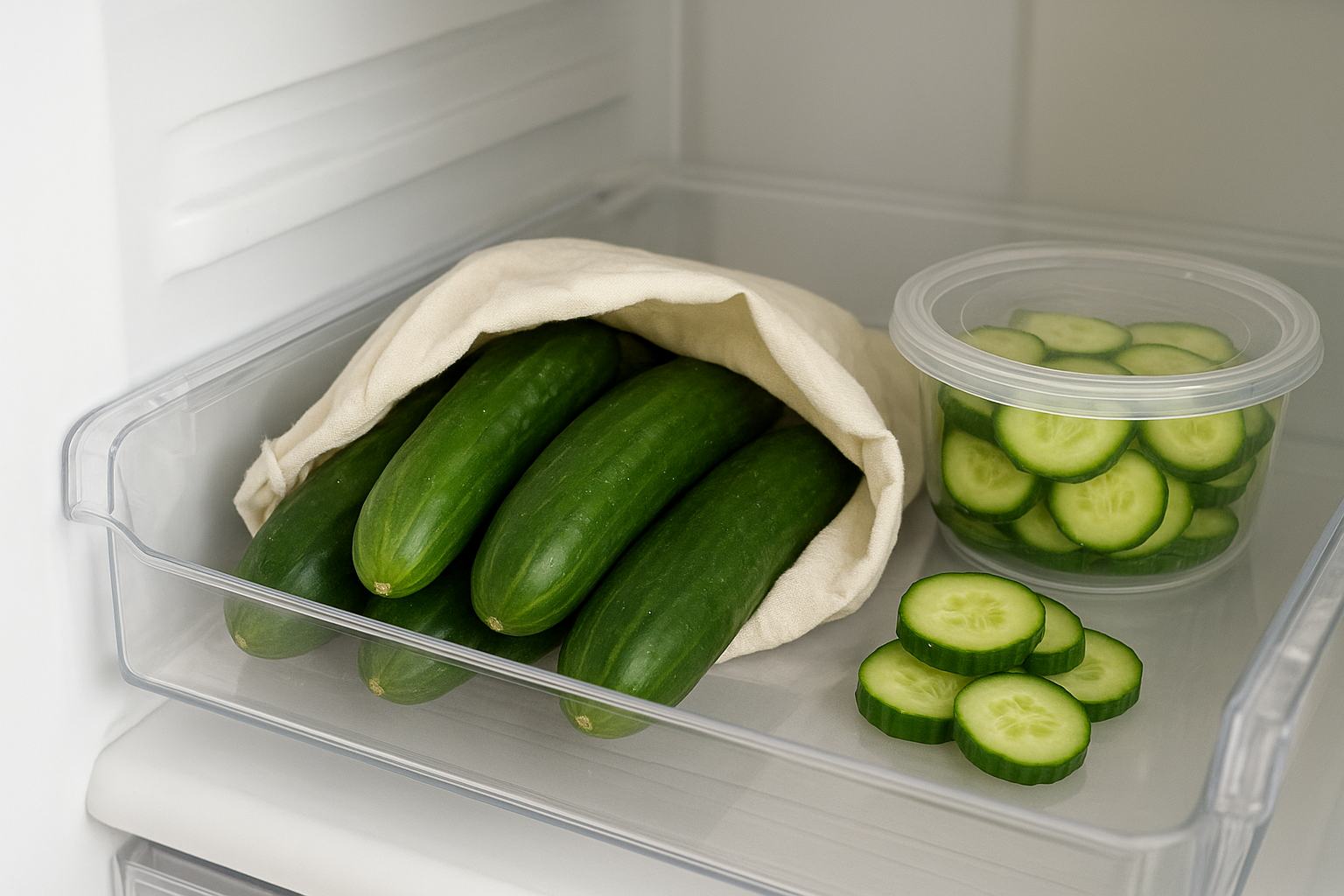
- Place in a loose bag or vented container. A plastic produce bag, reusable produce bag, or container with the lid slightly cracked works well. You want some airflow, not a tight, sweaty seal.
- Store in the warmer part of the fridge. A crisper drawer or the front area of the refrigerator is usually better than the cold back wall.
USDA produce storage guidance notes that refrigerator temperatures can vary by location, with colder spots often toward the back and warmer spots near the front. Cucumbers are also known to develop pitting and watery areas when chilled too cold, so avoid pressing them against the back wall of the fridge.
How Long Do Cucumbers Last in the Fridge?
Plan to use refrigerated cucumbers within about one week for the best texture. University extension guidance commonly gives cucumbers an expected shelf life of about a week, and USDA SNAP-Ed produce guidance also recommends storing cucumbers in the refrigerator in a plastic bag for up to one week.
That does not mean every cucumber will be perfect for seven days. Thin-skinned cucumbers, very ripe cucumbers, or cucumbers that were warm or bruised before you bought them may soften sooner. Firm, fresh cucumbers stored well often hold up nicely through the week.
Where to Put Cucumbers in the Refrigerator
The crisper drawer is usually the right place, but not all fridge drawers behave the same way. Cucumbers like moisture, but they do not like sitting in trapped condensation.
If your crisper has a humidity slider, use the higher-humidity setting, especially if your fridge tends to dry out leafy greens and vegetables. If you see water droplets collecting inside the bag or container, open it slightly or add a fresh dry paper towel.
Try not to store cucumbers directly under a cold air vent or at the very back of the fridge. Cucumbers can develop chill injury, which may look like sunken pits, watery patches, or faster decay after they come back to room temperature. Commercial produce guidance often lists ideal cucumber storage around 50 to 55 degrees F, but home refrigerators are colder for food safety, so the practical compromise is to use the warmer refrigerator zones and eat cucumbers within a week.
Keep Cucumbers Away from Apples and Tomatoes
Cucumbers are sensitive to ethylene, a natural gas released by some fruits and vegetables as they ripen. Ethylene can encourage yellowing and shorten storage life.
For better results, do not store cucumbers right beside:
- Apples
- Bananas
- Tomatoes
- Melons
- Avocados
- Pears
This matters most if your produce drawer is crowded. If possible, keep cucumbers in a separate drawer or on the opposite side of the fridge from strong ethylene producers.
How to Store Cut Cucumbers
Cut cucumbers do not keep as long as whole cucumbers, so slice only what you need when you can. Once cut, cucumbers start losing moisture and can turn limp or watery quickly.
To store leftover cut cucumber:
- Pat the cut surfaces dry. This reduces extra moisture in the container.
- Cover the exposed end tightly. For half a cucumber, press wrap or a reusable cover directly against the cut side.
- Use an airtight container for slices. Line the bottom with a paper towel if the slices are very juicy.
- Refrigerate promptly. Keep cut cucumbers cold and covered.
- Use within 1 to 2 days for best crunch.
If the cucumber slices release water, drain it off before serving. A quick sprinkle of salt can make slices taste fresher, but salt will also pull out more liquid, so it is best added right before eating unless you are intentionally making a cucumber salad.
Should You Wash Cucumbers Before Storing?
It is usually better to wash cucumbers right before using them, not before storing them. Extra surface moisture can encourage soft spots and spoilage, especially if the cucumbers are sealed in a bag.
If your cucumbers are muddy from the garden, you can rinse them, but dry them very well before they go into the refrigerator. Use a clean towel and let them sit on the counter for a few minutes until the skin feels dry.
How to Store Garden Cucumbers
Fresh-picked garden cucumbers are often warmer than store cucumbers, especially if you harvest in the afternoon. Bring them inside quickly, brush off dirt, and let them cool before packing them into the fridge.
For best quality, harvest cucumbers while they are still firm and before they get overgrown. Oversized cucumbers often have tougher skins, larger seeds, and a shorter useful storage life. Store them the same way as store-bought cucumbers: dry, loosely wrapped, and refrigerated away from ethylene-producing fruit.
How to Store English, Persian, and Pickling Cucumbers
English cucumbers
English cucumbers are often sold wrapped in plastic. Leave that wrap on until you are ready to use the cucumber. It helps protect the thin skin from drying out. Once opened, cover the cut end and use the rest within a couple of days.
Persian or mini cucumbers
Mini cucumbers are convenient but can soften fast if they are packed tightly with moisture. Sort through the bag when you get home, remove any soft ones, and store the rest with a paper towel in a loose bag or vented container.
Pickling cucumbers
Pickling cucumbers are best used soon after harvest or purchase, especially if you want crisp pickles. Store them cold, dry, and loosely covered, then pickle them within a few days for the best snap.
Signs a Cucumber Has Gone Bad
Do not try to rescue a cucumber that is clearly spoiled. Compost or discard it if you notice:
- Slime on the skin
- Soft, collapsed, or mushy spots
- A sour or unpleasant smell
- Visible mold
- Deep watery patches or sunken pitting
A slightly wrinkled cucumber may still be safe if it smells fresh and has no slime or mold, but the texture will not be as crisp. Use it in a blended sauce, smoothie, chilled soup, or quick cucumber salad rather than as a crunchy snack.
Quick Fixes for Cucumbers That Are Losing Crunch
If a cucumber is a little limp but not spoiled, you may be able to perk it up. Slice it and soak the pieces in a bowl of ice water for 15 to 30 minutes, then drain and dry well. This will not reverse spoilage, but it can improve texture for a salad or snack plate.
You can also turn less-crisp cucumbers into something useful. Try adding them to tzatziki, blending them into gazpacho, tossing them with vinegar and dill, or making quick refrigerator pickles.
Common Cucumber Storage Mistakes
- Sealing wet cucumbers in a tight bag: This traps moisture and encourages slimy spots.
- Storing them against the back wall of the fridge: That area can be too cold and may cause pitting or watery patches.
- Keeping them next to apples or tomatoes: Ethylene exposure can shorten freshness.
- Pre-slicing too many at once: Cut cucumbers lose quality much faster than whole ones.
- Washing before storage and not drying well: Surface moisture is one of the quickest paths to spoilage.
The Simple Method to Remember
For crisp cucumbers, remember this: dry, loosely wrapped, lightly vented, and kept in the warmer part of the refrigerator. Use whole cucumbers within about a week and cut cucumbers within a day or two.
It is a small storage routine, but it makes a noticeable difference. Instead of finding a limp cucumber in the drawer, you will have one ready for cold salads, lunch plates, sandwiches, and easy summer sides.