How to Propagate Basil from Cuttings in Water
If you have one healthy basil plant—or even a fresh bunch from the grocery store—you can often turn it into several new plants. The easiest beginner method is to propagate basil from cuttings in water, then move the rooted stems into potting mix once they have a small root system.
This is a handy kitchen-garden trick for summer, but it also works indoors if you can give basil warmth and bright light. Here is the simple, low-mess way to do it, plus the little mistakes that make cuttings rot before they root.
Why Basil Is Worth Propagating
Basil is an annual herb, which means it is generally grown for one season rather than kept as a long-lived perennial. It grows quickly in warm weather, handles regular harvesting well, and is easy to keep in a pot near the kitchen. University extension growing guides note that basil can be grown outdoors after frost danger has passed and soil has warmed, and it can also be grown as a windowsill herb for indoor harvests. ([extension.illinois.edu](https://extension.illinois.edu/herbs/basil?utm_source=openai))
Propagating cuttings is useful when you want more plants without starting seeds. It also lets you rescue long stems from a leggy plant, make backup plants before cold weather, or get one more use from a store-bought basil bunch before it wilts.
What You’ll Need
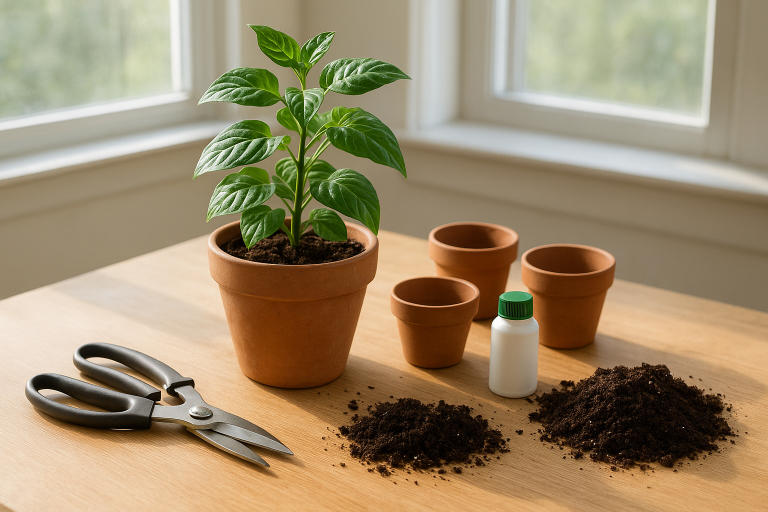
- A healthy basil stem, ideally 4 to 6 inches long
- Clean scissors, snips, or a sharp knife
- A small clear jar or drinking glass
- Room-temperature water
- A small pot with drainage holes
- Fresh potting mix
- A bright windowsill or grow light
Choose stems that are green, perky, and not woody. Avoid stems with blackened ends, mushy spots, sour smells, or badly wilted leaves. Purdue Extension recommends choosing basil leaves that are bright in color, smooth, whole, and strongly aromatic; those same freshness clues are helpful when choosing cuttings. ([extension.purdue.edu](https://extension.purdue.edu/foodlink/food.php?food=basil&utm_source=openai))
Step-by-Step: How to Propagate Basil from Cuttings
1. Pick the right stem
Look for a healthy non-flowering stem with several sets of leaves. If the plant is already flowering, you can still try, but a tender leafy stem usually roots more reliably. A good cutting should include at least one node, which is the small joint where leaves meet the stem. Nodes matter because vegetative propagation uses plant parts such as stems and nodes to produce a new plant. ([extension.psu.edu](https://extension.psu.edu/propagating-houseplants?utm_source=openai))
2. Cut just below a node
Use clean scissors to cut the stem just below a leaf node. A cutting around 4 to 6 inches is easy to handle: long enough to sit in water, but not so leafy that it wilts immediately. If your stem is longer, trim it down rather than trying to root a floppy branch.
3. Remove the lower leaves
Strip off the leaves from the bottom half of the cutting. Any leaves sitting underwater will break down and cloud the jar, which raises the chance of rot. Keep two to four healthy leaves at the top so the cutting can keep growing while it makes roots.
4. Place the cutting in water
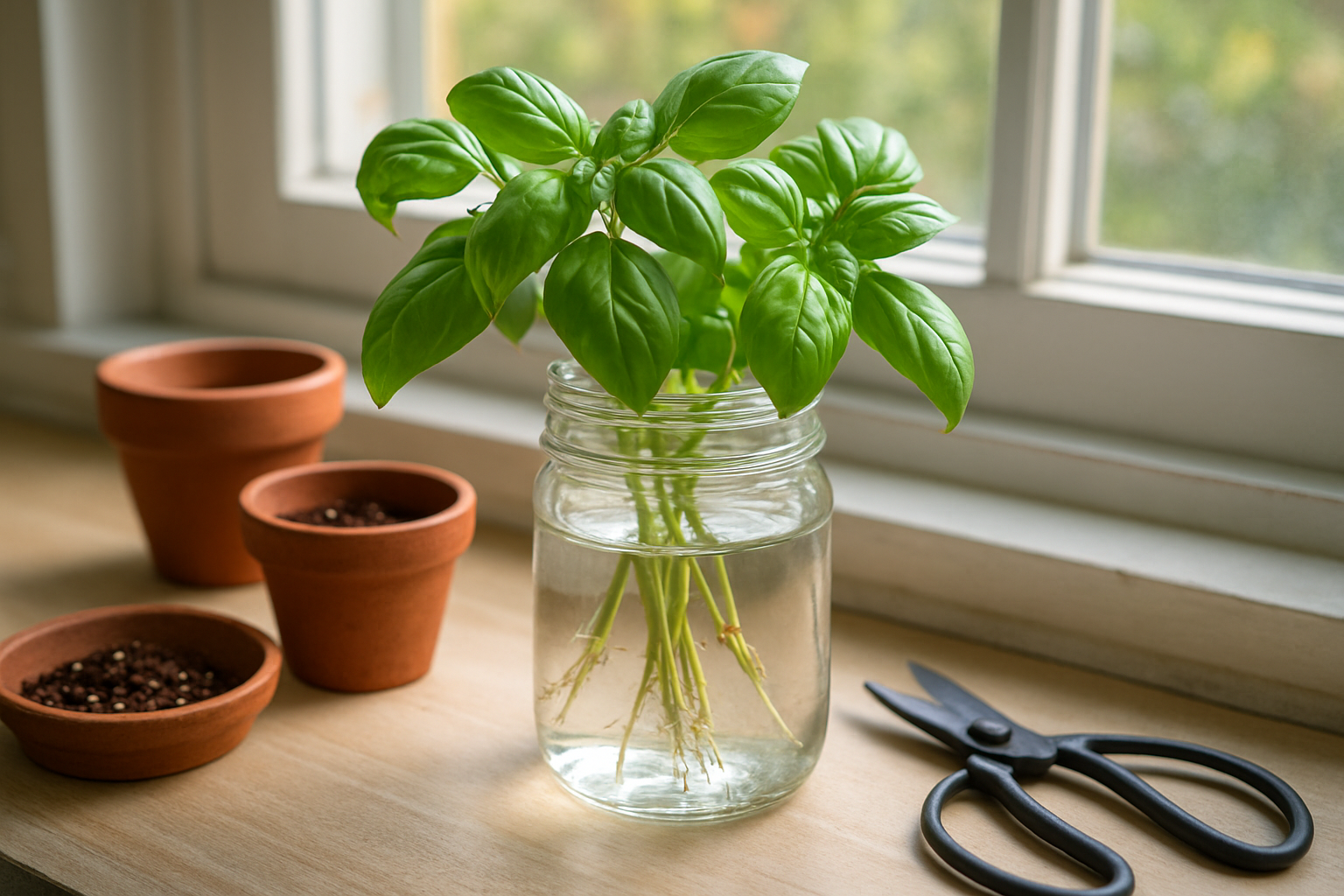
Set the stem in a small jar with enough water to cover the lower nodes, but not the upper leaves. A clear jar is nice because you can see roots forming, though any clean container will work. Keep the jar in bright, indirect light rather than harsh afternoon sun, which can overheat the water and stress the cutting.
5. Change the water regularly
Refresh the water every couple of days, or sooner if it looks cloudy. Room-temperature water is best. The goal is to keep the submerged stem clean and oxygenated while roots form. General extension guidance for rooting cuttings supports using water for stem cuttings and moving the new plant to soil once roots have formed. ([uvm.edu](https://www.uvm.edu/extension/news/propagating-perennials?utm_source=openai))
6. Wait for roots
Basil often roots quickly in warm, bright conditions, but do not panic if it takes longer than expected. Start checking after a week. You are looking for several white roots, ideally at least 1 to 2 inches long, before potting. If the stem turns black, collapses, or smells rotten, compost it and start again with a fresher cutting.
How to Pot Up Rooted Basil Cuttings
Once the roots are a couple inches long, move the cutting into a small pot with drainage holes. Fill the pot with moist potting mix, make a hole with your finger, and gently lower the roots into place. Firm the mix around the stem without crushing it.
Water well after planting, then set the pot in bright light. For the first few days, keep the soil evenly moist but not soggy. Water roots are tender, and the cutting may droop a little while it adjusts to soil. If it wilts badly, move it out of direct sun for a day or two and check that the potting mix has not dried out.
After the plant perks up and begins making new growth, treat it like a regular basil plant: give it warmth, bright light, and consistent moisture. Basil prefers warm conditions and should not be planted outdoors until after frost risk has passed and soil temperatures are warm enough for growth. ([extension.illinois.edu](https://extension.illinois.edu/herbs/basil?utm_source=openai))
How to Keep the New Plant Bushy
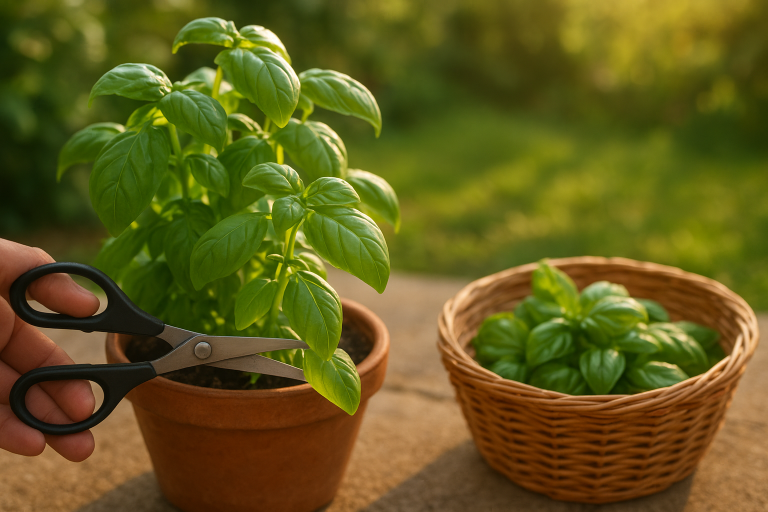
The secret to a full basil plant is regular pinching. Once your propagated cutting has settled in and is making new leaves, pinch or snip above a pair of leaves. This encourages side shoots instead of one tall, skinny stem.
West Virginia University Extension recommends harvesting basil by clipping or pinching the upper 2 to 3 inches of stem tips. That habit gives you usable basil for cooking while helping the plant stay productive. ([extension.wvu.edu](https://extension.wvu.edu/lawn-gardening-pests/gardening/wv-garden-guide/growing-basil-in-west-virginia?utm_source=openai))
If flower buds appear, pinch them off unless you are intentionally letting the plant bloom for pollinators. Flowering can slow leaf production and may change the flavor of the leaves, so regular harvesting is the better plan for kitchen basil.
Common Problems and Easy Fixes
The cutting wilts right away
A little droop is normal, but severe wilting usually means the cutting has too many leaves or is sitting in too much sun. Remove a few larger leaves, keep only the top cluster, and move the jar to bright indirect light.
The stem turns mushy
Mushy stems usually come from old cuttings, leaves rotting underwater, dirty jars, or stale water. Start with fresher stems, remove all lower leaves, wash the jar, and change the water more often.
Roots form, but the plant struggles after potting
Water-grown roots need time to adapt to potting mix. Use a small pot, keep the mix lightly moist, and avoid a hot windowsill for the first few days. Do not bury the stem too deeply; cover the roots, then firm the mix just enough to hold the cutting upright.
The plant gets tall and thin
Leggy basil usually needs more light or more frequent pinching. Move it to a brighter spot or use a grow light, then harvest the top growth regularly to encourage branching.
Can You Propagate Grocery Store Basil?
Yes, if the basil is fresh enough. Potted grocery store basil is often crowded, so taking a few cuttings can be easier than trying to keep the whole pot alive. Packaged basil stems may also root if they still look fresh, green, and firm.
If you buy cut basil for cooking, trim the stem ends and place the unused sprigs upright in water while you decide which ones to root. Purdue Extension notes that basil stems can be kept upright in a glass of water in a cool location, with the water changed daily, to maintain freshness for short-term storage. ([extension.purdue.edu](https://extension.purdue.edu/foodlink/food.php?food=basil&utm_source=openai))
Final Tips for Steady Fresh Basil
- Start more than one cutting. Not every stem roots, so make three or four at a time.
- Use small pots first. A tiny rooted cutting can struggle in a large wet pot.
- Keep it warm. Basil grows best when it is not chilled by cold windows, cold soil, or late spring nights.
- Harvest often. Small, regular harvests make a better plant than waiting until it is overgrown.
Once you learn how to propagate basil from cuttings, it becomes a simple kitchen habit. Snip a healthy stem, root it in water, pot it up gently, and you can keep fresh basil going for sauces, salads, sandwiches, and weeknight dinners with very little cost.