How to Clean a Smelly Garbage Disposal Safely
If your kitchen sink smells sour even after the dishes are done, the garbage disposal is a likely culprit. The good news: most disposal odors come from trapped food on the rubber splash guard and inside the upper grind chamber, and you can usually fix it in 10 to 15 minutes without harsh drain cleaners.
This guide walks you through how to clean a smelly garbage disposal safely, what not to put down it, and the small habits that keep odors from coming back.
Before You Start: Safety First
A garbage disposal is a powered appliance, so treat it with care. Never put your hand inside the disposal. Even when it is off, the chamber can have sharp or rough metal parts, and a stuck object can shift unexpectedly.
Before cleaning the splash guard or reaching near the drain opening, turn the disposal off. For the safest deep clean, unplug the unit under the sink or switch off the breaker that powers it. If your disposal is hardwired and you are not sure which breaker controls it, skip any deep reaching and stick to cleaning from above with a brush or sponge handle.
What You Need
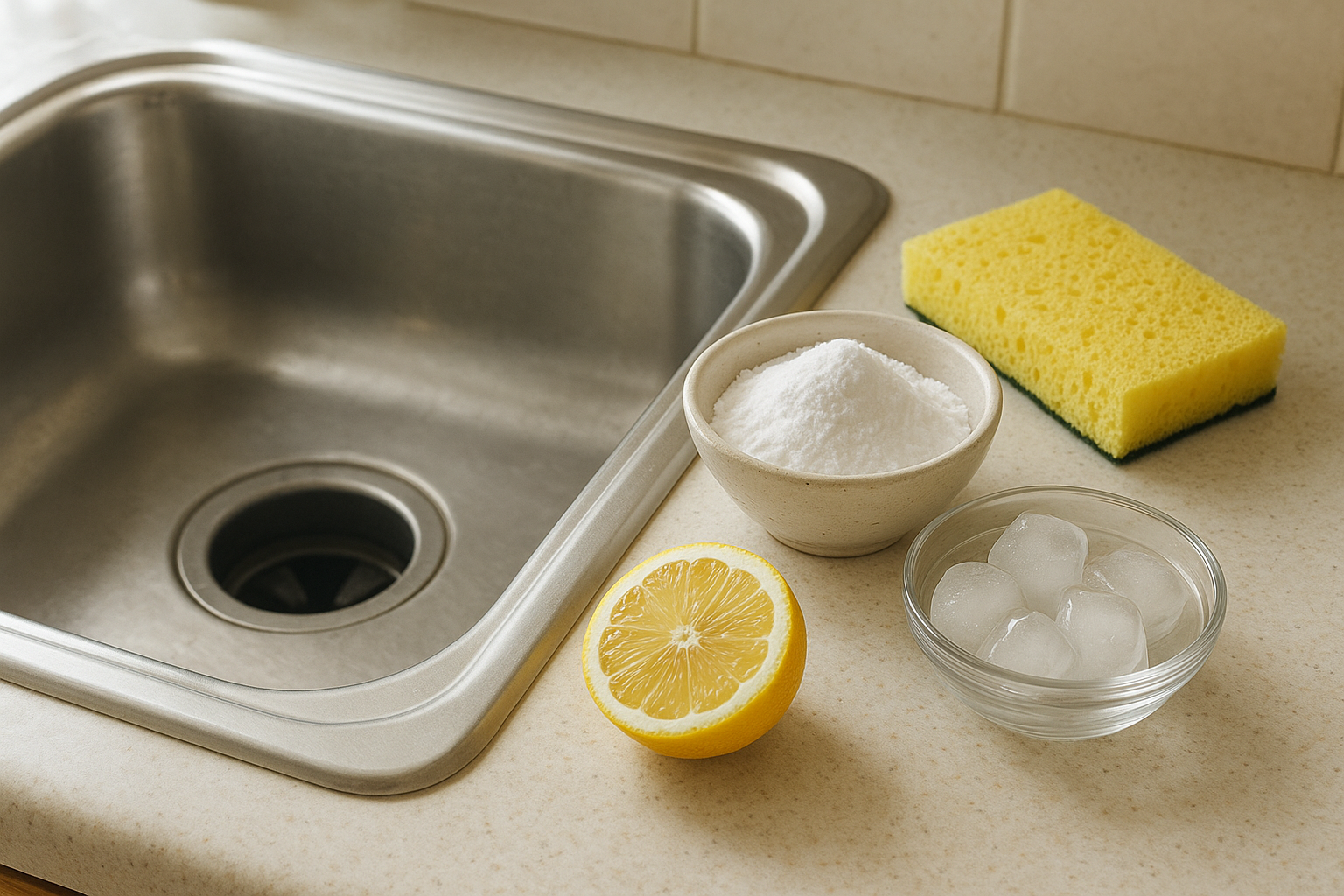
- Dish soap
- Baking soda
- Old toothbrush, bottle brush, or non-scratch scrub sponge
- Ice cubes
- Cold water
- Sink stopper
- Optional: a few small citrus peels for scent
- Optional: rubber gloves
You do not need bleach, drain opener, or a complicated fizzy mixture. Baking soda helps deodorize and lightly scrub, while ice helps knock loose bits of food from the grind chamber. The most important step is often the least glamorous one: cleaning the underside of the rubber splash guard.
Step 1: Clean the Splash Guard
The black rubber flaps at the drain opening catch splatters, but they also trap grease, sauce, coffee residue, and tiny food scraps. If your disposal smells every time water hits it, this is the first place to clean.
- Turn off power to the disposal if possible.
- Lift one flap of the splash guard with a gloved finger, spoon handle, or brush handle.
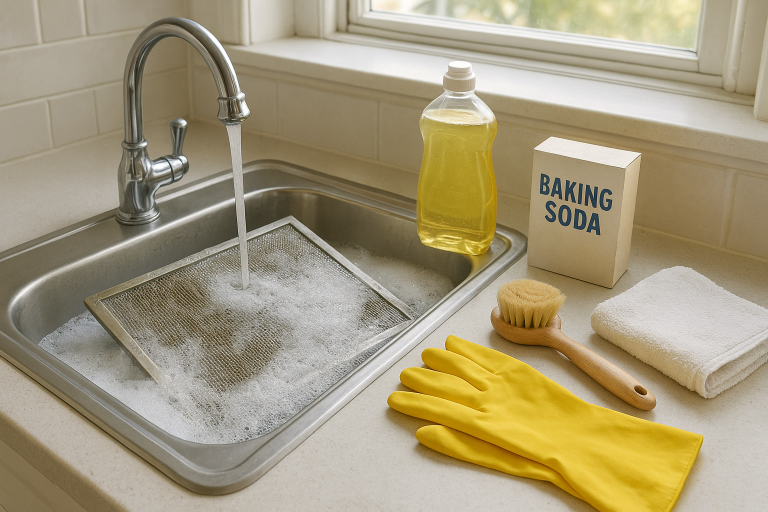
- Scrub the underside of each rubber flap with hot, soapy water.
- Wipe around the upper lip of the drain opening where gunk collects.
- Rinse well with warm water.
If your splash guard is removable, take it out and wash it in the sink with dish soap. Some removable guards can go on the top rack of the dishwasher, but check your model first. If it is cracked, stiff, or permanently foul-smelling, replacing the splash guard may solve the problem better than another round of scrubbing.
Step 2: Flush the Disposal with Baking Soda and Water
This is a gentle way to rinse loose grime from the chamber.
- Place the stopper in the sink.
- Fill the sink about halfway with warm water.
- Stir in 1/4 cup baking soda.
- Turn on the cold water slightly.
- Turn on the disposal and pull the stopper at the same time.
The sudden rush of water helps carry loosened debris through the disposal and drain line. Let the disposal run only until the water clears, then turn it off and keep the water running for several more seconds.
Step 3: Use Ice for a Quick Scour
Ice is useful because it breaks up as it moves around the grind chamber, helping knock away light buildup. It will sound loud and rough for a few seconds; that is normal.
- Put 1 to 2 cups of ice cubes into the disposal opening.
- Turn on a steady stream of cold water.
- Run the disposal until the grinding sound settles down.
- Let cold water run for another 15 to 30 seconds.
For a fresh scent, you can add a few small citrus peels after the ice. Use just a little, and avoid stuffing in large chunks of peel. Citrus can help with odor, but it is not a substitute for scrubbing the splash guard.
Step 4: Check for Lingering Odor
After cleaning, wait a few minutes and run water again. If the smell is gone, you are done. If it still smells bad, the issue may not be the disposal chamber itself.
A persistent odor can come from the sink overflow, the drain pipe, a dirty dishwasher hose, or food stuck in the trap. If the sink drains slowly, gurgles, or backs up, stop using the disposal and address the clog. Repeatedly grinding ice or adding more cleaner will not fix a blocked drain line.
What Not to Put Down a Garbage Disposal
A disposal can handle small bits of food, but it is not a trash can. To prevent odors, clogs, and septic problems, avoid grinding these items:
- Grease, fat, and oil: They can coat pipes and trap food particles.
- Coffee grounds: They may clump in the drain line.
- Eggshells in large amounts: Tiny pieces can combine with other debris.
- Pasta, rice, and bread: These swell with water and can create gummy buildup.
- Fibrous scraps: Celery, corn husks, onion skins, and artichoke leaves can tangle or jam.
- Bones, pits, and shells: Some manuals allow very small hard scraps for scouring, but they are hard on many household units. When in doubt, trash or compost them instead.
If your home has a septic system, be even more conservative. Food waste adds solids to the septic tank, so limit disposal use and put most scraps in the trash or compost bin instead.
Best Daily Habits to Prevent Disposal Smells
A few simple habits do more than any once-a-month deep clean:
- Use cold water while grinding. Cold water helps keep fats more solid so they move through instead of coating the chamber.
- Keep water running after the food is gone. Let it run for 15 to 30 seconds to flush the drain line.
- Feed scraps slowly. Do not pack the disposal full before turning it on.
- Clean the splash guard weekly. A quick soapy scrub prevents the worst smells.
- Run the disposal regularly. Letting scraps sit in a damp chamber is what creates odor.
Can You Use Vinegar and Baking Soda?
You can, but it is not magic. Baking soda and vinegar fizz when combined, which can help loosen light residue near the drain opening. However, the fizzing reaction is brief, and it does not replace scrubbing or flushing with plenty of water.
If you like using vinegar, pour in 1/2 cup baking soda, follow with 1/2 cup white vinegar, let it fizz for a few minutes, then flush thoroughly with water. Do not mix vinegar with bleach or any commercial drain cleaner.
How Often Should You Clean It?
For a busy kitchen, give the splash guard a quick scrub once a week and do the baking soda flush every few weeks. If you rarely use the disposal, clean it whenever you notice odor or after grinding strong-smelling foods like onion, fish scraps, or garlic peels.
A clean garbage disposal should not smell perfumed; it should smell like nothing. Once the rubber guard is clean, the chamber is flushed, and you are running enough cold water, most kitchen sink odors disappear and stay away.