How to Save Cucumber Seeds for Next Year
If you have one cucumber plant that outperformed the rest this summer, saving seed from it is a satisfying little garden project. The trick is knowing that cucumbers for seed are harvested much later than cucumbers for eating, then cleaned with a simple wet-seed method.
This guide walks you through how to save cucumber seeds at home, including which cucumbers are worth saving, when to pick them, how to ferment the seeds, and how to store them so they are ready for next year.
Start With the Right Cucumber
Before you save anything, check what kind of cucumber you grew. Seeds from open-pollinated or heirloom cucumbers are the best choice because they are more likely to grow into plants like the parent plant. Seeds saved from hybrid varieties may sprout, but the next generation often will not match the cucumber you liked.
Also remember that cucumbers are insect-pollinated and can cross with other cucumber varieties growing nearby. Seed Savers Exchange recommends a large isolation distance for maintaining pure cucumber seed, and UGA Extension gives an example of keeping different cucumber varieties about 1,600 feet apart for true-to-type seed. In a regular backyard, that is not always realistic. If you grew only one cucumber variety, your odds are better. If you grew several side by side, the seeds may still grow, but the results could be a surprise. ([seedsavers.org](https://seedsavers.org/grow-cucumber/?utm_source=openai))
Choose the Best Plant, Not the Saddest Fruit
It is tempting to save seed from a cucumber that got too big by accident, but choose more carefully if you can. Pick seed fruit from a healthy, productive plant with traits you actually want again: good flavor, steady production, disease resistance, nice shape, or reliable performance in your garden.
Avoid saving seed from badly diseased plants, weak vines, or oddball fruit unless that odd trait is something you specifically want to keep. Seed saving is a simple form of selection: what you save is what you encourage in next year’s garden.
Let the Cucumber Get Fully Mature
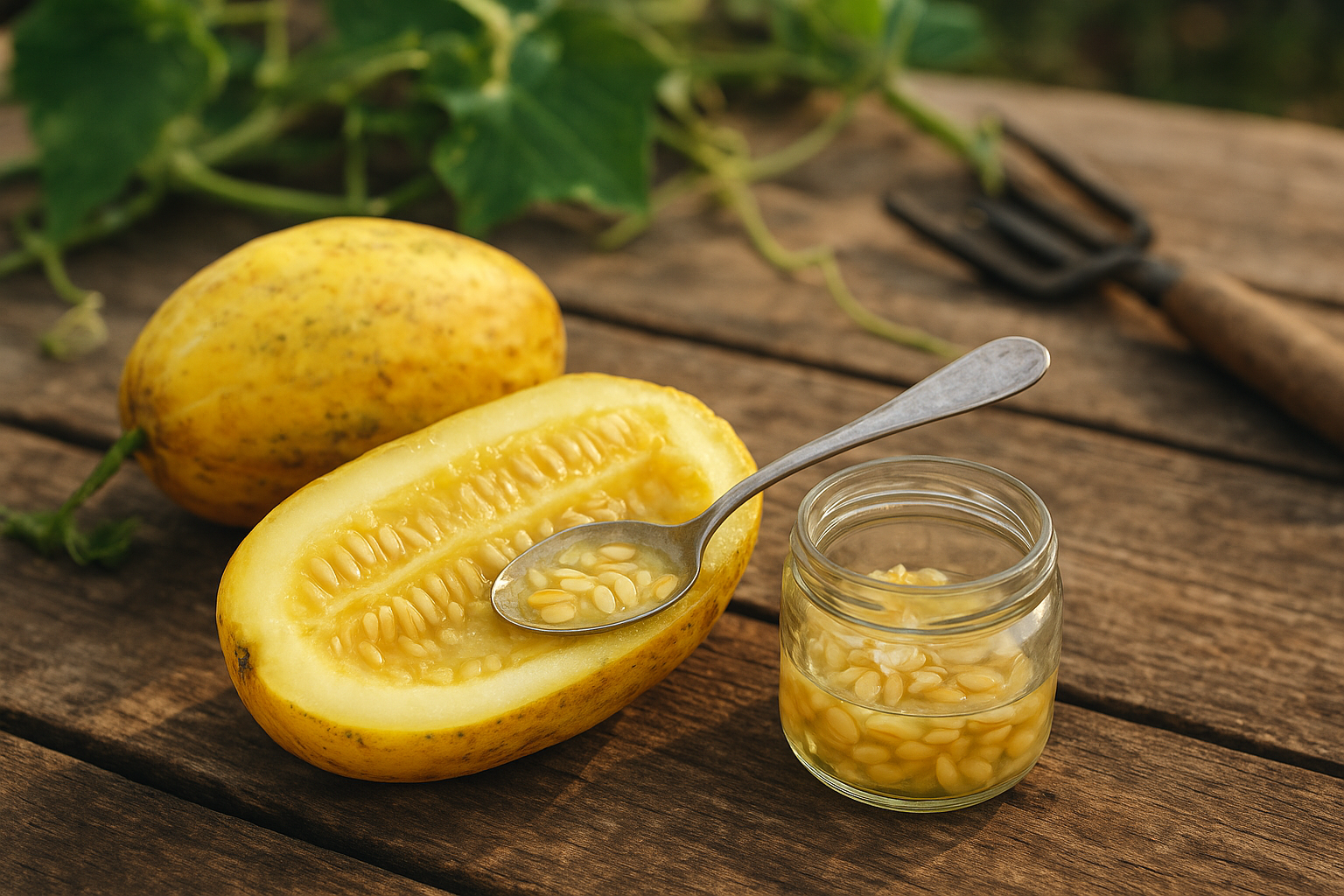
A cucumber that is perfect for slicing is not mature enough for seed saving. For viable seed, leave the chosen cucumber on the vine well past the eating stage. It should become large, firm, and yellow to orange or brownish, depending on the variety. University of California guidance notes that cucumbers for seed are picked when they are fat and yellow, far beyond the edible stage. ([ucanr.edu](https://ucanr.edu/node/137178/printable/print?utm_source=openai))
If frost, animals, or rot are a concern, harvest once the cucumber has clearly changed color and the skin has toughened. If the fruit is still green and tender, give it more time. The seeds inside need that extra maturity.
What You’ll Need
- One fully mature cucumber from a healthy plant
- Knife and spoon
- Small glass jar or bowl
- Water
- Fine mesh strainer
- Paper towel, coffee filter, screen, or paper plate for drying
- Envelope or small jar for storage
- Label and pen
Step-by-Step: How to Save Cucumber Seeds
1. Cut and scoop
Cut the mature cucumber lengthwise. Scoop the seeds and the surrounding gel into a clean jar or bowl. You do not need the firm flesh, just the seed cavity and pulp.
2. Add a little water
Add just enough water to loosen the pulp and help the mixture stir easily. Do not fill a huge container; a small jar is plenty for one cucumber.
3. Ferment for 1 to 3 days
Let the seed mixture sit at room temperature for about one to three days. Seed Savers Exchange recommends fermenting cucumber seed during this short window to remove the pulp around the seed. You may see a film or bubbles on the surface, which is normal. Stir once a day. ([shop.seedsavers.org](https://shop.seedsavers.org/site/pdf/grow-save-cucumbers.pdf?utm_source=openai))
Do not let the seeds ferment for a week and then hope for the best. Too much time in a wet jar can reduce seed quality or encourage sprouting, especially in a warm kitchen.
4. Separate good seed from pulp
After fermentation, add more water, stir well, and let the contents settle. Good, full seeds usually sink to the bottom. Pulp, scum, and many empty seeds float. Carefully pour off the floating material, then add fresh water and repeat until the water is mostly clear.
5. Strain and rinse
Pour the clean seeds through a fine mesh strainer. Rinse them well under cool water, rubbing gently with your fingers to remove any remaining slippery coating.
6. Dry completely
Spread the seeds in a single layer on a coffee filter, paper towel, screen, or paper plate. Keep them in a warm, airy spot out of direct sun. Stir or break them apart once or twice a day so they do not dry in clumps.
Drying can take several days to more than a week, depending on humidity. Seeds are ready to store when they feel hard and dry, not bendy or damp. If you seal seeds while they still hold moisture, they can mold in storage.
How to Store Cucumber Seeds
Once dry, place the seeds in a labeled paper envelope or small airtight jar. Write the variety name, the year, and any helpful notes, such as “best producer,” “from front trellis,” or “possibly crossed.” Store seeds somewhere cool, dark, and dry.
Cucumber seed can remain useful for several years when stored well. The University of Saskatchewan notes that cucumber seed stored under favorable conditions has a life expectancy of about five years. For the best home-garden results, try to use your saved seed within a few seasons and do a quick germination test if it is older. ([gardening.usask.ca](https://gardening.usask.ca/gardening-advice/gardenline-nested-pages/food-plant-pages/vegetables/cucumber.php?utm_source=openai))
Can You Save Seeds From Store-Bought Cucumbers?
Usually, no. Grocery store cucumbers are harvested immature, which is exactly when they taste crisp and mild. Their seeds are typically soft and undeveloped. Even if you find mature-looking seeds, you usually will not know the variety, whether it was hybrid, or how it was pollinated.
For dependable seed saving, use a cucumber from your own garden or from a grower who can tell you the variety and growing conditions.
Common Mistakes to Avoid
- Saving from a green eating cucumber: The fruit needs to mature past the eating stage.
- Saving from hybrids and expecting an identical plant: Hybrid seed may not come true.
- Growing several cucumber varieties together: They may cross-pollinate unless isolated or hand-pollinated.
- Skipping fermentation: Fermentation helps remove the gel and pulp from wet seeds like cucumber.
- Storing damp seed: Seeds must be fully dry before they go into a jar or envelope.
- Forgetting the label: Mystery seeds are fun once, but frustrating when planning next year’s garden.
A Simple Plan for Backyard Gardeners
If you want the easiest version, grow one open-pollinated cucumber variety next year and mark the strongest plant early in the season. Let one good fruit mature fully on that vine while you keep harvesting the rest for the kitchen. At the end of summer, ferment, rinse, dry, and label the seeds.
You do not need fancy equipment or a perfect seed-saving setup to begin. Just start with the right cucumber, let it fully ripen, dry the seeds thoroughly, and keep good notes. Next spring, you will have a packet of garden-tested cucumber seed with a story behind it.