Garden Drainage Mistakes That Can Flood a Neighbor’s Yard
Autumn is a great time to refresh a yard, but it is also when garden drainage mistakes tend to show up. A new path, a raised bed, or an “improved” downspout can change where rainwater goes, and that can create problems far beyond your own fence line.
The good news is that most drainage issues are preventable. With a little planning, you can protect your plants, keep water away from your foundation, and reduce the chance of sending runoff where it does not belong.
Why drainage changes matter more than you think
Water always follows the easiest path downhill. In a natural landscape, that is usually manageable. Problems begin when hard surfaces, soil changes, or added channels speed up runoff or redirect it toward a neighboring property.
In many places, the basic rule is simple: natural rainwater flowing from higher ground to lower ground is usually expected. But when a homeowner intentionally collects, concentrates, or redirects water, the situation can become a legal and neighbor-relations headache. Even if no one mentions the word “liability,” the practical result can be the same: standing water, erosion, basement seepage, soggy lawns, and damaged planting areas.
Common garden drainage mistakes to avoid
1. Sending downspouts straight to the property line
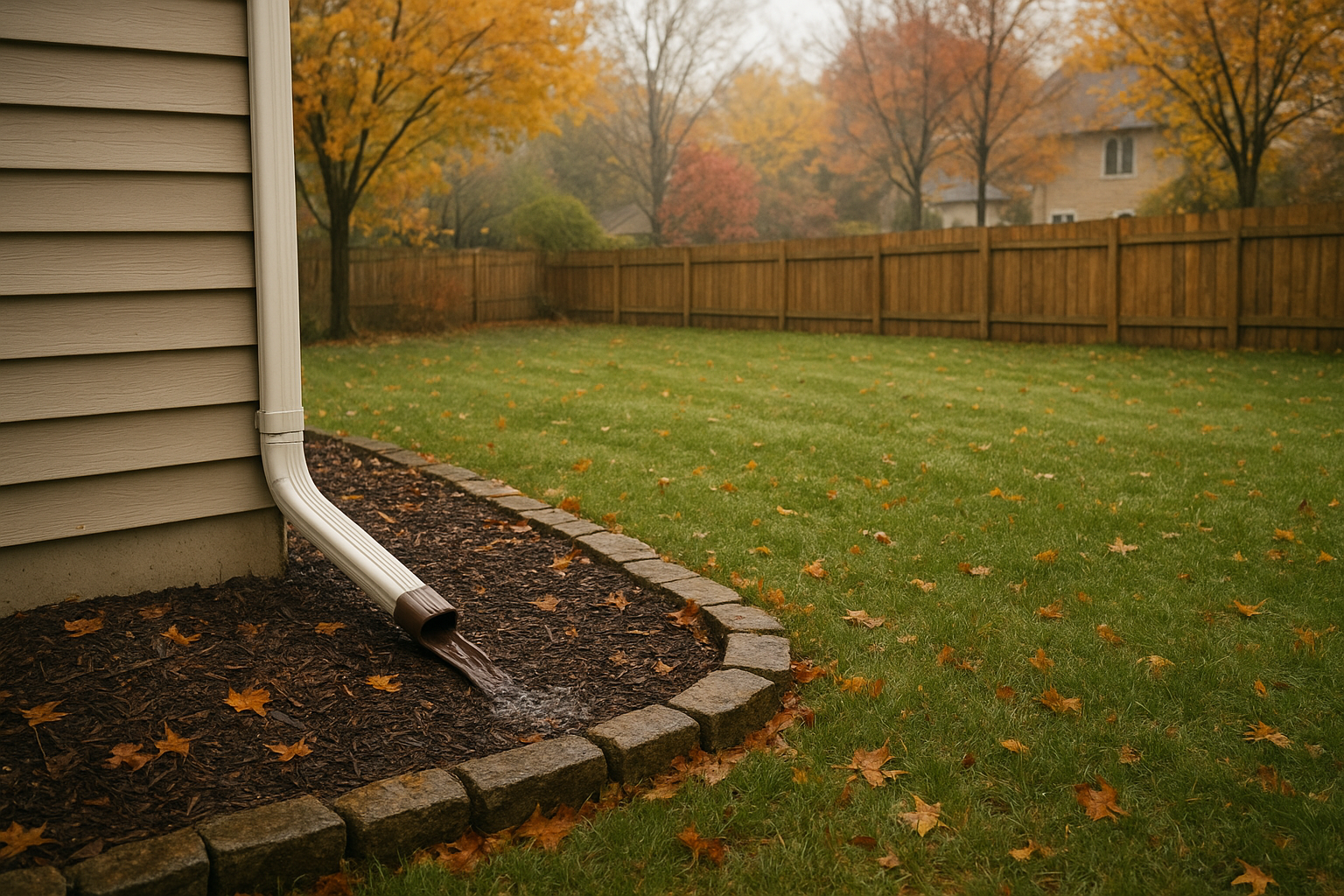
Downspouts are one of the biggest culprits. If roof runoff is dumped at the edge of your yard, it can pool there during heavy rain and spill into the next property. A short splash block may help a little, but in many yards it is not enough for large roof areas or clay soil.
Better approach: Extend downspouts to a safe discharge point on your own property, ideally where water can spread out and soak in without creating runoff. Use solid pipe where water needs to travel, and avoid discharging directly onto a slope that leads offsite.
2. Creating a hardscape that acts like a gutter
New patios, stepping-stone paths, driveways, and gravel strips can all change drainage. A surface that was once absorbent may become a fast-moving channel during a storm, especially if it slopes toward a fence or low point.
Better approach: When adding hardscape, think about pitch and edges. Build in a slight slope away from structures, and use permeable materials where possible. Permeable pavers, spaced flagstones, and well-prepared gravel beds can reduce runoff compared with sealed or tightly packed surfaces.
3. Raising beds without planning for overflow
Raised beds are fantastic for poor soil, but they can also trap water if they are placed in the wrong spot. Worse, a border of timbers or stone can unintentionally block the yard’s natural drainage path and push water sideways.
Better approach: Place raised beds where water already drains well, not in the middle of a known low spot. If the bed is built on a slope, make sure excess water has a controlled way to exit without blasting into a neighbor’s yard.
4. Regrading without checking the whole yard
It is common to add soil around a foundation, level a seating area, or reshape a flower border. Small changes may seem harmless, but a few inches of fill in the wrong place can steer stormwater into a new route. That may leave one area dryer while creating a new flood point elsewhere.
Better approach: Before moving soil, observe how water behaves during a heavy rain. If you must regrade, keep the slope gentle and continuous, and avoid creating a berm that blocks water from leaving your lot naturally.
5. Digging shallow trenches that dump water offsite
A shallow swale can be a smart way to guide water across a yard, but it should never become a shortcut that channels runoff to the street, a neighbor’s planting bed, or a shared fence line. If water gains speed in a trench, it can cause erosion and undermine the very fix you were trying to make.
Better approach: Use swales to slow and spread water, not concentrate it. Line them with deep-rooted grass, native plants, or stone where appropriate, and make sure they end in a rain garden, dry well, or other on-site absorption area.
Smart ways to manage water in a home landscape
- Capture roof runoff: Rain barrels or cisterns can reduce the amount of water leaving your roof during storms. Just be sure they are installed safely and emptied as needed.
- Use rain gardens: A rain garden is a shallow planted depression designed to collect runoff and allow it to soak into the soil. Native plants with varying root depths work especially well.
- Improve soil structure: Compost and organic matter help clay soils drain more effectively and help sandy soils hold moisture longer.
- Choose the right plants: In wet spots, use moisture-tolerant species instead of forcing drought-loving plants into soggy ground.
- Mulch wisely: Mulch helps slow runoff, but keep it off walkways and away from drainage outlets where it could wash away and clog systems.
What to do before fall storms arrive
Once leaves start dropping and rain becomes more frequent, take an hour to walk your property after a storm. Look for places where water collects, where soil washes away, and where gutters or drains overflow.
- Inspect all downspouts. Make sure they are attached securely and sending water away from the house.
- Check low spots. If puddles linger for more than a day, mark them for future fixes.
- Clear debris. Leaves, mulch, and pine needles can clog channels, drains, and grates.
- Watch the fence line. If water is pushing toward a neighbor, stop and reassess before adding more soil or edging.
- Document changes. Keep notes and photos of drainage improvements in case you need to explain what was done later.
When a drainage project is bigger than a DIY fix
Some situations call for a pro. If water is entering your basement, eroding a slope, undermining a retaining wall, or consistently pooling on a neighboring lot, a landscape contractor or civil engineer may be worth the investment. In some communities, local ordinances also affect grading, stormwater discharge, and hardscape installation.
If your project may affect a shared boundary, it is wise to talk with the neighbor first. A simple conversation can prevent frustration later. Explain what you are changing, where the water will go, and how you plan to keep it on your own property.
A simple rule of thumb
If a drainage change collects, concentrates, or speeds up water, treat it carefully. If it simply lets rain soak in where it falls, it is usually much safer. The best landscape solutions work with gravity instead of fighting it.
Fall is the perfect time to make your yard more resilient. By spotting garden drainage mistakes early, you can protect your plants, your foundation, and your neighborly peace of mind.