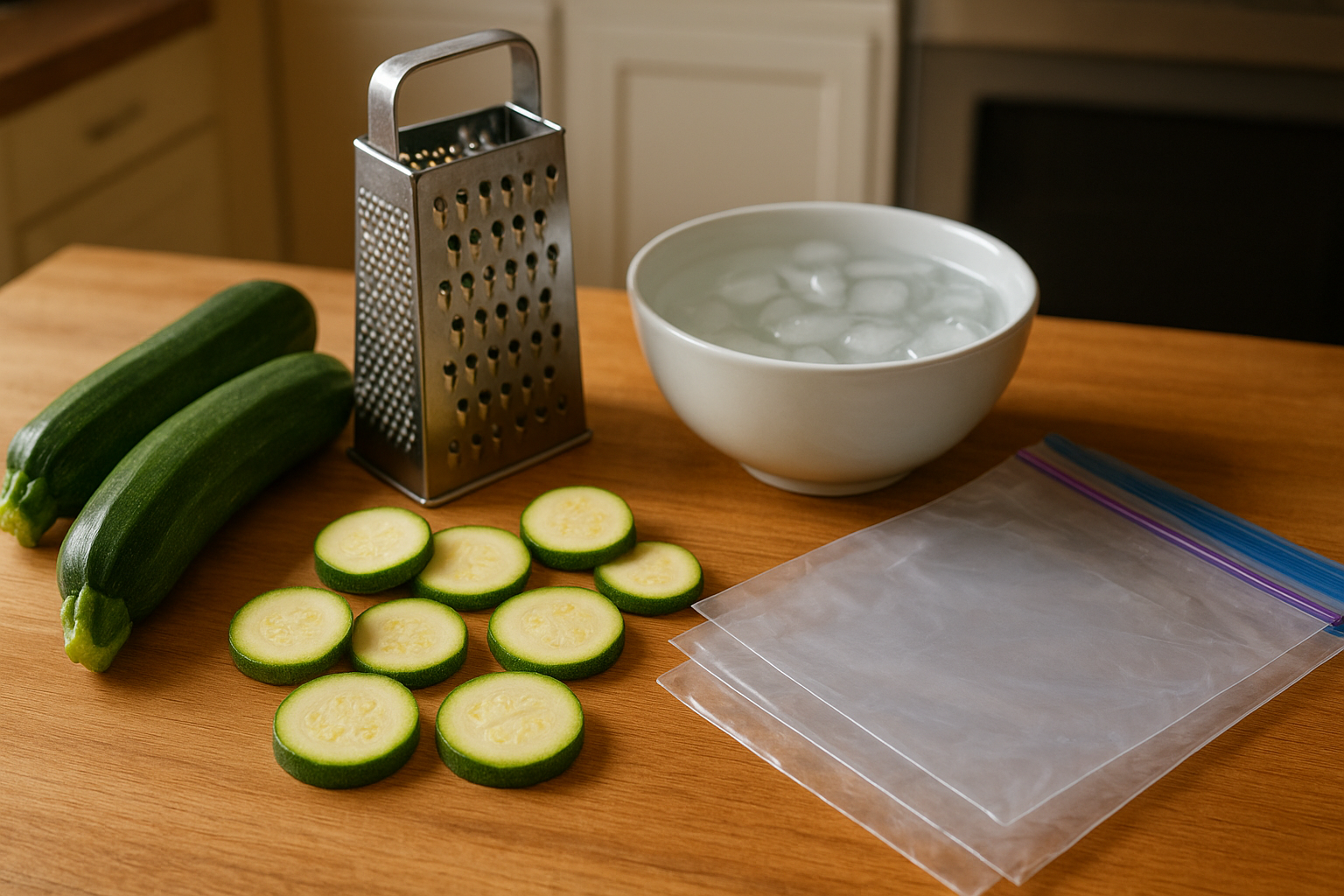
How to Freeze Zucchini for Bread, Soups, and Sides
If the garden is handing you more zucchini than dinner can handle, the freezer is your friend—but only if you prep it for the way you’ll actually use it later. Zucchini has a lot of water, so the goal is not to keep it crisp; it is to freeze it in a form that works beautifully in quick breads, soups, casseroles, sauces, and cooked side dishes.
Here is the practical, no-fuss way to freeze zucchini without creating one big icy clump or a soggy surprise when you thaw it.
Best Uses for Frozen Zucchini
Frozen zucchini will not thaw like fresh zucchini. After freezing, the texture softens, which is why Colorado State University Extension recommends using frozen zucchini in soups, casseroles, and baked goods rather than raw salads or crisp sautés. ([extension.colostate.edu](https://extension.colostate.edu/resource/how-to-use-zucchini/?utm_source=openai))
Before you start cutting, decide how you want to use it:
- Shredded zucchini: Best for zucchini bread, muffins, pancakes, fritters, meatloaf, pasta sauce, and soups.
- Sliced zucchini rounds or half-moons: Best for soups, casseroles, baked pasta, vegetable bakes, and quick skillet meals.
- Diced zucchini: Best for minestrone, chili, egg bakes, rice bowls, and casseroles.
If you bake often, freeze shredded zucchini in recipe-size portions. If you cook more soups and casseroles, slices or cubes are more useful.
What You’ll Need
- Fresh, firm zucchini
- Cutting board and knife
- Box grater or food processor, if shredding
- Large pot for blanching
- Large bowl of ice water
- Colander
- Clean kitchen towels or paper towels
- Rimmed baking sheet
- Parchment paper
- Freezer bags or freezer-safe containers
- Permanent marker for labeling
Start with the Right Zucchini
Choose zucchini that feels firm and heavy for its size, with smooth skin and no soft spots. Small to medium zucchini usually freeze better because they have fewer large seeds and less spongy flesh than oversized squash.
Wash the zucchini under cool running water and rub the skin gently with your hands. Colorado State University Extension notes that a coarse vegetable brush can damage the skin, so a gentle rub is enough for everyday cleaning. ([extension.colostate.edu](https://extension.colostate.edu/resource/how-to-use-zucchini/?utm_source=openai)) Trim off the stem and blossom ends before cutting or shredding.
Method 1: How to Freeze Shredded Zucchini for Bread
This is the most useful method if you love zucchini bread or muffins. The texture change does not matter much in baked goods, and the zucchini is ready to stir into batter once thawed and drained.
- Shred the zucchini. Use the large holes of a box grater or the shredding disk on a food processor.
- Portion it right away. Measure into common recipe amounts, such as 1 cup or 2 cups. Many zucchini bread recipes call for 1 to 2 cups, so this saves time later.
- Drain lightly. Place the shreds in a colander for a few minutes. You can gently press out excess moisture, but do not wring it completely dry unless your recipe specifically calls for that.
- Pack flat. Put each portion into a freezer bag, press out as much air as possible, and flatten the bag so it freezes quickly and stacks neatly.
- Label and freeze. Write the amount and date on the bag.
For grated zucchini, Nebraska Extension notes that the National Center for Home Food Preservation recommends steam blanching small quantities for 1 to 2 minutes until translucent before freezing. ([food.unl.edu](https://food.unl.edu/article/freezing-zucchini/?utm_source=openai)) Many home cooks freeze shredded zucchini raw for baking, but if you want to follow the research-based preservation method, steam blanch it briefly, cool it quickly, drain well, and then portion.
Method 2: How to Freeze Zucchini Slices or Cubes
For slices, half-moons, or cubes, blanching is worth the few extra minutes. Blanching slows the enzyme activity that can hurt flavor, color, and texture during freezer storage. University of Minnesota Extension explains that vegetables should be blanched before freezing and that the timer starts once the water returns to a boil. ([extension.umn.edu](https://extension.umn.edu/preserve-your-own-food/blanching-vegetables?utm_source=openai))
- Cut the zucchini. Slice into 1/2-inch rounds, half-moons, or cubes. Several Extension sources recommend 1/2-inch slices for freezing zucchini. ([ask.extension.org](https://ask.extension.org/kb/faq.php?id=665762&utm_source=openai))
- Boil water. Use a large pot so the water returns to a boil quickly after you add the zucchini.
- Blanch in small batches. Add the zucchini and start timing when the water returns to a boil. Water blanch 1/2-inch slices for about 3 minutes, a timing supported by University of New Hampshire Extension and Ask Extension guidance. ([extension.unh.edu](https://extension.unh.edu/resource/freezing-vegetables?utm_source=openai))
- Cool immediately. Move the zucchini to a bowl of ice water to stop the cooking.
- Drain very well. Let it sit in a colander, then spread it on a clean towel and pat dry. This step helps prevent icy buildup.
- Flash-freeze. Spread pieces in a single layer on a parchment-lined baking sheet and freeze until solid.
- Pack and label. Transfer the frozen pieces to freezer bags, press out air, label, and return to the freezer.
How to Prevent Watery, Mushy Results
You cannot make thawed zucchini crisp again, but you can keep it useful and pleasant to cook with. These small habits make the biggest difference:
- Do not freeze whole zucchini. It takes up space and thaws poorly.
- Cut pieces evenly. Similar sizes blanch and freeze more evenly.
- Cool quickly after blanching. Lingering heat keeps cooking the zucchini.
- Dry before packing. Extra surface water becomes ice crystals.
- Freeze flat or flash-freeze. This keeps portions from turning into a solid block.
- Use freezer-grade packaging. University of New Hampshire Extension recommends freezing food at 0°F or lower and using proper freezer packaging to protect flavor, color, moisture, and quality. ([extension.unh.edu](https://extension.unh.edu/resource/freezing-vegetables?utm_source=openai))
How Much to Put in Each Bag
Think in future meals. For shredded zucchini, 1-cup and 2-cup bags are the most flexible. For sliced or diced zucchini, pack in 2-cup portions for soups, casseroles, pasta bakes, and skillet meals.
Flatten bags before freezing. A flat bag thaws faster, stacks better, and is easier to break apart if you only need part of it.
How to Thaw and Use Frozen Zucchini
For quick breads, muffins, pancakes, and fritters, thaw shredded zucchini in the refrigerator or in a bowl on the counter if you are using it soon. Once thawed, drain off the liquid. If the recipe depends on moisture, lightly drain. If you are making fritters or a thick batter, squeeze out more liquid with a clean towel.
For soups, chili, pasta sauce, and casseroles, you can often add frozen zucchini directly to the pan. Add it near the end of cooking if you want it to hold some shape, or earlier if you want it to melt into the dish.
How Long Frozen Zucchini Keeps
For best quality, use frozen zucchini within about 8 to 12 months if it has been packed well and kept at 0°F or lower. It may remain safe longer if continuously frozen, but quality drops over time. Label every bag with the date and the form—such as “2 cups shredded zucchini” or “zucchini slices for soup.”
Quick Troubleshooting
My zucchini froze into one big clump
It was probably packed wet or not flash-frozen first. Next time, dry slices well and freeze them on a baking sheet before bagging.
My thawed zucchini is watery
That is normal. Drain it for baked goods, squeeze it for fritters, or add it straight to soups and sauces where the liquid can cook off.
My zucchini tastes flat after freezing
It may have been stored too long, packed with too much air, or frozen without blanching. For slices and cubes, blanching before freezing helps protect quality.
The Bottom Line
The best way to freeze zucchini depends on how you cook. Shred it and portion it for baking, or blanch slices and cubes for soups, casseroles, and easy weeknight meals. With a little draining, quick cooling, and smart labeling, that summer zucchini pile can become a freezer stash you will actually use.