The Easiest Fall Garden Soil Boost: Bury Kitchen Scraps
One of the simplest ways to improve garden soil is also one of the least glamorous: bury your food scraps in empty beds before winter sets in. Instead of tossing certain kitchen leftovers in the trash, you can let them break down underground and return organic matter to the soil where your plants will need it most next spring.
This method is especially handy for raised beds, vegetable plots, and any patch of ground that will sit unused through the cold months. It’s low-effort, low-cost, and surprisingly effective when you use the right ingredients and give them enough time to decompose.
Why bury kitchen scraps in fall?
Think of it as a quiet, in-bed version of composting. During fall and winter, microbes, insects, and soil organisms gradually break down the buried material. By the time planting season returns, the scraps help add organic matter to the soil, which can improve texture, water retention, and overall soil life.
This approach is not a shortcut to instant fertilizer, and it will not replace a full compost system for every garden need. But as a seasonal soil boost, it can be a practical way to recycle kitchen waste right where it counts.
The best scraps to use
Choose plant-based scraps and other biodegradable kitchen waste that will break down cleanly. The goal is to feed the soil, not attract pests or create smells.
- Fruit and vegetable trimmings: peels, cores, stems, and outer leaves
- Coffee grounds: used grounds from brewed coffee
- Crushed eggshells: rinsed and dried first if possible
- Herb stems and wilted greens: plain, uncooked scraps
- Tea leaves: loose tea or bags that are fully compostable
Cut larger scraps into smaller pieces so they break down more quickly. A rough chop is enough; you do not need to mince everything into tiny bits.
What not to bury
Not every kitchen scrap belongs in the garden. Some leftovers can attract animals, smell bad, or decompose too slowly for this method to work well.
- No meat, fish, bones, or dairy
- No greasy foods or anything coated in oil, butter, or creamy sauces
- No heavily salted or seasoned scraps
- No pet waste
- No diseased plant material from the garden if you are unsure whether pathogens could survive
If a scrap would make a trash can smell on the counter, it usually is not a good candidate for trench-style burial either.
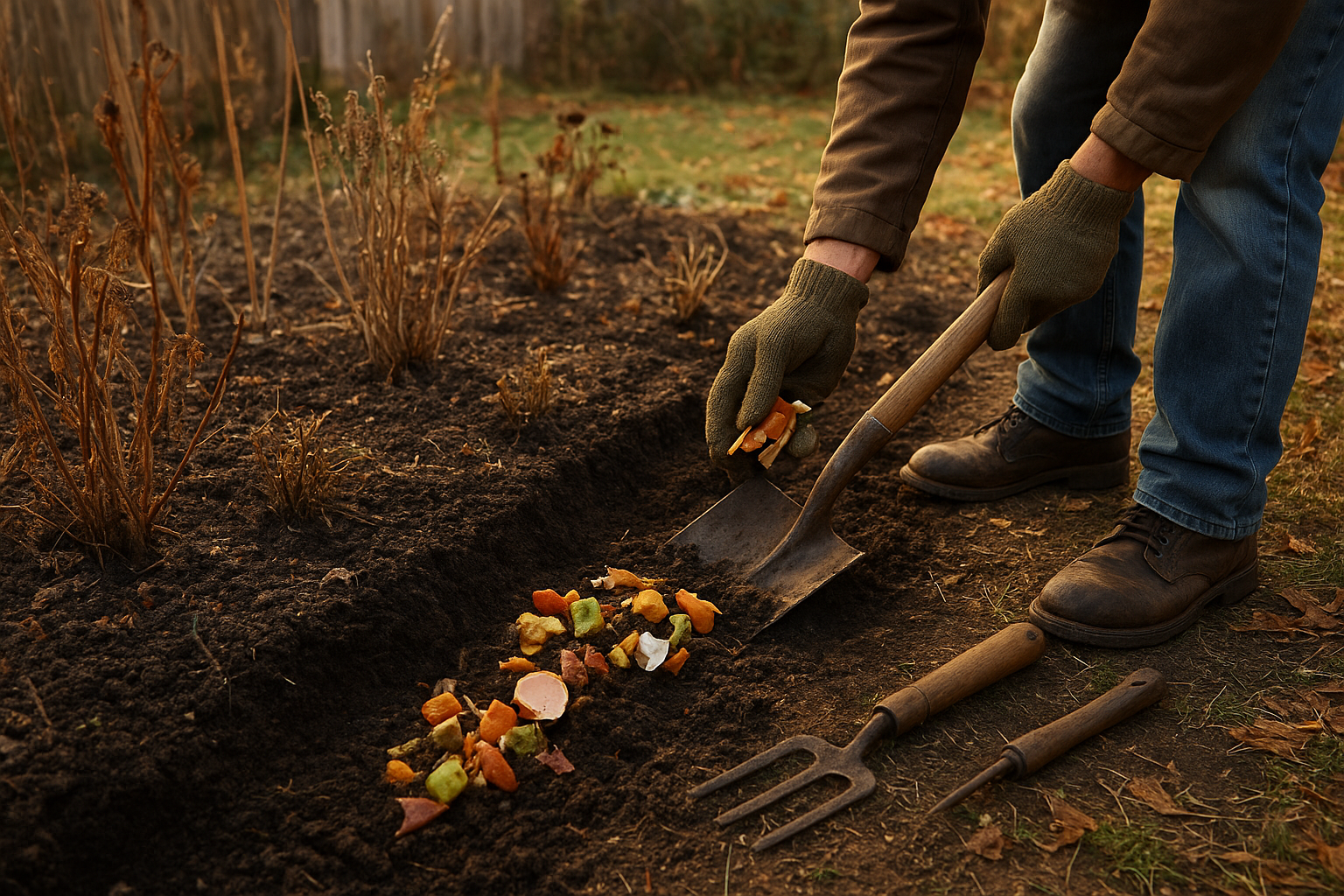
How to do a fall soil boost with kitchen scraps
You do not need special tools. A garden trowel, hand shovel, or small spade is enough.
- Pick an empty bed or unused section. Choose a spot that will not be planted immediately.
- Dig a shallow trench. Aim for about 6 to 8 inches deep. In loose soil, a little deeper is fine.
- Add a thin layer of scraps. Spread the material out instead of dumping it in one thick pile.
- Mix in a little dry material. A handful of dry leaves, shredded paper, or plain brown garden debris can help balance moisture.
- Cover with soil. Replace the soil completely so scraps are hidden from pests and air exposure is reduced.
- Move to a new area next time. Space out your trenches so the whole bed gets a light, even boost over the season.
If you have multiple beds, rotate where you bury scraps from week to week. That keeps any one area from becoming too concentrated with food waste.
How much should you add?
Moderation matters. A little kitchen waste goes a long way when it is buried in the soil. Aim for a thin layer rather than a pile. For a typical small raised bed, a few cups of chopped scraps at a time is plenty.
If you add too much at once, decomposition can slow down and the bed may become soggy or attract unwanted visitors. Smaller, repeated additions work better than a huge one-time dump.
When fall is the right time to start
The best time to begin is after harvest, once annual crops are finished and the bed is no longer in active use. In many climates, you can keep adding scraps until the ground freezes solid.
If your winters are mild, the buried scraps may continue breaking down through the season. In colder regions, decomposition slows dramatically once the soil hardens, but the process picks up again in spring.
Tips for better results
A few small habits can make this method cleaner and more effective.
- Use a countertop scrap container: a lidded pail or small bowl keeps you organized between garden trips.
- Drain wet scraps first: avoid adding excess liquid to one spot.
- Break up clumps: coffee grounds and soft scraps should be mixed so they do not form a dense mass.
- Top with dry material: dry leaves, straw, or shredded fall debris can help balance the mix.
- Label your spots if needed: if you work in several beds, make a simple note of where each trench goes.
If you garden in an area with squirrels, raccoons, or other scavengers, bury scraps a little deeper and cover them well. A secure layer of soil is your best defense.
Why gardeners like this method
There are plenty of reasons to give trench-style scrap burial a try. It reduces waste, avoids the need for a compost bin in small spaces, and turns an empty bed into a living system instead of letting it sit bare all winter.
It can also fit neatly into a low-maintenance gardening routine. If you already collect food scraps, this is an easy extension of that habit. No turning pile, no special tumbler, and no extra equipment required.
Frequently asked questions
Will buried scraps smell?
Not usually, if you bury them properly and avoid oily or animal-based foods. Cover the scraps fully with soil and keep the portions modest.
Can I do this in containers?
It is better suited to ground beds or large raised beds. In small containers, buried scraps can create drainage issues or attract pests.
Do eggshells really help?
Eggshells break down slowly, so they are not an instant fix, but crushed shells can eventually contribute calcium and add to the organic matter in the bed.
Is this the same as composting?
It is related, but not identical. Composting in a bin speeds decomposition in a controlled pile. Buried scrap gardening lets the soil do the work in place.
A simple seasonal habit with long-term payoffs
If you want an easy fall garden soil boost with kitchen scraps, this is one of the most practical methods around. You are giving food waste a useful second life, supporting soil health, and preparing your beds for a stronger start next season.
The key is to keep it simple: use plant-based scraps, chop them small, bury them well, and spread them around. With a little consistency, your garden gets the benefit long after the harvest is over.