The Simple September Rose Cleanup That Boosts Spring Blooms
September is one of the most important months for rose care, even though the plants may still look lively and full of flowers. A short cleanup now can make a real difference to how well your roses survive winter and how strongly they grow back in spring.
The job is simple, takes very little time, and does not involve major pruning. Instead, it focuses on removing the garden clutter that can shelter disease and pests through the colder months.
Why September matters for roses
By late summer and early fall, roses have often been through months of repeated flowering, heat, rain, and humidity. That combination can leave behind tired foliage, dropped petals, and the first signs of common fungal problems such as black spot and powdery mildew.
If infected leaves stay on the plant or on the soil beneath it, fungal spores can survive until next year. When new growth appears in spring, those spores can spread again and weaken the plant before it really gets going. A quick cleanup helps break that cycle.
The 5-minute job to do now
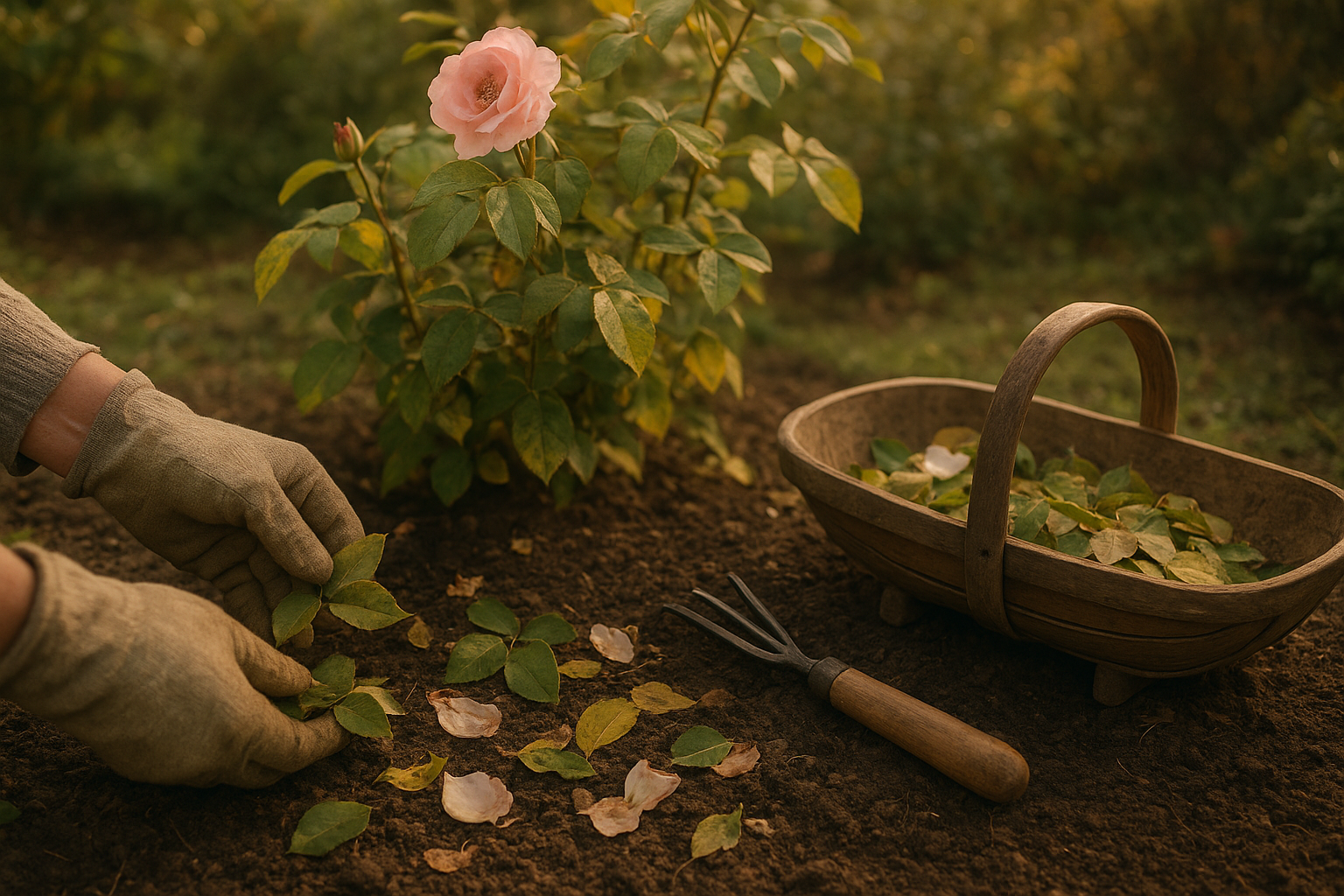
Your main task is to clear away fallen leaves and any diseased plant material from around the base of the rose. It sounds basic, but it is one of the most helpful things you can do for long-term plant health.
What to remove
- Fallen leaves with black spotting, yellowing, or mildew
- Dead petals that have collected around the base
- Weeds growing through the crown or nearby soil
- Any clearly diseased leaves still hanging on the lower stems
Use your hands, a small rake, or garden gloves to gather the debris. If leaves are heavily infected, do not add them to a compost heap unless you know your compost gets hot enough to break down disease organisms properly. It is usually safer to bag them and dispose of them with household waste, following local rules.
How to do the cleanup properly
Start by looking closely at the ground under the rose and the lower parts of the plant. Many fungal problems begin low down, where airflow is poor and moisture lingers after rain or watering.
- Put on gloves and remove loose debris from the soil surface.
- Pick off any obviously diseased leaves that are easy to reach.
- Clear away weeds, dead petals, and broken stems around the base.
- Check the plant from all sides so you do not miss hidden leaves tucked into the center.
- Finish by leaving the area neat and open to allow better air movement.
If the soil is dry, you can lightly water afterward so any disturbed dust or debris settles, but avoid splashing onto the foliage. Wet leaves are more likely to encourage disease spread.
What not to do in September
The biggest mistake is getting too eager with pruning. September is not the time for a hard cutback on most roses. Fresh pruning can encourage soft new growth that will not have enough time to harden before cold weather arrives.
Only remove the parts that are clearly damaged, dead, or diseased. Save any major reshaping or thinning for late winter or early spring, depending on the type of rose and your climate.
It is also wise to avoid heavy feeding now, especially anything high in nitrogen. Late-season growth can be vulnerable to frost, and you want the plant to begin winding down rather than pushing out tender new shoots.
Extra steps that help roses go into winter stronger
Once the main cleanup is done, a few small habits can improve the health of the plant even more.
Give the base some breathing room
Roses do best when air can move freely around their stems. If nearby plants are crowding the shrub, consider trimming back surrounding growth or moving containers a little farther away. Better airflow helps leaves dry faster after rain and reduces fungal pressure.
Water the soil, not the leaves
If your area has been dry, keep watering the root zone as needed. Consistent moisture helps the plant finish the season in good shape, but water at the base so the foliage stays dry.
Check for pests
September is a good time to look for aphids, sawfly larvae, or other pests that may still be feeding. Light infestations can often be managed by removing affected leaves or spraying them off with a strong jet of water.
Mulch with care
A light layer of mulch can help stabilize soil temperature and protect roots as weather cools. Keep the mulch a little away from the main stems so moisture does not collect against the crown.
Signs your rose needs more attention
Not every rose will only need a quick tidy-up. If you notice severe black spot, extensive leaf drop, or stems that look shriveled or discolored, your plant may need a closer inspection. In those cases, remove only the worst affected material and avoid overcorrecting with hard pruning.
Healthy roses usually have firm stems, clean-looking leaves higher up, and enough foliage left to keep feeding the plant as long as the weather stays mild. If a plant is struggling badly, improving sanitation and airflow is still a good first step before doing anything more dramatic.
A small job with a big payoff
September rose cleanup is one of those jobs that feels almost too easy to matter, but it can have a real impact. By removing infected leaves and clearing debris now, you lower disease pressure, improve airflow, and help your roses enter winter in better condition.
That means less trouble when temperatures rise again and a better chance of seeing healthy, vigorous growth next spring. If you only have a few minutes in the garden this week, your roses are a smart place to spend them.
Quick reminder: tidy the base, remove diseased material, and leave the major pruning for later. That simple routine is often the difference between roses that merely survive and roses that come back strong.