How to Grow Zinnias for Nonstop Summer Color
Zinnias are one of the easiest ways to bring big, cheerful color into a summer garden. They grow quickly from seed, bloom for months, and keep producing more flowers when you cut or deadhead them regularly. If you want a flower that looks lively, handles heat well, and works beautifully in beds or bouquets, zinnias are a smart choice.
Once you understand a few basic rules about sun, spacing, and watering, these annuals are remarkably low-maintenance. The trick is giving them the right start and then avoiding a few common mistakes that can shorten bloom time or invite disease.
Why zinnias deserve a spot in your garden
Zinnias are popular for good reason. They flower fast, come in many sizes and colors, and attract pollinators like butterflies and bees. They also make excellent cut flowers, with sturdy stems and long-lasting blooms.
Most garden zinnias are grown as warm-season annuals. That means they thrive during the hot months of summer and keep going until the first hard frost. In many gardens, they become one of the most reliable plants for filling in gaps and adding color at eye level.
Best growing conditions for zinnias
Choose full sun
Zinnias perform best with at least 6 to 8 hours of direct sun each day. More sun usually means stronger stems and more flowers. In too much shade, plants tend to stretch, flop, and bloom less freely.
If your climate gets extremely hot, a little light afternoon shade can help prevent stress. Still, the goal is bright, open conditions with good air movement.
Use well-draining soil
Good drainage matters more than fancy soil. Zinnias can adapt to a range of soil types, including sandy soil and clay, as long as water does not sit around the roots. They prefer soil that is moderately fertile and not overly rich.
Before planting, loosen the soil and mix in a little compost if needed. That helps improve structure without making the bed so lush that plants grow leafy but produce fewer blooms.
Watch the spacing
Airflow is a big deal with zinnias. Crowded plants dry slowly after rain or watering, which raises the risk of powdery mildew and other leaf problems. Give plants enough room based on the variety you choose:
- Dwarf varieties: about 6 to 10 inches apart
- Medium types: about 10 to 12 inches apart
- Tall varieties: about 12 to 18 inches apart
When in doubt, space them a little farther apart. The plants will thank you with healthier growth and better blooms.
How to plant zinnias from seed
Zinnias are easy to start from seed, and many gardeners prefer this method because it is inexpensive and straightforward. You can sow them directly in the garden after the danger of frost has passed and the soil has warmed.
- Wait for warm weather. Zinnia seeds germinate best in warm soil, so do not rush to plant too early.
- Prepare the bed. Remove weeds, break up clumps, and rake the surface smooth.
- Sow seeds shallowly. Plant them about 1/4 inch deep and cover lightly with soil.
- Water gently. Keep the top layer moist until seedlings emerge.
- Thin seedlings if needed. Once they have a few sets of leaves, keep the strongest plants and space them properly.
If you want earlier flowers, you can also start seeds indoors a few weeks before your last frost date. Use small pots or cell trays and transplant carefully once nighttime temperatures stay warm.
Watering and feeding tips
Water at the base, not overhead
Zinnias need regular moisture while young, but they do not like soggy soil. Once established, they handle short dry spells fairly well. The best approach is deep, infrequent watering rather than frequent sprinkles.
Try to water early in the day and aim the water at the soil line. Wet leaves can encourage fungal diseases, especially if the weather is humid or the plants are crowded.
Go easy on fertilizer
Too much nitrogen can create tall plants with lots of foliage and fewer blooms. If your soil is average, a light application of balanced fertilizer at planting time is usually enough. If the plants look pale or stop growing, a gentle midseason feeding can help, but avoid overdoing it.
For many gardeners, compost worked into the bed before planting provides plenty of nutrition for the season.
How to keep zinnias blooming longer
If you want zinnias to flower all summer, regular maintenance makes a big difference. These plants respond well when you keep them picked and tidy.
Deadhead often
Remove spent blooms as soon as they fade. This tells the plant to send energy into new flower buds instead of seed production. You can pinch or snip flowers just above a set of leaves or side branch.
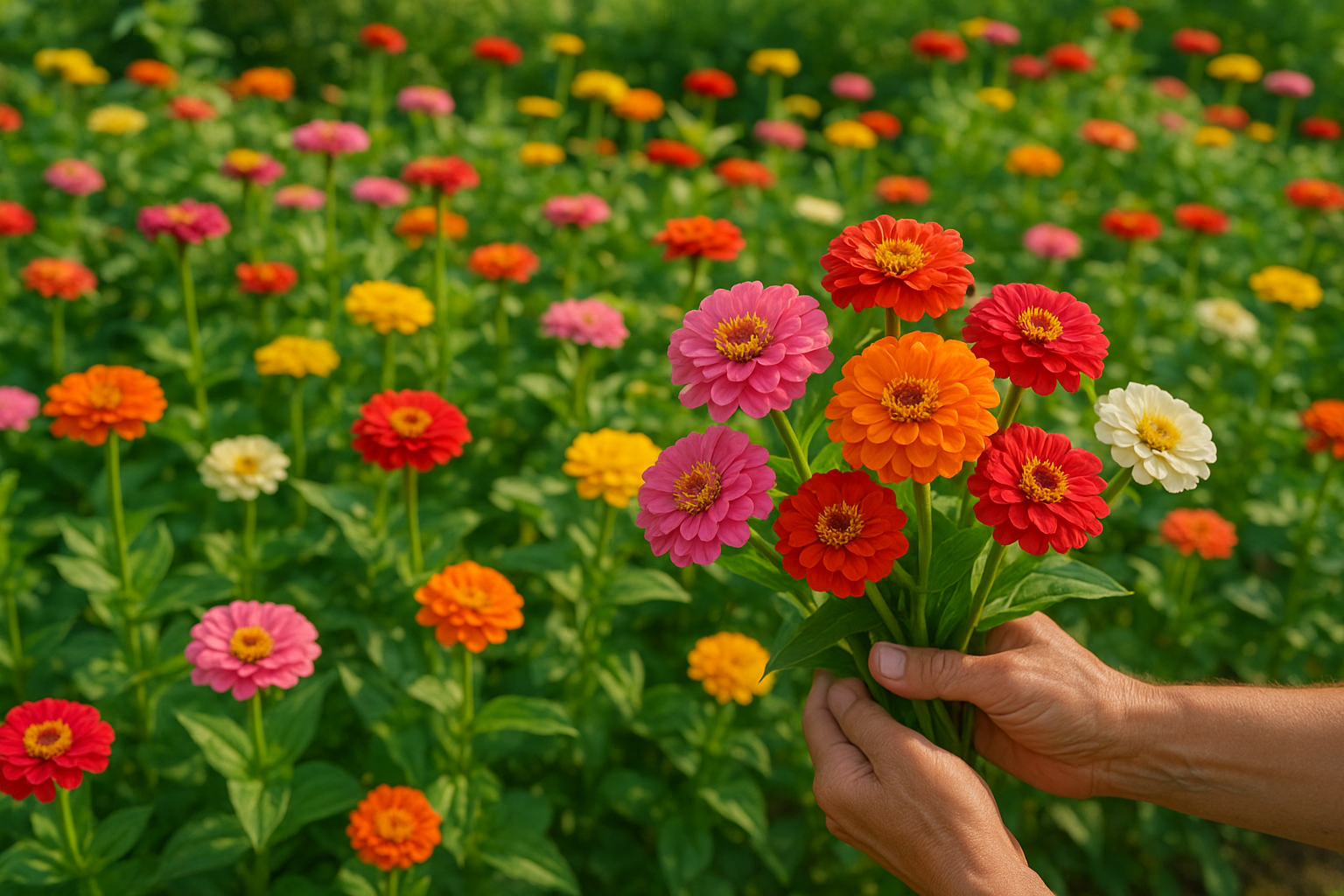
If you cut zinnias for bouquets, you are already doing part of the deadheading work. The more you harvest, the more the plant tends to branch and bloom.
Pinch young plants for bushier growth
When seedlings are about 8 to 12 inches tall, you can pinch the top of the main stem. This encourages side shoots and often creates a fuller, more flower-filled plant. It is especially helpful for taller varieties that may otherwise grow a single main stem.
Mulch to steady moisture
A light layer of mulch can help the soil stay evenly moist and reduce weed competition. Keep mulch a little away from the stems so air can circulate freely around the base of the plants.
Common zinnia problems and how to avoid them
Powdery mildew
This is one of the most common zinnia issues, especially later in the season. It shows up as a white, powdery coating on leaves. To lower the risk, give plants full sun, good spacing, and morning watering at the roots. Removing old, crowded foliage can also help.
Weak stems
Leggy or floppy zinnias usually mean the plants are reaching for more light. They may also be too crowded or growing in soil that is too rich. Full sun and proper spacing usually solve the problem.
Pests
Young zinnias can occasionally attract aphids or other small insects, but serious damage is uncommon in healthy plants. A strong blast of water can remove many pests, and encouraging beneficial insects helps keep the garden balanced.
Best ways to use zinnias in the garden
Zinnias are wonderfully versatile. Plant them in borders for bright color, tuck compact varieties into containers, or use taller kinds in a cutting garden. They pair well with other sun-loving annuals and make a strong visual impact when planted in groups.
If you enjoy fresh flowers indoors, keep a pair of snips nearby. Harvesting in the morning, when blooms are fresh and cool, usually gives the best vase life. Cut stems when the flower is fully open or just starting to open, and strip off the lower leaves before placing them in water.
Simple zinnia growing checklist
- Plant in full sun
- Use soil that drains well
- Wait for warm weather before sowing
- Space plants generously for airflow
- Water at the base and avoid soggy soil
- Deadhead regularly to keep blooms coming
- Use only light fertilizer, if needed
With a sunny location and a little routine care, zinnias can become one of the most rewarding flowers in your yard. They are colorful, forgiving, and generous bloomers that make summer gardening feel easy. If you are looking for a fast-growing flower that delivers a lot of payoff, zinnias are hard to beat.