How to Clean Range Hood Filters Without Scrubbing
If your stovetop smells a little stale even after dinner is cleaned up, the range hood filter may be the culprit. Grease, steam, and cooking residue collect there quietly, and once the filter is sticky, the fan cannot move air as well.
The good news: learning how to clean range hood filters is simple, cheap, and not nearly as gross as it looks. A hot soak with dish soap and baking soda does most of the work, so you do not have to scrub for half an hour.
Why Range Hood Filters Need Regular Cleaning
Range hood filters are designed to catch grease before it travels farther into the hood and ductwork. Fire-safety guidance for cooking ventilation systems emphasizes that grease-removal parts should be cleaned often enough to prevent grease accumulation, because buildup can affect airflow and add fuel near a heat source. ([portland.gov](https://www.portland.gov/policies/portland-fire-and-rescue/fixed-portable-fire-extinguishing-systems-equipment/fir-808?utm_source=openai))
In a home kitchen, the stakes are usually smaller than in a restaurant, but the basic idea is the same: grease belongs in the filter, not caked onto it forever. A clean filter also helps the fan pull steam, smoke, and odors away from your cooking area.
How Often Should You Clean Range Hood Filters?
For most everyday kitchens, clean metal range hood filters about once a month. If you fry often, cook bacon regularly, use a wok, or notice greasy drips on the underside of the hood, clean them every 2 weeks. If you cook lightly, every 6 to 8 weeks may be enough.
Use the filter itself as your guide. If it feels tacky, looks amber-brown instead of silver, smells like old oil, or makes the fan seem weaker than usual, it is time.
Before You Start: Check What Kind of Filter You Have
Most range hoods use one of these filter types:
- Metal mesh filters: Usually aluminum or stainless steel. These are washable and the focus of this guide.
- Metal baffle filters: Common on stronger hoods. These are also washable, though they may have deeper channels where grease collects.
- Charcoal filters: Often used in ductless or recirculating hoods. These are generally replaced, not washed, because washing removes their odor-trapping ability.
If you are unsure, look up your range hood model or check the manual. Do not soak a paper, fiber, or charcoal filter unless the manufacturer specifically says it is washable.
Supplies You’ll Need
- Very hot water
- Degreasing dish soap
- 1/4 cup baking soda
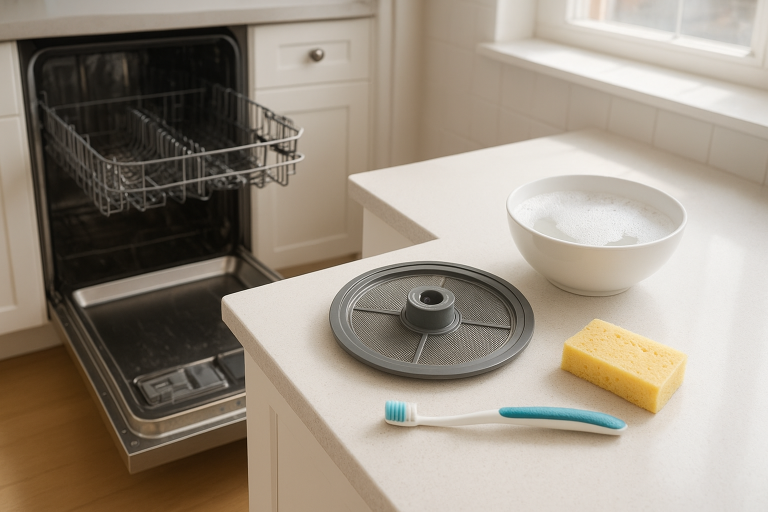
- Large sink, dishpan, or rimmed baking sheet
- Soft brush or old toothbrush
- Rubber gloves
- Clean towel
- Optional: white vinegar for wiping the hood exterior
Step-by-Step: How to Clean Range Hood Filters
1. Turn Off the Fan and Light
Make sure the range hood fan and light are off and cool. If you have been cooking, wait until the stovetop and hood are comfortable to touch.
2. Remove the Filters
Most filters slide, tilt, or pop out using a small tab or latch. Support the filter with one hand as you release it so it does not drop onto the stovetop. If the filter is very greasy, place an old towel or baking sheet underneath before removing it.
3. Fill the Sink With Hot, Soapy Water
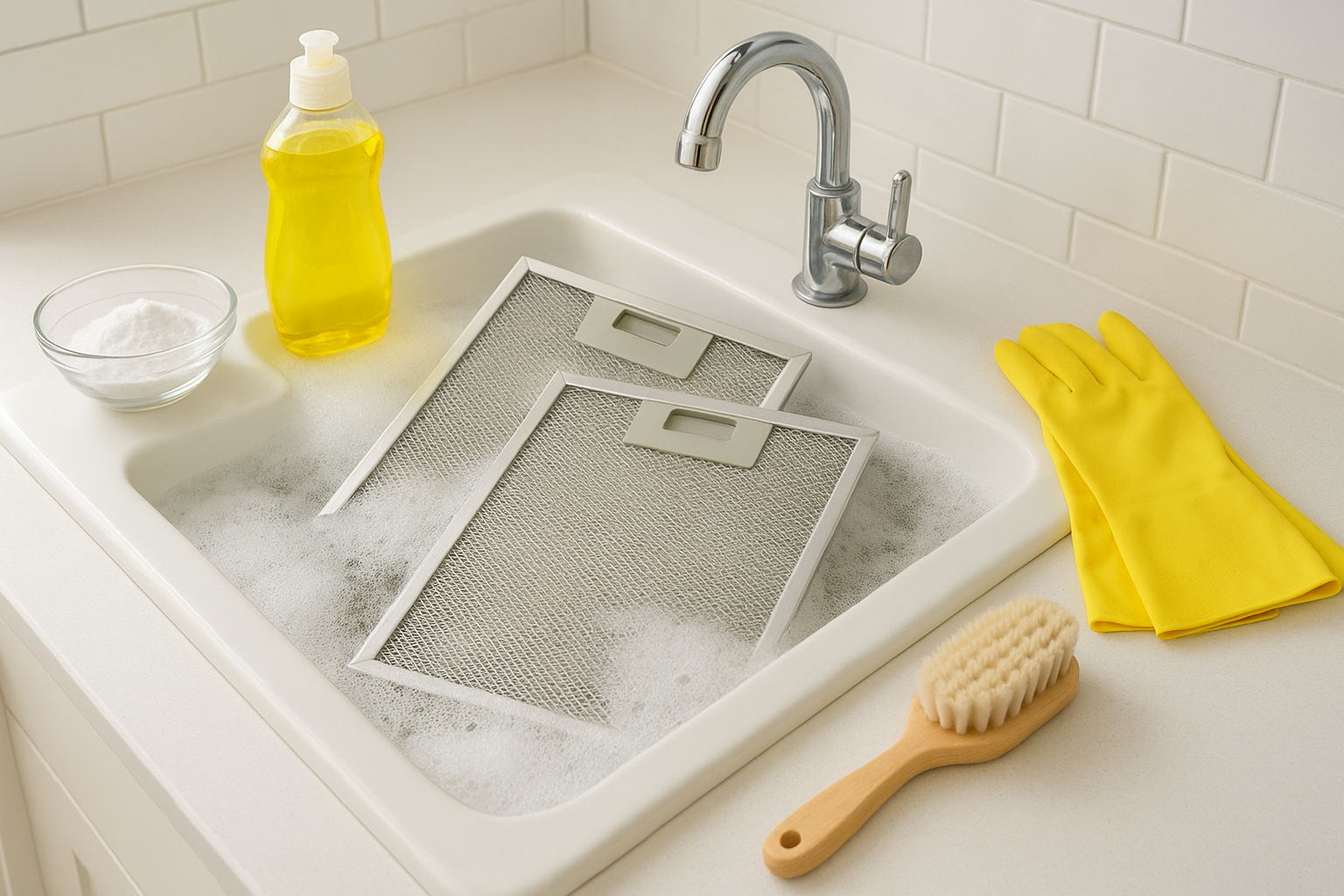
Fill your sink or tub with enough very hot water to fully cover the filters. Add a generous squirt of degreasing dish soap and stir in 1/4 cup baking soda. A hot-water soak with dish soap and baking soda is a common low-cost method for loosening greasy range hood residue without harsh cleaners. ([tomsguide.com](https://www.tomsguide.com/home/kitchen-dining/dont-let-grease-build-up-on-your-range-hood-this-method-takes-minutes-and-leaves-it-spotless?utm_source=openai))
Use gloves if the water is hot. You want heat to soften the grease, but you do not need to burn your hands.
4. Soak for 15 to 30 Minutes
Submerge the filters and let them sit. Light buildup may loosen in 15 minutes. Heavy, sticky grease may need 30 minutes or a second soak with fresh hot water.
If your filters are too large for the sink, use a rimmed baking sheet, roasting pan, bathtub, or clean storage bin. You can also soak one half at a time, flipping the filter after 15 minutes.
5. Brush Gently
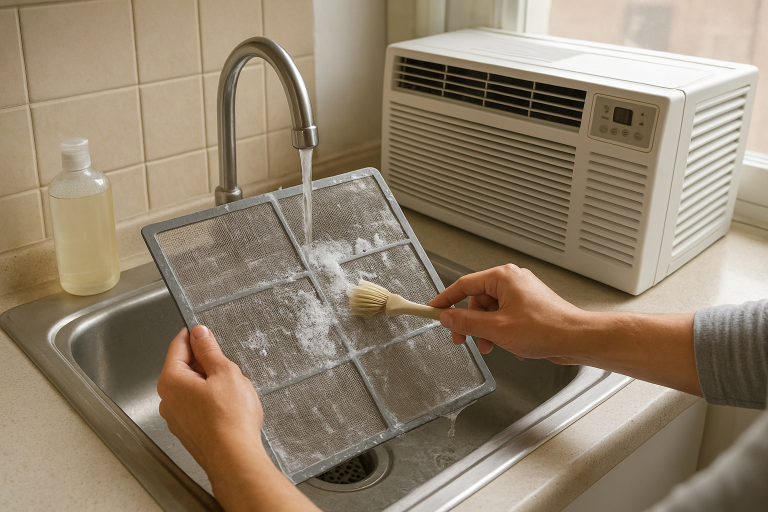
After soaking, use a soft brush to loosen any remaining grease from corners, mesh, or baffle channels. Avoid steel wool on aluminum filters; it can scratch and dull the finish. An old toothbrush works well along the frame.
6. Rinse Thoroughly
Rinse with hot running water until the water runs clear and the filter no longer feels slippery. Take your time here. Soap left in the mesh can foam the next time steam hits the filter.
7. Dry Completely
Shake off excess water, then set the filters upright on a towel until fully dry. Do not reinstall them while dripping wet. Moisture trapped in the hood can encourage grime to stick faster.
8. Wipe the Hood While the Filters Are Out
With the filters removed, wipe the underside of the hood with warm soapy water. For sticky spots, sprinkle a little baking soda on a damp cloth and rub gently. Finish with a clean damp cloth so no cleaner is left near the cooking area.
Can You Put Range Hood Filters in the Dishwasher?
Sometimes, yes—but check the manual first. Stainless steel baffle filters often handle the dishwasher well. Aluminum mesh filters can darken, discolor, or pit in a dishwasher, especially with strong detergent or high heat.
If you do use the dishwasher, place filters on the bottom rack only if the manufacturer allows it, skip dishes in the same load, and use a normal cycle without heated dry if you are worried about discoloration. For very greasy filters, the sink soak is usually safer for your dishwasher anyway.
What If the Grease Won’t Come Off?
If the filter still feels sticky after one soak, do not panic. Empty the greasy water, refill with fresh hot water, dish soap, and another 1/4 cup baking soda, then soak again for 20 minutes. Old oil can turn varnish-like, so a second round often works better than aggressive scrubbing.
For stubborn edges, make a paste of baking soda and a few drops of dish soap. Rub it on the greasy area, wait 10 minutes, then brush and rinse.
When to Replace a Range Hood Filter
Replace a washable metal filter if it is warped, torn, badly corroded, missing sections of mesh, or no longer locks into place. Replace charcoal filters on the schedule recommended by your hood manufacturer; many ductless range hoods need them changed every few months depending on cooking frequency.
A filter that cannot sit properly in the hood will not capture grease well, even if it looks clean.
Simple Habits That Keep Filters Cleaner Longer
- Turn the fan on before the pan gets smoky. Starting early helps capture steam and grease as they rise.
- Use a splatter screen for frying. Less airborne oil means less filter buildup.
- Wipe the hood weekly. A 2-minute wipe prevents sticky layers from hardening.
- Do not ignore weak airflow. If the fan sounds normal but pulls poorly, check the filter first.
- Set a reminder. Add “clean range hood filter” to your monthly kitchen cleaning list.
The Bottom Line
Cleaning range hood filters is one of those small jobs that makes the whole kitchen feel fresher. Remove the filters, soak them in very hot water with degreasing dish soap and baking soda, brush lightly, rinse well, and let them dry completely before reinstalling.
Do it monthly if you cook often, and more frequently if you fry or sear several times a week. Your hood will work better, your kitchen will smell cleaner, and you will avoid letting old grease build up right above the stove.