How to Clean Oven Door Glass Without Scratching It
A cloudy, brown oven window makes even a clean kitchen feel a little neglected. The good news is that you can clean oven door glass with simple supplies and a gentle method that lifts baked-on grease without scratching the surface.
The safest approach is to start mild, avoid the door gasket, and only take the door apart if your owner’s manual says it is designed for that. Here is a practical step-by-step method for everyday glass, stubborn splatters, and that annoying grime trapped between panes.
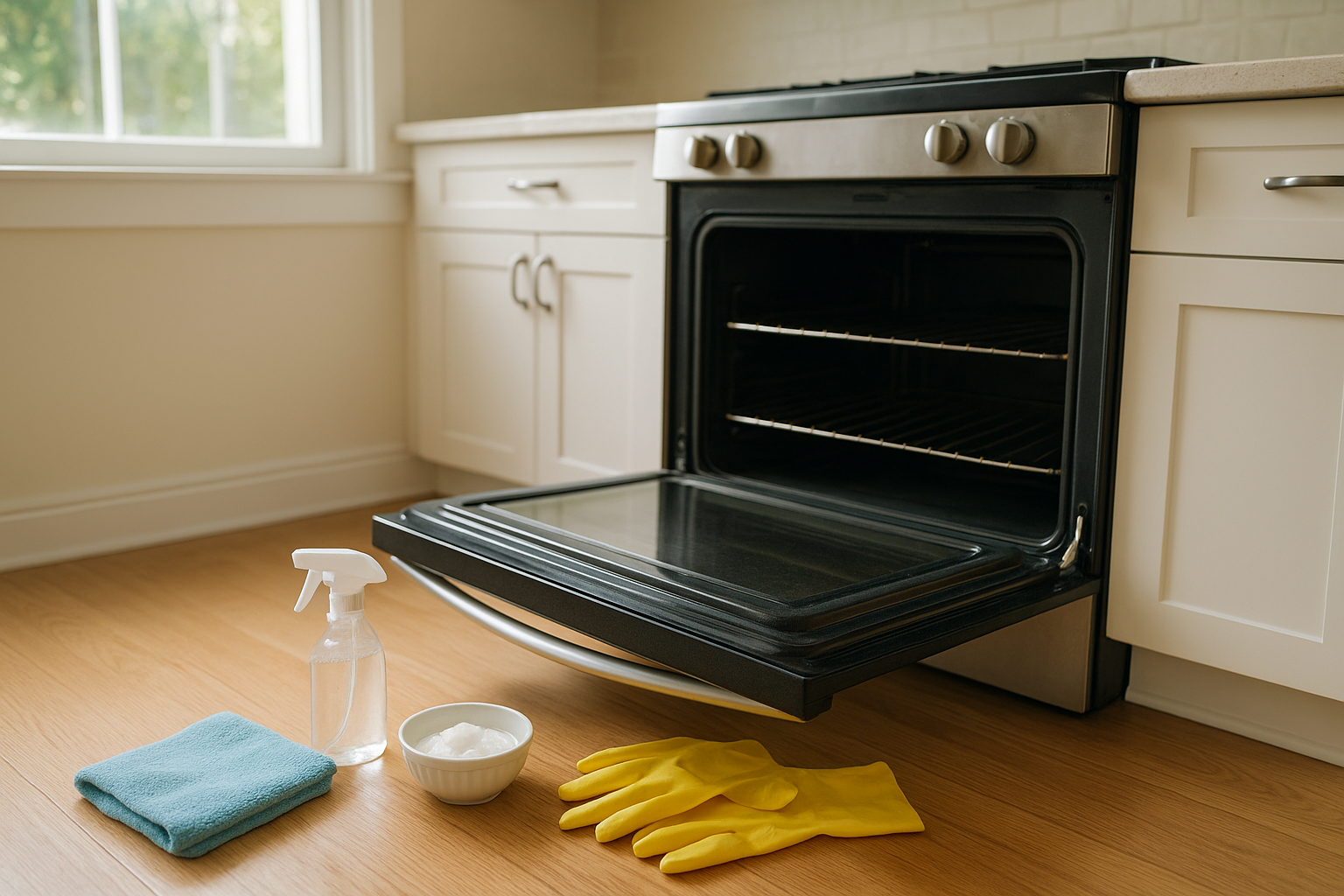
What You’ll Need
- Baking soda
- Warm water
- A few drops of dish soap
- White vinegar in a spray bottle
- Microfiber cloths
- Non-scratch sponge or plastic scrub pad
- Plastic scraper or old plastic gift card
- Rubber gloves
- Dry towel
Skip steel wool, razor blades, harsh scouring powders, and abrasive pads. Appliance makers commonly recommend non-abrasive cleaners such as baking soda for oven glass, and GE specifically warns not to let water or cleaner get on the oven door gasket. ([products.geappliances.com](https://products.geappliances.com/appliance/gea-support-search-content?contentId=17327&utm_source=openai))
Before You Start: Let the Oven Cool Completely
Do not clean hot oven glass. Let the oven cool fully, then remove any loose crumbs or ash from the door with a dry cloth. If you recently used a self-clean cycle, wait until the oven is cool and unlocked before wiping the glass.
Also take a quick look at your door seal. The soft gasket around the oven opening helps the door seal properly, so do not soak it, scrub it, pull it, or coat it with paste. Whirlpool also cautions against letting water or cleaner enter slots on the door frame. ([producthelp.whirlpool.com](https://producthelp.whirlpool.com/Cooking/Wall_Ovens_and_Ranges/Product_Info/Oven_Cleaning_and_Care/High_Temperature_Self-Clean_Cycle_Information?utm_source=openai))
Step 1: Make a Gentle Cleaning Paste
In a small bowl, mix:
- 1/2 cup baking soda
- 2 to 3 tablespoons warm water
- 2 to 3 drops dish soap
Stir until it forms a spreadable paste, about the texture of frosting. If it is runny, add more baking soda. If it is too dry, add water a teaspoon at a time.
The baking soda gives gentle scrubbing power, while dish soap helps cut greasy film. This is usually enough for normal brown splatters and cloudy residue.
Step 2: Spread the Paste on the Glass
Open the oven door so it lies flat, if your model allows it. Spread the paste over the interior glass only, keeping it away from the gasket and any vents or slots along the door frame.
Use your fingers with gloves, a soft cloth, or a rubber spatula. Cover the dirtiest areas with a thicker layer. Let it sit for 15 to 30 minutes. For heavy baked-on grease, give it the full 30 minutes so the paste has time to soften the grime.
Step 3: Scrub Gently, Then Scrape Carefully
After the paste has rested, use a damp non-scratch sponge or plastic scrub pad to work in small circles. Focus on the edges of splatters rather than grinding straight down into the glass.
If you have a stubborn baked-on spot, hold a plastic scraper or old gift card at a shallow angle and nudge the softened residue loose. Do not use a razor blade unless your oven manual specifically allows it. It is too easy to scratch the glass or damage the door finish.
Step 4: Wipe, Rinse, and Shine
Scoop up the loosened paste with a damp microfiber cloth. Rinse the cloth often and keep wiping until the glass no longer feels gritty.
Next, lightly mist the glass with white vinegar. It may foam where baking soda remains. Wipe again with a clean damp cloth, then dry with a fresh microfiber cloth. For the exterior side of the oven window, Whirlpool recommends wiping with a microfiber cloth after cleaning, and vinegar or glass cleaner is commonly used on the outside glass. ([whirlpool.com](https://www.whirlpool.com/blog/kitchen/how-to-clean-glass-oven-door-window.html?utm_source=openai))
How to Clean Very Greasy Oven Door Glass
If the glass still looks amber or streaky after the first pass, do not reach for a harsh scrubber. Repeat the same paste method, but make two small changes:
- Warm the residue first. Place a damp, warm microfiber cloth over the greasy area for 5 minutes. The glass should be cool enough to touch before you do this.
- Use more dwell time. Apply the paste and let it sit for 30 to 45 minutes, checking that it does not dry into a hard crust.
For a self-cleaning oven, read your manual before using any commercial oven cleaner. GE notes that no commercial oven cleaner or oven liner should be used in or around any part of a self-clean oven. ([geappliances.com](https://www.geappliances.com/ge/range-stove/range-cleaning-options.htm?utm_source=openai))
What About Streaks Between the Glass Panes?
Grease streaks between the panes are a different job. They usually happen when spills, steam, or greasy vapor enters the door vents. Wiping the inside and outside surfaces will not remove marks trapped in the middle.
Some oven doors are designed so the door can be removed and the panes accessed; others are not. GE says that if the listed instructions do not apply to your model, service may be required to disassemble the door and clean the glass. Whirlpool also notes that cleaning between glass panels takes more time and may require help because the oven door is removed. ([products.geappliances.com](https://products.geappliances.com/appliance/gea-support-search-content?contentId=34524&utm_source=openai))
If you want to try it, first find your exact model number and owner’s manual. Do not remove screws at random. Oven doors are heavy, hinges are spring-loaded, and glass panels can crack if uneven pressure is applied.
How Often Should You Clean Oven Door Glass?
For a busy kitchen, wipe the interior glass once a month or whenever splatters are obvious. A quick wipe while the oven is slightly warm—not hot—can make cleanup easier, especially after casseroles, roasted meats, pies, or cheesy dishes bubble over.
Do a deeper baking soda paste clean every 2 to 3 months, or before holiday cooking when you want to see through the oven window clearly.
How to Prevent Baked-On Oven Glass Grime
- Use a rimmed baking sheet under pies, lasagna, fruit crisps, and anything likely to bubble over.
- Do not overfill casserole dishes. Leave at least 1 inch of space at the top when possible.
- Wipe fresh splatters early. Wait until the oven is safe to touch, then wipe grease before it bakes on repeatedly.
- Avoid foil on the oven floor unless your manual allows it. Foil can affect heat flow and may damage some ovens.
- Clean before self-cleaning. Removing heavy grease from the window first can reduce burned-on residue during a self-clean cycle. ([producthelp.whirlpool.com](https://producthelp.whirlpool.com/Cooking/Wall_Ovens_and_Ranges/Product_Info/Oven_Cleaning_and_Care/High_Temperature_Self-Clean_Cycle_Information?utm_source=openai))
Common Mistakes to Avoid
- Soaking the gasket: Moisture and cleaner can affect the seal.
- Using steel wool: It can leave permanent scratches.
- Spraying cleaner into vents: Liquid can run between panes or into door parts.
- Taking the door apart without the manual: Hinges, screws, and glass layers vary by model.
- Mixing cleaners: Never mix commercial cleaning products, especially anything containing bleach or ammonia.
The Bottom Line
The best way to clean oven door glass is slow, mild, and non-abrasive: soften the grease with a baking soda paste, scrub with a non-scratch sponge, rinse well, and dry with microfiber. Save door disassembly for models that clearly allow it, and when in doubt, check your manual or call appliance service.
Done regularly, this small task keeps your oven looking better, helps you check food without opening the door, and prevents greasy splatters from turning into a much bigger cleaning job later.