How to Make a Solar Bird Bath Fountain for Hummingbirds
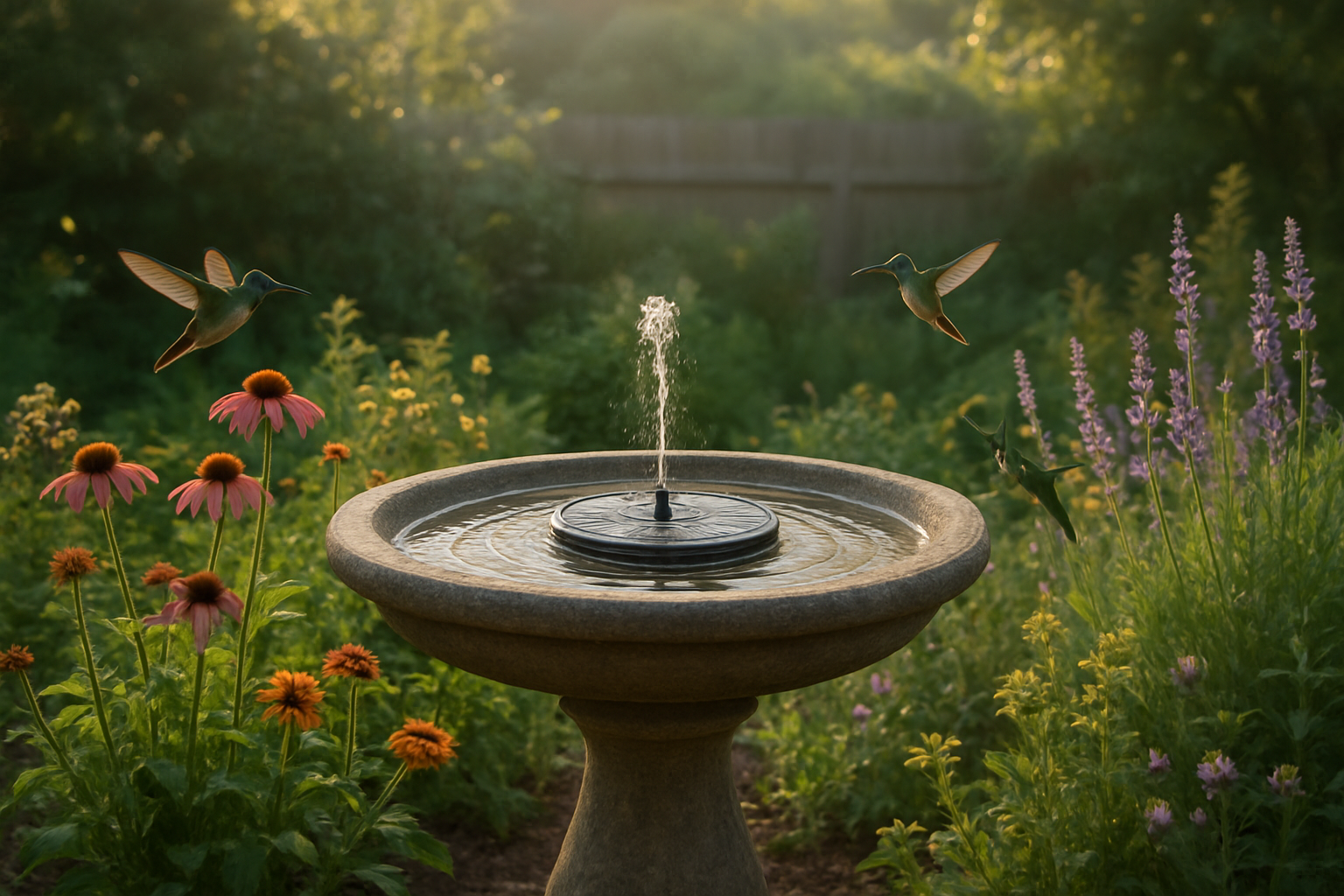
As hummingbirds head into migration, they need more than nectar. They also depend on clean water to preen their feathers, stay in good flying condition, and cool off during long, demanding journeys. A simple solar bird bath fountain for hummingbirds can turn an ordinary water dish into a moving-water stopover that these fast little birds are far more likely to use.
The best part is that this is an easy project for almost any yard or patio. You do not need a large pond or a complicated plumbing setup. With the right container, a small floating solar fountain, and a little attention to placement and maintenance, you can create a bird-friendly water feature that is both practical and attractive.
Why moving water matters to hummingbirds
Hummingbirds are tiny, but their migration is anything but small. They travel long distances and need their feathers to stay light, clean, and well-aligned. Feather care helps with insulation, waterproofing, and efficient flight. That is why a shallow bath with still water often goes unused, while a gentle spray or bubbling fountain can be irresistible.
Hummingbirds prefer water they can fly through or hover beside. They are not built to hop around in a deep basin like larger birds. Instead, they often dart into mist, spray, or shallow splashes to clean themselves. A fountain creates motion and sparkle, which also makes the water easier for birds to notice from above.
What you need
You can keep this setup simple. Before you start, gather the following:
- A shallow, wide container such as a bird bath, large plant saucer, galvanized tub, or heavy ceramic bowl
- A floating solar fountain pump sized for your container
- Clean water
- Flat stones or a brick if you want to create a perch or raise part of the fountain area
- A soft brush or sponge for cleaning
If you already have a bird bath, check whether it is wide enough for the fountain spray to stay inside the basin. If the spray lands outside the rim, the water level will drop too quickly and you will be refilling it constantly. A wider vessel is usually better than a deep one.
Choosing the right container
The ideal container is broad, shallow, and stable. Hummingbirds do not need deep water, and deep baths can be risky for all birds. Aim for a basin that holds only a few inches of water at most.
If your current bird bath is narrow, you may want to repurpose something else. Good options include:
- A wide plant saucer on a level stand
- A shallow livestock pan
- A large ceramic bowl with a stable base
- A repurposed metal tub with smooth edges
Whatever you choose, make sure it is not slippery and cannot tip easily. Stability matters more than decoration. A container that wobbles or shifts in the wind can scare birds away.
Placement tips for better bird traffic
Position the fountain in a spot that is easy for birds to see but close to some cover. Hummingbirds like open access to water, yet they also appreciate nearby shrubs, trees, or a trellis where they can retreat quickly if needed. A site with morning sun and afternoon shade is often ideal because the water stays fresh longer without overheating.
Avoid placing the fountain too close to dense bird feeders where aggressive species may guard the area. A calm, relatively quiet corner of the garden is usually best.
How to set it up
- Clean the container thoroughly before first use. Rinse away soap completely, since residue can be harmful to birds.
- Fill with fresh water to the level recommended for your fountain pump.
- Place the solar fountain in the center or near the middle of the basin so spray stays contained.
- Test the spray pattern in bright sunlight. Adjust the pump position if the water shoots too high or too far.
- Watch for stability during the first day. Make sure the container stays level and the fountain continues running well.
Because solar fountains rely on direct light, they often work best during sunny hours. That is also when hummingbirds are most active, so the timing works nicely. On cloudy days, the fountain may slow down or stop, which is normal.
Make the water even more bird-friendly
You do not need to overcomplicate the feature, but a few small additions can make it more usable for hummingbirds and other wildlife.
- Add a few stones along one edge so smaller birds can perch safely before or after bathing.
- Keep the water shallow to reduce drowning risk and make hovering easier.
- Leave open space above the bath so birds have room to approach and leave quickly.
- Use gentle spray rather than a forceful jet. A fine, bubbling movement is usually more attractive than a dramatic splash.
If your fountain has adjustable settings, start on the lowest one. Hummingbirds are drawn to motion, not pressure. You want an airy, sparkling effect, not a hard stream.
Maintenance that keeps birds coming back
Clean water is essential. Stagnant or dirty water can spread disease, attract mosquitoes, and discourage birds from using the bath. A little routine care goes a long way.
Try to follow this simple schedule:
- Top off the water daily during hot weather or heavy use
- Rinse the basin every few days to remove debris
- Scrub once a week with a brush and plain water
- Disinfect occasionally if algae build up, then rinse extremely well
Check the fountain pump too. Small solar pumps can collect bits of leaf litter, dust, or mineral deposits. If the spray weakens, lift the unit out and clear the intake according to the manufacturer’s instructions. Regular upkeep helps the fountain last longer and keeps it inviting.
Extra ways to support migrating hummingbirds
A water feature works even better alongside food and shelter. If you want your garden to be a stronger stop on a hummingbird migration route, consider adding:
- Nectar-rich flowers such as salvia, bee balm, penstemon, and trumpet vine
- Native plants that bloom at different times so food is available for longer
- A safe feeder cleaned frequently and filled with fresh nectar if allowed in your area
- Perches and cover such as shrubs or small trees
It is also helpful to avoid pesticides wherever possible. Hummingbirds may not eat insects as their main food source, but they do rely on tiny bugs for protein, especially during breeding and migration. A healthier garden ecosystem supports them from more than one angle.
Common mistakes to avoid
Even a simple bird bath can fail if a few details are overlooked. Watch out for these problems:
- Using a container that is too narrow, which can let the spray empty the basin too fast
- Setting the bath too deep, which makes the water less accessible
- Placing it in full, harsh sun all day, which can warm the water too much
- Letting algae or debris build up, which makes the feature less safe and less attractive
- Expecting constant fountain output on cloudy days or in shaded spots, since solar power depends on light
If you keep the setup simple and clean, it should be easy to maintain and enjoyable to watch.
A small project with a big payoff
A solar bird bath fountain is one of those garden additions that looks decorative but does real work for wildlife. It gives hummingbirds moving water for feather care, helps them stay in better shape during migration, and adds life and motion to your yard. Best of all, it is an easy weekend project that does not require much space or money.
For anyone who enjoys gardening with wildlife in mind, this is a practical upgrade with a big seasonal benefit. Set it up, keep the water fresh, and you may be rewarded with one of the most delightful sights in the garden: a hummingbird hovering, darting, and bathing in a fine spray of sunlight.