When to Transplant Peonies for Healthy Blooms
Peonies are famous for their long life and spectacular blooms, but they are not fond of being moved. If a peony is in the wrong spot, has outgrown its space, or needs to be divided, timing matters more than almost anything else. Choosing the right season and using a careful transplanting method can make the difference between a stressed plant and one that settles in successfully.
If you are wondering when to transplant peonies, the short answer is that the safest window is during dormancy, when the plant is no longer focused on making flowers or leaves. That usually means fall in most climates, though late summer can also work in cooler regions. The goal is to disturb the roots as little as possible and give the plant enough time to establish before extreme heat or deep cold arrives.
The best time to transplant peonies
Peonies should be moved while they are dormant, not when they are actively growing. Dormancy allows the plant to recover from root disturbance with less stress, and it improves the chances of blooming normally the following year.
Fall is usually the top choice
In most gardens, early to mid-fall is the ideal time to transplant peonies. The foliage has begun to die back, the roots are still active enough to settle into new soil, and cooler temperatures reduce the risk of shock. A fall transplant gives the plant time to establish roots before winter.
As a general rule, aim for the period after the leaves start to yellow and before the ground freezes hard. In many areas, that means September through October, but your local climate will determine the exact timing.
Late summer can work in cooler climates
If you live where autumn arrives early or winters come fast, late summer can be a practical transplant window. The key is to wait until the peony has finished its growing cycle for the season. You want the plant to be dormant or nearly dormant, not actively pushing new growth.
Why spring is usually not ideal
Spring transplanting is possible, but it is harder on the plant. Once peonies start sending up shoots, they are putting energy into top growth and bud formation. Moving them during this stage can delay flowering and increase transplant shock. If spring is your only option, handle the roots gently and expect the plant to take longer to recover.
Signs your peony may need to be moved
Peonies can stay in the same spot for decades, but sometimes a transplant is necessary. You may need to move one if:
- It is planted in too much shade and blooms poorly.
- Nearby trees or shrubs have crowded it out.
- The plant is too close to a walkway or structure.
- You want to divide a mature clump and create more plants.
- The soil stays too wet, which can cause root problems.
Before digging, think carefully about placement. Peonies do best when they are left alone once established, so choose a spot that gives them room to grow for years.
How to prepare the new planting site
Peonies are long-term plants, so their new home should be ready before the old plant comes out of the ground. A little planning now can save a lot of stress later.
Choose the right location
Look for a site with full sun or at least six hours of direct light each day. Good air circulation helps reduce disease problems. Avoid planting peonies too close to large shrubs or tree roots that will compete for water and nutrients.
Improve the soil
Peonies prefer well-draining soil that is rich but not overly heavy. If your soil is dense clay, work in compost to improve texture and drainage. If it is sandy and dries quickly, compost can help it hold moisture longer. Avoid adding too much fertilizer at planting time, since rich soil alone is usually enough to get the roots established.
Dig the hole ahead of time
Make the planting hole wide enough to spread the roots without bending them. A hole that is about 18 inches wide and deep is a good starting point for most divisions or mature clumps. Loosen the soil at the bottom and sides so roots can grow outward easily.
How to transplant peonies step by step
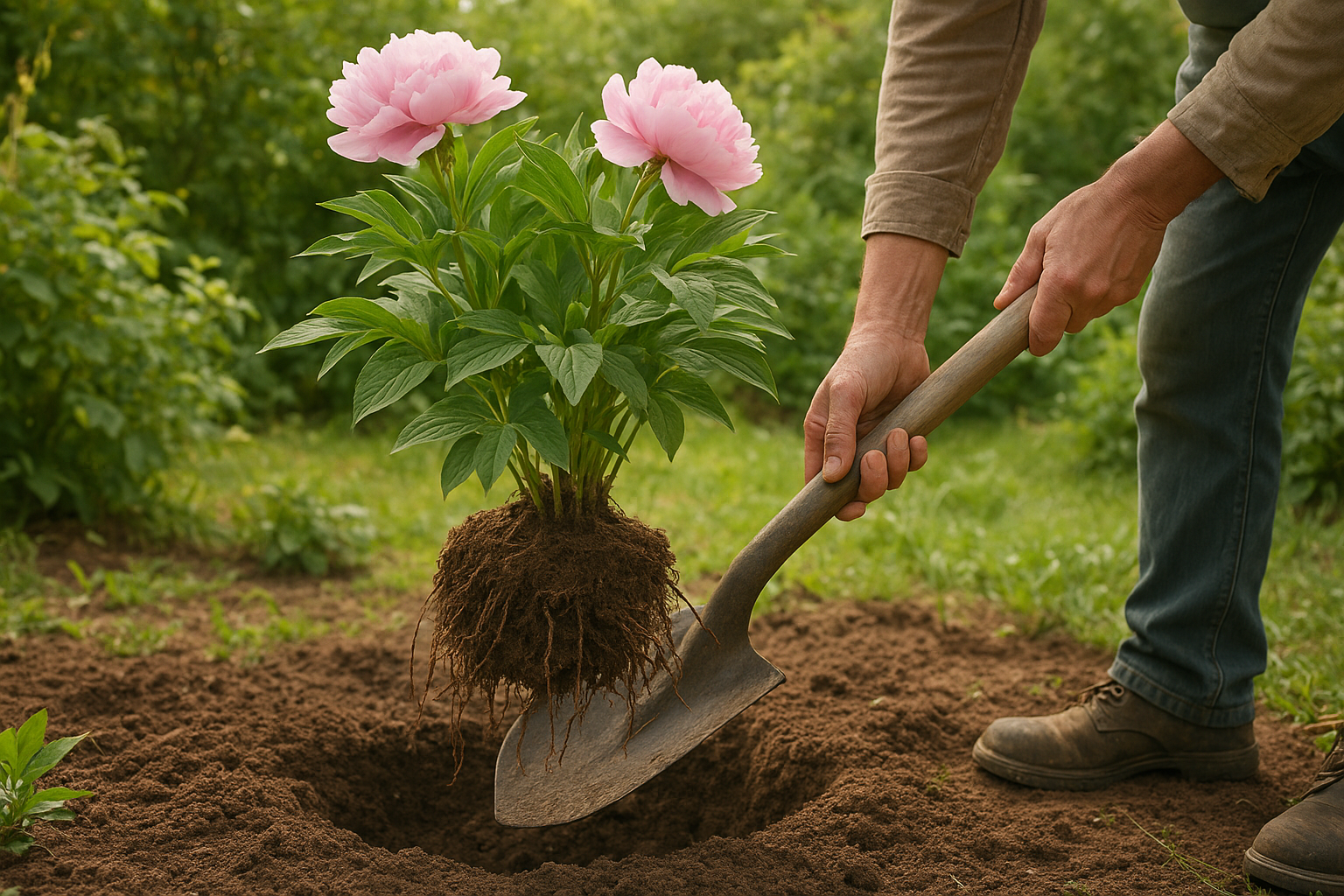
Peonies have thick, fleshy roots that break easily if handled roughly. Move slowly and keep the root ball as intact as possible.
- Cut back the foliage. After the plant has begun to die back, trim the stems down to a few inches above the soil.
- Dig wide around the clump. Use a spade or garden fork and work several inches away from the crown so you do not slice through the roots.
- Lift the plant carefully. Gently pry up the root mass, keeping as much soil around the roots as you can.
- Inspect and divide if needed. If you want to split the plant, look for sections with at least three to five healthy buds, often called eyes.
- Plant at the proper depth. Position the buds no more than 1 to 2 inches below the soil surface. Planting too deeply is one of the most common reasons peonies fail to bloom.
- Water thoroughly. Give the plant a deep watering to settle the soil around the roots.
- Mulch lightly. Add a thin layer of mulch to help retain moisture, but keep it away from the crown.
Dividing peonies without hurting them
Division is not something peonies need often, but it can be useful when a clump gets too large or you want to share plants. Mature peonies may bloom less in the center of the clump over time, which is another clue that division could help.
Use a clean, sharp knife or sturdy spade to separate the root mass into smaller sections. Each division should have healthy roots and at least three buds, though more buds usually means faster recovery and earlier flowering. Small divisions can survive, but they often take longer to bloom.
Be patient after dividing. It is common for a peony to skip one bloom season or produce fewer flowers the year after transplanting. That does not necessarily mean something is wrong; the plant may simply be focusing on root growth.
Aftercare that helps peonies recover
Once the peony is in its new spot, the follow-up care is just as important as the transplant itself.
- Water regularly, but do not overwater. Keep the soil evenly moist while the roots settle in, especially if the weather is dry.
- Do not fertilize heavily right away. Too much fertilizer can push weak growth before the plant is ready.
- Watch the planting depth. If the crown settles too deep after watering, gently lift and reset it before the soil fully compacts.
- Protect from competition. Keep weeds and nearby aggressive plants away from the new transplant.
- Be patient with blooms. It may take a season or two for the plant to return to peak flowering.
Common mistakes to avoid
Many peony transplant problems come down to a few preventable errors. Avoid moving the plant during hot weather, since heat increases stress and dries out roots quickly. Do not bury the buds too deeply, or you may get lots of leaves and very few flowers. Also, resist the urge to plant in heavy shade just because there is open space there; peonies need light to bloom well.
Another mistake is letting the roots dry out while you work. If you are not planting immediately, keep the divisions shaded and slightly moist. Even a short period of drying can set the plant back.
What to expect after transplanting
A transplanted peony may look quiet for a while, and that is normal. The first year is often about recovery rather than display. Healthy foliage, sturdy stems, and gradual root establishment are signs the plant is adjusting well. By the second or third season, many transplanted peonies are back to producing reliable blooms, especially if they were moved at the right time and planted at the correct depth.
In the end, the best answer to when to transplant peonies is simple: wait for dormancy, work gently, and give the plant a good permanent home. With the right timing and care, your peony can continue thriving for many more years in its new spot.