How to Clean a Dishwasher Filter the Right Way
If your dishwasher smells funky, leaves grit on glasses, or suddenly seems bad at its one job, the filter is the first place to check. Learning how to clean a dishwasher filter takes about 10 to 15 minutes, and it can save you from re-washing dishes or calling for a repair you may not need.
Most newer dishwashers have a removable filter at the bottom of the tub that traps food particles during the wash. When that filter gets clogged, water flow suffers and bits of food can end up right back on your “clean” plates. Appliance makers including Whirlpool and Bosch recommend checking your owner’s manual, removing the filter if your model allows it, and washing it under running water with mild soap and a soft brush. ([producthelp.whirlpool.com](https://producthelp.whirlpool.com/Dishwashers/Product_Info/Dishwasher_Cleaning_and_Care/How_to_Clean_the_Dishwasher_Filters?utm_source=openai))
Why Your Dishwasher Filter Gets So Gross
A dishwasher filter is supposed to catch the small stuff: softened rice, seeds, eggshell flecks, bits of herbs, paper labels, and greasy residue. That is good news for your plumbing, but not great news if the filter is ignored for months.
A dirty filter can cause several common dishwasher complaints:
- Gritty dishes or glasses: Food particles may recirculate during the wash.
- Bad smells: Trapped food and grease sit in a warm, damp place.
- Poor draining: A blocked filter area can slow water movement.
- Cloudy or spotty results: Water may not move through the machine as forcefully.
- Food stuck after a full cycle: The spray arms may not get enough clean water flow.
Not every dishwasher has the same filter style. Some older models have self-cleaning grinder-style systems, while many modern machines use a manual filter that twists or lifts out. If you are not sure which type you have, search the model number on the dishwasher label and check the use-and-care guide before pulling on anything.
What You’ll Need
- Dish soap
- Warm running water
- Soft sponge or dishcloth
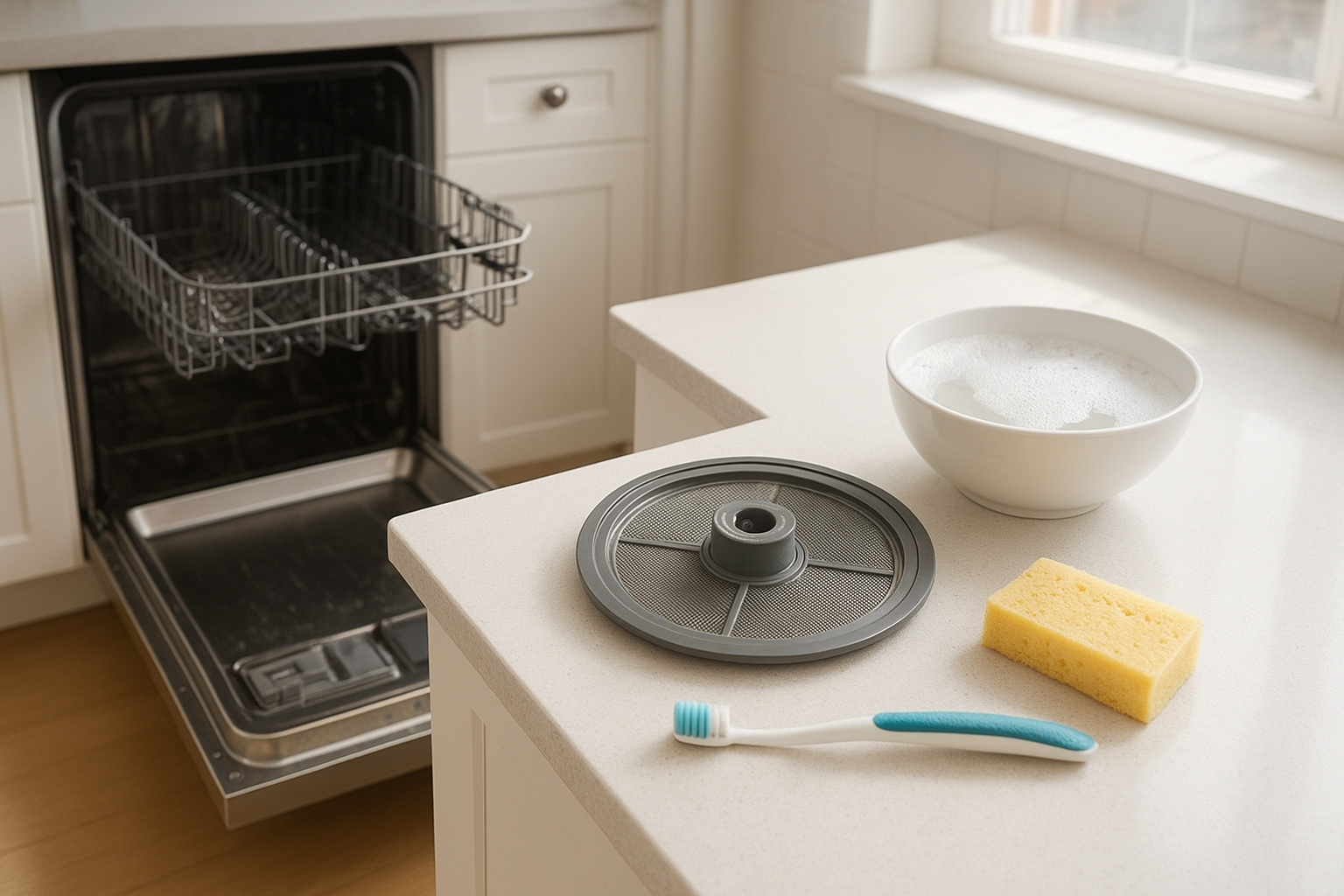
- Soft-bristled brush or old toothbrush
- Small bowl or sink basin
- Towel
- Flashlight, optional but helpful
Avoid steel wool, stiff wire brushes, knives, or anything sharp. Dishwasher filters are usually plastic and fine mesh, and rough tools can damage them.
How to Clean a Dishwasher Filter
1. Empty the dishwasher and remove the lower rack
Start with a cool, empty dishwasher. Pull out the lower rack and set it aside so you can clearly see the bottom of the tub. If there is standing water above the filter, stop and check your manual. A small amount of water in the sump area can be normal, but water covering the bottom of the tub may point to a drain issue.
2. Find the filter assembly
Most removable filters sit at the bottom center or back corner of the dishwasher tub, often below the lower spray arm. Many have a round upper filter that twists to unlock and a flat lower filter that lifts out after the top piece is removed.
Do not force it. On many Whirlpool-style filters, the upper filter assembly turns counterclockwise and lifts out, then the lower filter can be removed. Other brands may use a different release. Your model’s manual is the final word. Whirlpool specifically notes that some filters require model-specific removal and reinstallation steps. ([whirlpool.com](https://www.whirlpool.com/blog/kitchen/fixing-removing-and-replacing-dishwasher-filters.html?fmt=png-alpha&utm_source=openai))
3. Remove loose debris
Carry the filter to the trash can and gently tap or wipe off obvious food scraps. Check for popcorn kernels, broken glass, twist ties, fruit stickers, bits of plastic, or soggy paper labels. These small items can block water flow or make noise during a cycle.
If you suspect broken glass, put on gloves and use a flashlight. Never sweep your bare fingers around the filter well.
4. Wash the filter with warm, soapy water
Rinse the filter under warm running water. Add a drop or two of dish soap and use a soft sponge or toothbrush to clean the mesh, grooves, and plastic frame. For greasy buildup, let the filter sit in warm, soapy water for five minutes, then brush again.
Manufacturers recommend a soft brush for stuck-on food bits or mineral deposits, especially in homes with hard water. Bosch also recommends mild soap and a soft brush when cleaning a dishwasher filter under running water. ([bosch-home.com](https://www.bosch-home.com/us/owner-support/get-support/support-selfhelp-dishwashers-cleaning-dishwasher-filter?utm_source=openai))
5. Wipe the filter well
Before reinstalling the filter, look into the opening where it sits. Wipe away slime, grease, or food around the sump area with a damp cloth. Do not remove screws or disassemble pump parts unless your manual tells you to. This is a cleaning job, not a repair job.
Spin the lower spray arm gently while you are there. If it bumps into a utensil, rack part, or tall dish during normal loading, that can also cause poor cleaning.
6. Reinstall the filter securely
Put the lower filter back first if your machine has one, then lock the upper filter into place. This step matters: a loose or incorrectly seated filter can let food particles through or interfere with the spray arm.
After reinstalling it, give the filter a gentle wiggle. It should feel seated, not floating or crooked. Replace the lower rack and run a short rinse cycle if desired.
How Often Should You Clean a Dishwasher Filter?
A good rule for most homes is to check the filter once a month and clean it whenever you see buildup. If your dishwasher runs daily, you scrape instead of rinse, or you cook greasy foods often, you may need to clean it more frequently.
Some Whirlpool manuals give a more detailed schedule based on how many loads you run and whether you scrape, rinse, or wash dishes before loading. For example, households running 8 to 12 loads per week may need to clean the filter every two months if they only scrape dishes, while lighter-use households may need it only once or twice a year. ([whirlpool.com](https://www.whirlpool.com/content/dam/global/documents/201908/owners-manual-w10901525-revb.pdf?utm_source=openai))
Still, real life is simple: if the dishwasher smells, drains slowly, or leaves grit, check the filter first.
Should You Rinse Dishes First?
You usually do not need to fully rinse dishes before loading. In fact, ENERGY STAR advises scraping food off dishes rather than pre-rinsing, noting that modern dishwashers with soil sensors are designed to detect how dirty the water is and adjust the cycle. ([energystar.gov](https://www.energystar.gov/products/dishwashers?utm_source=openai))
The sweet spot is this: scrape plates well, but do not wash them clean at the sink. Remove bones, toothpicks, fruit pits, labels, and heavy clumps of rice or pasta. Then let the dishwasher do the washing.
What Not to Do
- Do not run the dishwasher without the filter installed. Food and debris can reach places they should not.
- Do not use bleach on stainless steel interiors. It can damage stainless surfaces and seals.
- Do not scrub the mesh with metal tools. Torn mesh means the filter cannot do its job.
- Do not force a stuck filter. Look up the manual before breaking tabs or clips.
- Do not ignore recurring standing water. If cleaning the filter does not help, the drain hose, air gap, garbage disposal connection, or pump may need attention.
Quick Troubleshooting After Cleaning
If you cleaned the filter and the dishwasher still is not performing well, check these common issues before assuming the appliance is failing:
- Spray arms: Make sure holes are not plugged with seeds or mineral deposits.
- Loading: Bowls and pans should not block the detergent dispenser or spray arms.
- Water temperature: Run the kitchen tap until hot before starting the dishwasher.
- Detergent: Old, clumpy detergent may not dissolve properly.
- Rinse aid: This can help with spots, especially in hard-water homes.
If there is a sour smell, clean the filter, wipe the door gasket, and run a dishwasher cleaner cycle according to your appliance manual. Whirlpool recommends regular cleaning to help reduce filming, spotting, and odors, and notes that monthly dishwasher cleaner can help keep the interior fresh. ([producthelp.whirlpool.com](https://producthelp.whirlpool.com/Dishwashers/Dishwasher/Other/Cleaning_and_Odor/Cleaning_and_Maintenance/Cleaning_the_Filter/Cleaning_the_Filter_-_Dishwasher?utm_source=openai))
The Bottom Line
Cleaning the dishwasher filter is one of those small chores that pays off quickly. It takes only a few minutes, uses tools you already have, and often fixes odor, grit, and poor cleaning in one go.
Check it monthly, clean it gently, and reinstall it correctly. Your dishwasher will have better water flow, your dishes will come out cleaner, and you will be much less likely to open the door and wonder why everything feels sandy.