August Orchid Care: 6 Tasks for More Fall Blooms
Late summer is a transition period for orchids. Growth may slow, blooms may fade, and indoor conditions often get trickier because of strong sun, air conditioning, and drier air. That does not mean your orchid is in trouble — it just means this is the time to fine-tune its care so the plant stays healthy and ready to bloom again later.
August orchid care is less about pushing flowers and more about supporting strong roots, clean foliage, and steady growth. A few small adjustments now can make a big difference in how your orchid looks through fall and winter.
1. Give orchids bright, filtered light
Most orchids prefer bright light without harsh direct sun. In August, the sun can still be intense enough to scorch leaves, especially on west- and south-facing windowsills. If the leaves start looking pale, yellow, or slightly burned, the plant is probably getting too much direct light.
Move orchids a little farther from the window or soften the light with a sheer curtain. If you already use a bright spot indoors, check it again now that the sun angle has changed. A good light setup helps the plant store energy in its leaves and roots, which supports later blooming.
- Good sign: leaves are medium green, firm, and upright
- Too much light: yellowing, bleached patches, or scorch marks
- Too little light: very dark green leaves and weak growth
2. Water based on the plant, not the calendar
Orchids do not like to sit in constant moisture, but they also should not be left bone dry for long periods. In late summer, indoor air can be especially dry if you run air conditioning, so the plant may need water a little more often than it did earlier in the season.
The safest approach is to check the potting mix and roots before watering. If the roots look silvery or the bark feels dry, it is usually time to water. Healthy roots are often green after watering and firmer in texture. Always water thoroughly, then allow excess water to drain away completely.
Never let the pot stand in a saucer full of water. Root rot is one of the most common orchid problems, and it often starts when the roots stay wet too long.
A simple watering routine
- Check the potting mix with your finger or a moisture meter.
- If it feels nearly dry, water slowly until it runs through the drainage holes.
- Let the pot drain fully before returning it to its decorative container or saucer.
- Empty any collected water afterward.
3. Raise humidity the easy way
Orchids naturally grow in humid environments, so dry household air can stress them. This is especially common in air-conditioned rooms, where the air may feel comfortable to us but too dry for tropical plants.
If you have one orchid, you do not need a complicated setup. A few simple humidity fixes can help:
- Set the pot on a tray filled with pebbles and water, keeping the pot above the water line
- Group orchids with other houseplants to create a slightly moister microclimate
- Use a room humidifier if your home is very dry
- Keep plants away from direct AC vents and drafty windows
Just remember that humidity should come from the air, not from wet leaves. Try to keep water out of the crown and between leaves, since trapped moisture can lead to rot.
4. Feed lightly, then stop when growth slows
Many orchids appreciate regular feeding during active growth, but late summer is not the time to overdo it. Use a balanced orchid fertilizer at a diluted strength, and follow the label directions carefully. A weak, steady feeding schedule is usually better than a heavy dose.
If your orchid is still producing new leaves or roots, gentle feeding can support that growth. If the plant has clearly slowed down, you can ease off. Overfertilizing can burn roots and leave behind mineral buildup in the potting medium.
One helpful habit is to flush the pot with plain water occasionally. This rinses out excess salts and keeps the growing medium cleaner. If you notice a white crust on the pot or bark, that is often a sign of fertilizer buildup.
5. Check roots, potting mix, and drainage
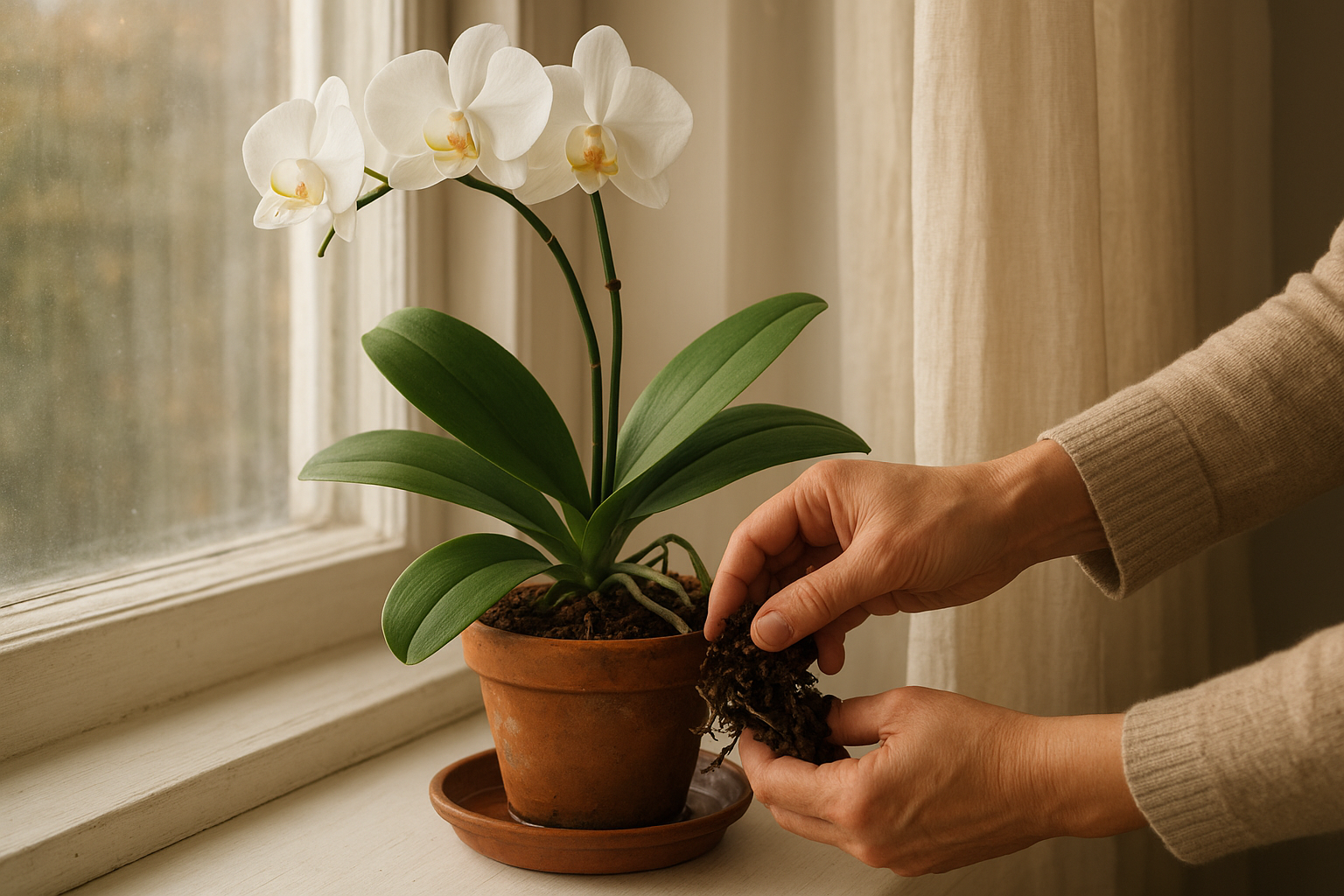
August is a good time to inspect the whole plant instead of focusing only on the flowers. Healthy orchids need airy roots and a potting mix that drains well. If the medium is broken down and compacted, roots cannot get enough air.
Look for signs that your orchid may need repotting soon:
- The mix smells sour or stays wet for too long
- Bark pieces have turned soft and broken down
- Roots are growing over the pot edge or circling heavily inside the container
- Water runs through too quickly because the medium has collapsed
If your orchid is in bad shape, repotting may be worth doing once blooming is finished or when new roots begin to appear. Use a fresh orchid mix designed for the type you grow, and choose a pot with plenty of drainage holes.
6. Watch for pests and trim away trouble spots
Warm weather and dry indoor conditions can invite pests like spider mites, mealybugs, and scale. These are easier to manage when caught early, so inspect your orchid regularly.
Check under leaves, along the stems, and around the base of the plant. Sticky residue, tiny white cottony clusters, or speckled leaves can all point to insect activity. If you spot a pest problem, isolate the plant right away so it does not spread to nearby houseplants.
You can often handle a minor issue by wiping pests off with a cotton swab dipped in rubbing alcohol or by rinsing the plant gently and following up with a safe treatment. Remove dead leaves or obviously damaged material with clean scissors, but do not cut healthy growth just because the plant looks a little messy.
What to expect after August care
Orchids do not usually respond with immediate flowers after a care adjustment, and that is normal. This month’s work is building the conditions for future success. A plant with strong roots, stable moisture, healthy leaves, and enough light is much more likely to produce flower spikes when the time is right.
If your orchid is resting now, resist the urge to force it. Let it recover, strengthen, and settle into a routine. That patience usually pays off with better blooms later.
Quick August orchid checklist
- Move the plant to bright, indirect light
- Water only when the potting mix is nearing dry
- Increase humidity if your home air is dry
- Feed lightly if the plant is still growing
- Inspect roots, drainage, and potting mix
- Look for pests before they spread
With just a few thoughtful changes, August orchid care becomes simple maintenance instead of guesswork. A little attention now can help your orchid stay healthy through the seasonal shift and set the stage for stronger blooming when cooler weather arrives.