How to Style Garden Cuttings for a Chic Kitchen Display
Fresh flowers can transform a kitchen in seconds, but you do not need a florist bouquet to get that polished, lived-in look. A few carefully chosen garden cuttings can look even better: lighter, less fussy, and more personal than a standard bunch.
The trick is to treat stems like décor, not just flowers. With the right vase, a few mixed textures, and a little attention to scale, you can create a garden cuttings flower display that feels intentional and elegant without costing much at all.
Why garden cuttings work so well in the kitchen
Kitchen displays should feel fresh, natural, and easy to live with. That is exactly why cuttings from your own yard often work better than dense bouquets. A single sprig in a small vase can soften a counter, brighten a windowsill, or add height to a shelf without crowding the space.
Garden cuttings also let you work with what is looking good right now. If your borders are full of climbers, herbs, grasses, or long stems after pruning, you may already have everything you need for an attractive arrangement.
Best plants to cut for a simple kitchen arrangement
When people hear “cut flowers,” they often think of roses, dahlias, or hydrangeas. Those are beautiful, but they are not your only option. Many plants with attractive stems, foliage, or seed heads can be just as striking indoors.
Great choices to try
- Clematis for delicate, trailing flowers that look airy in a slim vase
- Orchids if you are using shop-bought stems or dividing indoor plants carefully
- Herbs such as rosemary, sage, mint, and basil for scent and texture
- Flowering branches like viburnum, jasmine, or flowering currant in season
- Ornamental grasses for movement and a soft, modern feel
- Foliage such as eucalyptus, pittosporum, or fern fronds for a minimal look
- Seed heads and dried stems for a more sculptural arrangement
For the most stylish result, mix one “star” stem with a few quieter supporting pieces. That keeps the arrangement from looking too busy.
How to choose the right cuttings
Not every stem will look good in a vase, so it helps to be selective. Look for cuttings with strong lines, fresh color, and interesting shape. A stem does not need a large bloom to be useful; sometimes the curve of the branch is the prettiest part.
Choose stems that are:
- freshly cut or recently pruned
- free from pests or disease
- long enough to sit naturally in the vase
- different in height, if you want a layered look
Avoid using anything with sticky sap, strong thorns near eye level, or pollen-heavy blooms if the arrangement will sit in a busy kitchen. Also, if you have children or pets, check that your chosen plant is safe to keep indoors.
Step-by-step: how to make a stylish vase arrangement
You do not need floristry foam or fancy tools. A clean jar, bottle, or clear vase is often enough.
- Start with a clean vase. Wash it well so bacteria do not shorten the life of the stems.
- Trim the stems. Cut each one at an angle with sharp scissors or snips.
- Remove any leaves below the water line. This helps keep the water fresher for longer.
- Choose the tallest stem first. Use it as your anchor so the arrangement has shape.
- Add supporting stems one at a time. Turn the vase as you work so the display looks balanced from every angle.
- Keep some breathing room. A relaxed, airy arrangement usually looks more modern than a tightly packed bouquet.
- Step back and edit. If it looks crowded, remove one stem rather than forcing everything in.
If you are making several small arrangements, try repeating one or two stems in each vase. That creates a cohesive look across the kitchen while still feeling informal.
Vase ideas that make cuttings look expensive
The container matters just as much as the stems. Clear glass is a safe choice because it keeps the arrangement light and lets the shape of the stems do the decorating. But other vessels can work beautifully too.
Try these options
- Small bud vases for single stems or tiny clusters
- Recycled glass jars for a casual farmhouse feel
- Milk bottles for tall, narrow arrangements
- Stoneware pitchers for a rustic kitchen display
- Amber or green glass for a vintage touch
As a rule, slender vases suit delicate flowers and vines, while short, wider vessels work well for foliage and fuller cuttings. If the vase is too large, add more stems or cluster several small vases together instead of using one oversized container.
How to make the arrangement last longer
Fresh cuttings can stay attractive for several days, and sometimes longer, if you give them a little care. This matters in a kitchen, where heat from appliances can shorten vase life.
- Change the water every one to two days
- Re-trim the stems every few days
- Keep vases away from direct sunlight and hot cookers
- Remove any fading petals or leaves promptly
- Use cool water for most stems unless the plant prefers otherwise
Herbs can be especially useful because they often hold up well and add fragrance. Just remember to use them before they wilt too far, since a tired herb stem can quickly spoil the fresh look.
Styling tips for a kitchen that feels curated, not cluttered
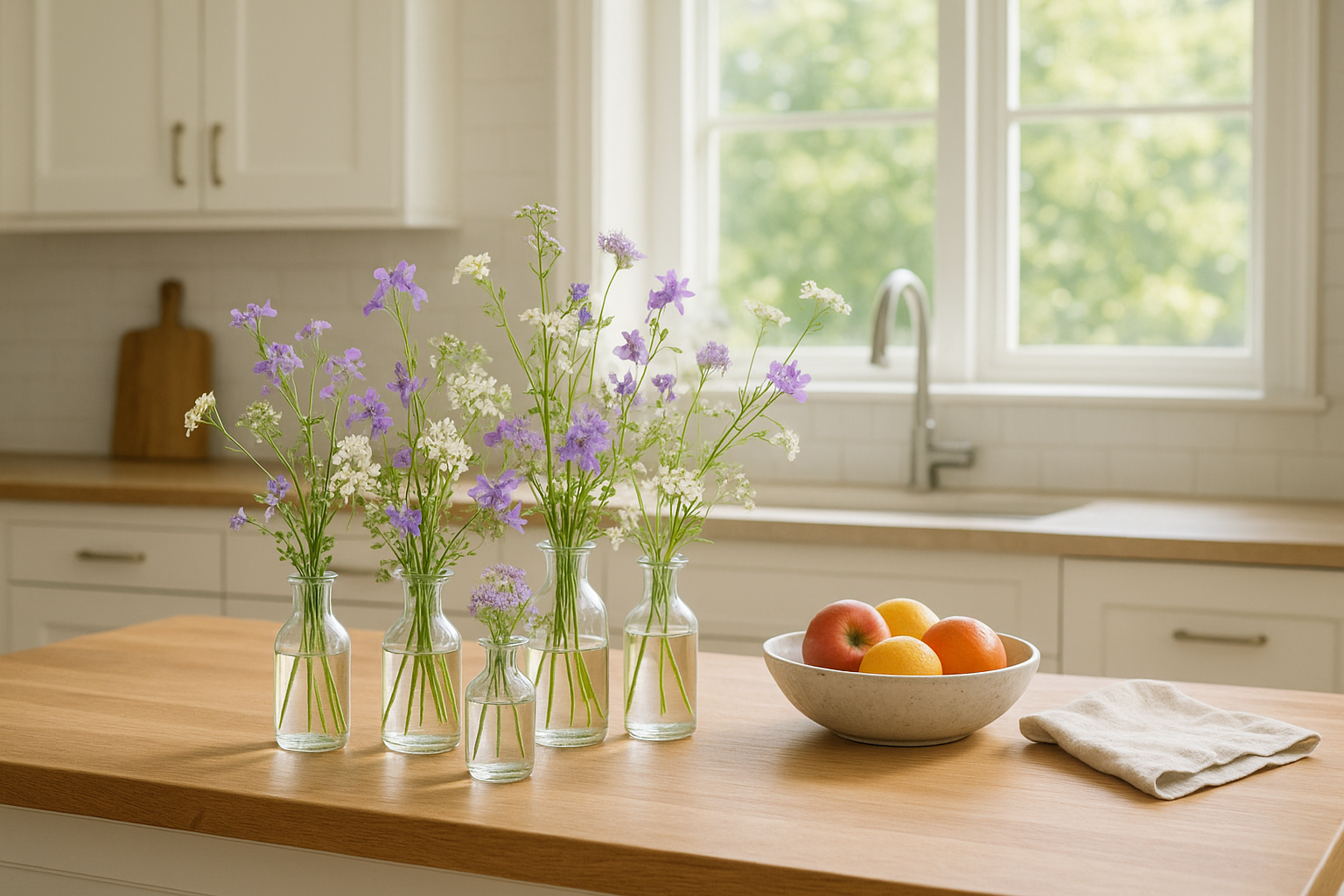
In the kitchen, less is usually more. One of the easiest ways to make a cuttings display look chic is to let negative space do some work. A few small vases arranged in a line on a shelf, sill, or island often look better than one giant centerpiece.
For a balanced display, think about the rest of the room. If your kitchen already has bold cabinetry or busy countertops, keep the cuttings simple with single stems and quiet greenery. If your kitchen is plain and neutral, you can use the display to add more color or shape.
Here are a few combinations that work especially well:
- One tall stem + two short vases for a layered, contemporary look
- Mixed greenery only for a calm, minimalist arrangement
- One flower type repeated across several vessels for a collected feel
- Flowers and herbs together for beauty plus fragrance
Easy seasonal ideas
The best part of this approach is that it changes with the garden. In spring, try blossom branches or early clematis. In summer, use airy climbers, herb cuttings, and soft grasses. In autumn, seed heads, berries, and late foliage can feel rich and textural. Even winter prunings can look elegant when arranged in a tall bottle or simple jug.
If you keep a pair of snips near the back door, you can gather stems while doing everyday garden chores. That turns the display into a habit rather than a project, which is often the easiest way to keep a home feeling fresh.
Quick checklist before you bring cuttings indoors
- Cut in the morning if possible
- Use sharp, clean snips
- Remove damaged leaves and petals
- Match vase size to stem length
- Place the arrangement where it can be seen and enjoyed
With just a few stems and a simple vase, you can create a display that feels calm, stylish, and personal. It is an easy reminder that the prettiest home accents do not always come from a store; sometimes they are already growing just outside the door.