How to Create a Privacy Hedge for a Secluded Backyard
A well-planned privacy hedge can transform a yard from exposed and noisy to calm and tucked away. Whether you want to block a neighbor’s view, soften a fence line, or create a sheltered outdoor room, the right planting strategy makes a big difference.
The good news is that you do not need a massive property or a professional landscape crew to get that secluded feel. With the right plants, spacing, and maintenance plan, you can build a living screen that looks attractive year-round and only gets better with age.
Why a privacy hedge works so well
A fence can hide a yard, but a hedge does more than that. It adds texture, filters wind, reduces street noise a bit, and gives the space a softer, more natural look. In many yards, it also creates a better backdrop for seating areas, patios, and garden beds.
The best privacy hedge is one that fits your climate, soil, and available space. Fast growth matters, but so does density. A hedge that grows quickly but stays sparse will not give you the coverage you want.
Choose the right plant for your climate
Start by thinking about your growing zone and how much room you have. Some plants are naturally wider, while others stay narrow enough for tight borders. If you choose a plant that is wrong for your climate, you will spend more time replacing it than enjoying the privacy it was supposed to provide.
Popular privacy hedge options
- Arborvitae – A classic choice for cooler regions. Many types stay dense, hold their color through winter, and make an excellent year-round screen.
- Laurel – In mild climates, laurel can grow into a thick, glossy hedge with a polished look.
- Privet – Fast-growing and easy to shape, though it needs regular trimming to keep it tidy.
- Podocarpus – A good option in warmer areas for a tall, refined hedge with an upright habit.
- Holly – Offers dense coverage and can be useful where you want security as well as privacy.
If you live in a windy or exposed area, look for plants that can handle those conditions without thinning out. If your yard is narrow, choose a hedge with a slim profile so you do not lose too much usable space.
Plan the hedge before you dig
Good hedge planting starts with measuring. You want to know exactly how long the hedge needs to be and how tall it must grow to block the view you care about. Sometimes a 6-foot hedge is enough; other times you may want something taller to screen an upstairs window or a neighboring deck.
Before you plant, check for buried utilities, property lines, and local rules about hedge height or setbacks. Some neighborhoods have limits on how close you can plant to a fence, sidewalk, or driveway.
Spacing matters more than most people think
Plants spaced too far apart leave gaps that take years to fill. Plants spaced too close can compete for water and nutrients, which may weaken them over time. The exact spacing depends on the species, but many hedge plants are placed close enough that their mature widths will overlap slightly.
A simple rule of thumb is to follow the plant tag or nursery recommendation, then adjust for your goal. If you want a thick, formal screen, you may plant a little tighter. If you want a more natural look, allow a bit more breathing room.
Prepare the soil for steady growth
Privacy hedges are long-term plantings, so soil prep is worth the extra time. Most hedge plants grow best in soil that drains well but still holds some moisture. Before planting, loosen the soil in a wide area rather than digging only a small hole for each plant.
- Remove weeds and grass from the planting strip.
- Work in compost if your soil is poor or compacted.
- Check drainage by watering the area and seeing how quickly it absorbs.
- Avoid piling mulch directly against stems or trunks.
If the soil is very heavy clay, raised planting mounds or a slightly elevated bed can help roots avoid standing water.
Planting day: what to do for the best start
The first planting season is the most important. Water stress during this stage can slow growth and create uneven patches in the hedge later on. Plant on a mild day if possible, and avoid the hottest part of summer unless you can water consistently.
- Dig a hole twice as wide as the root ball but no deeper than the root ball’s height.
- Gently loosen circling roots before setting the plant in place.
- Place the plant so the top of the root ball sits level with the surrounding soil.
- Backfill with native soil, lightly firming as you go.
- Water deeply right after planting.
- Add 2 to 3 inches of mulch around the base, keeping it a few inches away from the trunk.
For long hedge runs, set the first and last plants first, then stretch a line between them so the row stays straight.
How to care for a new privacy hedge
New hedges need regular watering, especially during the first summer. Deep, infrequent watering is better than shallow sprinkling because it encourages roots to grow downward. Once established, many hedge plants need less attention, but they still benefit from a steady routine.
Watering guide
- First year: Water deeply once or twice a week, depending on rainfall and soil type.
- Second year: Water during dry spells and heat waves.
- Established hedge: Check soil moisture before watering; many plants need less frequent but deeper soakings.
Keep an eye out for signs of stress such as browning tips, yellowing leaves, or patchy growth. These can point to underwatering, overwatering, poor drainage, or pest issues.
Shape it without overtrimming
It is tempting to shear a hedge into a perfect box right away, but young plants usually need time to fill out. Early pruning should focus on encouraging branching, not creating a finished shape too soon. Once the hedge is established, regular light trimming keeps it dense and tidy.
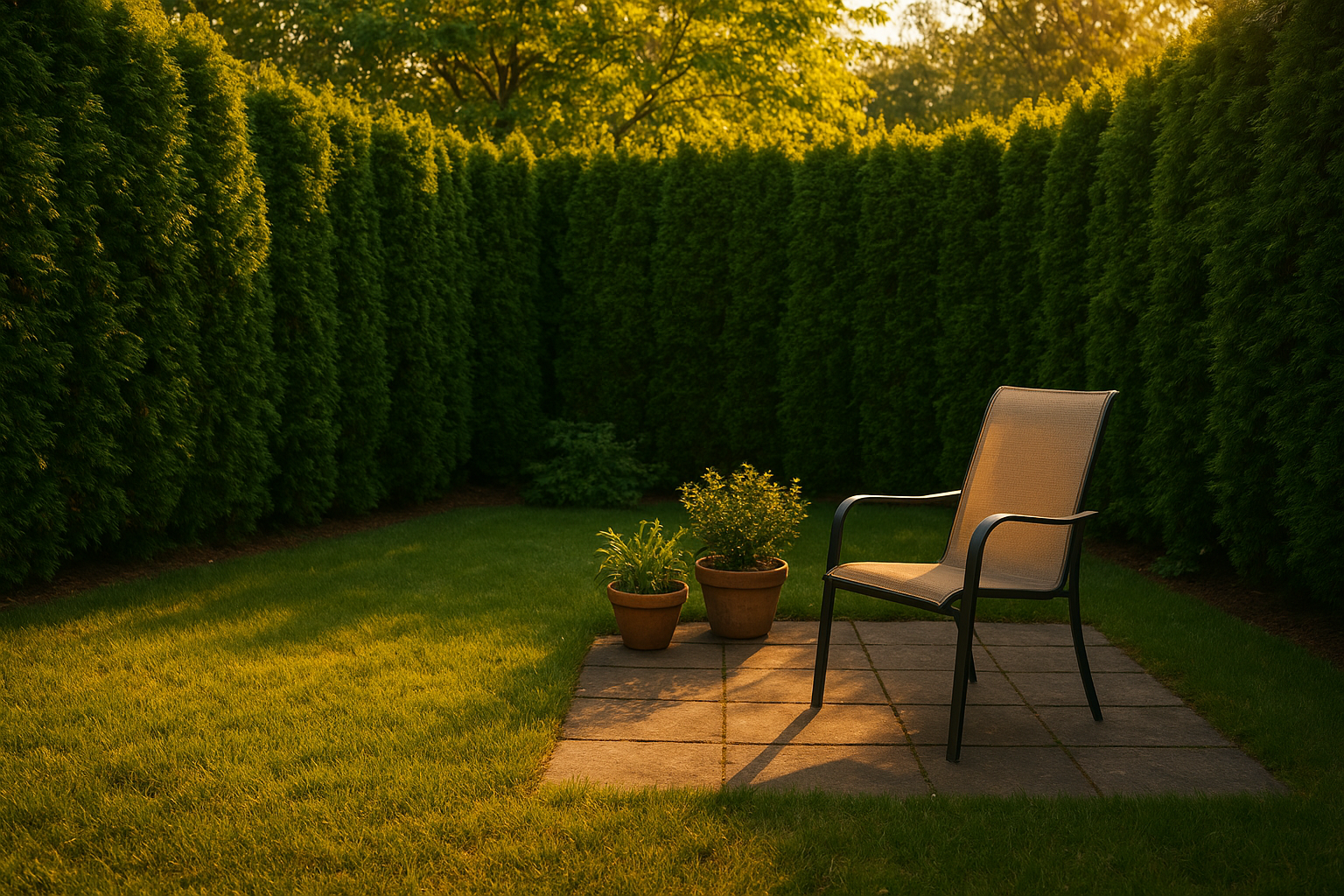
For a formal look, trim the sides so the base is slightly wider than the top. That simple shape helps sunlight reach the lower branches and prevents the hedge from becoming bare at the bottom.
If you prefer a softer landscape style, trim less often and let the hedge keep a more relaxed outline. You will still get privacy, but the result feels less rigid.
Extra ways to boost backyard privacy
A hedge does not have to do all the work by itself. Layering other elements can make the space feel even more secluded while adding beauty and function.
- Use a trellis with climbers to cover gaps while the hedge matures.
- Mix in shrubs with different textures for a fuller border.
- Add small trees where you need height above the hedge line.
- Use containers and seating to create a private outdoor room closer to the house.
If you are on a tight budget, you can combine faster growers with slower, longer-lived plants. The fast growers give immediate coverage, while the slower plants take over the long-term structure.
Common mistakes to avoid
Many privacy planting projects fail because of poor planning rather than bad plants. Avoid these common issues:
- Planting too small a hedge for the job and expecting instant coverage.
- Choosing plants that outgrow the space and require constant heavy pruning.
- Skipping soil preparation, which slows establishment.
- Ignoring sunlight needs and placing sun-loving plants in shade.
- Underwatering during the first year, when roots are still spreading.
A little patience goes a long way. Most hedges do not become a full screen overnight, but with the right setup, you will see meaningful progress within a couple of growing seasons.
Final thought
The best privacy hedge is one that looks good, fits your space, and is realistic for your climate and schedule. Once it fills in, it can make your yard feel quieter, more comfortable, and much more personal. With careful plant selection and consistent early care, you can create a secluded backyard that feels like an escape every time you step outside.