How to Clean a Front-Load Washer Pump Filter
If your front-load washer smells musty, drains slowly, or pauses with water still sitting in the drum, the pump filter may be packed with lint, coins, hairpins, or other little laundry surprises. The good news: you can usually clean a front-load washer pump filter in about 20 minutes with a towel, a shallow pan, and a little patience.
This guide is written for typical front-load washers with a small access door near the bottom front of the machine. Always check your owner’s manual for your exact model, but the general process is very similar across many machines.
What the Washer Pump Filter Does
The pump filter, sometimes called a drain pump filter or debris filter, catches small objects and lint before they reach the drain pump. LG notes that its front-load washers and combo units use this filter to collect items like buttons, loose change, and lint, and recommends cleaning it monthly. Samsung similarly recommends cleaning the front-load washer pump filter at least once per month or about every 40 washes, whichever comes first. ([lg.com](https://www.lg.com/us/support/help-library/lg-washer-how-to-clean-the-drain-pump-filter-CT10000010-20150206838321?utm_source=openai))
Top-load washers are different. Many do not have the same small front-access pump filter, so do not start taking panels apart unless your manual says there is a user-serviceable filter.
Signs Your Pump Filter Needs Cleaning
You do not have to wait for a full-on washer problem. Clean the filter if you notice any of these signs:
- Slow draining: Clothes come out wetter than usual, or water lingers in the drum.
- Musty smells: Trapped lint and debris can hold odor-causing residue.
- Error codes: Some washers show drain-related codes when the filter or drain path is restricted. LG specifically mentions checking the filter when a slow drain or OE error appears. ([lg.com](https://www.lg.com/us/support/help-library/lg-washer-how-to-clean-the-drain-pump-filter-CT10000010-20150206838321?utm_source=openai))
- Rattling sounds: Coins, buttons, or small hardware can end up in the filter housing.
- Heavy lint loads: Pet bedding, fuzzy blankets, rugs, and towels shed more debris than regular clothing.
What You’ll Need
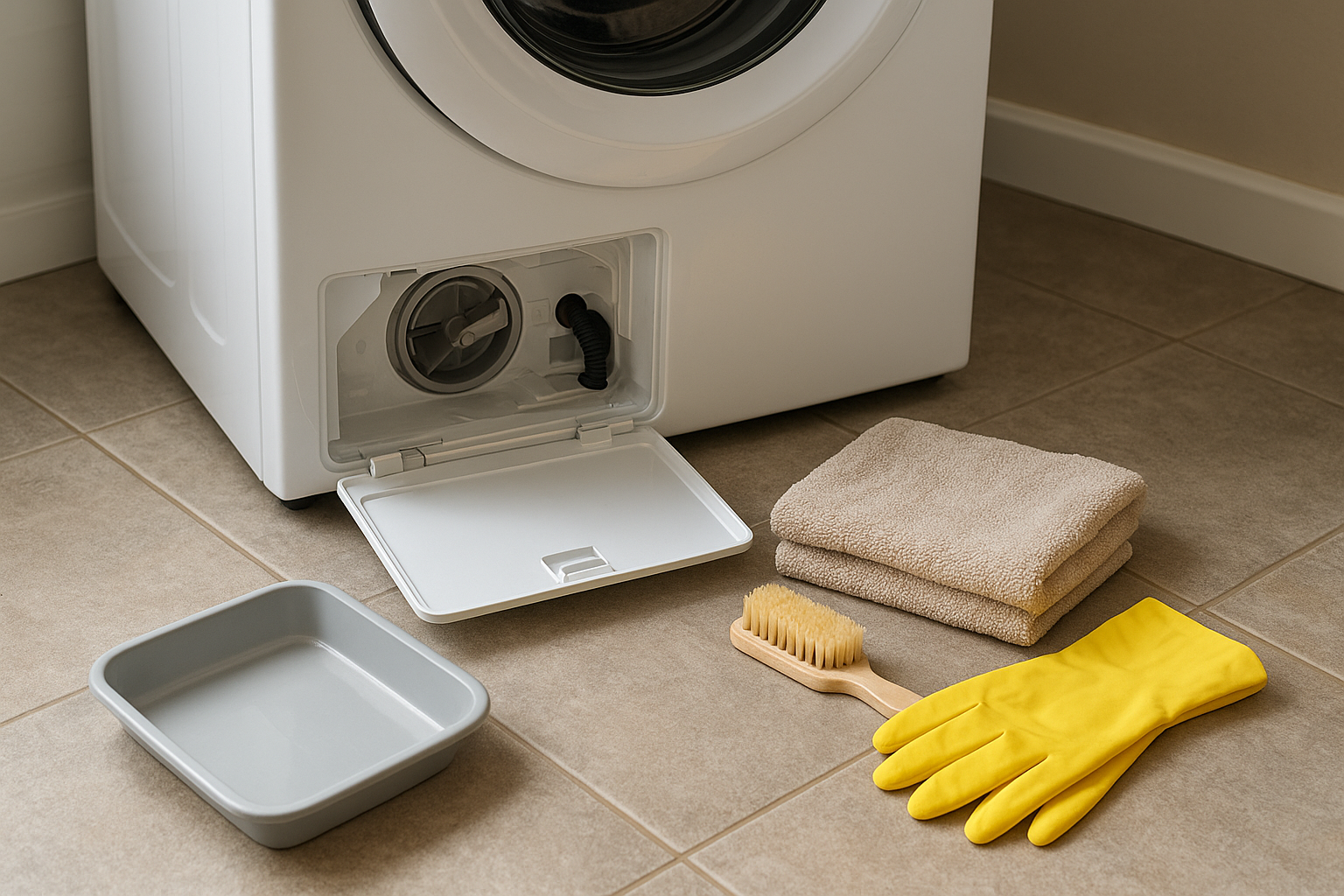
- Shallow pan, baking sheet, or low plastic container
- Old towels or absorbent rags
- Small bowl or cup, if your machine drains a lot of water
- Soft brush, old toothbrush, or sponge
- Rubber gloves, optional but helpful
- Flashlight
- Small flat tool or coin, only if your access door needs it
A shallow pan matters because the drain hose and filter are usually only a few inches above the floor. If your pan is too tall, it will not fit under the hose.
Before You Start: Two Safety Notes
First, turn the washer off and unplug it if you can safely reach the outlet. Samsung’s debris filter guidance says to unplug the washing machine before cleaning the filter. ([samsung.com](https://www.samsung.com/sg/support/home-appliances/how-to-clean-the-debris-filter-in-samsung-washing-machine/?utm_source=openai))
Second, do not clean the filter right after a hot cycle. Samsung cautions that water may be very hot after cycles such as Self Clean, Pure Cycle, or Sanitize, and advises waiting one hour so the water can cool. ([samsung.com](https://www.samsung.com/us/support/answer/ANS10003197/?msockid=2f5e0f34a2b36bfb20e41987a32a6a43&utm_source=openai))
How to Clean a Front-Load Washer Pump Filter
1. Empty the Washer
Make sure the drum is empty. If there is visible standing water in the tub, expect more water to come out through the drain hose. Place towels on the floor before opening anything.
2. Find the Access Panel
Look for a small rectangular or square door near the bottom front of the washer. On many machines it is on the lower left, but some models place it on the lower right. Open it by pulling the tab, pressing the latch, or gently using a coin if your model allows that.
3. Set Up for Water
Place a towel directly under the access area. Set your shallow pan below the small emergency drain hose, if your machine has one. Keep an extra towel nearby. Even when you drain carefully, a little water usually escapes when the filter is removed.
4. Drain the Small Hose Slowly
Pull the small drain hose out just far enough to reach your pan. Do not yank it. LG warns that pulling the hose too far can kink it and prevent proper draining. Remove the plug or cap and let the water flow into the pan. If the pan fills, replace the cap, empty the pan, and continue. ([lg.com](https://www.lg.com/us/support/help-library/lg-washer-how-to-clean-the-drain-pump-filter-CT10000010-20150206838321?utm_source=openai))
This is the step that keeps the job from becoming a puddle. Take your time. Depending on how much water is trapped in the washer, draining may take a few minutes.
5. Remove the Pump Filter
Once the hose stops draining, cap it and put it back in place. Now turn the pump filter counterclockwise. Keep a towel under it because more water may dribble out. Pull the filter straight out once it loosens.
6. Clean the Filter
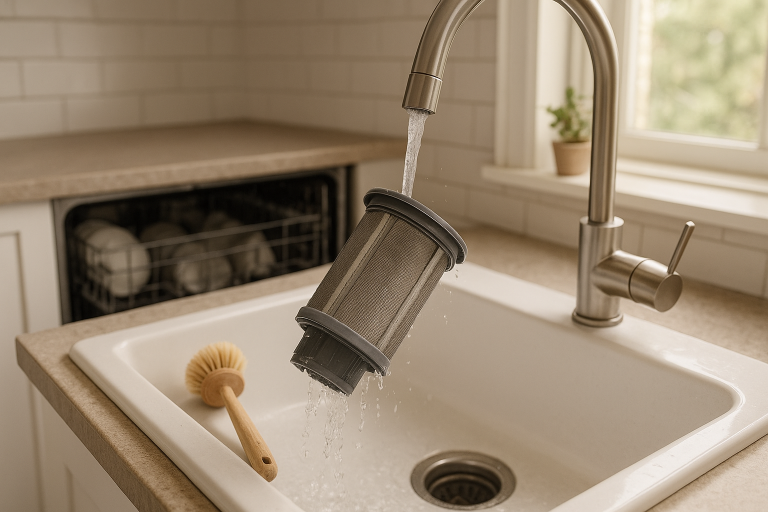
Remove lint, coins, hair, buttons, and any other debris. Rinse the filter under warm running water and scrub it with a soft brush or sponge. LG recommends washing the pump filter by hand with a soft brush or sponge and specifically says not to wash the pump filter in the dishwasher. ([lg.com](https://www.lg.com/us/support/help-library/lg-washer-how-to-clean-the-drain-pump-filter-CT10000010-20150206838321?utm_source=openai))
7. Check the Filter Opening
Use a flashlight to look inside the opening where the filter sits. If you can see lint or grit around the opening, wipe it out gently. Samsung’s instructions for debris filters also note checking that the drain pump propeller behind the filter is not blocked. Do not force anything or spin parts aggressively; just remove obvious debris you can reach easily. ([samsung.com](https://www.samsung.com/sg/support/home-appliances/how-to-clean-the-debris-filter-in-samsung-washing-machine/?utm_source=openai))
8. Reinstall the Filter Firmly
Slide the clean filter back into place and turn it clockwise until it is snug and stops. Make sure it threads evenly. A crooked or loose filter can leak. Replace the small drain hose cap securely, push the hose back into its holder, and close the access panel.
9. Run a Quick Test
Plug the washer back in. Run a rinse-and-spin or quick drain cycle with no laundry inside. Watch the access panel area for a minute or two. If you see dripping, stop the washer, turn it off, and check that the filter and drain hose cap are fully tightened.
How Often Should You Clean It?
For most households, monthly is a good habit. That lines up with LG’s monthly recommendation and Samsung’s guidance of monthly or about every 40 washes. ([lg.com](https://www.lg.com/us/support/help-library/lg-washer-how-to-clean-the-drain-pump-filter-CT10000010-20150206838321?utm_source=openai))
You may need to clean it more often if you wash pet bedding, very linty towels, work clothes, washable rugs, or items with lots of hair and debris. If your laundry routine is light, you may be able to pair it with your monthly washer tub-clean cycle so it becomes one easy maintenance routine.
How to Make Less Mess Next Time
- Use the lowest pan you own: A rimmed baking sheet can work better than a bowl.
- Drain in stages: Cap the hose whenever the pan is nearly full.
- Keep towels tight to the machine: Tuck one slightly under the front edge if possible.
- Do not skip the drain hose: Opening the filter first can release a lot more water at once.
- Clean the door gasket too: Hair and lint trapped in the rubber seal can end up back in the wash.
When to Stop and Call a Pro
Call an appliance technician if the filter will not turn with gentle pressure, the filter handle breaks, the washer leaks after the filter is reinstalled, or the machine still will not drain after the filter is clean. There may be a clog deeper in the drain hose, a blocked pump impeller, or a failing drain pump.
Also stop if you find sharp metal, broken plastic, or wiring-like material inside the filter area. Remove only loose debris you can reach without forcing parts.
The Bottom Line
Learning to clean a front-load washer pump filter is one of those small home skills that pays off quickly. Do it once a month, drain the little hose before removing the filter, and reinstall everything snugly. Your washer will drain better, smell fresher, and be less likely to surprise you with a wet load of laundry at the worst possible time.