How to Plant Bush Beans in July for a Fall Harvest
If a patch of garden opened up after garlic, early potatoes, lettuce, or peas, bush beans are one of the simplest ways to make that space productive again. A July planting can still give many gardeners a fresh fall harvest, as long as you choose quick-maturing varieties and count backward from your first expected frost.
Bush beans are especially handy because they do not need a trellis, they sprout quickly in warm soil, and they produce in a fairly compact window. Here is how to plant them in midsummer so you are not guessing.
Can You Plant Bush Beans in July?
Yes, in many areas you can plant bush beans in July for a late summer or fall harvest. The key is timing. University of Minnesota Extension lists bush snap beans as a midsummer planting option that mature in about 45 to 65 days, but notes that even a light frost can kill the plants. ([extension.umn.edu](https://extension.umn.edu/planting-and-growing-guides/planting-vegetables-midsummer-fall-harvest?utm_source=openai))
That means you need enough frost-free time for the beans to germinate, grow, flower, and set pods. If your seed packet says 50 days to maturity, give yourself a little cushion. Late-season beans often slow down as days get shorter and nights cool, so it is smart to add 10 to 14 extra days when planning.
A simple rule: plant bush beans in July if your first expected frost is at least 8 to 10 weeks away. Gardeners in warm climates may have a much longer window. Gardeners in short-season northern areas should plant early in July and choose the fastest varieties they can find.
Why Bush Beans Work Better Than Pole Beans for a Late Crop
For a midsummer planting, bush beans are usually the better choice. They mature faster, stay shorter, and do not spend extra time climbing a trellis before producing heavily. Oregon State University Extension notes that some bush snap beans can be ready in as little as 45 days, and shorter days-to-maturity varieties are useful insurance in frost-prone areas. ([extension.oregonstate.edu](https://extension.oregonstate.edu/catalog/em-9630-getting-most-your-backyard-bean-crop?utm_source=openai))
Pole beans are wonderful earlier in the season because they keep producing over a longer period, but many take longer to get going. In July, the goal is speed. Look for seed packets marked bush bean, snap bean, green bean, wax bean, or filet bean, then compare the days to maturity.
Choose the Right Variety
For a July planting, do not pick the most unusual bean just because it looks fun. Choose reliable, quick varieties with a maturity date around 45 to 55 days if possible. A 60-day variety may still work in warm regions, but in cooler areas it leaves less room for weather delays.
Good traits to look for:
- Short days to maturity: ideally 45 to 55 days for a late planting.
- Disease resistance: helpful in humid summer weather.
- Bush habit: no trellis needed, faster to establish.
- Fresh eating type: snap beans are harvested young and tender.
If you want a mix, plant one green bush bean and one yellow wax bean. They grow similarly, and the yellow pods are easier to spot when picking.
Check Soil Temperature and Garden Conditions
Beans like warm soil. Clemson Cooperative Extension recommends waiting until soil is at least 60 degrees F at a 4-inch depth before planting, and Maryland Extension notes that beans germinate well when soil has reached 65 degrees F for several days. ([hgic.clemson.edu](https://hgic.clemson.edu/factsheet/bush-pole-type-snap-beans/?utm_source=openai))
In July, cold soil usually is not the problem. Dry soil, crusted soil, and heat stress are more common. Pick a bed that gets full sun, but if your summers are extremely hot, a spot with morning sun and light afternoon shade can help seedlings establish.
Before planting, remove old crop debris, pull weeds, and loosen the top few inches of soil. Mix in a modest layer of finished compost if the bed is tired, but avoid heavy nitrogen fertilizer. Too much nitrogen can encourage leafy plants at the expense of pods.
How to Plant Bush Beans in July
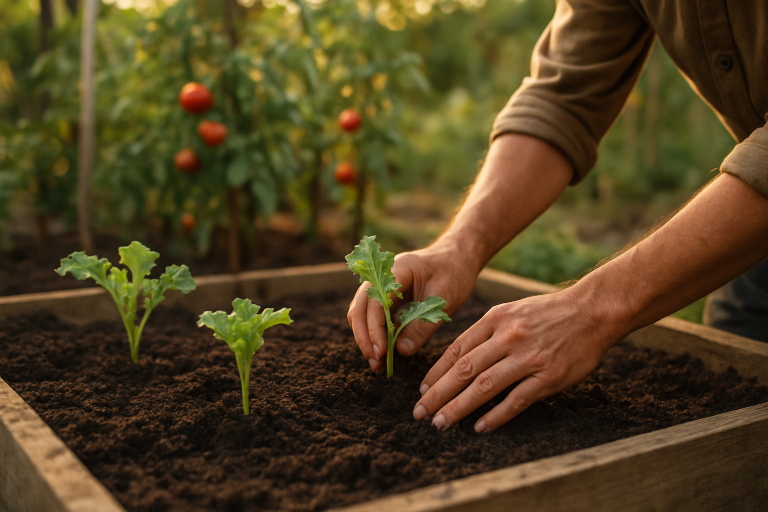
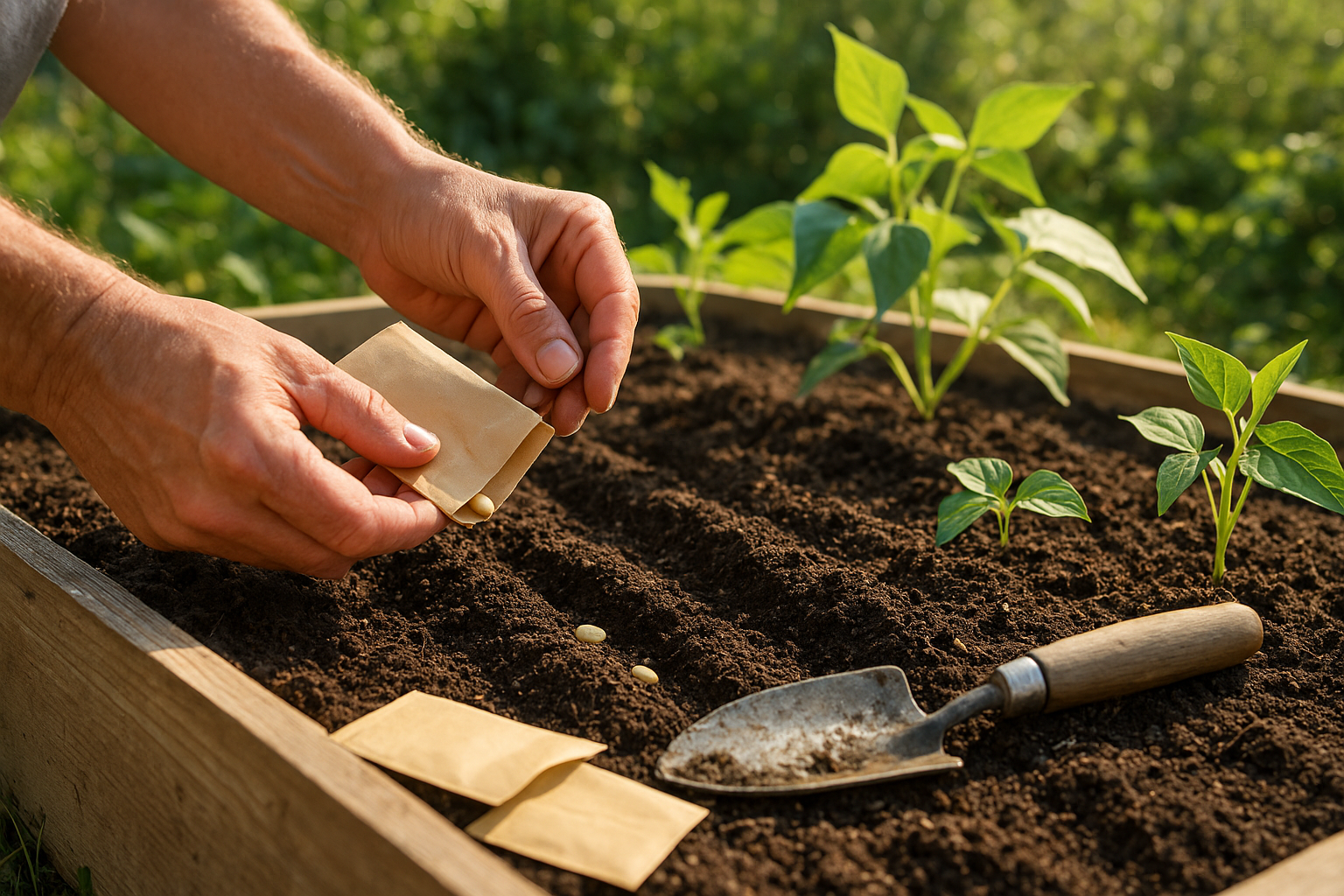
Bean seedlings dislike root disturbance, so direct sow them where they will grow. Warm July soil usually gives you fast germination if you keep the seedbed evenly moist.
- Water the bed first. If the soil is dusty-dry, water deeply the day before planting. Seeds need steady moisture to swell and sprout.
- Make shallow rows. Plant bush bean seeds about 1 inch deep in heavier soil and up to 1 1/2 inches deep in loose, sandy soil.
- Space seeds properly. Sow seeds 3 to 4 inches apart in rows 18 to 24 inches apart. If you are planting in a raised bed, you can use a block pattern with rows about 12 to 18 inches apart, as long as air can still move through the plants.
- Cover and firm the soil. Gently press the soil over the seeds so there is good seed-to-soil contact.
- Water gently. Use a watering can, shower setting, or drip irrigation so you do not wash seeds out of place.
If birds, chipmunks, or squirrels dig in your beds, lay a piece of hardware cloth, chicken wire, or lightweight row cover over the planted area until seedlings are a few inches tall.
Watering: The Make-or-Break Step
Midsummer beans need consistent moisture, especially during germination, flowering, and pod formation. Keep the top inch of soil damp until seeds sprout. Once plants are growing, aim for deep, regular watering rather than a quick daily sprinkle.
A layer of straw, shredded leaves, untreated grass clippings, or fine mulch can help keep soil moisture steady. Wait until seedlings are a few inches tall before mulching so you do not smother them.
Try to water at the base of the plants instead of soaking the leaves. Morning watering is best because foliage dries more quickly, which can reduce disease pressure in humid weather.
Should You Fertilize July-Planted Beans?
Usually, not much. Beans are legumes, and they can work with soil bacteria to fix nitrogen. In a normal garden bed with compost and decent fertility, they do not need a rich feeding program.
If your soil is poor, use a balanced organic fertilizer lightly before planting, following the label. Avoid repeated high-nitrogen feedings. If the plants look lush and green but are not flowering, too much nitrogen may be part of the problem.
Protect Seedlings from Heat and Pests
July plantings face different problems than spring plantings. The soil may dry fast, pests are already active, and hot afternoons can stress small seedlings.
- For heat: keep soil evenly moist and use a light mulch once plants are established.
- For rabbits: use a low fence or cover young plants with mesh until they size up.
- For beetles: check undersides of leaves and handpick pests early in the morning.
- For weeds: pull them small so bean roots do not have to compete for moisture.
Do not work among bean plants when the leaves are wet. This simple habit helps avoid spreading disease from plant to plant.
When to Harvest Fall Bush Beans
Start checking plants as soon as pods begin to size up. Snap beans are best when pods are firm, crisp, and still tender, before the seeds inside get large and lumpy. UC Davis Postharvest Research and Extension Center notes that typical snap beans are harvested about 8 to 10 days after flowering. ([postharvest.ucdavis.edu](https://postharvest.ucdavis.edu/ar/produce-facts-sheets/snap-beans?utm_source=openai))
Pick every day or two once harvest starts. Frequent picking encourages the plants to keep producing what they can before cold weather arrives. Use two hands if needed: hold the stem with one hand and snap the bean with the other so you do not pull up the plant.
What If Frost Is Coming?
Beans are warm-season plants, and frost can end the crop quickly. If a light frost is forecast and your plants still have pods, cover them in the evening with frost cloth, old sheets, or lightweight blankets supported so they do not crush the plants. Remove covers the next morning once temperatures rise.
If a hard freeze is coming, harvest all usable pods, even the small ones. Tiny beans are still excellent sautéed, added to soups, or tossed into stir-fries.
Best Places to Tuck in a July Bean Crop
Bush beans are compact enough for small gardens. Try them:
- After harvested garlic or onions
- Where spring lettuce or spinach has bolted
- In an empty square of a raised bed
- Along the edge of a tomato bed where they still get sun
- In a large container at least 12 inches deep
For containers, choose a bush variety, use fresh potting mix, and water often. Pots dry out faster than garden beds in July, so check them daily in hot weather.
Final Tips for Success
The best July bean crop comes down to three things: choose a fast bush variety, keep the seedbed moist, and know your frost window. If you have enough time before frost, a packet of bean seeds can turn an empty midsummer bed into several weeks of crisp, homegrown pods.
Even if the harvest is smaller than a spring planting, it is often worth it. Bush beans are quick, low-fuss, and satisfying—exactly the kind of second crop that makes a fall garden feel abundant.