5 Perennials to Leave Standing Until Spring
When the first cold snap hits, it’s tempting to grab the pruners and tidy everything at once. But some plants do more than just look messy after bloom—they provide structure, food for birds, shelter for beneficial insects, and a little beauty when the rest of the garden goes quiet.
If you want a garden that carries interest through fall and winter, these are the perennials to leave standing in fall instead of cutting back right away. You’ll still get to clean up the bed eventually, but waiting until spring can make your landscape healthier and more attractive all season long.
Why leave some perennials standing?
Not every perennial should be trimmed in autumn. In many gardens, standing stems and seed heads do several useful jobs over winter:
- Feed birds: Seed heads can provide a valuable food source when natural forage is scarce.
- Support pollinators: Hollow stems and plant debris can offer shelter for beneficial insects.
- Add structure: Dried flowers, seed heads, and stems give your garden shape after frost.
- Protect crowns: Some plants fare better when their top growth remains in place through winter.
- Reduce fall chores: Leaving cleanup for spring can be easier on you and better for the garden.
The key is knowing which plants benefit from standing through winter and which ones really do need a fall cutback. Start with these five reliable choices.
1. Purple coneflower
Botanical name: Echinacea purpurea
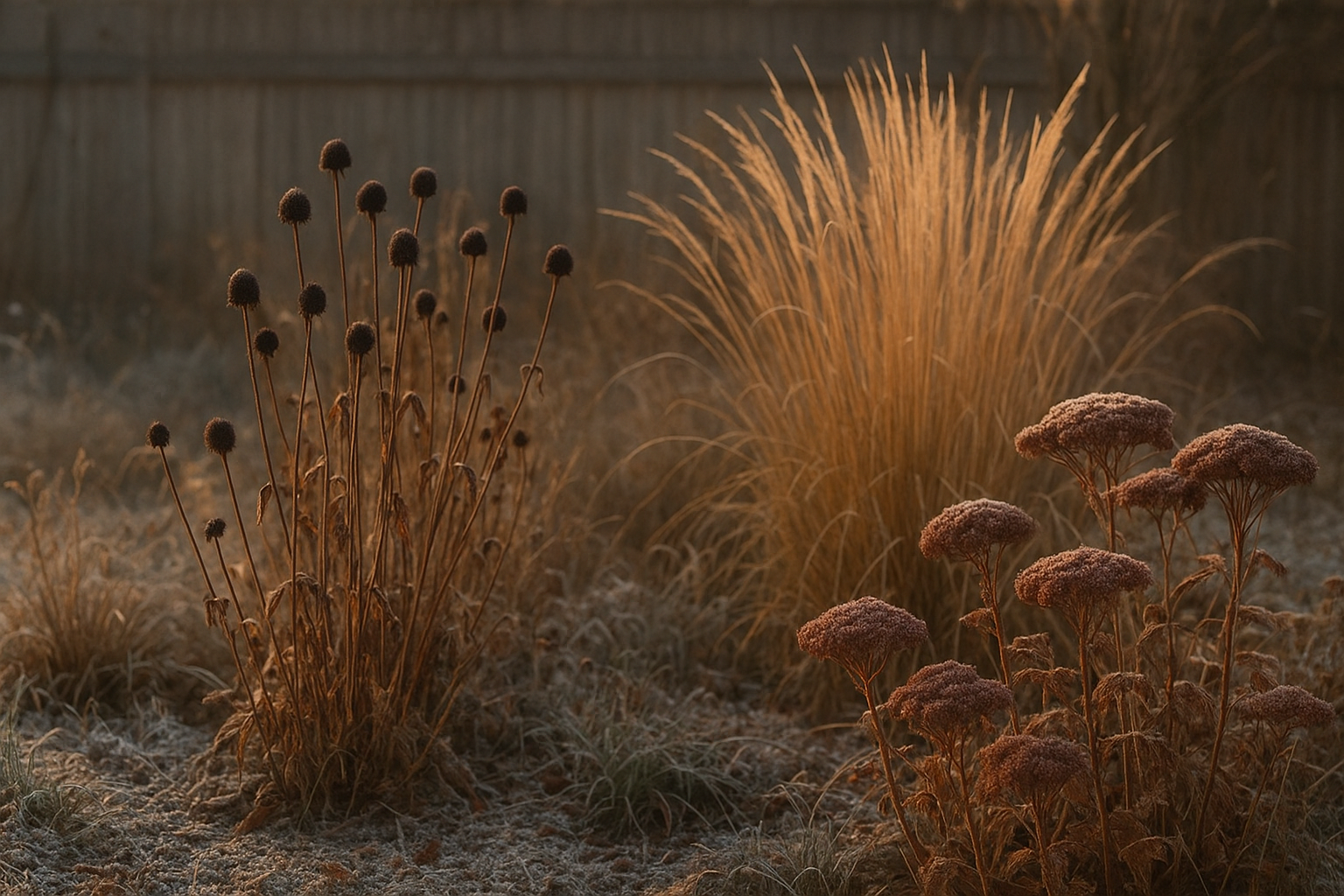
Purple coneflower is a classic late-season perennial that earns its keep twice: first with long summer blooms, then with sturdy seed heads that linger after the petals drop. The flowers may fade, but the cone-shaped centers remain attractive and useful well into winter.
Leave the stems in place after the flowers finish. Birds, especially goldfinches, often visit for the seeds. The hollow stems can also provide overwintering spots for small beneficial insects. If you cut coneflowers too early, you miss both the wildlife value and the architectural look of the dried plants.
Spring cleanup tip: Wait until new growth appears at the base, then cut the old stems back to just above emerging shoots.
2. Black-eyed Susan
Botanical name: Rudbeckia hirta and related species
Black-eyed Susan is another dependable perennial that looks surprisingly good after bloom. The golden petals may drop, but the dark seed heads and tall stems still create a pleasant, natural look in the border. In many gardens, these plants also keep feeding seed-eating birds long after summer ends.
Another reason to resist the urge to shear them down is that the standing stems help define the garden bed in winter. If you have a mixed border, the dried plants can keep the landscape from looking flat and empty when everything else is dormant.
If you live in a windy area, you can leave most stems standing and remove only any that have flopped badly or become broken. That keeps the bed tidy without stripping it bare.
3. Sedum
Botanical name: Hylotelephium species
Fall-blooming sedums, often sold under names like autumn joy or stonecrop, are especially useful because they change with the season. The flower heads start as soft clusters, deepen in color as the weather cools, and finally dry into rust-colored domes that hold their shape through frost.
These dried flower heads catch snow beautifully and give a border texture at a time of year when many plants disappear completely. They’re also less likely to become a nuisance in winter than floppy perennials, since the thick stems usually stand fairly well.
Good to know: If your sedum has very heavy, wet growth that collapses after storms, you can trim only the damaged stems and still leave the rest for winter interest.
4. Ornamental grasses
Examples: fountain grass, switchgrass, maiden grass, little bluestem
Ornamental grasses are among the best plants for winter style. Their plumes, seed heads, and upright blades bring movement and texture to the garden, even after they turn tan or bronze. On frosty mornings, they can be some of the most beautiful plants in the yard.
They also help soften hard edges, screen views, and create contrast with evergreen shrubs or bare perennial beds. Many birds use the seed heads for food, and the dense clumps can give small creatures cover.
Hold off on cutting grasses until late winter or early spring. You’ll avoid leaving a blank spot in the landscape for months, and the stems can also help trap snow around the plant base, which offers a bit of insulation.
Cleanup tip: In spring, cut grasses down to a few inches above the crown before new blades emerge. For larger clumps, use hand shears or hedge trimmers and work in sections to avoid a messy job.
5. Astilbe
Botanical name: Astilbe species
Astilbe is often grown for its feathery summer plumes, but the spent flower stalks can still add interest after the blooms fade. Even dried, the arching stems and textured seed heads bring a subtle, elegant look to shaded gardens in fall and early winter.
Astilbe is a good example of a perennial that doesn’t need to be cut to the ground just because it’s finished flowering. The foliage may fade later in the season, but the plant’s dried flower stalks can remain attractive for months. In shaded beds where winter interest is often hard to find, that makes a big difference.
If the stems begin to collapse into a soggy mess, trim only the weakest parts. Otherwise, leave the plant alone until spring cleanup.
How to decide what stays and what goes
Not every perennial is a candidate for winter standing. Use these quick rules when deciding what to leave in place:
- Leave plants with sturdy stems that hold seed heads or dried flowers well.
- Keep anything birds enjoy for late-season or winter forage.
- Save hollow or woody stems for beneficial insects when possible.
- Remove plants that are diseased or that had serious pest problems during the season.
- Cut back floppy, rotting, or mushy growth if it starts to look unhealthy rather than simply faded.
If a plant has mildew, blight, or visible pest damage, don’t leave the debris in place. In that case, autumn cleanup can help reduce problems next year. The goal is not to ignore the garden completely, but to make smart choices about what stays.
Best practices for fall and spring cleanup
Leaving perennials standing doesn’t mean forgetting them. A little seasonal care goes a long way.
In fall
- Remove only damaged, diseased, or broken stems.
- Leave seed heads and sturdy stalks for birds and winter interest.
- Rake heavy leaves off crowns if they’re smothering small plants.
- Use mulch around the base of tender perennials if your climate calls for it.
In spring
- Wait until the worst of winter is over and temperatures begin to settle.
- Look for new shoots at the crown before cutting back old growth.
- Cut stems down cleanly and compost healthy material.
- Check for overwintering insects before tidying too aggressively.
If you garden in a windy or snowy region, you may need to remove a few broken stems during winter storms. That’s fine. The point is to avoid a full fall cutback when the plant still has something to offer.
A simpler way to think about fall pruning
Instead of asking, “Should I clean this up now?” try asking, “Does this plant still have a job to do?” If it’s feeding birds, supporting insects, holding structure, or protecting itself, it may be better left alone until spring.
By keeping these perennials to leave standing in fall, you’ll get a garden that looks fuller, feels more alive, and asks a little less of you during the busiest cleanup season. Sometimes the best fall chore is the one you skip.