August Dahlia Care: 6 Simple Steps for Bigger Blooms
August is a turning point for dahlias. They’re often at their peak right now, but the hot weather, heavy blooms, and steady pest pressure can also make them start to sag. A little attention this month can keep plants producing new buds instead of winding down too early.
The good news is that August dahlia care does not require a major overhaul. A few targeted jobs each week can help your plants stay upright, hydrated, and focused on flowering until frost.
Start with a quick plant check
Before you begin, walk around each plant and look for the basics: drooping stems, faded blooms, yellowing leaves, chewing damage, or powdery white patches on the foliage. August is when problems tend to show up fast, especially in dry weather or after a few days of rain followed by heat.
If your dahlias are in containers, check them first. Pots dry out faster than garden beds and can overheat in direct sun, which stresses the roots and reduces flowering. In-ground dahlias usually handle late summer better, but they still need steady moisture and support.
1. Deadhead spent flowers often
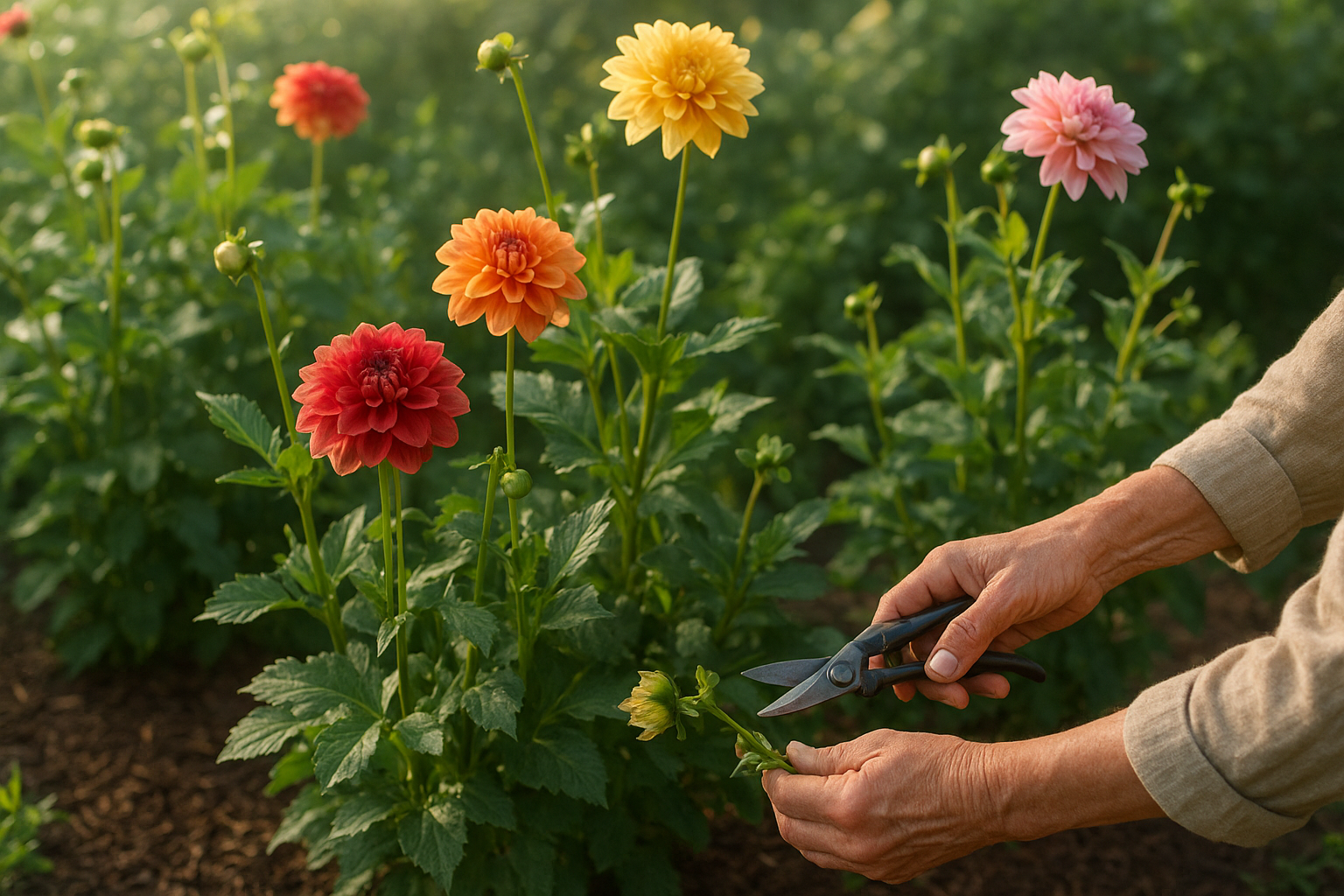
One of the easiest ways to keep dahlias blooming is to remove flowers as soon as they fade. Once a bloom starts to brown, the plant shifts energy toward seed production. That usually means fewer new flowers.
Use clean snips or pruners and cut the stem back to a healthy set of leaves or a side bud. If a stem has several fading blooms, remove the whole spent section rather than just the petals. This helps the plant look tidier and encourages stronger regrowth.
- Check plants every 2 to 3 days during peak bloom.
- Remove any mushy or faded blooms before they go to seed.
- Cut just above a leaf node to encourage branching.
If you enjoy cut flowers indoors, deadheading gives you an extra bonus: you can bring fresh blooms inside before they age on the plant.
2. Water deeply and consistently
Dahlias dislike extremes. If the soil swings from bone-dry to soaked, plants may drop buds, produce smaller flowers, or develop weak stems. The best approach is steady, deep watering that reaches the root zone.
In most gardens, a deep soak two to three times a week is better than a quick sprinkle every day. Water at the base of the plant, not over the top of the leaves, to help reduce fungal issues.
A simple way to test moisture is to push your finger into the soil about 3 to 4 inches deep. If it feels dry at that depth, it is time to water. If your dahlias are in containers, check them daily during hot spells because pots can dry out surprisingly fast.
- Water early in the day so leaves can dry quickly.
- Use a soaker hose or watering wand for even moisture.
- Keep the soil moist, not soggy.
If you notice buds drying up before opening or leaves curling in the afternoon, the plant may need a more consistent watering routine.
3. Refresh mulch to hold in moisture
A fresh layer of mulch is one of the best late-summer helpers for dahlias. It slows evaporation, keeps roots cooler, and helps reduce weeds that compete for water.
Spread 2 to 3 inches of organic mulch around the base of each plant, but leave a small gap around the stem so moisture does not sit directly against it. Shredded bark, chopped leaves, straw, or composted garden mulch all work well.
Mulch is especially useful if your garden gets hot afternoon sun or windy conditions. It can make a noticeable difference in how long plants keep blooming during warm weather.
- Remove any crusted or compacted mulch before adding fresh material.
- Keep mulch a few inches away from the stem.
- Top up areas that have thinned out during summer heat.
4. Feed lightly if growth has slowed
By August, dahlias are usually done with the heavy growth phase, so avoid overfeeding with high-nitrogen fertilizer. Too much nitrogen can create lots of leafy growth at the expense of flowers.
If plants look tired, a light feeding with a bloom-friendly fertilizer can help support continued flowering. Compost tea or a balanced low-nitrogen fertilizer is often enough. Always follow the product instructions and avoid making the soil too rich.
Signs you may be overfeeding include lush green leaves, fewer buds, and weak stems that flop under their own weight. The goal now is not a jungle of foliage; it is healthy, steady flower production.
5. Stake or tie up heavy stems
Dahlia blooms can get big enough to bend stems, especially after rain or wind. Once a stem flops, it is harder for the plant to keep flowers facing upward. Good support also makes the bed look neater and helps prevent breakage.
Use bamboo stakes, metal plant supports, or a simple grid system. Tie stems loosely with soft garden ties, twine, or strips of fabric so they can move a little without rubbing.
- Support the main stems before they bend too far.
- Add ties higher up as the plant grows.
- Check after storms and adjust any loose sections.
If you have taller varieties, it is worth installing support before problems begin. Waiting until the stems are already leaning can lead to snapped branches.
6. Watch for pests and disease
August warmth can bring aphids, spider mites, slugs, and earwigs, while damp conditions can encourage mildew and leaf spots. Catching problems early is much easier than dealing with a full outbreak later.
Look under leaves and around buds for insects or sticky residue. If you see aphids, a firm spray of water can knock them off. For spider mites, look for fine webbing and stippled leaves, especially during hot, dry stretches. Damaged leaves with powdery white coating may point to mildew.
Good airflow matters a lot. If your dahlias are crowded, remove a few badly affected leaves or trim nearby plants that are blocking movement of air. Just avoid stripping too much foliage at once, since the plant still needs leaves to feed the blooms.
Practical August dahlia routine
If you want a simple weekly rhythm, this is an easy one to follow:
- Deadhead faded blooms.
- Water deeply at the base.
- Check stakes and ties.
- Inspect leaves for pests or disease.
- Top up mulch if the soil is exposed.
This takes only a few minutes per plant, but it can make the difference between a dahlia that fades in late summer and one that keeps delivering color into the first frost.
What not to do in August
It is just as important to avoid a few common mistakes. Do not let plants dry out between waterings, and do not overdo fertilizer, especially anything high in nitrogen. Try not to let spent blooms stay on the plant for long, and avoid heavy pruning that removes too many leaves at once.
Also resist the urge to crowd dahlias with tall neighbors that steal light and airflow. Full sun is still important at this stage, and shaded plants often produce fewer blooms.
Keep the show going until frost
August dahlia care is mostly about staying consistent. If you deadhead regularly, water deeply, mulch well, support tall stems, and keep an eye out for pests, your dahlias have a much better chance of flowering hard through the rest of the season.
A few thoughtful checks each week can keep your plants healthy and full of color when other flowers are already fading. With the right care now, your dahlias can stay one of the brightest parts of the garden right up to frost.