How to Stop Window Condensation in Winter
If you wake up on cold mornings to foggy windows or little puddles on the sill, your house is telling you something: warm indoor air is carrying more moisture than your cold glass can handle. The good news is that most winter window condensation can be reduced with a few practical changes, not a full window replacement.
This guide explains how to stop window condensation in winter, how to tell normal fog from a moisture problem, and what to fix first so you do not waste money on the wrong solution.
Why Windows Sweat in Winter
Window condensation forms when warm, moist indoor air touches a cold surface. The glass cools the air next to it, and the extra moisture turns into water droplets. It is the same idea as a cold drink sweating on a summer day, just happening on the inside of your house.
A little temporary fog after a shower, big pot of soup, or a crowded holiday dinner is not unusual. But daily water on the glass, damp wood trim, peeling paint, or black specks around the frame are signs you need to lower indoor moisture and improve air movement. The EPA recommends keeping indoor relative humidity below 60 percent, ideally between 30 and 50 percent, and acting quickly when moisture collects on windows, walls, or pipes. ([epa.gov](https://www.epa.gov/mold/brief-guide-mold-moisture-and-your-home?utm_source=openai))
Start With a $10 Hygrometer
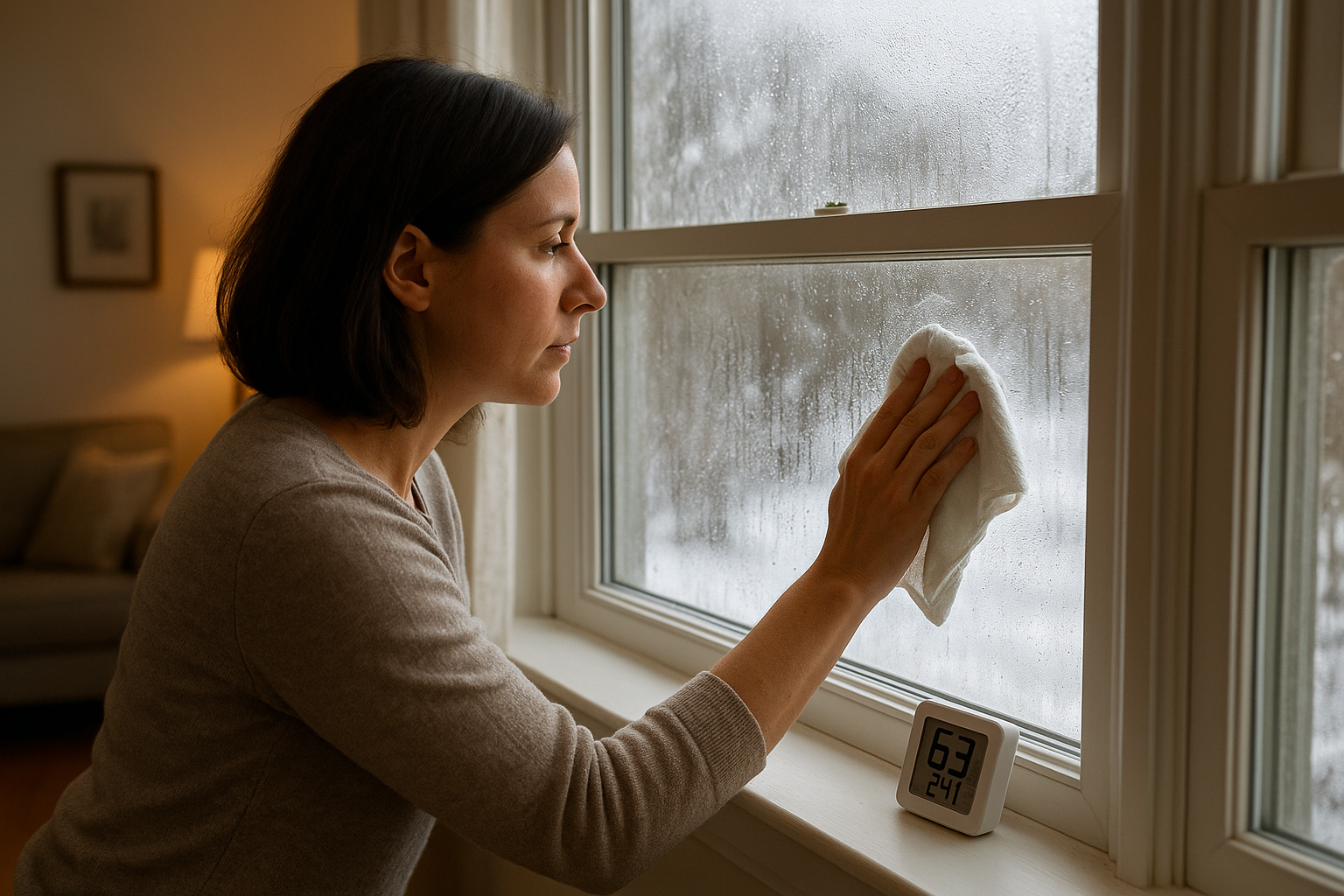
Before changing anything, measure your indoor humidity. A small digital hygrometer is inexpensive and much more useful than guessing. Place it in the room with the worst condensation, away from direct sunlight, heat vents, and humidifiers.
For many homes, a winter humidity target around 30 to 40 percent is a good starting point. If your windows are still dripping at 40 percent, you may need to go lower during very cold weather. If your home feels painfully dry below 30 percent, focus on warming the glass and improving air circulation instead of simply drying the air further.
Quick Fixes for Morning Condensation
Use these simple steps first. They are low-cost, renter-friendly in most homes, and can make a noticeable difference within a few days.
- Open blinds or curtains during the day. Heavy window coverings trap cold air against the glass. Opening them lets room air warm the window surface.
- Wipe standing water each morning. Use a towel or squeegee so moisture does not soak into wood sills, drywall, or paint.
- Run the bath fan during and after showers. Leave it on for about 20 minutes after bathing if the mirror and windows are fogged.
- Use the range hood when cooking. Boiling pasta, simmering soup, and running a kettle all add moisture fast. Vent it outdoors if your hood is ducted.
- Do not dry laundry indoors if windows are sweating. A drying rack can add a surprising amount of moisture to the air.
- Pull furniture a few inches from exterior walls. This improves air movement in cold corners where condensation and mildew often start.
Lower Indoor Humidity at the Source
If your hygrometer regularly reads above 50 percent in winter, look for moisture sources. Condensation is often blamed on bad windows, but daily habits and hidden dampness are common culprits.
Check the Bathroom
Make sure the bathroom fan actually moves air. Hold a square of toilet paper near the fan grille while it is running; it should pull the paper toward the grille. If it barely moves, clean the cover and consider replacing a weak fan. Also confirm that the fan vents outdoors, not into an attic.
Check the Kitchen
Use lids on pots when you can, run the vent hood, and avoid long open simmers on days when windows are already wet. If your range hood only recirculates through a filter, crack a nearby window for a few minutes while cooking, even in winter.
Check the Basement or Crawl Space
A damp basement can feed moisture to the whole house. Look for musty smells, damp cardboard, water stains, or a dehumidifier bucket that fills quickly. Fix downspout drainage, seal obvious foundation cracks, and run a dehumidifier if the space stays damp.
Improve Air Circulation Around Windows
Stagnant air makes condensation worse. You do not need a gale blowing through the room; you just need enough movement to keep warm air reaching the glass.
- Leave interior doors open during the day so air can mix between rooms.
- Keep supply and return vents unblocked by rugs, furniture, or curtains.
- Use ceiling fans on low if the room has tall ceilings or cold corners.
- Open window coverings daily, especially on north-facing windows that stay colder.
If only one room has severe condensation, compare its habits with the rest of the house. Bedrooms often collect moisture overnight because people exhale water vapor for hours while the door is closed and curtains are drawn. Opening the door in the morning and giving the room ten minutes of fresh air can help.
Seal Air Leaks That Chill the Glass and Trim
Drafts do two things: they make the window area colder, and they can move moist indoor air into wall cavities where it may condense out of sight. ENERGY STAR notes that sealing air leaks and adding insulation can improve comfort and reduce energy waste, and common simple fixes include caulking around windows and adding weather stripping around doors. ([energystar.gov](https://www.energystar.gov/saveathome/seal_insulate?utm_source=openai))
For windows, inspect the joint where trim meets the wall and where trim meets the window frame. If you feel a draft, apply paintable interior caulk to small stationary gaps. Do not caulk shut weep holes or moving parts of the window. For older double-hung windows, add removable rope caulk or seasonal window film if you need a reversible fix.
If condensation appears on walls or ceilings near the window, not just on the glass, you may have a larger insulation or air-leak problem. ENERGY STAR identifies attics and basements as major places to find hidden air leaks, including wiring holes, plumbing vents, attic hatches, and rim joists. ([energystar.gov](https://www.energystar.gov/saveathome/seal_insulate/do-it-yourself-guide?utm_source=openai))
When a Dehumidifier Helps
A dehumidifier is useful when the whole home or a damp lower level stays humid. It is less useful if the room is already around 30 to 35 percent humidity and the windows still sweat; in that case, the glass is probably too cold, air is not circulating, or the window covering is trapping cold air.
If you use a dehumidifier, set it to a specific humidity rather than running it nonstop. Empty and clean it regularly, and place it where air can move freely around the unit. In a basement, keep doors open to nearby spaces if you want the dehumidifier to help more than one room.
Do You Need New Windows?
Not always. Newer, better-insulated windows can reduce condensation by keeping the interior glass surface warmer, but they will not fix an indoor humidity problem by themselves. If your home is sitting at 55 percent humidity in January, even good windows may fog during a cold snap.
Consider window repair or replacement if you see condensation between panes of glass. That usually means the seal on an insulated glass unit has failed, and moisture is trapped inside the window, not forming on the room side. Also consider professional help if frames are rotting, sashes do not close properly, or drafts remain after basic weatherstripping.
A Simple 7-Day Plan to Stop Window Condensation
- Day 1: Put a hygrometer in the worst room and write down the morning and evening readings.
- Day 2: Open curtains and blinds during daylight hours and move furniture away from exterior walls.
- Day 3: Run bath fans and kitchen ventilation every time you add moisture.
- Day 4: Stop indoor line-drying and check for damp basement or crawl space conditions.
- Day 5: Seal small interior gaps around window trim with paintable caulk.
- Day 6: Clean fan grilles, unblock vents, and improve air movement in closed bedrooms.
- Day 7: Compare humidity readings and window conditions. If humidity is still high, use a dehumidifier or look for a hidden moisture source.
When to Worry
Call a qualified pro if you find soft wood, recurring mold, wet drywall, water running into wall cavities, or condensation inside double-pane glass. Also take chronic moisture seriously if anyone in the home has asthma, allergies, or respiratory issues. The EPA emphasizes moisture control as a key part of preventing mold problems indoors. ([epa.gov](https://www.epa.gov/mold/brief-guide-mold-moisture-and-your-home?utm_source=openai))
For most homes, the best answer is a combination: measure humidity, reduce moisture at the source, move air around cold windows, and seal obvious drafts. Do those in order, and winter window condensation usually becomes a manageable nuisance instead of a daily mess.