How to Clean Window Weep Holes Before Rainy Weather
If you have ever noticed rainwater sitting in the bottom track of a window, the problem may be smaller than it looks: clogged weep holes. Learning how to clean window weep holes is a quick bit of home maintenance that helps rainwater drain to the outside instead of lingering in the track.
This is especially worth doing before a stretch of wet, windy weather. The job usually takes 10 to 20 minutes per window, requires only simple tools, and can help you spot early warning signs before water stains or window damage show up.
What Are Window Weep Holes?
Window weep holes are small drainage openings, usually found along the lower outside edge of many vinyl, aluminum, and some clad windows. Their job is simple: when wind-driven rain gets into the window track or sill channel, the weep system gives that water a path back outdoors. The Building America Solution Center, a U.S. Department of Energy resource, describes cleaning these openings with a thin brush to remove debris so the drainage path stays open. ([basc.pnnl.gov](https://basc.pnnl.gov/diy-guides/clean-window-weep-holes?utm_source=openai))
Not every window looks the same. Some weep holes are visible as tiny slots on the exterior bottom frame. Others have small covers or baffles. On some sliding windows, you may also find an interior opening hidden under a removable track insert. If you are not sure what you are looking at, do not poke blindly into sealed seams or weatherstripping. Look for intentional slots near the bottom of the frame where water would naturally exit.
Why Clogged Weep Holes Matter
A little dirt in a window track may not seem urgent, but it can block drainage. Dust, pollen, pet hair, dead insects, paint flakes, mulch bits, and blown-in grit can collect in the channel. Once the weep holes clog, water can pool in the track after rain or window washing.
That standing water can lead to musty smells, dirty tracks, mineral deposits, swollen nearby trim, or water appearing where you do not expect it. It can also make a minor drainage issue look like a serious window leak. The important caution: weep holes are supposed to remain open. When caulking around windows, avoid sealing weep holes, moving parts, or other designed drainage openings. This Old House gives the same warning in its window caulking guidance. ([thisoldhouse.com](https://www.thisoldhouse.com/windows/how-to-caulk-windows?utm_source=openai))
Tools You Will Need
- Vacuum with a crevice tool or small handheld vacuum
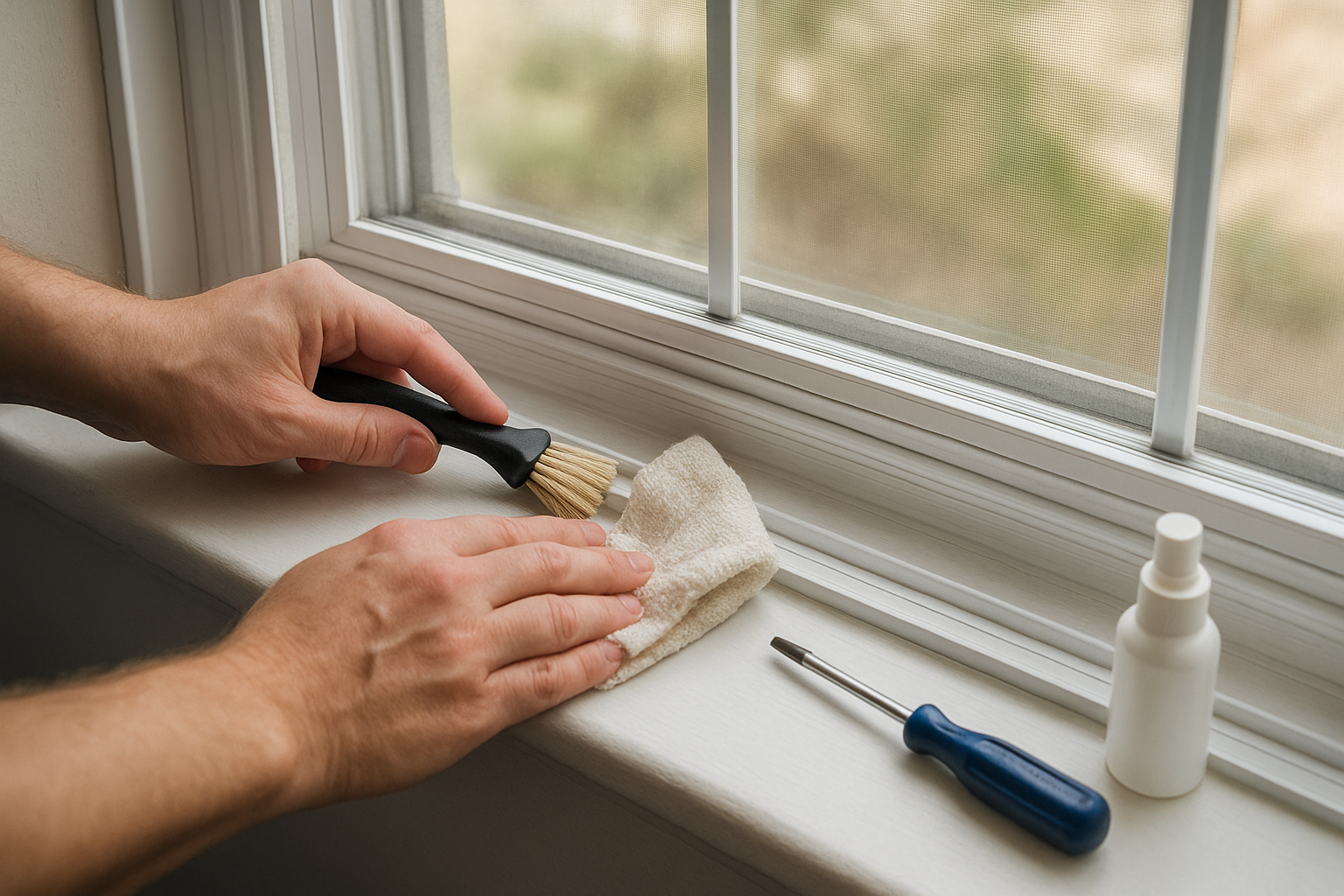
- Soft brush, old toothbrush, or small detailing brush
- Straw-cleaning brush, pipe cleaner, or plastic zip tie
- Cotton swabs or a folded paper towel
- Small cup of clean water
- Microfiber cloth or rag
- Mild dish soap, if the track is grimy
Avoid using a drill bit, knife tip, or anything sharp enough to enlarge the opening or damage the frame. If the window is painted, be extra gentle; old paint can bridge over a weep slot and make it harder to tell what is frame and what is clog.
How to Clean Window Weep Holes
1. Open the Window and Clear Loose Dirt
Start inside. Open the sash as far as it safely goes. Vacuum the lower track, paying close attention to the corners where dirt collects. If you have a sliding window, brush debris toward the vacuum nozzle rather than pushing it deeper into the channel.
Wipe the track with a damp cloth. For sticky dirt, use a drop of mild dish soap in warm water, then wipe again with a clean damp cloth. Do not flood the track yet; you want the loose grime gone before you test drainage.
2. Find the Interior Drain Openings
Look along the bottom track for small holes, slots, or gaps that appear to lead into the frame. On some windows, a snap-in track cover may hide the opening. The Building America Solution Center notes that when an interior weep hole sits beneath the window track, removing the track can give access for cleaning. ([basc.pnnl.gov](https://basc.pnnl.gov/diy-guides/clean-window-weep-holes?utm_source=openai))
If a removable piece does not lift easily, stop. Forcing brittle vinyl or older plastic can crack it. Clean what you can reach and move to the exterior side.
3. Clean the Exterior Weep Holes
Go outside and inspect the lower edge of the window frame. Brush away cobwebs, mud, leaf bits, and insect debris. If there are small weep covers, clean around them without snapping them off unless your window manufacturer’s instructions say they are removable.
Gently insert a straw brush, pipe cleaner, or plastic zip tie into the weep hole and move it back and forth. The goal is to loosen the clog, not ram it farther in. A thin brush is commonly recommended for this task because it can sweep out debris without damaging the opening. ([basc.pnnl.gov](https://basc.pnnl.gov/diy-guides/clean-window-weep-holes?utm_source=openai))
4. Flush and Test the Drainage
Once the openings look clear, pour a small amount of clean water into the inside sill track. Use just a few tablespoons at first. Watch the outside weep holes. The water should find its way out. A spring home maintenance checklist from Kiplinger recommends this same basic test: pour a small amount of water into the sill and confirm it drains through the weep holes. ([kiplinger.com](https://www.kiplinger.com/slideshow/real-estate/t029-s001-spring-home-maintenance-checklist/index.html?utm_source=openai))
If water trickles out slowly, brush the openings again and retest. If no water appears outside, stop adding water. There may be a hidden clog, a painted-over opening, a blocked internal channel, or a window design you should not disassemble without guidance.
5. Dry the Track
After testing, wipe the inside track dry with a microfiber cloth. This keeps fresh dust from turning into paste and gives you a clean baseline. If the track has stubborn mineral rings from old standing water, dampen a cloth with a little white vinegar, wipe the marks, then follow with a clean damp cloth. Keep vinegar off natural stone sills and avoid letting it sit on metal finishes.
What Not to Do
- Do not caulk over weep holes. They are drainage openings, not gaps to seal.
- Do not pressure-wash the window track. High pressure can drive water where it does not belong.
- Do not enlarge the holes. Bigger is not always better; you can damage the frame or weep cover.
- Do not ignore repeated indoor water. A clogged weep hole is common, but it is not the only cause of leakage.
How Often Should You Clean Them?
For most homes, check window weep holes twice a year: once in spring after pollen season and once in fall before cold, rainy weather. Clean them more often if your windows sit near dusty roads, overhanging trees, flower beds with mulch, or spots where wind piles leaves against the house.
It is also smart to check them after exterior painting, siding work, heavy storms, or a big insect season. Paint, caulk, and debris are common reasons a previously fine window suddenly stops draining.
When to Call a Pro
Call a window repair professional if water keeps coming inside after the weep holes are clear, if the frame feels soft, if trim is stained or swollen, or if you see water between panes of insulated glass. Also get help if you cannot identify the drainage openings and the window manufacturer’s label is missing.
Window weep holes are small, but they do an important job. Keep them clear, test them with a little water, and resist the urge to seal every opening you see. A few careful minutes now can save you from chasing a mysterious rainy-day window problem later.