How to Clean a Dishwasher Filter in 10 Minutes
If your dishwasher smells musty or leaves gritty specks on glasses, the filter is a good place to start. Learning how to clean a dishwasher filter takes about 10 minutes, costs nothing, and can make a tired machine work noticeably better.
Most newer dishwashers have a removable manual filter in the bottom of the tub. It catches food before it recirculates onto dishes, which is helpful—until the filter itself gets packed with bits of rice, seeds, labels, grease, and sludge.
Why Your Dishwasher Filter Matters
A dishwasher filter helps keep food particles from moving back through the wash water and landing on clean dishes. Whirlpool notes that regular filter cleaning helps keep water flowing strongly and prevents food particles from recirculating during the cycle. ([producthelp.whirlpool.com](https://producthelp.whirlpool.com/Dishwashers/Dishwasher/Other/Cleaning_and_Odor/Cleaning_and_Maintenance/Cleaning_the_Filter/Cleaning_the_Filter_-_Dishwasher?utm_source=openai))
It is also one of the easiest fixes for common dishwasher complaints: bad smells, cloudy glasses, bowls that feel sandy, or dishes that look clean but have mystery flecks stuck inside. Before you buy a cleaner, replace detergent, or call for service, check the filter.
Before You Start: Check What Kind of Filter You Have
Not every dishwasher filter is removed the same way. Some machines have a cylindrical filter that twists out. Others have a flat mesh screen, an ultra-fine filter, or a self-cleaning filtration system that is not meant to be taken apart by hand.
GE Appliances advises using the owner’s manual for model-specific instructions on what you can remove and clean yourself. ([products.geappliances.com](https://products.geappliances.com/appliance/gea-support-search-content?contentId=35611&utm_source=openai)) If you rent, recently moved in, or cannot find the manual, look for the model number on the dishwasher door frame and search the manufacturer’s site.
Do not force anything. A removable filter should release with a light twist, lift, or pull. If it feels stuck, stop and look up the model. Breaking a small plastic tab can turn a free cleaning job into a parts order.
What You’ll Need
- Dish soap
- Warm water
- Soft sponge or dishcloth
- Old soft toothbrush
- Small bowl or sink basin
- Paper towel or rag
- Optional: rubber gloves
Skip harsh scrub pads, bleach, and drain cleaners. The filter is usually plastic and fine mesh, so gentle cleaning is best.
How to Clean a Dishwasher Filter
1. Empty the Bottom Rack
Pull out the bottom rack so you can clearly see the floor of the dishwasher. If the rack comes all the way out, set it on a towel nearby. This gives you room to work and keeps you from dripping water across the kitchen.
2. Locate the Filter
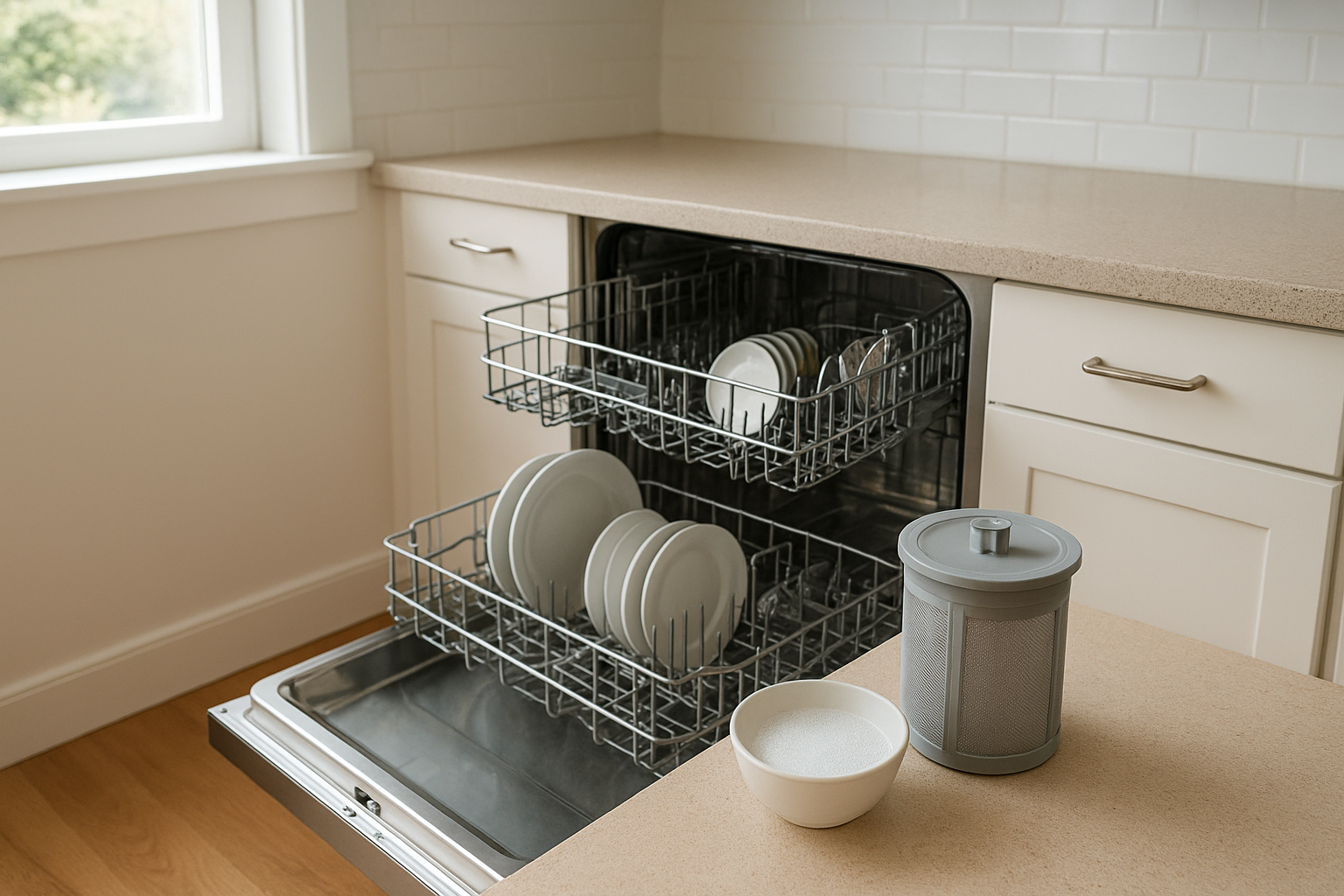
Look at the bottom center of the dishwasher, often near the lower spray arm. In many machines, the filter looks like a short round cylinder with a handle or tab. There may also be a flat mesh plate around it.
If there is standing water in the filter well, a small amount can be normal. If there is a lot of dirty water, a clogged drain, blocked hose, or disposal issue may also be involved.
3. Remove the Filter Gently
Most twist-style filters unlock with a quarter turn counterclockwise, then lift straight up. Some have a separate flat filter that lifts out after the cylinder is removed. Keep track of how the pieces fit together so you can put them back the same way.
Set the filter in the sink or a bowl. Be prepared: the first cleaning can be unpleasant, especially if it has been months or years.
4. Rinse Away Loose Food
Run warm water over the filter to remove loose debris. Tap it lightly against your palm or the side of the sink, but do not bang it hard. Pull off obvious food scraps, paper labels, lemon seeds, pasta, rice, or bits of plastic.
5. Wash with Soap and a Soft Brush
Add a drop or two of dish soap to a sponge or toothbrush and scrub the mesh, handle, and plastic frame. Work gently around the screen so you do not stretch or tear it. If grease is built up, let the filter sit in warm soapy water for five minutes, then brush again.
Pay attention to the seam where the mesh meets the plastic. That narrow edge often holds the smelliest residue.
6. Wipe the Filter Housing
Before reinstalling the filter, wipe the opening where it sits. Use a damp rag or paper towel to pick up sludge, food scraps, or broken glass. Move slowly and carefully—tiny shards from a broken cup can hide in the bottom of the dishwasher.
Also glance at the spray arm holes. If you see a grain of rice, seed, or hard mineral flake stuck in a jet, remove it gently with a toothpick or tweezers without enlarging the hole.
7. Reinstall and Lock the Filter
Put the filter pieces back exactly as they came out. If the main filter twists, turn it until it locks. This matters: a loose filter can allow food back into the wash water or interfere with the spray arm.
Spin the lower spray arm by hand before replacing the rack. It should rotate freely without bumping the filter, rack, or utensil basket.
How Often Should You Clean It?
The right schedule depends on how often you run the dishwasher and how much food is left on plates. Whirlpool’s filter guidance uses different cleaning intervals based on usage and pre-cleaning habits, with more frequent cleaning recommended when loads contain more food soil. ([producthelp.whirlpool.com](https://producthelp.whirlpool.com/Dishwashers/Product_Info/Dishwasher_Cleaning_and_Care/How_to_Clean_the_Dishwasher_Filters?utm_source=openai))
For most households, a practical rule is:
- Every 2 weeks: busy family kitchen, daily dishwasher use, or lots of rice, oatmeal, eggs, seeds, and sauces
- Once a month: average household use with scraped plates
- Every 2 to 3 months: light use, small household, or mostly rinsed cookware and glasses
If you are not sure, check it monthly for a while. Once you see how quickly your filter collects debris, you can adjust.
Should You Rinse Dishes First?
You do not need to fully pre-rinse most dishes before loading. ENERGY STAR recommends “scrape, don’t rinse,” noting that modern dishwashers use features such as soil sensors, filtration, improved jets, and rack designs to clean efficiently. ([energystar.gov](https://www.energystar.gov/products/dishwashers?utm_source=openai)) The EPA’s WaterSense guidance also recommends scraping food into the trash or compost instead of rinsing dishes before loading. ([epa.gov](https://www.epa.gov/watersense/home-maintenance?utm_source=openai))
The key word is scrape. Bones, toothpicks, fruit pits, onion skins, large noodles, chunks of egg, and sticky labels should not go into the dishwasher. They can clog the filter, block spray arms, or create odors.
When Cleaning the Filter Is Not Enough
A clean filter solves many problems, but not all of them. If dishes are still dirty after the filter is clean, check these next:
- Spray arms: Make sure they spin and the holes are not blocked.
- Detergent: Old, clumpy detergent may not dissolve well.
- Loading: Bowls and pans can block water if they face the wrong direction.
- Water temperature: Very cool incoming water can reduce cleaning performance.
- Drain path: Standing dirty water may point to a drain hose, garbage disposal knockout plug, or plumbing issue.
If the dishwasher leaks, will not drain, shows an error code, or has electrical issues, stop troubleshooting and consult the manual or a qualified appliance technician.
A Simple Monthly Dishwasher Reset
After the filter is clean, give the rest of the machine a quick reset. Wipe the door gasket, clean the detergent cup, remove debris from the bottom edge of the door, and run an empty cleaning cycle if your manual recommends it. Whirlpool’s care guidance says monthly cleaning can help prevent buildup that may cause odors or filming. ([youtube.com](https://www.youtube.com/watch?v=2T_nQ1SJ2AQ&utm_source=openai))
You do not have to make this complicated. Put a reminder on your calendar for the first weekend of the month: clean the dishwasher filter, wipe the gasket, and check the spray arms. Ten minutes now can save you from rewashing glasses later.
Bottom Line
If your dishwasher has a removable filter, cleaning it is one of the simplest home maintenance tasks you can do. Scrape plates instead of rinsing, keep large food scraps out of the machine, and wash the filter regularly. Your dishwasher will smell fresher, drain better, and have a much better chance of sending out truly clean dishes.