How to Clean a Humidifier Before Winter Use
If your humidifier has been sitting in a closet since last winter, do not just fill it and turn it on. A quick deep clean helps remove stale residue, mineral scale, and the film that can build up anywhere water sits.
This guide walks you through how to clean a humidifier before winter use, plus the simple habits that keep it from getting grimy again once the heat is running.
Why Humidifier Cleaning Matters
Portable humidifiers are helpful when indoor air gets dry, but they need regular care. The EPA notes that ultrasonic and impeller cool-mist humidifiers can disperse minerals and microorganisms from the tank into indoor air, which is why cleaning and water choice matter. The EPA recommends emptying, wiping dry, and refilling portable humidifiers daily, then cleaning them every third day during use. ([epa.gov](https://www.epa.gov/indoor-air-quality-iaq/use-and-care-home-humidifiers?utm_source=openai))
Mineral buildup is another common problem, especially if you use hard tap water. Those crusty deposits are not just ugly; scale can give microorganisms more places to grow. If you have ever noticed fine white dust around an ultrasonic humidifier, that is often minerals from the water being carried into the room. Distilled water is the EPA’s preferred choice for reducing mineral dispersal. ([epa.gov](https://www.epa.gov/indoor-air-quality-iaq/use-and-care-home-humidifiers?utm_source=openai))
What You’ll Need
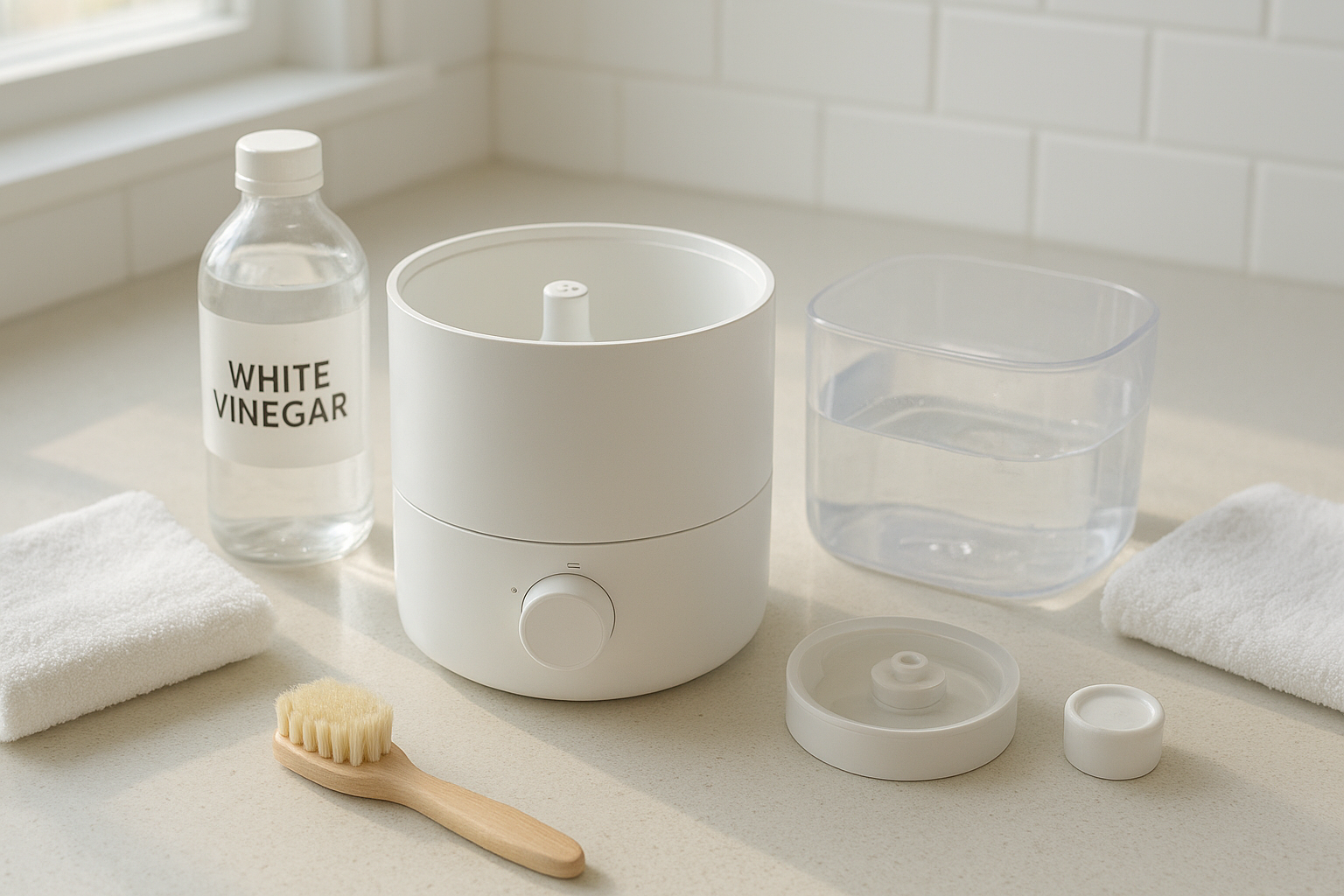
- White distilled vinegar
- Clean water
- Soft brush, bottle brush, or old toothbrush
- Microfiber cloths or clean dish towels
- Cotton swabs for small crevices
- 3% hydrogen peroxide, if your manufacturer allows it
- Replacement wick, filter, cartridge, or demineralization insert, if needed
Before you start, find the manual if you still have it. Some humidifiers allow vinegar for descaling but warn against bleach or certain disinfectants. Always follow the manufacturer’s directions first.
Step 1: Unplug and Take It Apart
Unplug the humidifier before any cleaning. Remove the tank, cap, mist nozzle, tray, filter, wick, cartridge, and any other removable parts. Pour out all old water from the tank and base.
If your humidifier has a disposable wick or filter that looks brown, slimy, stiff, sour-smelling, or heavily crusted, replace it rather than trying to scrub it clean. If the unit uses a demineralization cartridge, check whether it is past its recommended use period.
Step 2: Wash Loose Grime First
Rinse the tank and base with clean water to remove loose dust and residue. Use a soft cloth or brush to wipe away any film you can reach. Avoid soaking the motor housing or any electrical parts; only water-contact parts should be cleaned.
Pay special attention to seams, tank caps, float valves, and the narrow channel where the tank drains into the base. These areas often hold water after the tank looks empty.
Step 3: Descale With Vinegar
For mineral crust, vinegar is the easiest first step. Fill the water tank with enough white vinegar to cover the scaled areas, or use a mix of equal parts vinegar and water for lighter buildup. In the base, pour vinegar only into the water reservoir area, keeping it away from vents, buttons, cords, and the motor.
Let the vinegar sit for 20 to 30 minutes. For stubborn scale, lay vinegar-soaked paper towels over crusty spots so the acid stays in contact with the buildup. Scrub gently with a soft brush, then rinse well.
Do not run the humidifier with vinegar in it. The goal is to soak, scrub, and rinse—not send vinegar mist into the room.
Step 4: Disinfect If the Manual Allows
Descaling removes mineral buildup, but it is not the same as disinfecting. The EPA says that when a manufacturer does not give specific disinfecting instructions, water-contact surfaces can be cleaned with a 3% hydrogen peroxide solution, followed by thorough rinsing with several changes of tap water so cleaning chemicals are not dispersed during use. ([epa.gov](https://www.epa.gov/indoor-air-quality-iaq/use-and-care-home-humidifiers?utm_source=openai))
To do this, pour a small amount of 3% hydrogen peroxide into the tank and base reservoir, enough to wet the surfaces that touch water. Let it contact the surfaces for several minutes, swish it around, scrub where needed, then pour it out and rinse repeatedly.
Important: Never mix vinegar with hydrogen peroxide, bleach, ammonia, or other cleaning products. Rinse the humidifier thoroughly between steps, and do not combine cleaners in the tank. The EPA also warns against mixing cleaning products together, and CDC cleaning guidance says never to mix household bleach with ammonia or other cleansers. ([epa.gov](https://www.epa.gov/indoor-air-quality-iaq/biological-contaminants-and-indoor-air-quality?utm_source=openai))
Step 5: Rinse More Than You Think
After cleaning, rinse the tank, cap, tray, and base reservoir several times with clean water. If you can still smell vinegar or cleaner, keep rinsing. Any leftover cleaning residue can be released when the humidifier runs, which defeats the purpose of cleaning it.
Use cotton swabs to remove residue from tight corners, but do not force anything into the mist outlet, fan area, or mechanical parts. If a part does not come clean after soaking and gentle scrubbing, check whether it is replaceable.
Step 6: Dry Every Part Completely
Set all parts on a clean towel and let them air-dry fully before reassembling. Drying matters because leftover moisture encourages musty smells and microbial growth.
If you are cleaning the humidifier at the start of the season, reassemble it only once it is dry and you are ready to use it. If you are putting it back into storage, leave caps loose so trapped moisture does not get sealed inside.
How Often to Clean a Humidifier in Winter
During regular use, make this your simple routine:
- Every day: Empty the tank, wipe surfaces dry if possible, and refill with fresh water.
- Every third day: Unplug, empty, scrub away film or scale, rinse, and dry.
- Weekly or as needed: Do a deeper vinegar descale if you see crusty deposits.
- End of season: Clean, disinfect if allowed, replace used filters or cartridges, dry completely, and store in a dry place.
This schedule follows the EPA’s guidance for portable humidifiers, including daily emptying and cleaning every third day during use. ([epa.gov](https://www.epa.gov/indoor-air-quality-iaq/use-and-care-home-humidifiers?utm_source=openai))
What Water Should You Use?
If you have an ultrasonic or impeller humidifier, distilled water is usually the best choice. The EPA explains that distillation is the most effective method for removing minerals from water, while spring, artesian, and mineral waters are not treated to remove mineral content. Demineralization cartridges may help, but their performance varies, so white dust is a sign they may not be doing enough. ([epa.gov](https://www.epa.gov/indoor-air-quality-iaq/use-and-care-home-humidifiers?utm_source=openai))
For evaporative humidifiers, distilled water can still reduce scale, but the wick or filter also plays a big role. Replace it on schedule and sooner if it becomes stiff, discolored, moldy, or smelly.
Common Humidifier Cleaning Mistakes
- Leaving water in the tank for days. Stagnant water is the fastest path to slime and odor.
- Only cleaning the tank. The base reservoir often gets dirtier than the tank because water sits there during operation.
- Using abrasive scrubbers. Scratches can make plastic harder to clean later.
- Forgetting the cap gasket. Rubber rings and cap threads can hide buildup.
- Running cleaner through the machine. Cleaning solutions should be rinsed out, not misted into the air.
When to Replace Instead of Clean
Replace the humidifier if the tank is cracked, the base has unreachable mold or heavy residue, electrical parts have gotten wet, or the unit still smells musty after careful cleaning. Also consider replacing very old models with complicated reservoirs that are nearly impossible to scrub.
A humidifier should make winter air more comfortable, not add another worry to your home. Start the season with a thorough clean, use fresh water daily, and keep a simple every-third-day cleaning rhythm. Your nose, your furniture, and your indoor air will all be better for it.