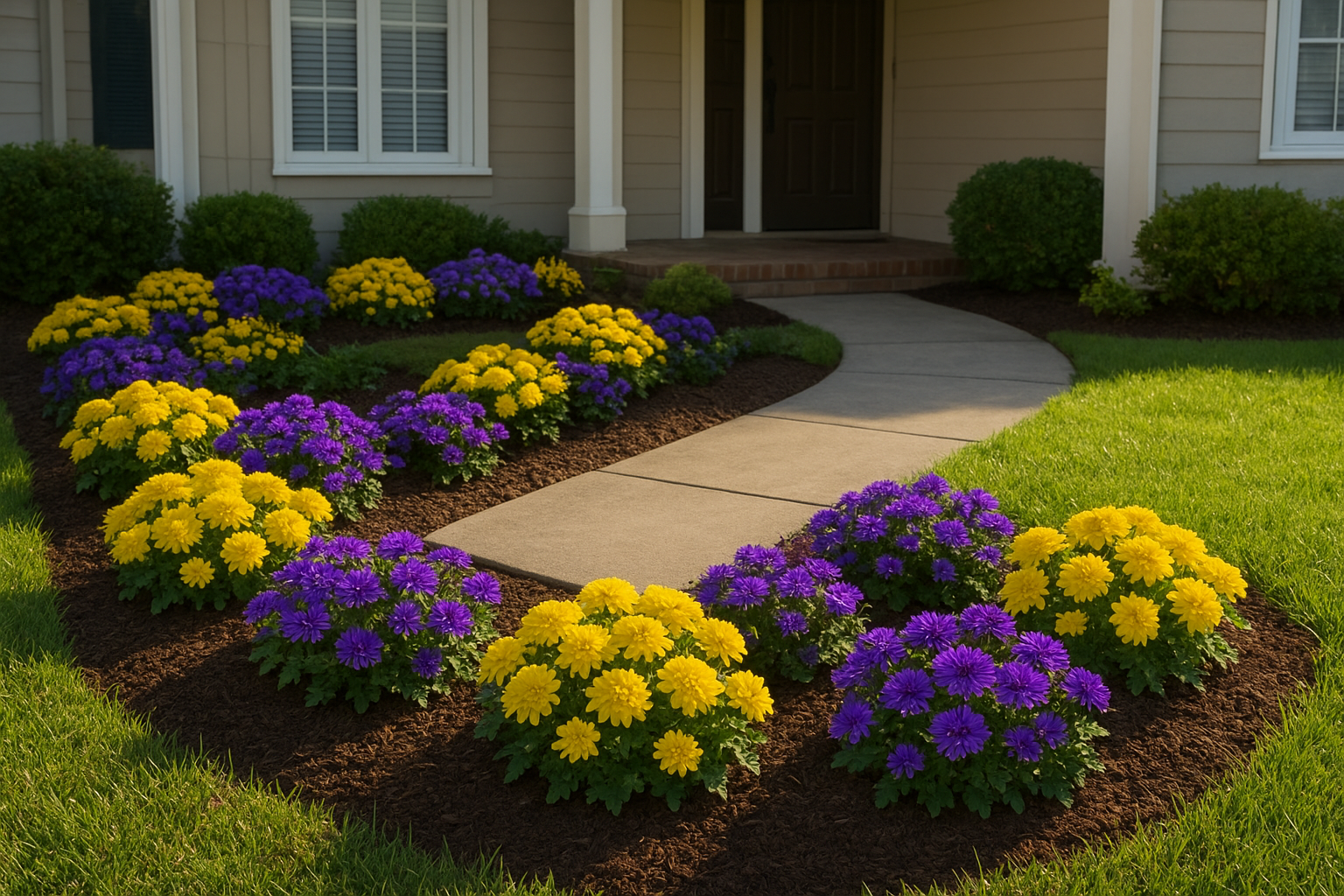
The 2-Color Planting Trick for a Cleaner Front Yard
If your front yard feels busy no matter how much you weed, trim, or water, the problem may not be the plants themselves. It may be the color mix. A simple planting plan that limits the palette to just two main colors can make a garden look calmer, more intentional, and much easier to admire from the street.
The good news is that you do not need a landscape designer to make it work. With a few practical choices, the 2-color plant trick can help you turn a cluttered display into a front yard that feels polished and welcoming.
Why Two Colors Work So Well
When a garden bed contains too many vivid shades, the eye has nowhere to rest. Bright pink, orange, yellow, purple, red, and blue all compete at once, which can make a yard feel visually noisy. A two-color scheme creates order. It gives your planting a repeating rhythm that looks more purposeful from the sidewalk or driveway.
This does not mean your yard has to be boring. In fact, limiting color often makes the overall design feel richer because the shapes, textures, and layers stand out more clearly. You can still enjoy variety through leaf size, bloom form, plant height, and foliage texture.
How to Choose Your Two Colors
The best plant combinations are usually based on one of three approaches:
- Analogous colors: neighbors on the color wheel, such as yellow and orange or blue and purple
- High-contrast pairs: colors that pop against each other, such as purple and white or red and silver-gray foliage
- Soft combinations: calmer pairings, like pink and white or lavender and pale yellow
If your home exterior is already colorful, choose plant colors that complement it instead of competing with it. For example, a warm brick house often looks great with cream, white, blue, purple, or soft pink flowers. A white or gray house can handle bolder combinations like deep red and chartreuse or cobalt blue and yellow.
When in doubt, start with one color you love and then choose a second that helps it stand out rather than fight it.
Best Planting Rules for a Two-Color Bed
1. Repeat each color more than once
A color scheme looks intentional when each color appears in multiple spots across the bed. One lonely purple plant surrounded by everything else can look accidental. Instead, plant in clusters or repeat the same color at intervals along the border.
2. Mix flower shapes and foliage textures
Two colors are enough variety for the eye, so let texture do some of the work. Pair fine flowers with broad leaves, upright spikes with mounded blooms, or glossy foliage with soft, feathery plants. This keeps the garden interesting without adding more color confusion.
3. Use one color as the anchor
In many designs, one shade should dominate while the other acts as an accent. A 70/30 split is a helpful rule of thumb. For example, white flowers could fill most of the bed while blue blooms appear in smaller repeating groups.
4. Watch bloom timing
Pick plants that overlap in season so your two-color plan holds together through spring, summer, or fall. If one plant blooms for only a short window, add a second variety in the same color to keep the effect going.
Easy Two-Color Combinations to Try
These pairings work well in many front yards and container displays:
- Purple and white: clean, classic, and easy to mix with nearly any home style
- Blue and yellow: bright and cheerful without feeling chaotic
- Pink and silver: soft, elegant, and especially nice near pastel homes
- Red and white: crisp and bold for high-visibility entryways
- Orange and deep purple: rich and dramatic for sunny spaces
- Lavender and cream: gentle and refined for a relaxed look
If you want to keep things simple, start with white plus one other color. White acts like a visual reset button and helps the rest of the planting feel clean.
How to Build a Two-Color Front Border
Use this step-by-step approach for a polished result:
- Pick your focal area. Decide whether the bed nearest the front walk, porch, or mailbox will be the star.
- Choose your main color. Select the color that will cover most of the space.
- Add the accent color. Place smaller repeating groups of the second color where the eye naturally moves.
- Balance height. Put taller plants at the back and shorter ones in front so the bed feels layered, not crowded.
- Include foliage. Use plants with silver, chartreuse, dark green, or variegated leaves to support the design without adding new bloom colors.
If your garden bed is large, you can divide it into sections and repeat the same two colors in each section. That repetition creates unity and helps the entire yard read as one design instead of several unrelated patches.
Good Plant Ideas for the Look
You do not have to use the same flowers every season. The idea is to think in color pairs, not specific species. For sunny beds, you might use marigolds, petunias, zinnias, salvia, alyssum, or lantana in coordinated shades. In shadier spots, impatiens, begonias, coleus, and caladiums can create strong color without relying on full sun.
For even more structure, mix in shrubs or perennials that carry your chosen colors in foliage or flowers. That way, the design still looks cohesive after annual blooms fade.
Common Mistakes to Avoid
A two-color plan is simple, but a few missteps can weaken the effect:
- Using too many accents: If every plant is different, the two-color idea disappears.
- Ignoring foliage: Leaves take up more visual space than flowers, so their color matters too.
- Choosing clashing shades: Two colors can still look messy if they are both extremely bright and compete at the same intensity.
- Forgetting scale: Tiny flowers next to large-leaved plants can look unbalanced unless the spacing is thoughtful.
Avoid adding a third or fourth flower color just because you have a leftover six-pack. It is better to place extra plants in pots or another area of the yard than to muddy the front border.
How to Keep the Look Fresh All Season
To keep your color scheme looking sharp, deadhead spent blooms, replace tired annuals, and pinch back leggy growth. If one color fades too quickly, refresh the bed with a second wave of plants in the same shade. Mulch also helps the whole design look cleaner by creating a neutral backdrop that makes the flowers stand out.
You can also use containers to reinforce the same palette near the front door, on steps, or beside the walkway. That little repetition helps tie the whole entry together.
The Bottom Line
The 2-color plant trick is one of the easiest ways to improve curb appeal without redoing your whole yard. It works because it simplifies the visual story: fewer competing colors, more harmony, and a clearer path for the eye to follow.
If your front garden feels chaotic, start by choosing two colors you truly enjoy and repeating them with purpose. A calmer palette can make even a modest planting look refined, welcoming, and beautifully put together.