How to Plant Beets in Late Summer for Fall Harvest
If your summer garden is starting to look tired, beets are one of the best crops to tuck into open spaces for fall. They grow quickly, handle cool weather well, and give you two harvests from one planting: tender greens and earthy, sweet roots.
The trick is timing. Plant too early in scorching soil and germination can be spotty; plant too late and the roots may not size up before cold weather slows growth. Here’s how to plant beets in late summer and get a dependable fall harvest.
Why Late Summer Is a Good Time to Plant Beets
Beets are a cool-season crop that grows especially well in spring and fall. In many gardens, a late-summer sowing is even easier than a spring one because the soil is already warm enough for quick germination, while the crop matures as temperatures cool.
University extension guides commonly list beets as a late-summer crop for fall harvest, with many varieties taking about 50 to 70 days to mature. Iowa State University Extension, for example, recommends planting beets in early to mid-August for a fall crop, while Maryland Extension notes that beets can be sown in late summer up until about 6 weeks before the first killing frost. ([yardandgarden.extension.iastate.edu](https://yardandgarden.extension.iastate.edu/faq/which-vegetables-can-be-planted-late-summer?utm_source=openai))
That means late July through August is prime beet-planting time for many U.S. gardeners, though your exact window depends on your first fall frost date and local heat.
When to Plant Beets for a Fall Harvest
For full-size roots, count backward from your average first hard frost or killing frost. Most beet varieties need 50 to 70 days, and late-season crops can slow down as days get shorter. To be safe, aim to sow seed 8 to 10 weeks before your first expected hard freeze.
- Cold northern areas: sow in mid to late July, or early August at the latest.
- Moderate climates: sow from late July through mid-August.
- Warm southern areas: sow later, often from late August into fall, once the worst heat begins to ease.
If you are not sure of your frost date, check your local extension office or use a frost-date lookup, then add a little cushion. You can harvest baby beets earlier, but full roots need time.
Choose the Right Beet Variety
Almost any garden beet can work for fall, but faster-maturing varieties are helpful when you are planting late. Look for varieties listed around 50 to 60 days if your season is short.
- Detroit Dark Red: a classic round red beet with reliable roots and good greens.
- Early Wonder: a good choice for quicker harvests and tasty tops.
- Red Ace: dependable, uniform roots and widely recommended for home gardens.
- Chioggia: a pretty red-and-white striped beet with a mild flavor.
- Cylindra: long, narrow roots that slice neatly and make efficient use of space.
UF/IFAS lists several good home-garden beet varieties, including ‘Detroit Dark Red,’ ‘Early Wonder,’ ‘Chioggia,’ ‘Cylindra,’ and ‘Red Ace.’ ([gardeningsolutions.ifas.ufl.edu](https://gardeningsolutions.ifas.ufl.edu/plants/edibles/vegetables/beets/?utm_source=openai))
Prepare the Bed Before Sowing
Beets grow best in loose, crumbly soil. Since the root is the harvest, compacted or rocky soil can lead to small, forked, or misshapen beets. Before planting, loosen the top 8 to 10 inches of soil and remove rocks, old roots, and hard clods.
Mix in a thin layer of finished compost to improve texture and moisture retention. If your soil is heavy clay, compost is especially useful. Texas A&M AgriLife Extension recommends adding compost to clay soil and notes that beets have deep roots, so they should not be planted where tree roots will compete heavily. ([agrilifeextension.tamu.edu](https://agrilifeextension.tamu.edu/library/gardening/beets/?utm_source=openai))
Avoid dumping on a lot of high-nitrogen fertilizer. Too much nitrogen can encourage lush tops at the expense of roots. If your garden has struggled with poor root growth before, a soil test is the best guide.
How to Plant Beet Seeds
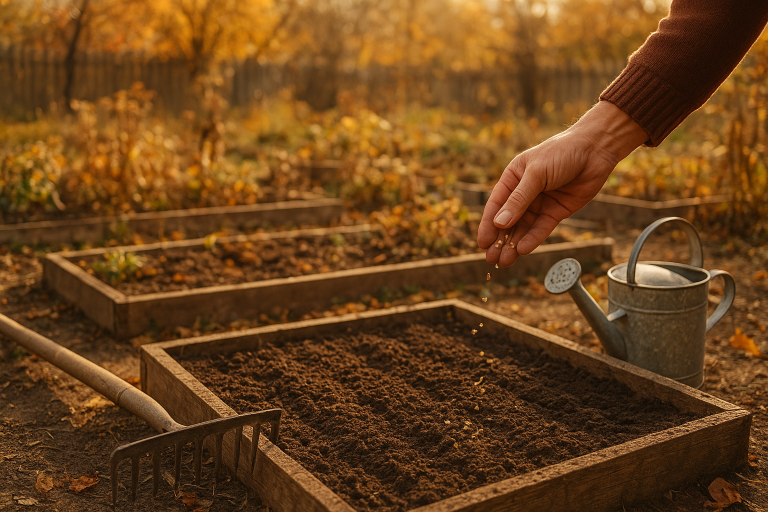
Beets are usually direct-seeded because they do not love being disturbed. Beet “seeds” are actually seed clusters, which is why several seedlings often pop up from one spot. Plan to thin them after they sprout.
- Water the bed first. Late-summer soil can be dry. Water deeply the day before planting so the seed zone is evenly moist.
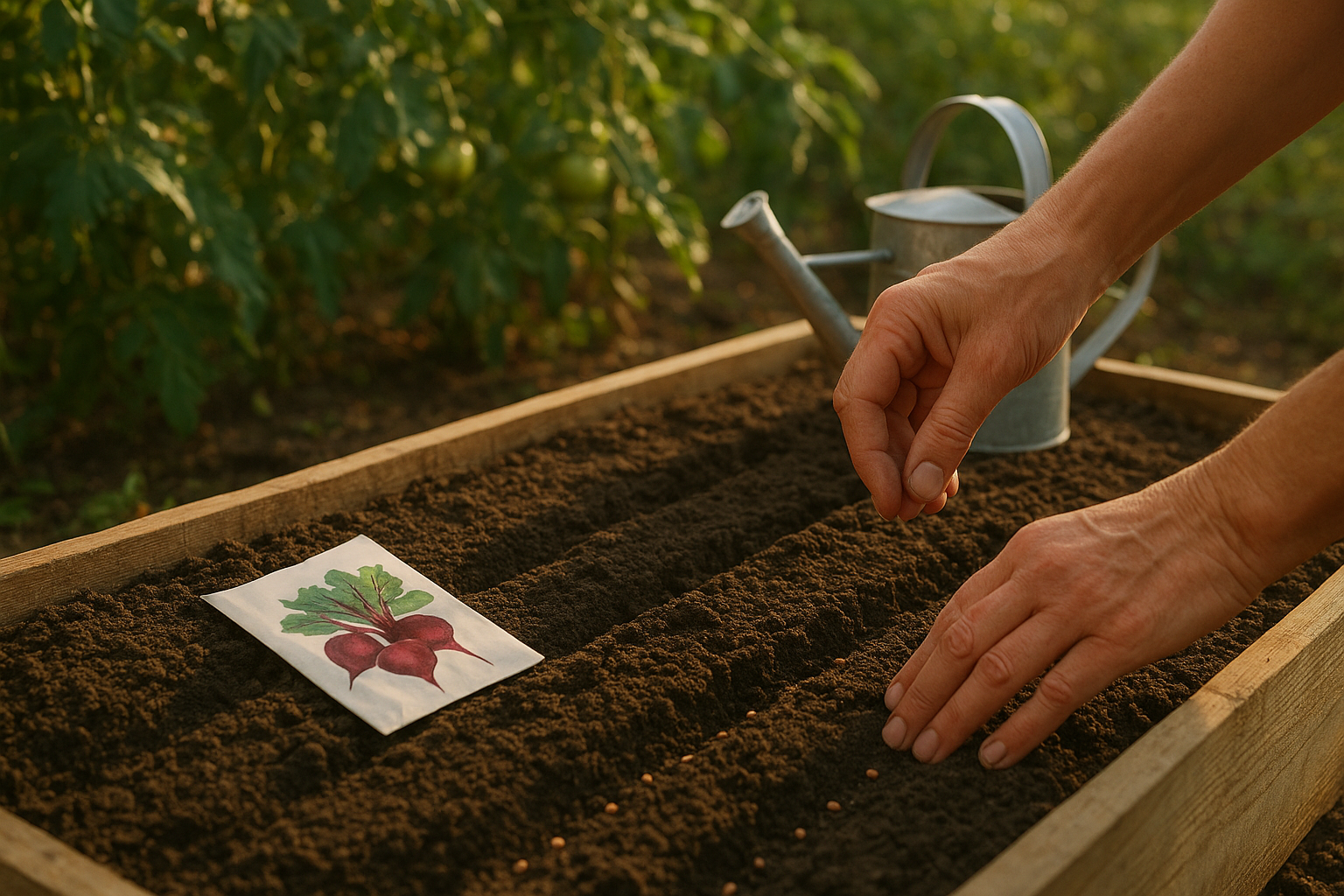
- Make shallow rows. Sow seeds about 1/2 inch deep in warm soil. In very dry conditions, you can go slightly deeper, but do not bury them too far.
- Space the seeds. Plant seeds about 1 inch apart in rows 12 to 18 inches apart.
- Cover and firm. Cover with fine soil, then gently press the row so seeds make good contact with the soil.
- Water gently. Use a watering can or a soft hose setting so you do not wash the seeds away.
For a small garden, you do not need a long row. A 2-by-4-foot patch can produce plenty of beets for fresh eating, especially if you harvest some young.
Keep Seeds Moist in Hot Weather
The hardest part of planting beets in late summer is keeping the seedbed moist. Beet seeds need steady moisture to germinate well. If the soil dries out and crusts over, you may get patchy rows.
After sowing, check the bed daily. Water lightly whenever the top half-inch of soil starts to dry. In hot, sunny weather, lay a piece of burlap, shade cloth, or a lightweight board over the seeded row for a few days to keep the soil cooler and moister. Remove the cover as soon as you see sprouts.
A very thin mulch of straw or shredded leaves can also help, but keep it light enough that seedlings can push through.
Thin Beets for Better Roots
Thinning is not optional if you want nice roots. Because each beet seed cluster may produce multiple seedlings, crowded plants will compete and stay small.
When seedlings are about 2 inches tall, thin them to 2 to 3 inches apart for baby beets or 3 to 4 inches apart for full-size roots. Use small scissors to snip extras at soil level instead of yanking them out, which can disturb nearby seedlings.
Do not waste the thinnings. Rinse them well and use the tiny greens in salads, omelets, soups, or stir-fries.
Watering and Care Through Fall
Beets need consistent moisture for tender roots. Aim for about 1 inch of water per week from rain or irrigation, and more during hot, dry spells. Uneven watering can make roots tough or slow their growth.
Once plants are a few inches tall, mulch around them with straw, shredded leaves, or untreated grass clippings. Mulch helps hold moisture, keeps soil temperatures steadier, and reduces weeds.
Keep weeds pulled while the beets are small. Their roots are shallow near the surface at first, so weed carefully by hand rather than chopping close with a hoe.
Common Problems to Watch For
Poor germination
This usually comes from dry soil, crusted soil, old seed, or planting during extreme heat. Keep the bed evenly moist and consider pre-soaking beet seed for a few hours before planting if conditions are dry.
Lots of leaves but tiny roots
Too much nitrogen, crowding, or not enough sun can cause leafy plants with small roots. Thin properly, avoid heavy nitrogen feeding, and give beets at least 6 hours of sun when possible.
Leaf spots
Beets can develop fungal leaf spots, especially in humid weather. Water at the soil level, provide good spacing, and rotate crops so beets and close relatives are not planted in the same spot year after year. South Dakota State University Extension recommends avoiding planting beets in the same place two years in a row to help reduce Cercospora leaf spot. ([extension.sdstate.edu](https://extension.sdstate.edu/beets-how-grow-it?utm_source=openai))
When and How to Harvest Fall Beets
You can start harvesting beet greens once plants are established, but take only a few outer leaves from each plant so the roots can keep growing. For roots, begin checking when they reach about 1 1/2 inches across. Many gardeners prefer beets between 1 1/2 and 2 1/2 inches because they are tender and cook quickly. UC Marin Master Gardeners gives that same general size range for optimum harvest. ([ucanr.edu](https://ucanr.edu/site/uc-marin-master-gardeners/documents/beets?utm_source=openai))
To harvest, loosen the soil with a hand fork, then pull gently from the base of the greens. Cut tops back to about 1 inch above the root before refrigerating so the greens do not pull moisture from the beet.
Light frost usually improves flavor, but do not leave beets in the ground through a hard freeze unless you are protecting them with a thick mulch and your climate allows it. When in doubt, harvest before the ground freezes solid.
A Simple Late-Summer Beet Planting Plan
For an easy fall crop, sow one short row now, then another row 10 to 14 days later if you still have enough season left. Keep the bed moist, thin early, mulch once seedlings are established, and harvest roots while they are still young and sweet.
Late-summer beets do not need much fuss, but they do need good timing and steady water. Give them those two things, and your fading summer garden can turn into a fresh fall harvest.