How to Store Apples So They Stay Crisp Longer
A good apple should snap when you bite it, not taste mealy two days after you bring it home. If you bought a big bag at the grocery store or came home from the orchard with more apples than your fruit bowl can handle, a few simple storage habits will help them stay crisp much longer.
The short version: keep most apples cold, slightly humid, and away from produce that does not like ethylene gas. Here is how to store apples the practical way, whether you have six apples or a whole bushel.
The Best Place to Store Apples
For everyday home storage, the refrigerator crisper drawer is usually the best place for apples. Apple storage guidance from Extension notes that apples need two main things to hold quality: cool temperature and humidity, and recommends plastic bags in the refrigerator crisper for home storage. ([apples.extension.org](https://apples.extension.org/apple-harvest-and-storage/?utm_source=openai))
A fruit bowl is fine if you plan to eat the apples within a few days, but room-temperature storage speeds ripening. USDA SNAP-Ed also notes that apples ripen more slowly in the refrigerator than at room temperature. ([snaped.fns.usda.gov](https://snaped.fns.usda.gov/seasonal-produce-guide/apples?utm_source=openai))
For food safety and general fridge performance, keep your refrigerator at 40°F or below. The FDA recommends using a refrigerator thermometer so you know the appliance is actually holding a safe temperature, not just relying on the dial setting. ([fda.gov](https://www.fda.gov/food/buy-store-serve-safe-food/refrigerator-thermometers-cold-facts-about-food-safety?utm_source=openai))
How to Store Apples in the Fridge
Use this method for grocery-store apples, farmers market apples, and most orchard apples you want to keep for several weeks.
- Sort the apples first. Remove any with bruises, soft spots, punctures, or broken skin. Eat or cook those first.
- Do not wash before storing. Extra moisture on the skin can encourage spoilage. Rinse apples right before eating or cooking.
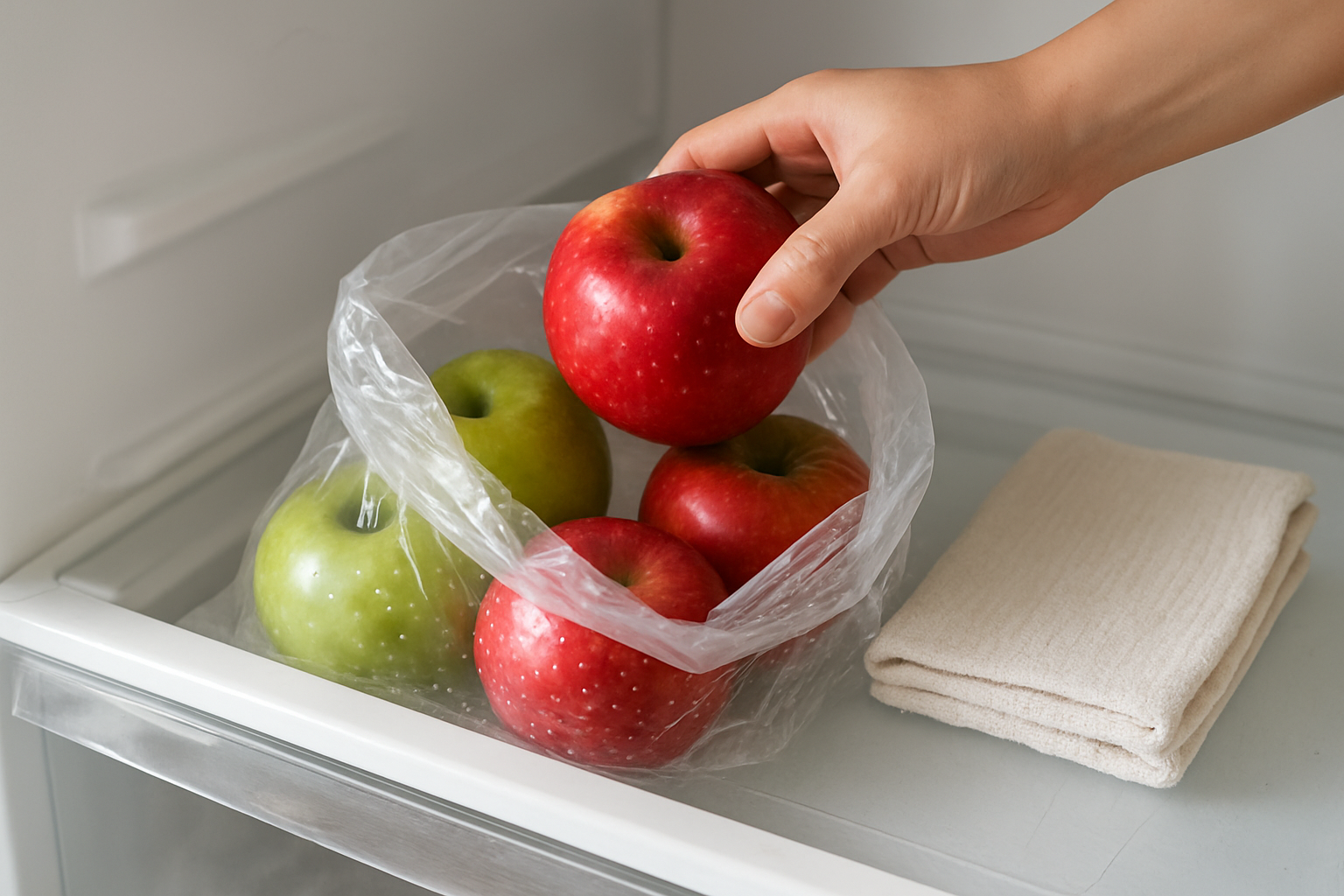
- Use a bag, but do not seal it airtight. A produce bag, loosely closed plastic bag, or reusable perforated produce bag helps hold humidity without trapping too much moisture.
- Place them in the crisper drawer. If your fridge has humidity controls, choose the higher-humidity setting unless the drawer becomes visibly wet inside.
- Check once a week. One soft apple can affect the rest. Pull out any fruit that is bruised, leaking, or getting wrinkly.
If you have only one crisper drawer and it is already full of leafy greens, give apples their own bag and place them toward the back of a refrigerator shelf, where temperatures are usually steadier than the door.
Keep Apples Away from Ethylene-Sensitive Produce
Apples produce ethylene, a natural gas that encourages ripening. That is useful when you are trying to ripen a hard avocado, but it can shorten the life of some vegetables and fruits stored nearby. USDA produce storage guidance says ethylene-producing fruits should ideally be kept in the refrigerator as far from ethylene-sensitive produce as possible. ([fna.usda.gov](https://www.fna.usda.gov/fs/produce-safety/storage?utm_source=openai))
In a home fridge, that means apples should not be crammed into the same drawer with lettuce, spinach, broccoli, cucumbers, or fresh herbs if you can avoid it. If space is tight, bag the apples separately and keep delicate greens in their own container or drawer.
Should Apples Go in High or Low Humidity?
Apples like cool, humid storage because dry refrigerator air can make them shrivel. A loosely closed bag helps create that small humid environment. The goal is not wet apples; it is apples that are protected from drying out.
If you see condensation dripping inside the bag, open it slightly or poke a few small holes. If the apples look wrinkled after a week or two, the storage spot is probably too dry, and a more closed bag may help.
Can You Store Apples in a Basement, Garage, or Root Cellar?
You can store apples outside the refrigerator if you have a consistently cold, dark, humid place that does not freeze. However, many modern garages and basements swing too warm during the day or too cold overnight. Ask Extension guidance from the University of Minnesota notes that apples last longest around standard refrigerator temperatures, about 33°F to 38°F, with about 85 percent humidity, and says the refrigerator is usually the best home storage spot. ([ask.extension.org](https://ask.extension.org/kb/faq.php?id=775640&utm_source=openai))
If you do use a garage, enclosed porch, or basement, store apples in shallow boxes or crates rather than deep piles. Keep them off concrete floors, away from sunlight, and protected from mice. Check them often, especially if the weather turns warm or dips below freezing.
How to Store a Lot of Apples After Picking
Orchard apples can last well, but only if you sort them carefully. Do not store perfect apples with bruised windfalls. Apples that hit the ground, even if they look mostly fine, are better for applesauce, apple butter, pies, or dehydrating.
For a large apple haul:
- Sort by condition. Perfect apples go to storage; bruised apples go to the kitchen.
- Sort by variety if you know it. Firm, tart, late-season apples usually store better than soft or early-season types.
- Wrap only if needed. For longer storage in boxes, you can wrap apples individually in plain paper to slow the spread of rot from one apple to another.
- Label the box. Write the variety and date so you use the shortest-keeping apples first.
- Inspect weekly. This is not fussy; it is how you save the rest of the box.
If you are unsure which apples will store best, taste and texture are clues. Very soft, thin-skinned, or already sweet apples are usually better eaten sooner. Dense, crisp apples with no bruising are better candidates for storage.
How Long Do Apples Last?
At room temperature, apples are best treated as short-term fruit. In the refrigerator, properly stored apples can often stay crisp for several weeks, and some varieties can keep longer. The exact time depends on variety, freshness when purchased, bruising, and how consistently cold your fridge is.
Do not rely only on the calendar. Use your senses. An apple should feel firm and smell fresh. Compost or discard apples that are moldy, leaking, deeply brown inside, fermented-smelling, or mushy throughout.
What to Do with Apples That Are Starting to Soften
Slightly wrinkled or soft apples may not be great for snacking, but they can still be useful if they are not moldy or spoiled. Peel and chop them for oatmeal, pancakes, muffins, baked apples, applesauce, or a quick skillet dessert with butter, cinnamon, and a little brown sugar.
You can also freeze sliced apples for future baking. Peel if you prefer, slice, toss with a little lemon juice to slow browning, freeze on a sheet pan, then transfer to a freezer bag. Frozen apples soften when thawed, so use them in cooked recipes rather than fresh salads.
Common Apple Storage Mistakes
- Leaving the whole bag on the counter. Fine for a few days, not ideal for longer storage.
- Storing bruised apples with perfect ones. Damage speeds decline and can spread spoilage.
- Washing before refrigeration. Wash right before use instead.
- Mixing apples with delicate greens. Ethylene can make some produce fade faster.
- Using the refrigerator door. The door is warmer and less steady than the crisper or back shelf.
The Simple Rule to Remember
If you want apples for the week, a bowl on the counter is convenient. If you want apples to stay crisp longer, put them in a loosely closed bag in the refrigerator crisper, keep the fridge at 40°F or below, and separate them from ethylene-sensitive produce.
That one small change can turn a disappointing bag of soft apples into weeks of crisp snacks, easy lunchbox fruit, and ready-to-bake fall desserts.