How to Clean a Shower Head for Better Water Pressure
A weak, sideways-spraying shower is often not a plumbing mystery. In many homes, it is simply a shower head with mineral buildup blocking the tiny spray holes.
The good news: you can usually clean a shower head with plain white vinegar, a toothbrush, and a little patience. Here is a practical step-by-step method that works for most fixed and handheld shower heads, plus when to skip vinegar and use a different approach.
Why Shower Heads Get Clogged
Shower heads clog when minerals in hard water dry inside and around the spray holes. Calcium and lime deposits slowly narrow the openings, so the water may come out weak, uneven, or in odd directions.
Cleaning also matters because shower heads stay damp between uses. University of Michigan Health recommends cleaning shower heads at least every 3 months to help reduce buildup and keep them sanitary. ([med.umich.edu](https://www.med.umich.edu/1libr/PedDialysis/CleaningShowerHeads.pdf?utm_source=openai))
If your shower head is old, badly corroded, cracked, or leaking from the seams, cleaning may only help a little. But if the main problem is crusty white buildup or uneven spray, this is worth trying before replacing it.
What You’ll Need
- Distilled white vinegar
- Warm water, if diluting
- Plastic food storage bag or small bowl
- Rubber band, twist tie, or painter’s tape
- Old toothbrush
- Soft cloth or microfiber towel
- Toothpick or plastic floss pick, optional
- Adjustable wrench, optional for removable shower heads
Important: vinegar is acidic. Do not use a long vinegar soak on natural stone, unsealed grout, brass, nickel, oil-rubbed bronze, or any finish where the manufacturer warns against acidic cleaners. If you are unsure, check the care instructions for your fixture first.
Best Method: Clean a Fixed Shower Head with Vinegar
This method works when the shower head is attached to the wall and you do not want to remove it.
- Wipe the shower head first. Use a damp cloth to remove loose dust, soap film, and grime from the outside.
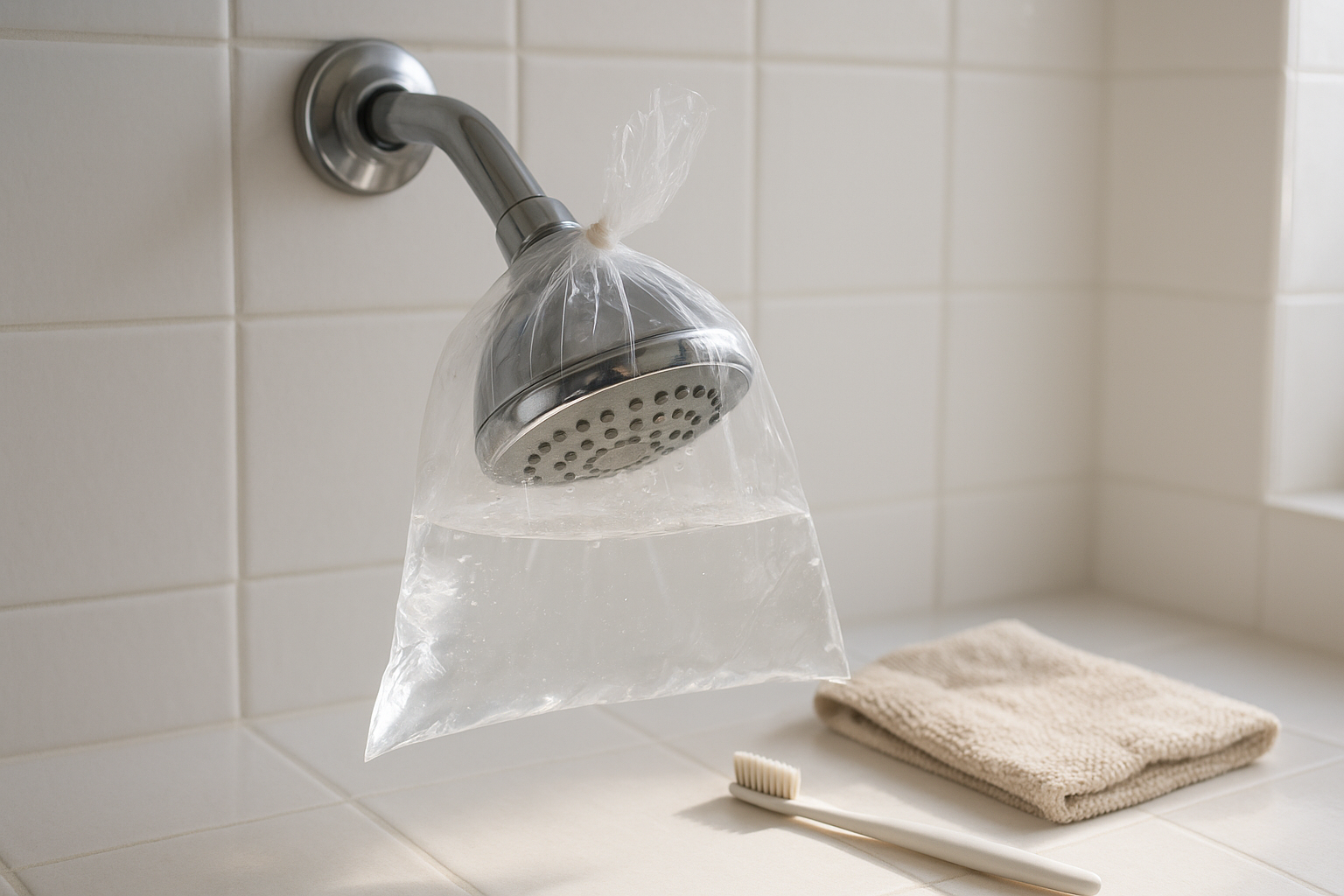
- Fill a plastic bag with vinegar. Use enough white vinegar to cover the spray face. If the buildup is light or the finish is delicate, use a 50/50 mix of vinegar and warm water instead.
- Attach the bag. Slip the bag over the shower head so the spray holes are submerged. Secure it tightly with a rubber band or twist tie.
- Soak for 10 to 20 minutes first. University of Michigan Health suggests soaking in white vinegar for 10 to 20 minutes, or until deposits dissolve, with tougher buildup needing more time or scrubbing. ([med.umich.edu](https://www.med.umich.edu/1libr/PedDialysis/CleaningShowerHeads.pdf?utm_source=openai))
- Remove and scrub. Carefully take off the bag, then scrub the spray holes with an old toothbrush.
- Flush the shower head. Run hot water for a few minutes to rinse away loosened minerals and vinegar smell. A shower-cleaning guide from the Global Sustainability Assessment System also recommends running hot water for several minutes after a vinegar soak. ([gsa-website.files.svdcdn.com](https://gsa-website.files.svdcdn.com/production/documents/How-to-guides/how-to-clean-a-showerhead.pdf?dm=1740046918&utm_source=openai))
- Dry and polish. Wipe the shower head dry with a soft cloth to slow new water spots.
For a Removable Shower Head
If your shower head unscrews easily, cleaning it in a bowl is neater and more thorough.
- Turn the shower head counterclockwise by hand. If it is tight, wrap the nut with a cloth before using a wrench so you do not scratch the finish.
- Place the shower head in a bowl with white vinegar or a 50/50 vinegar-and-water mix.
- Soak for 10 to 20 minutes, then check the buildup.
- Scrub the face, rinse well, and run water through it from both directions if possible.
- Reattach it by hand. If the connection drips, you may need fresh plumber’s tape on the shower arm threads.
Do not force a stuck shower head. If it will not budge, use the bag method instead. Twisting too hard can damage the shower arm inside the wall.
How to Unclog Stubborn Spray Holes
After soaking, some holes may still spray sideways or not at all. Try this:
- Rub flexible rubber nozzles with your thumb to break loose mineral bits.
- Use a toothbrush to scrub across the spray face in several directions.
- Gently loosen deposits with a toothpick or plastic floss pick. Avoid metal pins if they could scratch the finish or enlarge the holes.
- Turn the shower on full for 30 to 60 seconds, then repeat the brushing.
Some brands build in easy-clean spray holes. Delta, for example, recommends wiping the face of Touch-Clean shower heads to loosen deposits; for more difficult deposits on other shower heads, it recommends a 50/50 white vinegar and water soak. ([deltafaucet.com](https://www.deltafaucet.com/node/264?utm_source=openai))
When Vinegar Is Not Enough
If your shower head has thick, chalky buildup that vinegar barely softens, a commercial calcium, lime, and rust remover may work faster. Follow the label exactly, wear gloves, ventilate the room, and rinse thoroughly.
CLR’s shower head directions recommend using equal parts CLR Calcium, Lime and Rust Remover and warm water for cleaning shower heads. ([clrbrands.com](https://www.clrbrands.com/faq/how-do-i-use-calcium-lime-and-rust-remover-to-clean-a-showerhead/?utm_source=openai)) Do not mix CLR, vinegar, bleach, ammonia, or other cleaners together. Mixing cleaners can create dangerous fumes or damage finishes.
Also avoid harsh cleaners on specialty finishes unless the fixture maker says they are safe. Chrome and stainless steel are usually more forgiving than brass, matte black, bronze, or brushed finishes.
How Often Should You Clean a Shower Head?
For most homes, every 3 months is a good routine. If you have hard water, clean it monthly or whenever you notice weak pressure, uneven spray, white crust, or water shooting sideways.
A quick weekly wipe helps too. After your bathroom cleaning routine, rub the shower head face with a damp cloth and dry it. That small habit prevents water drops from drying into fresh mineral spots.
Is It the Shower Head or Low Water Pressure?
Cleaning helps when the clog is inside the fixture, but it will not fix every low-pressure problem. After cleaning, check the flow again.
Modern water-saving shower heads can still perform well, but they may use less water than older fixtures. EPA WaterSense-labeled shower heads use no more than 2.0 gallons per minute and must meet performance criteria through independent certification. ([epa.gov](https://www.epa.gov/watersense/showerheads?utm_source=openai))
If every faucet in the house has weak flow, the issue may be your main water supply, pressure regulator, shutoff valve, or plumbing. If only the shower is weak and cleaning does not help, the shower cartridge, diverter, or an internal flow restrictor may be clogged.
Common Mistakes to Avoid
- Soaking too long without checking: Overnight vinegar soaks are common, but they can be risky for some finishes. Start with 10 to 20 minutes and repeat if needed.
- Using bleach for mineral buildup: Bleach is not the right tool for calcium and lime deposits. Use an acidic cleaner like vinegar or a labeled descaler instead.
- Scrubbing with steel wool: It can scratch chrome and damage coated finishes.
- Forgetting to flush: Always run hot water after soaking so loosened debris does not sit inside the shower head.
- Mixing cleaners: Never combine vinegar with bleach or commercial chemicals.
The Simple Maintenance Plan
If your shower head is spraying poorly, start simple: soak, scrub, flush, and dry. Most mineral-clogged shower heads improve after one careful vinegar cleaning.
Then put it on your calendar every 3 months. It is a small bathroom task, but it can make your shower feel cleaner, stronger, and a lot less frustrating.