How to Stop Birds Pooping on Your Car Safely
Finding bird droppings on your car can be maddening, especially when it keeps happening in the same parking spot. The good news is that birds are usually not “targeting” your vehicle; they’re simply using a favorite perch or overhead resting place and leaving a mess below.
If you want to learn how to stop birds from pooping on your car, the best approach is to make that parking area less inviting without hurting the birds or your yard. Most of the time, a few changes to the space above and around the car will cut down the problem quickly.
Start by figuring out why that spot is attractive
Birds are more likely to leave droppings where they can perch, gather, or watch for food. A driveway under a tree, power line, roof edge, or utility wire is a prime target. Even a single branch can create a “waiting room” for birds that spend time above your car.
Walk around your parking area and look up. If you notice birds regularly sitting on:
- tree branches that hang over the driveway
- roof ridges or gutters
- fences, light poles, or mailboxes nearby
- utility wires above the street or lot
then you’ve probably found the source of the mess. Once you identify the perch, it becomes much easier to choose the right fix.
1. Remove or reduce the best perch spots
The most effective long-term solution is often to make it harder for birds to sit directly above the car. If branches are hanging over your parking area, trim them back so there’s less overhead cover. Even a modest pruning job can make the space feel less secure to birds.
When pruning, focus on safety and plant health. Don’t remove so much that the tree is left lopsided or stressed. For large limbs or branches near power lines, call a professional arborist or utility company instead of trying to handle it yourself.
Other structure-based fixes can help too:
- Install bird spikes on ledges, beams, or roof edges where birds land.
- Add sloped covers or caps to flat surfaces that collect birds.
- Keep gutters clean so birds are not attracted to debris or standing water.
Bird spikes and similar deterrents are meant to make landing uncomfortable, not to injure wildlife. When installed correctly, they can be a good option for spots you cannot easily change.
2. Change where you park, if possible
This may sound too simple, but a different parking angle or location can make a big difference. If you have a choice, move the car out from under trees, wires, and roof overhangs. Even parking a few feet away from a known perch can reduce the amount of droppings.
If your driveway has more than one usable space, try rotating vehicles so the same car is not always in the “hot spot.” If the problem happens on the street rather than in your driveway, see whether a nearby open area, garage, or carport is an option.
When permanent relocation is not possible, a car cover can help protect your paint and windshield. Choose a breathable, weather-resistant cover that fits well, and make sure the car is clean and dry before covering it.
3. Use harmless visual deterrents
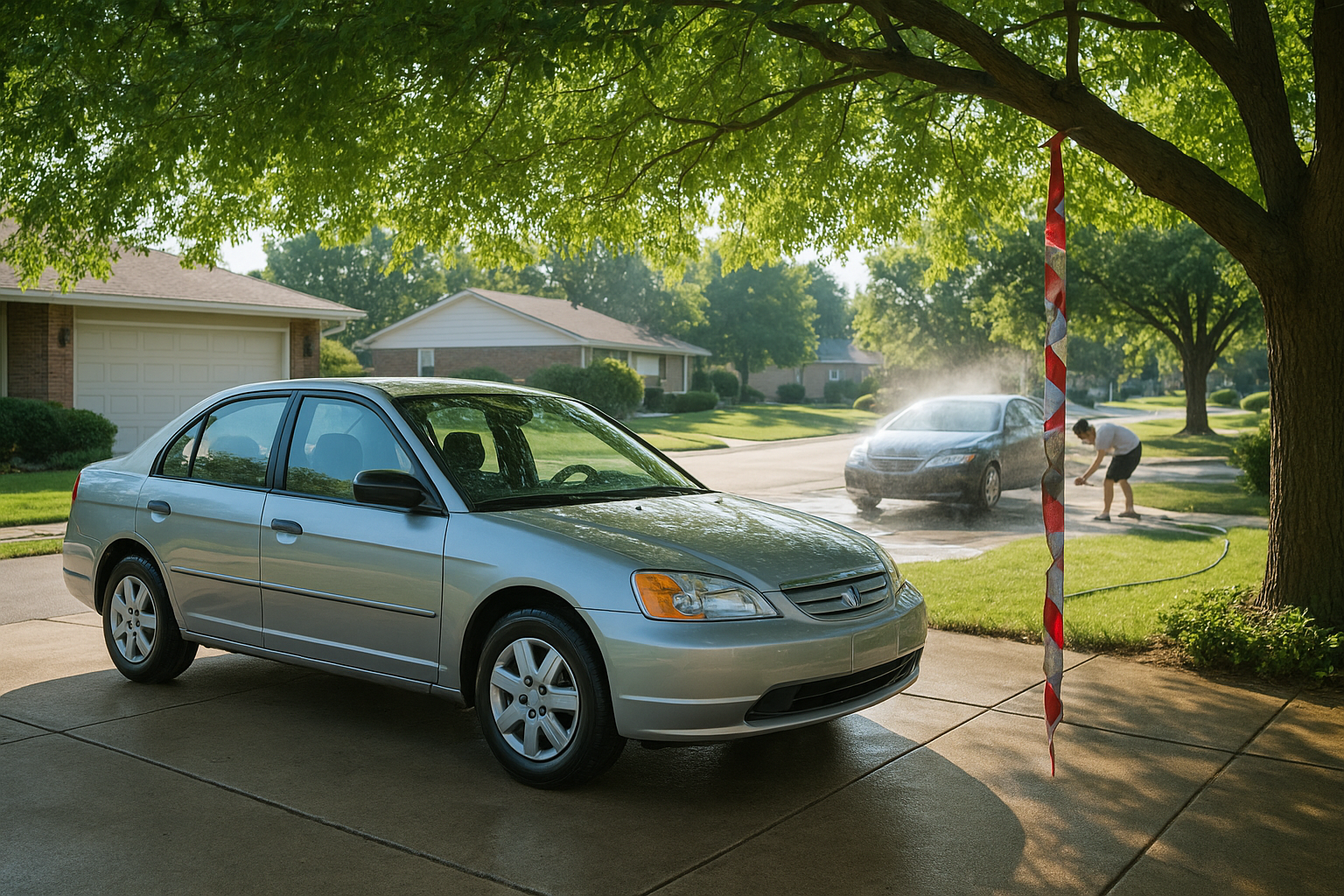
Birds can be wary of movement, shine, and unfamiliar objects. Visual deterrents are most useful when they are placed where birds actually approach or land. The key is to move them occasionally so birds do not get used to the same setup.
Good options include:
- Reflective tape or hanging strips that flutter in the wind
- Pinwheels or wind spinners near the parking area
- Shiny deterrent balloons placed above nearby landing zones
- Old CDs or reflective discs used temporarily in trees or on posts
These tools work best as part of a larger plan. A lone shiny object may not do much if birds have a perfect branch above the car. Pair them with pruning, covers, or perch removal for better results.
4. Keep the area from becoming a food or water stop
Birds often return to places that offer food, water, or shelter. If your driveway is near feeders, pet bowls, spilled seed, or standing water, the activity may be drawing birds in from the neighborhood.
To make the area less appealing:
- move bird feeders farther from the driveway if you have them
- clean up fallen seed under feeders regularly
- empty pet bowls or feeding stations after use
- remove puddles, clogged planters, or other standing water
If you enjoy feeding birds, place feeders well away from parked vehicles. This lets you welcome wildlife without inviting them to linger over your car.
5. Use a car cover or garage on the worst days
If your bird problem is seasonal or tied to nesting time, a physical barrier can be the simplest answer. A fitted car cover blocks droppings before they reach the paint, and it can save you from repeated washing.
For best results, choose a cover that is:
- breathable to help prevent moisture buildup
- soft-lined to reduce scratching
- secure at the bottom so it does not flap in the wind
If you have a garage, even partial use can help. Parking inside at night or during peak bird activity can reduce cleanup and protect your finish from more than just droppings.
What not to do
It can be tempting to try harsh methods, but those usually create bigger problems. Avoid anything that could injure birds or create safety hazards in your yard. In particular:
- do not use poisons or toxic sprays
- do not leave sticky substances on surfaces
- do not remove nesting birds or active nests without checking local rules
- do not use loud harassment methods that disturb neighbors or pets
Humane deterrence is usually enough when the goal is simply to move birds to a better landing spot.
Cleaning droppings safely matters too
Even with the best prevention plan, occasional cleanup may still be necessary. Bird droppings can damage paint if left too long, especially in hot sun. If you spot fresh mess, rinse it off as soon as you can.
A safer cleaning routine looks like this:
- Soak the spot with water or car-safe cleaner to loosen it.
- Wipe gently with a soft microfiber cloth.
- Wash the area with car soap and water.
- Dry it thoroughly to avoid water spots.
Avoid scraping dried droppings off with anything abrasive, which can scratch the clear coat. If the mess has baked on for a while, let it soften first rather than forcing it.
Putting it all together
When you are figuring out how to stop birds from pooping on your car, think in layers. One fix may help, but a combination of pruning, perch removal, visual deterrents, and smarter parking usually works best.
Here’s a simple plan to try:
- identify the overhead perch or attraction
- trim branches or treat ledges where birds land
- move the car when possible
- add a cover or reflective deterrent
- remove food and standing water nearby
Once the area is less comfortable for birds, they usually move on to a better spot. That means less cleanup for you, better protection for your paint, and a driveway that stays a little more pleasant to use every day.