How to Save Dahlia Tubers After the First Frost
The first hard frost can make dahlias look like they have given up overnight, but the underground tubers are often still full of life. If you act at the right time and handle them gently, you can save dahlia tubers after first frost and enjoy the same plants again next summer.
The key is knowing when to dig, how to dry them, and where to store them through winter. A little care now goes a long way toward stronger plants, healthier tubers, and better blooms next year.
Wait for the Right Moment
Do not rush out and dig the moment the temperature dips. Dahlias need a light frost or two to signal that the season is ending, and the plant will send its remaining energy down into the tubers. That short wait helps them store up what they need for winter dormancy.
At the same time, you do not want to leave them in frozen, soggy ground for too long. If you live in a cold region, keep an eye on the forecast and be ready to lift them before the soil freezes hard.
When to dig dahlias
- After the first frost once the foliage turns black or limp
- Before deep freezes if your ground is likely to lock up quickly
- After a few days if the weather is mild and the soil is still workable
If you garden in a warmer area with well-draining soil, you may be able to leave dahlias in the ground with protection. In colder climates, lifting them is usually the safer choice.
Cut Back the Top Growth First
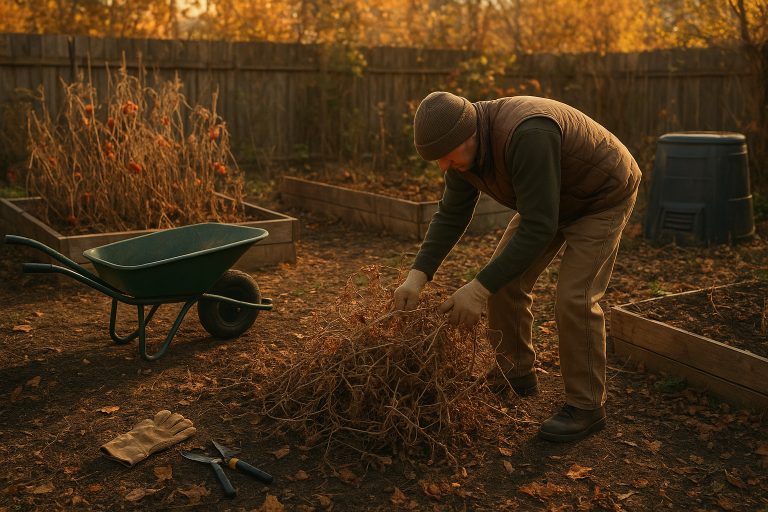
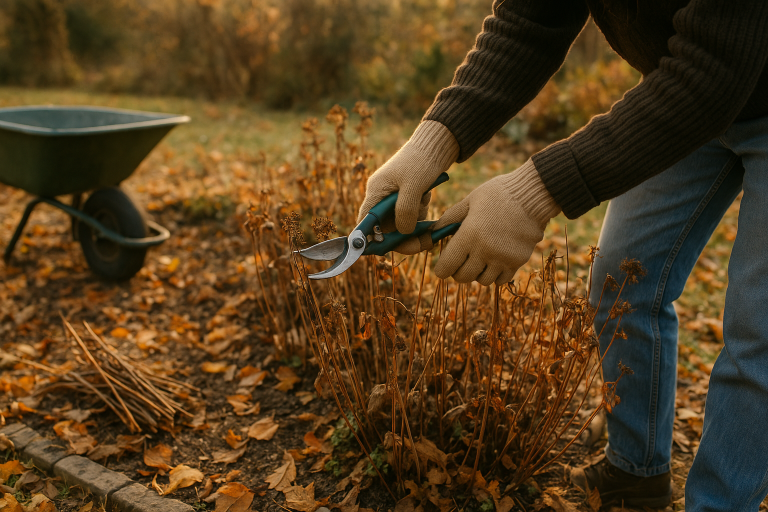
Once the stems have been hit by frost, trim them back to about 4 to 6 inches above the soil. This makes the clump easier to handle and gives you a clear place to hold while digging.
Use clean pruning shears or loppers, especially if you have multiple tuber clumps to process. Sanitary tools help reduce the chance of spreading disease from one plant to another.
What to do before digging
- Remove blackened flowers and damaged leaves from the bed.
- Label each plant if you want to keep track of variety names.
- Cut stems to a short stub so they are easier to lift.
- Keep the area dry if possible, since wet soil makes lifting messier and more likely to damage tubers.
Dig Carefully to Avoid Injury
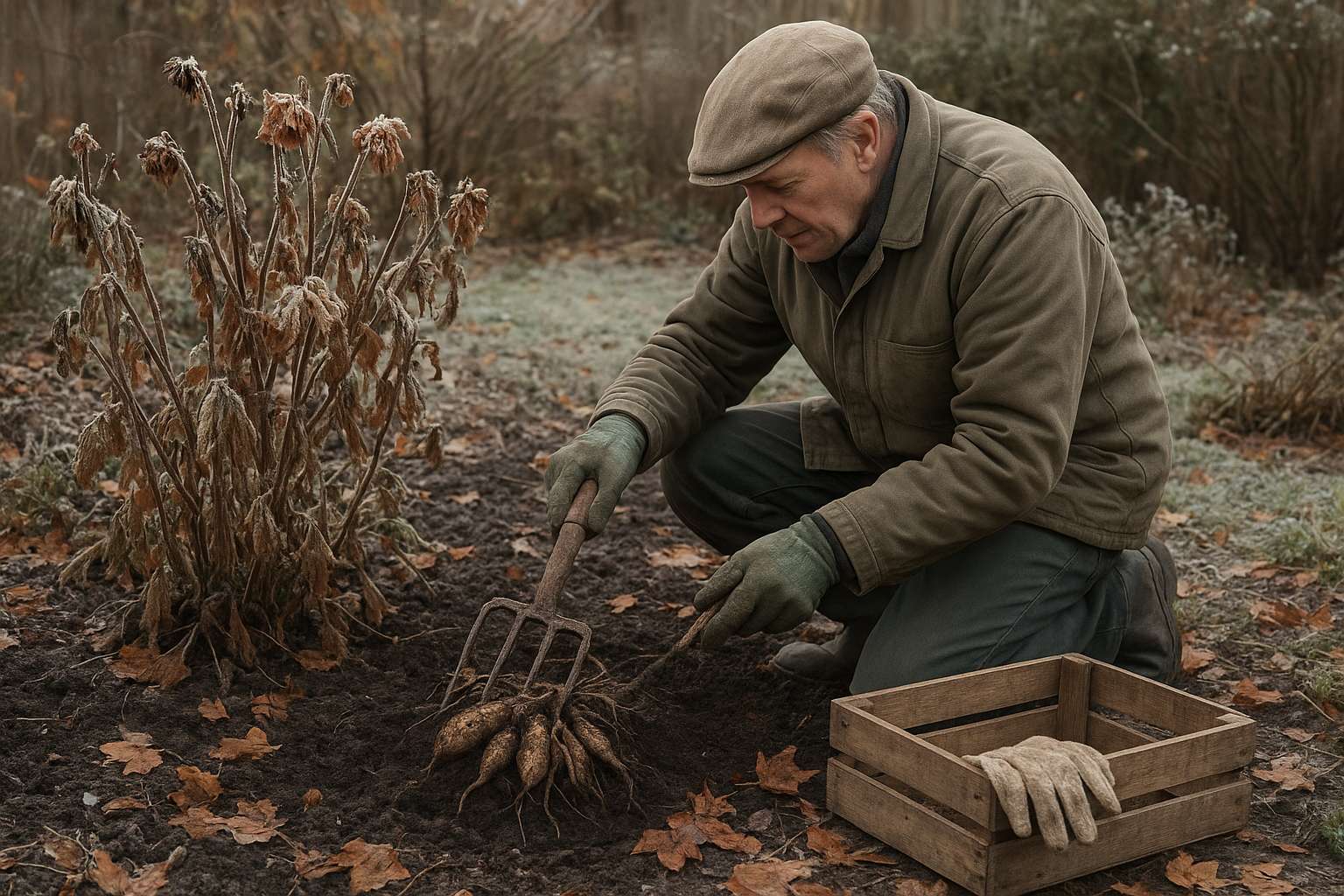
Dahlia tubers can be surprisingly fragile. One careless stab with a shovel can nick a tuber and create a rot point that shows up later in storage. A garden fork is often the best tool because it loosens the soil without slicing through the clump as easily.
Start a little farther away from the stem than you think you need to. Work around the plant in a circle, loosening the soil on all sides before lifting. Then slide the fork underneath and gently raise the clump from below.
If the soil is dense, do not yank. Shake off loose dirt by hand and set the clump on the ground or in a tray. The goal is to keep the necks of the tubers attached to the crown, since tubers without that connection usually will not regrow.
Helpful digging tips
- Choose a dry day if you can.
- Dig at least 8 to 12 inches out from the stem for larger plants.
- Lift from multiple sides instead of prying from one spot.
- Handle the clump by the remaining stem, not the tubers themselves.
Let the Tubers Cure Before Storing
Freshly dug dahlias are often damp and coated with soil. They need a short drying period, sometimes called curing, before winter storage. This helps the outer skin toughen up and reduces the chance of mold or rot.
Spread the clumps in a single layer in a sheltered, airy spot out of direct sun. A garage, porch, shed, or covered work area can work well as long as temperatures stay above freezing and there is good ventilation.
Let them dry for several days, checking them now and then. If the clumps are large and thick, they may need longer than compact varieties. Brush off loose soil, but do not scrub them clean or wash them unless absolutely necessary. Excess moisture is the enemy during storage.
Look for problems while curing
- Soft spots
- Broken necks
- Visible rot
- Missing labels or variety tags
If you find damaged tubers, set them aside and do not store them with healthy ones. One rotting tuber can affect an entire box.
Store Dahlias in a Cool, Dry Place
The ideal storage space is cool, dark, and slightly humid, but not damp. You want the tubers to stay dormant without drying out completely or turning mushy.
Many gardeners use cardboard boxes, paper bags, crates, or plastic bins with ventilation holes. Pack the tubers in a dry medium such as peat moss, vermiculite, wood shavings, or dry potting mix. The packing material helps cushion the tubers and keeps them from touching too closely.
Best storage conditions
- Temperature: cool but above freezing
- Light: dark or very low light
- Moisture: dry enough to prevent rot, but not bone-dry for months
- Airflow: gentle ventilation to avoid mold
A basement, unheated garage, or root cellar often works well. Avoid hot closets, sealed containers with no airflow, and places that fluctuate wildly in temperature.
Check on Them Through Winter
Do not just pack them away and forget them. Dahlias benefit from a quick inspection every few weeks during winter. Look for shriveling, mold, or softening, and adjust conditions if needed.
If the tubers seem shriveled, the storage area may be too dry. If they look mushy or smell sour, the space may be too wet or too warm. Catching these issues early can save the rest of the clump.
Winter storage checklist
- Inspect tubers monthly.
- Remove anything that is rotting.
- Add a little dry packing material if they seem too dry.
- Keep labels attached so you know what you planted where.
Can You Leave Dahlias in the Ground?
In mild climates with free-draining soil, some gardeners leave dahlias in place through winter. This can work if freezes are brief and the ground does not stay saturated for long periods. The biggest risk is rot from cold, wet soil.
If you choose to leave them outside, add a thick layer of mulch after the foliage has died back. Straw, shredded leaves, or dry compost can help buffer temperature swings. Even then, this method is safest in regions where winters are gentle.
For many gardeners, lifting is simply the more reliable option. If your winters are unpredictable, storing tubers indoors gives you much better control.
Set Yourself Up for a Better Spring
Saving dahlias after frost is really about timing, patience, and a dry storage setup. Once you get the hang of it, the process becomes part of the fall routine. And the payoff is worth it: healthier tubers, less replanting expense, and the same varieties returning year after year.
When spring arrives, inspect the clumps again before planting. Healthy tubers should feel firm and plump, with visible eyes near the crown. If your storage went well, you will be ready to divide, plant, and start the cycle over for another season of big, colorful blooms.