7 Flowering Plants That Stay Beautiful in Winter
A garden does not have to look empty just because the main bloom season is over. The smartest plant choices keep working hard after their flowers fade, giving you color, texture, seedheads, berries, or strong stems that look great well into fall and winter.
If you want a garden that still feels alive in the colder months, look for plants that offer more than one season of interest. These are the kinds of plants that make beds, borders, and containers feel intentional even when the weather turns gray.
What makes a plant worth keeping for winter?
When shopping for perennials or shrubs, think beyond the flowers. The best multi-season plants usually have one or more of these features:
- Persistent seedheads that add shape and feed birds
- Sturdy stems that stand up to wind and snow
- Evergreen or colorful foliage that stays attractive after blooming
- Berries or pods that brighten the off-season garden
- Interesting texture that catches frost and snow beautifully
Also make sure the plant fits your conditions. Winter interest is only useful if the plant thrives in your soil, light, and USDA hardiness zone.
1. Coneflower
Best for: bird-friendly seedheads and upright winter structure
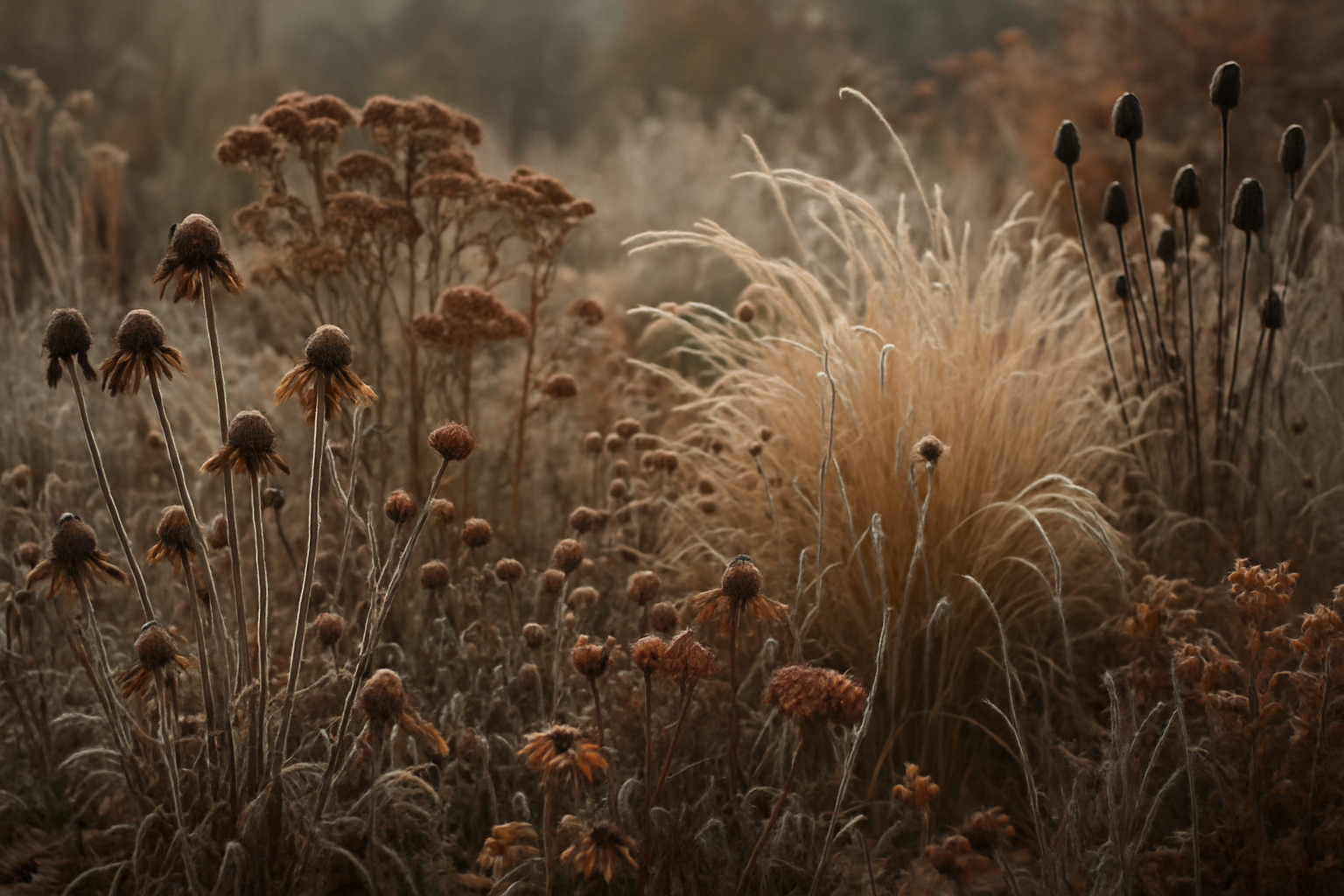
Coneflower is a classic perennial for sunny gardens, and it keeps paying off after its purple, pink, white, or orange blooms finish. Once the petals drop, the central cones remain standing on tall stems, creating a strong silhouette through late fall and often into winter.
Those seedheads are more than decorative. Goldfinches and other birds will happily visit them for food. If you want a tidy look, you can leave several stems standing and cut the rest back in spring. That gives wildlife something to use while still keeping the garden from looking too messy.
Growing tip: Coneflowers prefer full sun and well-drained soil. Avoid rich, overly wet conditions, which can shorten the plant’s life.
2. Sedum
Best for: bronze flower heads and dependable late-season texture
Upright sedum, often sold as stonecrop, is one of the easiest plants to appreciate year-round. In late summer, it produces flat clusters of small flowers that mature into rosy, copper, or rusty tones as the season cools.
Instead of collapsing after bloom, many sedums dry in place with excellent form. The flower heads become architectural, especially when frost dusts the tops of the stems. Even the thick leaves help the plant look full and neat while many other perennials have gone floppy.
Growing tip: Sedum needs full sun and sharply drained soil. If your garden stays damp in winter, plant it in a raised bed or slope.
3. Bee balm
Best for: sculptural seedheads and pollinator support
Bee balm is known for its shaggy, colorful summer flowers, but once those fade, the plant’s seedheads continue to add interest. The dried heads have a wild, textural look that suits informal gardens and pollinator spaces.
In summer, bee balm attracts bees, butterflies, and hummingbirds. In the off-season, the seedheads can still be useful if you leave them standing through fall. The foliage is aromatic too, which adds another layer of sensory interest when you brush past it.
Growing tip: Bee balm does best in full sun to partial shade with evenly moist soil. Good air circulation helps reduce powdery mildew.
4. Ornamental grass with seed plumes
Best for: movement, frost, and winter silhouette
Not every winter-interest plant needs flowers in the traditional sense. Many ornamental grasses bloom into airy plumes or seed heads that remain attractive long after the growing season ends. They sway in the breeze, soften hard edges, and hold frost in a way few other plants can match.
Choose clumping grasses rather than aggressive spreaders if you want easy maintenance. Varieties such as switchgrass or feather reed grass often hold their shape well and look especially attractive when backlit by low winter sun.
Growing tip: Leave grasses standing until late winter or early spring, then cut them back before new growth starts.
5. Hydrangea with dried flower heads
Best for: big dried blooms that look great in cold weather
Some hydrangeas, especially panicle and many smooth hydrangeas, hold their flower heads after the season ends. As the blooms dry, they often shift into parchment, green, pink, tan, or burgundy tones that can last for months.
These dried clusters add volume to the winter garden and look beautiful when outlined by frost. They also work well in mixed borders where you want taller plants to provide height after the summer color is gone.
Growing tip: Leave the spent blooms through winter, then prune according to the type of hydrangea you grow. Panicle hydrangeas are usually pruned in late winter or early spring.
6. Cone-shaped allium seedheads
Best for: sculptural seed pods and a natural dried look
Ornamental alliums are often planted for their dramatic spring flowers, but the dried seedheads can be just as eye-catching. Their round forms slowly fade into airy, lacy spheres that add a modern, architectural feel to the garden.
These seedheads are especially effective in beds with a simple planting design. A few leftover allium stems can look like garden ornaments once the flowers have gone. They also make great dried accents alongside grasses and late perennials.
Growing tip: Plant allium bulbs in fall in a sunny spot with well-drained soil. The seedheads are only a bonus if the plants get enough light and airflow.
7. Winterberry holly
Best for: bright berries that bring color to bare branches
Winterberry holly is a deciduous shrub, which means it drops its leaves and then shows off clusters of vivid red berries on bare stems. That bare-branched look makes the fruit even more striking in winter.
This shrub is a standout for foundation plantings, wildlife gardens, and mixed borders. It’s also an excellent reminder that winter color does not have to come from flowers at all. Just make sure you plant a male pollinator if you want berries on a female winterberry plant.
Growing tip: Winterberry prefers moist, acidic soil and full sun to partial shade. It performs best where soil does not dry out completely.
How to keep winter-interest plants looking good
One of the biggest mistakes gardeners make is cutting everything back too soon. While some cleanup is helpful, many plants look best when left standing until late winter. Here are a few simple rules to follow:
- Leave sturdy stems through winter if they add shape or feed birds.
- Remove only damaged or diseased material in fall.
- Cut back in stages if a plant is messy but still attractive in parts.
- Use mulch to protect roots and make beds look more finished.
- Mix textures so seedheads, berries, and foliage support one another visually.
If you want a garden that looks thoughtful in every season, build it around contrast. Pair soft grasses with bold seedheads, or dried flower clusters with evergreen shrubs. A good winter planting scheme does not rely on one showy plant. It layers several smaller effects so something is always carrying the scene.
Simple design ideas for a four-season border
- Back layer: hydrangea or winterberry for height and structure
- Middle layer: coneflower, bee balm, or upright sedum for seedheads
- Front layer: lower sedums, groundcovers, or ornamental grasses for texture
- Accent layer: allium seedheads or a few vertical stems left standing for shape
With the right mix, your garden can keep looking interesting long after the flowers fade. In fact, the weeks after bloom season are often when shape, texture, and silhouette matter most. Choose plants that do both jobs well, and your garden will reward you from spring through winter.