7 Fall Flowers That Bloom Into October and Feed Pollinators
By the time October rolls around, many gardens start winding down—but the right plants can keep borders lively and buzzing with pollinators. If you want color that lasts and flowers that still offer nectar when resources get scarce, these late-season picks are some of the best choices.
Choosing fall flowers that bloom into October does more than stretch your garden’s display. It also helps bees, butterflies, and other helpful insects fuel up before colder weather arrives. With a little planning, you can turn the last stretch of the growing season into one of the most rewarding times in the garden.
Why late bloomers matter so much
As summer fades, many nectar-rich flowers begin to slow down just when pollinators need food most. Seasonal changes, shrinking habitat, and fewer available blooms can make autumn a lean period for wildlife. That’s why a garden full of late bloomers is more than just attractive—it can be genuinely helpful.
Late-flowering plants can also make the garden feel fresh again after midsummer plants fade. In many areas, autumn has its own beauty: soft light, cooler temperatures, richer flower colors, and fewer pest problems. The right plants let you enjoy all of that while still supporting local wildlife.
7 flowers that keep blooming into October
1. Asters
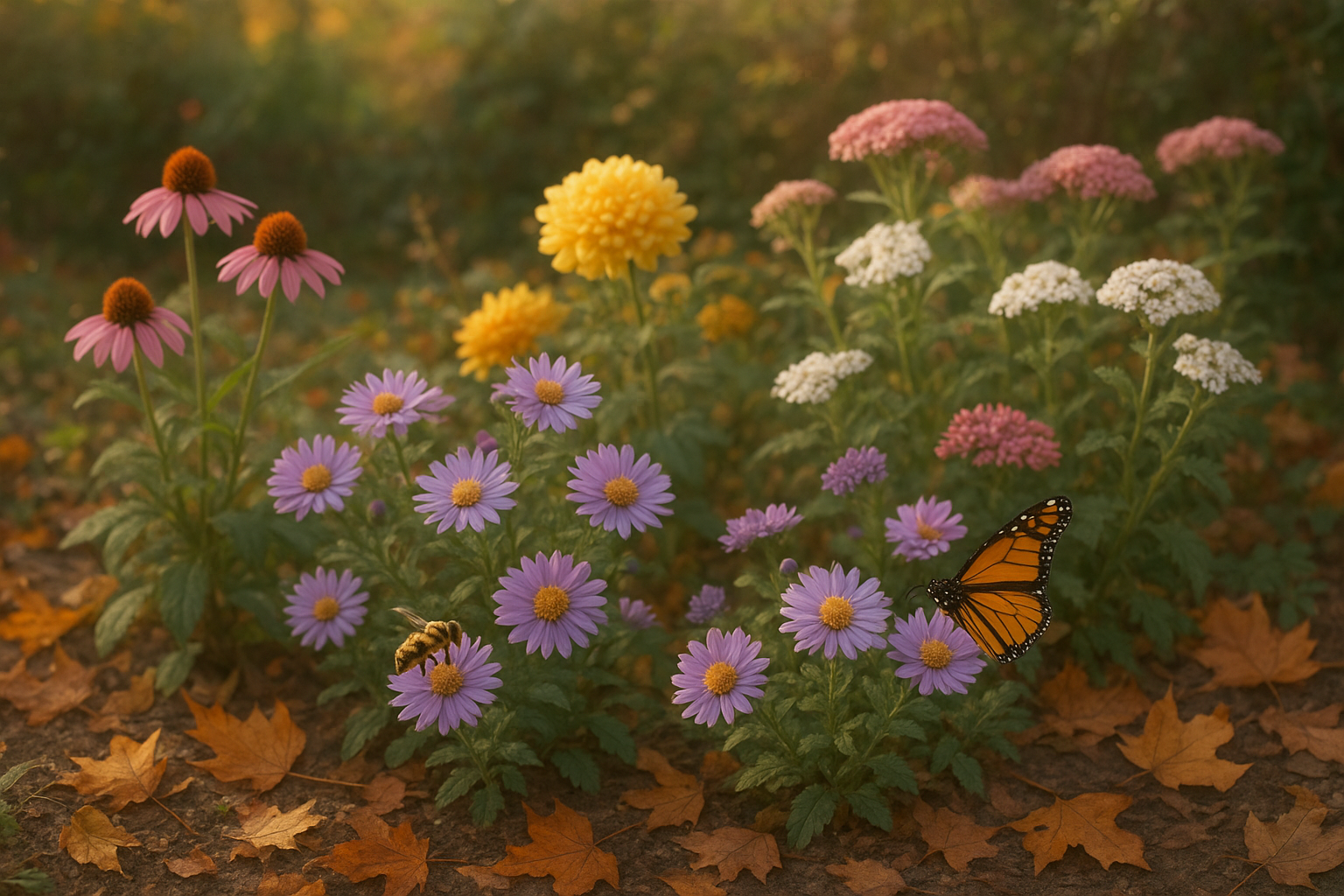
Asters are classic fall flowers, and for good reason. Their daisy-like blooms appear in shades of purple, blue, pink, and white, and they’re one of the best late nectar sources for bees and butterflies.
Growing tip: Plant asters in full sun and well-drained soil. Pinching back stems in early summer can help them grow bushier and produce more flowers later in the season.
Best for: Cottage gardens, borders, and pollinator patches.
2. Sedum
Also known as stonecrop, sedum is a tough perennial that thrives on neglect in the best possible way. The large, flat flower heads are easy landing pads for bees, and the blooms often stay attractive well into fall.
Growing tip: Sedum prefers full sun and dry to average soil. Avoid overwatering, since soggy roots can cause problems.
Best for: Sunny borders, gravel gardens, and low-maintenance spaces.
3. Japanese anemone
Japanese anemones bring graceful movement to the autumn garden with tall stems and simple, airy flowers in white or soft pink. They bloom late and often keep going if the weather stays mild.
Growing tip: Give them partial shade in hotter regions and moist, well-drained soil. They appreciate space to spread, so place them where they can naturalize comfortably.
Best for: Woodland edges, mixed borders, and informal plantings.
4. Goldenrod
Goldenrod gets a lot of credit as a fall wildflower, and it deserves it. Its bright yellow flower clusters can light up a border and attract a wide range of beneficial insects.
Growing tip: Choose a noninvasive variety suited to your region. Most goldenrods perform well in full sun and tolerate average garden conditions once established.
Best for: Wildlife gardens and naturalized areas.
5. Verbena bonariensis
Verbena bonariensis offers tall, see-through stems topped with clusters of purple flowers. It creates a light, airy look and keeps blooming for a long season in warmer areas or in sunny, sheltered spots.
Growing tip: This plant loves sun and good drainage. Deadheading can encourage more blooms, though even seed heads can be useful for birds later on.
Best for: Adding height without blocking the view of other plants.
6. Cosmos
Cosmos are easygoing annuals that can flower for months if you keep them watered and deadheaded. In many gardens, they continue right into early autumn, especially after a late start.
Growing tip: Sow or plant them in a sunny spot with moderately fertile soil. Too much nitrogen can give you leaves instead of flowers, so don’t overfeed.
Best for: Cutting gardens and cheerful informal beds.
7. Helenium
Helenium, sometimes called sneezeweed, produces warm-toned flowers in red, orange, and gold that fit beautifully into fall plantings. It’s a magnet for pollinators and pairs well with ornamental grasses and asters.
Growing tip: Keep the soil consistently moist and give plants full sun. Taller varieties may need staking in exposed locations.
Best for: Mixed borders and late-season color combinations.
How to keep autumn flowers blooming longer
Flower choice matters, but good care is what helps your garden hold on to those blooms through October. A few simple habits can make a big difference.
- Deadhead regularly: Removing spent flowers can encourage many plants to produce more buds.
- Water deeply during dry spells: Fall can still be surprisingly dry, especially for newer plants.
- Mulch around roots: A layer of mulch helps retain moisture and keeps roots more comfortable as nights cool.
- Avoid heavy feeding late in the season: Too much fertilizer can push leafy growth instead of flowers.
- Leave some seed heads: If you want to help birds and add winter interest, let a few blooms go to seed.
Designing a pollinator-friendly fall border
If you want the garden to look full and intentional, combine different flower shapes and heights. Asters and sedum create sturdy lower layers, while verbena bonariensis and helenium add vertical interest. Mix in ornamental grasses or bronze foliage plants to give the planting extra texture.
It also helps to group flowers in clusters. Pollinators are more likely to visit a bed when they can spot several blooms together rather than a single isolated plant. In a small yard, even a few pots can make a difference.
Great companion ideas
- ornamental grasses for movement and late-season texture
- purple coneflower for an extended bloom season in some regions
- autumn joy sedum for structure and color
- shrubs with berries for wildlife support after flowering ends
Container gardeners can join in too
You don’t need a big border to help bees and butterflies in autumn. Patio pots and balcony planters can also carry late-season flowers. Choose a large container, use quality potting mix, and make sure there’s excellent drainage. Then combine one upright plant, one filler, and one trailing option for a balanced display.
Try a pot with cosmos or a compact aster as the main feature, then underplant it with trailing ivy or a seasonal foliage plant. Keep containers watered more often than in-ground beds, since pots dry out quickly in crisp fall weather.
What to plant now for next year’s October display
If you’re reading this before the season ends, autumn is a smart time to plan ahead. Many perennials establish well when planted in cooler weather, which gives them a head start for the following year. Add notes to your garden journal about which plants were still flowering in October, which areas got the most sun, and where pollinators gathered most often.
That way, you can build a stronger, better-looking fall garden year after year. A little observation now will help you create a border that’s beautiful, practical, and alive with movement long after summer has gone.
For gardeners who love a yard that keeps doing useful work right through the season, these flowers are a simple win. They brighten the landscape, support wildlife, and make the final weeks of the gardening year feel much less like an ending.