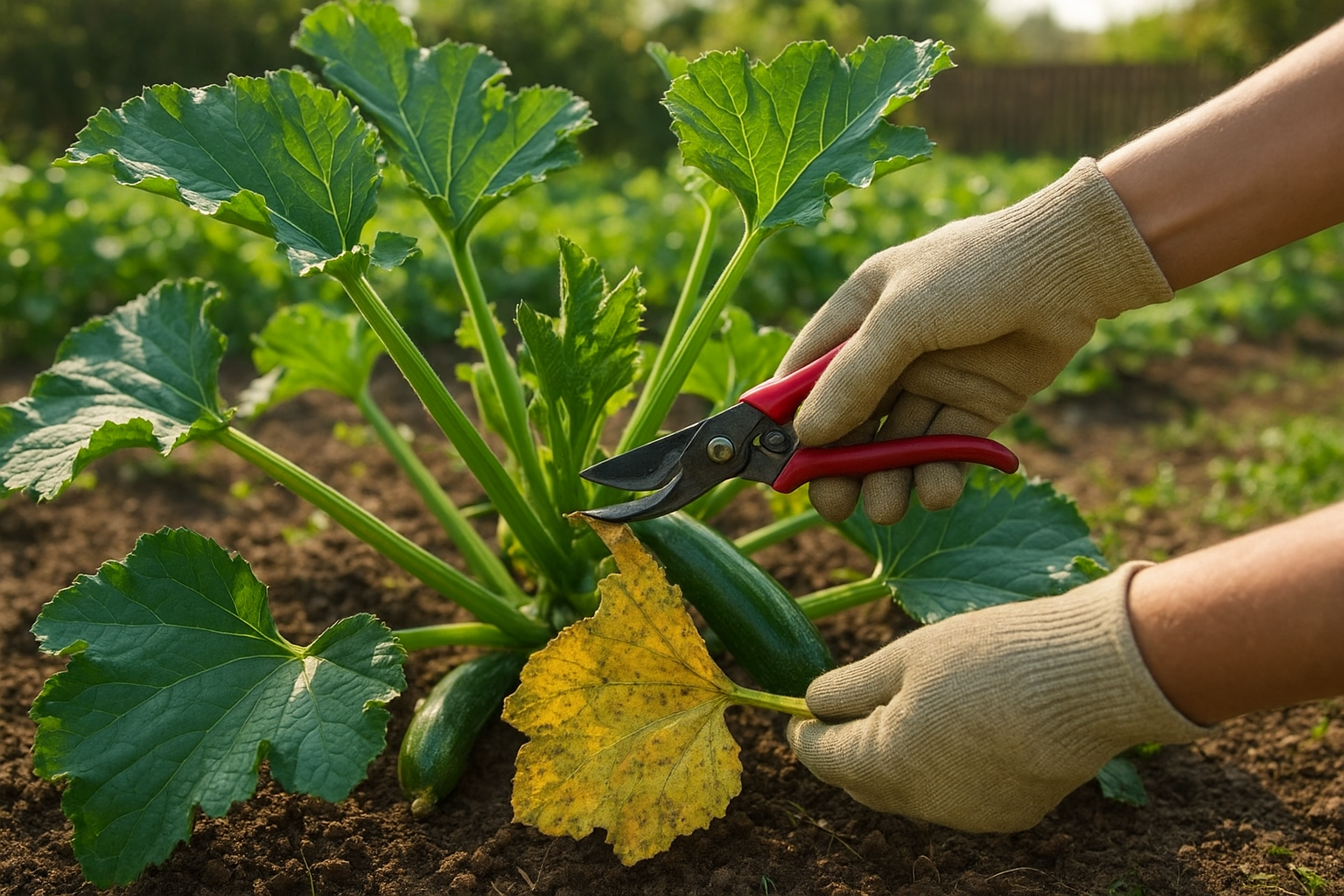
How to Prune Zucchini Leaves Without Hurting the Plant
Zucchini plants can turn into a leafy jungle by midsummer. A little pruning can make them easier to harvest, improve airflow, and help you spot problems before they take over.
The trick is not to treat zucchini like a shrub that needs shaping. You only want to remove the leaves that are doing more harm than good, while leaving enough healthy foliage to feed and shade the plant.
Should You Prune Zucchini Leaves?
Yes, you can prune zucchini leaves, but lightly. Zucchini leaves make food for the plant through photosynthesis, and they also help shade developing fruit from sunscald. Remove too many leaves at once and the plant may slow down or become stressed.
The best reasons to prune are practical ones: removing damaged leaves, improving airflow, making watering easier, and giving yourself room to harvest without breaking stems. Good airflow is especially helpful because powdery mildew is a common problem on squash and zucchini, and dense, crowded growth can make leaf disease harder to manage. Extension advice also recommends pruning leaves when needed to increase airflow and reduce heavy shade around plants. ([ask.extension.org](https://ask.extension.org/kb/faq.php?id=655742&utm_source=openai))
When to Prune Zucchini
Wait until the plant is established and actively growing. For most gardeners, that means pruning after the zucchini has several large leaves and is beginning to flower or set fruit. Tiny young plants need their leaves, so avoid pruning seedlings unless a leaf is dead or diseased.
The best time of day to prune is in the morning after dew has dried, or in the early evening when the plant is not wilting from heat. Avoid pruning during the hottest part of the day, especially during a heat wave, because the open cuts and sudden loss of shade can stress the plant.
Plan on pruning a little at a time. A quick check once a week is better than hacking back half the plant after it becomes unmanageable.
What Zucchini Leaves to Remove
Focus on leaves that are no longer helping the plant. These are the safest leaves to cut:
- Yellow or brown lower leaves: Older leaves near the base often fade first. Once they are mostly yellow, they are not doing much useful work.
- Leaves touching the soil: Soil-splashed leaves are more likely to stay damp and dirty. Removing them also makes watering at the base easier.
- Torn or broken leaves: Wind, pets, kids, and harvesting can damage big zucchini leaves. Cut them off cleanly instead of leaving ragged stems.
- Leaves with early disease spots: If one or two leaves show suspicious white, gray, or brown patches, remove them promptly and dispose of them away from the garden.
- Leaves blocking harvest: If a leaf makes it impossible to see or reach fruit, remove one or two rather than snapping stems every time you pick.
Do not remove all the big leaves just because the plant looks crowded. Summer squash is usually harvested young and tender; Clemson Extension notes that zucchini is commonly picked around 7 to 8 inches long, so you need to be able to see fruit often without stripping the plant bare. ([hgic.clemson.edu](https://hgic.clemson.edu/factsheet/summer-squash/?utm_source=openai))
What Not to Cut
Before you start, it helps to know what should stay. Avoid cutting these unless they are clearly diseased or dead:
- The growing crown: This is the center of the plant where new stems, flowers, and leaves emerge. If you damage it, the plant may stop producing.
- Healthy upper leaves: These leaves are feeding the plant and shading fruit.
- Flower stems: Male and female flowers are needed for pollination. Female flowers have a tiny fruit at the base.
- Fruit stems: Do not tug leaves or fruit from the plant. Use clean shears or a knife.
Also avoid removing so much foliage that developing zucchini are suddenly exposed to full, harsh sun. A little dappled shade from the leaves is useful, especially in hot summer gardens.
How to Prune Zucchini Leaves Step by Step
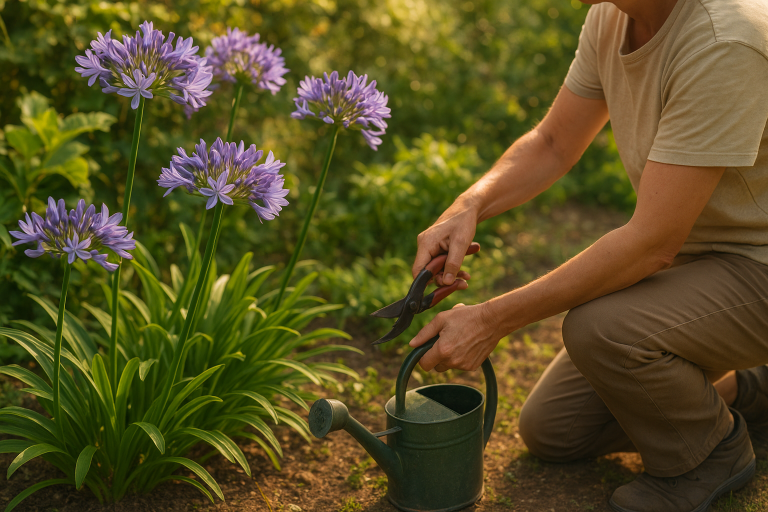
- Put on gloves. Zucchini stems and leaf stalks can be prickly. Illinois Extension recommends gloves and a sharp knife or pruning shears when harvesting summer squash because the stems can scratch and irritate skin. ([extension.illinois.edu](https://extension.illinois.edu/gardening/summer-squash?utm_source=openai))
- Clean your pruners. Wipe the blades with rubbing alcohol or a disinfecting wipe before you begin, especially if you have been cutting diseased plants.
- Start at the bottom. Look for the oldest leaves near the base of the plant. These are usually the first ones to yellow, drag on the soil, or develop mildew.
- Follow the leaf stem back. Cut the leaf stalk close to the main stem, but do not nick the main stem itself.
- Remove only a few leaves at once. A good rule for home gardens is to take no more than 2 to 4 leaves from a large plant in one pruning session. If the plant still feels crowded, come back in several days.
- Bag diseased leaves. Do not leave mildewed or diseased leaves under the plant. Put them in the trash rather than composting if your compost pile does not get hot.
- Water at the base afterward if needed. Keep leaves as dry as possible and direct water to the soil.
Pruning for Powdery Mildew
Powdery mildew often shows up as pale white or gray dusty patches on squash leaves. It may appear on the upper surface, undersides, or both. Cornell notes that good spray coverage on undersides of leaves matters for control, which is one reason dense foliage can be a challenge. ([vegetables.cornell.edu](https://www.vegetables.cornell.edu/pest-management/disease-factsheets/cucurbit-powdery-mildew/?utm_source=openai))
If you see one or two affected leaves, prune them off promptly. If the whole plant is covered, pruning alone will not fix it, and removing too many leaves may make things worse. In that case, remove the worst leaves, improve airflow, avoid overhead watering, and consider a vegetable-labeled treatment if appropriate for your garden.
UC IPM recommends planting resistant varieties when available, growing vegetables in full sun, and using good cultural practices to help control powdery mildew. It also notes that horticultural oils, neem oil, jojoba oil, and certain sulfur products may be used in some situations, though sulfur can damage some squash and melon varieties. Always read the product label before spraying edible plants. ([ipm.ucanr.edu](https://ipm.ucanr.edu/home-and-landscape/powdery-mildew-on-vegetables/?utm_source=openai))
How Much Pruning Is Too Much?
If your zucchini plant looks suddenly bare, floppy, or sunburned after pruning, you removed too much. The plant should still have a generous canopy of healthy leaves when you are done.
As a simple guideline, remove the problem leaves and then stop. You are not trying to make the plant look tidy from every angle. You are trying to open up the base, reduce damp crowded growth, and make harvesting easier.
For bush-type zucchini, most pruning happens around the lower outside leaves. For vining or sprawling squash, you may also need to guide stems gently along the ground or away from paths, but avoid snapping them. Zucchini stems are hollow and can break easily.
Pruning and Harvesting Go Together
Once you open up the plant a bit, check for fruit every day or two. Zucchini can grow from perfect to oversized very quickly in warm weather. Smaller fruit usually have better texture, thinner skin, and fewer large seeds.
Use a knife or pruning shears to cut the fruit with a short stem attached. Pulling or twisting can damage the plant, especially if the fruit is tucked under thick stems. After harvest, store summer squash unwashed in the refrigerator and use it soon; several extension sources note that summer squash has a short storage life, often only a few days to about a week depending on conditions. ([extension.usu.edu](https://extension.usu.edu/preserve-the-harvest/research/summer-squash?utm_source=openai))
Quick Zucchini Pruning Checklist
- Prune only established plants, not tiny seedlings.
- Remove yellow, broken, soil-touching, or diseased leaves first.
- Cut leaf stems cleanly near the main stem without wounding it.
- Keep plenty of healthy leaves to feed and shade the plant.
- Wear gloves to protect your arms from prickly stems.
- Throw diseased leaves in the trash.
- Water at soil level instead of soaking the foliage.
The Bottom Line
Pruning zucchini is less about making the plant pretty and more about keeping it productive. A few careful cuts can improve airflow, reduce hiding places for problems, and make it much easier to find tender zucchini before they turn into baseball bats.
Go slowly, remove only what is necessary, and let the healthy leaves do their job. Your zucchini plant will still look full, but it will be easier to manage for the rest of the season.