How to Plant Radishes in Late Summer for Fall Harvest
If your summer garden has a few empty spaces, radishes are one of the easiest crops to tuck in for fall. They grow quickly, like cool weather, and can give you a crisp harvest before many slower fall vegetables are ready.
The trick is not just tossing seed into hot, dry soil and hoping for the best. Late-summer radishes need steady moisture, proper spacing, and a planting date that lines up with cooler fall weather.
Why late summer is a good time to plant radishes
Radishes are a cool-season crop, which means they usually taste better and grow more evenly when temperatures are mild rather than hot. University of California IPM notes that radishes grow best in cool conditions around 50°F to 70°F, and many garden types mature in about 3 to 6 weeks depending on the variety. ([ipm.ucanr.edu](https://ipm.ucanr.edu/home-and-landscape/cultural-tips-for-growing-radish/?utm_source=openai))
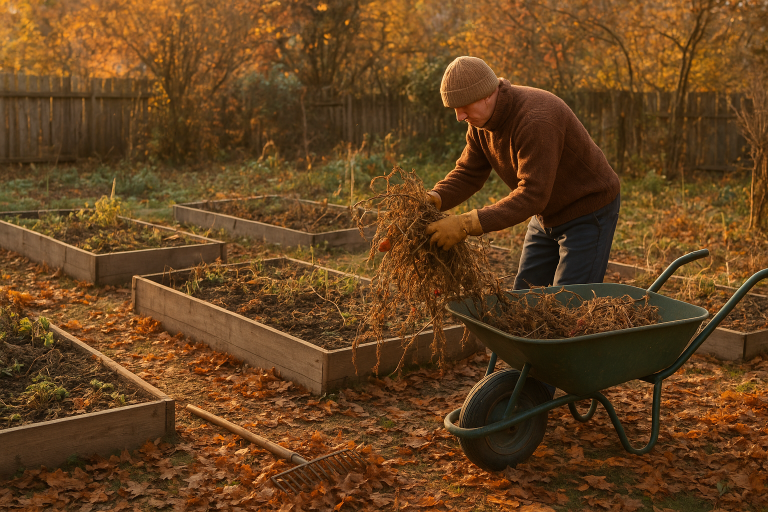
That short growing window makes radishes especially useful in late summer. You can plant them after pulling spent bush beans, cucumbers, early potatoes, or tired lettuce. They also work well along the edge of a raised bed where larger crops are winding down.
Fall radishes often have a better texture than spring radishes because the days are getting shorter and cooler instead of hotter. Hot weather and irregular watering can make radishes pithy, woody, or extra sharp, so planting too early in peak summer heat is one of the main mistakes to avoid.
When to plant radishes for a fall harvest
For many northern and middle U.S. gardens, the main fall radish window is August into early September. The University of Minnesota Extension recommends planting radish seed again from August 1 through September 1 for a fall crop, while the University of Delaware lists a fall planting window of mid-August to mid-September. ([extension.umn.edu](https://extension.umn.edu/vegetables/growing-radishes?utm_source=openai))
Your exact date depends on your first expected fall frost and the type of radish you are growing. Small round spring-type radishes are usually fastest. Maryland Extension lists common garden radishes at about 25 to 35 days to maturity, which makes them a good choice when the season is getting short. ([extension.umd.edu](https://extension.umd.edu/resource/growing-radishes-home-garden?utm_source=openai))
As a simple rule, count backward from your first expected hard freeze using the days to maturity on the seed packet, then add about 7 to 10 extra days because fall growth slows as daylight decreases. If your packet says 28 days, planting about 5 to 6 weeks before your usual hard freeze is safer than waiting until the last minute.
Best radish types for late-summer planting
For quick results, choose small salad radishes such as cherry belle, French breakfast, Easter egg, or similar round and oblong types. These are the ones most likely to size up quickly before cold weather settles in.
Winter radishes, including daikon, watermelon radish, and black radish, can also be grown for fall, but they need more time and more space. They are usually planted earlier than small salad radishes. If you want a dependable late-summer beginner crop, start with a fast variety listed at 21 to 35 days.
Where to plant radishes
Pick a spot with full sun if possible. Maryland Extension says radishes need at least 6 hours of direct light and prefer 8 to 10 hours. In very hot late-summer regions, a little afternoon shade can help keep the seedbed from baking while the seeds germinate. ([extension.umd.edu](https://extension.umd.edu/resource/growing-radishes-home-garden?utm_source=openai))
Radishes need loose soil because the edible root has to swell underground. Before planting, remove rocks, old roots, and compacted clumps from the top several inches of soil. Mix in a small amount of finished compost if the bed is tired, but do not overdo high-nitrogen fertilizer. Too much nitrogen can encourage leafy tops at the expense of round roots.
How to plant radish seeds in late summer
- Water the bed first. If the soil is dusty dry, water deeply the day before planting. Seeds sprout more evenly in soil that is already moist.
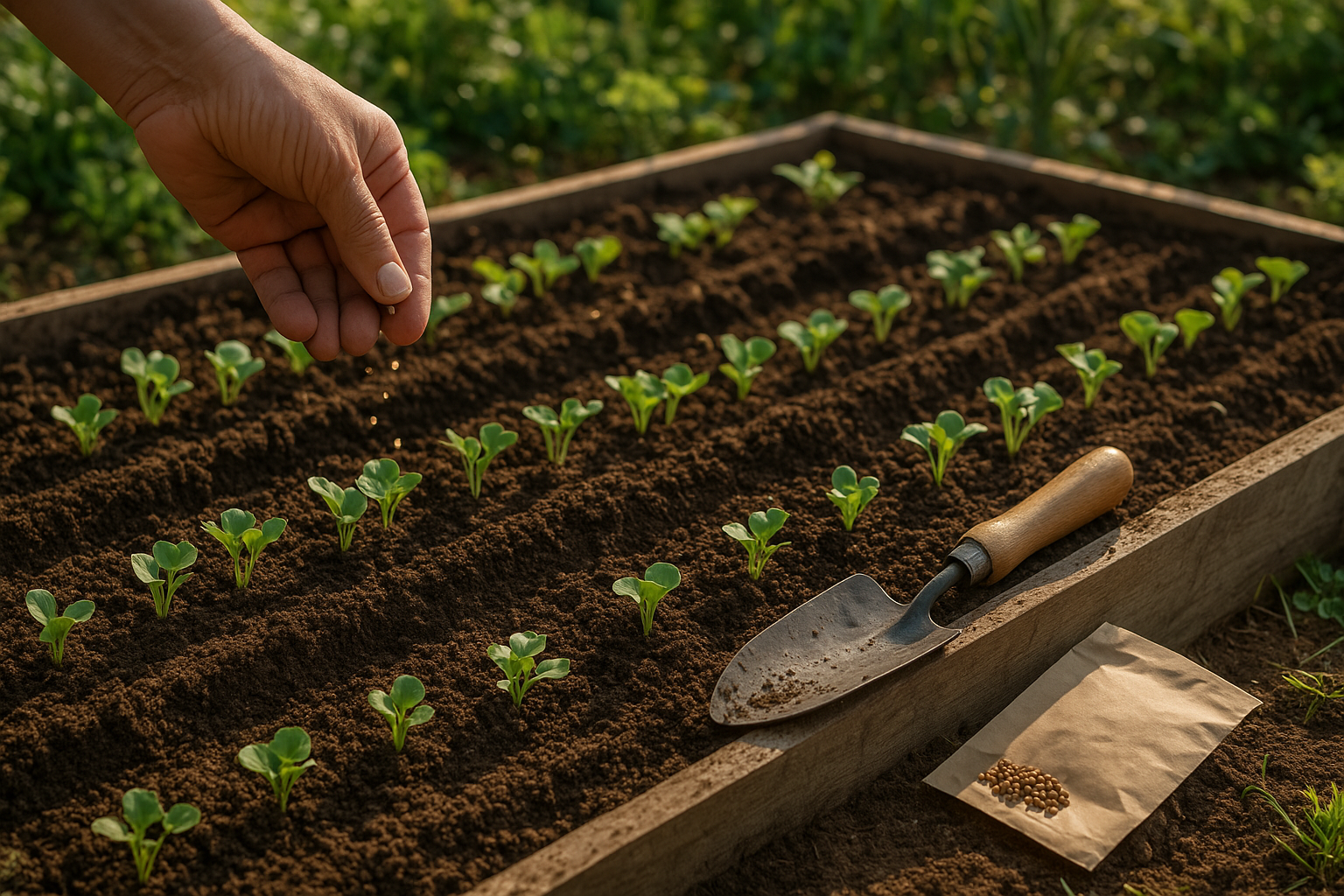
- Make shallow furrows. Plant seeds about 1/4 to 1/2 inch deep. Maryland Extension recommends sowing radish seed 1 to 2 inches apart and 1/4 to 1/2 inch deep, depending on the variety. ([extension.umd.edu](https://extension.umd.edu/resource/growing-radishes-home-garden?utm_source=openai))
- Cover lightly. Pull fine soil over the seeds and gently pat it down so the seed has good contact with the soil.
- Water gently. Use a watering can with a rose head, a soft hose setting, or drip irrigation. A hard spray can wash the tiny seeds into clumps.
- Keep the top inch moist. Late-summer seedbeds dry out faster than spring seedbeds. University of New Hampshire Extension notes that fall seedbeds may need watering more than once a day until seeds germinate and seedlings establish. ([extension.unh.edu](https://extension.unh.edu/blog/2020/08/fall-vegetable-gardening?utm_source=openai))
Spacing and thinning for good roots
Radishes are simple, but they are not forgiving about crowding. If seedlings are packed together, you may get lots of leaves and skinny roots.
Once seedlings are about 1 to 2 inches tall, thin small salad radishes so they stand about 2 inches apart. Oregon State University’s vegetable planting guide lists radishes at a final thinning distance of about 2 to 3 inches. Larger fall or winter radishes need more room; Kansas State University notes that fall radishes should be thinned to 4 to 6 inches apart so the roots can mature properly. ([extension.oregonstate.edu](https://extension.oregonstate.edu/sites/extd8/files/catalog/auto/EM9032.pdf?utm_source=openai))
Use scissors to snip extra seedlings at soil level instead of yanking them out. Pulling can disturb the roots you want to keep. The thinnings are edible, so rinse them and add them to salads or sandwiches.
Watering radishes in hot late-summer weather
Consistent moisture is the difference between tender radishes and disappointing ones. Aim for evenly damp soil, not soggy soil. A thin layer of straw, shredded leaves, or untreated grass clippings can help hold moisture once seedlings are up.
If the forecast turns hot after planting, shade cloth, an upside-down nursery flat, or a lightweight row cover held above the bed can help protect the seedbed for a few days. Remove heavy shade once seedlings are growing so they do not stretch toward the light.
Succession planting for several harvests
Instead of planting the whole packet at once, sow a short row every 7 to 10 days while your weather window allows. Utah State University Extension recommends planting radishes at 10-day intervals for a steady supply. ([extension.usu.edu](https://extension.usu.edu/yardandgarden/research/radishes-in-the-garden?utm_source=openai))
This is especially helpful in fall because weather can shift quickly. One sowing may hit a hot spell, while the next one grows in perfect cool weather. Succession planting also keeps you from harvesting 60 radishes in one weekend.
Common late-summer radish problems
All leaves and no bulb
This usually comes from crowding, too much nitrogen, not enough sun, or temperatures that are too hot. Thin promptly and avoid planting into rich, freshly fertilized soil.
Woody or pithy roots
Radishes left in the ground too long can lose their crisp texture. Check them early. When the shoulder of the root is about the expected size for that variety, pull a test radish.
Very spicy flavor
Some bite is normal, but harsh radishes are often stressed by heat, dryness, or overmaturity. Water consistently and harvest promptly.
Flea beetle holes in leaves
Tiny shot holes in the leaves are often cosmetic, but heavy damage can slow young plants. A lightweight row cover right after planting can protect seedlings. Be sure the edges are pinned down so insects cannot crawl underneath.
When and how to harvest fall radishes
Begin checking small radishes about 3 weeks after planting, especially if the seed packet lists a fast maturity date. Minnesota Extension says garden radishes are usually ready 3 to 5 weeks after planting. ([extension.umn.edu](https://extension.umn.edu/vegetables/growing-radishes?utm_source=openai))
To harvest, loosen the soil with your fingers or a small hand fork and pull gently from the base of the leaves. Remove the greens before storing because attached tops pull moisture from the roots. Keep the radishes in a bag or lidded container in the refrigerator, and wash them right before eating for the best texture.
A simple late-summer radish plan
For a small household, plant a 2- to 3-foot row in mid to late August, then another short row 10 days later. Keep the seedbed moist, thin early, and start checking roots as soon as they look big enough to eat.
Radishes are not a fussy fall crop, but they reward attention to the small things: cool timing, shallow planting, steady watering, and enough room to swell. Give them those basics, and an empty patch of late-summer garden can turn into one of the quickest harvests of the season.