Passionflower Privacy Screen: Fast Growth for Fences
If you have a fence you’d rather not stare at every day, a fast-growing vine can be one of the easiest fixes. A passionflower privacy screen gives you color, coverage, and a little bit of drama all at once, especially during the warm months when the plant really gets moving.
Passionflower is more than a pretty face, though. Once established, it can scramble up supports quickly, soften hard boundaries, and bring in bees and other pollinators with its unusual blooms. If you want a living screen that works hard and looks good doing it, this is a plant worth considering.
Why passionflower works so well on fences
Passionflower vines are natural climbers. They use tendrils to grab onto support, which makes them ideal for fences, wire panels, lattice, and sturdy trellises. Given enough sunlight and a little room at the base, they can cover vertical space surprisingly fast.
That quick growth is what makes them so useful for privacy. Instead of waiting years for a shrub hedge to fill in, you can often get a noticeable screen in a single growing season. The effect is especially good on plain timber or metal fencing that needs softening.
Another advantage is the look. Passionflower blooms are intricate and eye-catching, and many types produce a dense curtain of foliage before the flowers even start appearing. Even when the plant is not in bloom, it still gives the garden a fuller, greener feel.
Choosing the right passionflower for your space
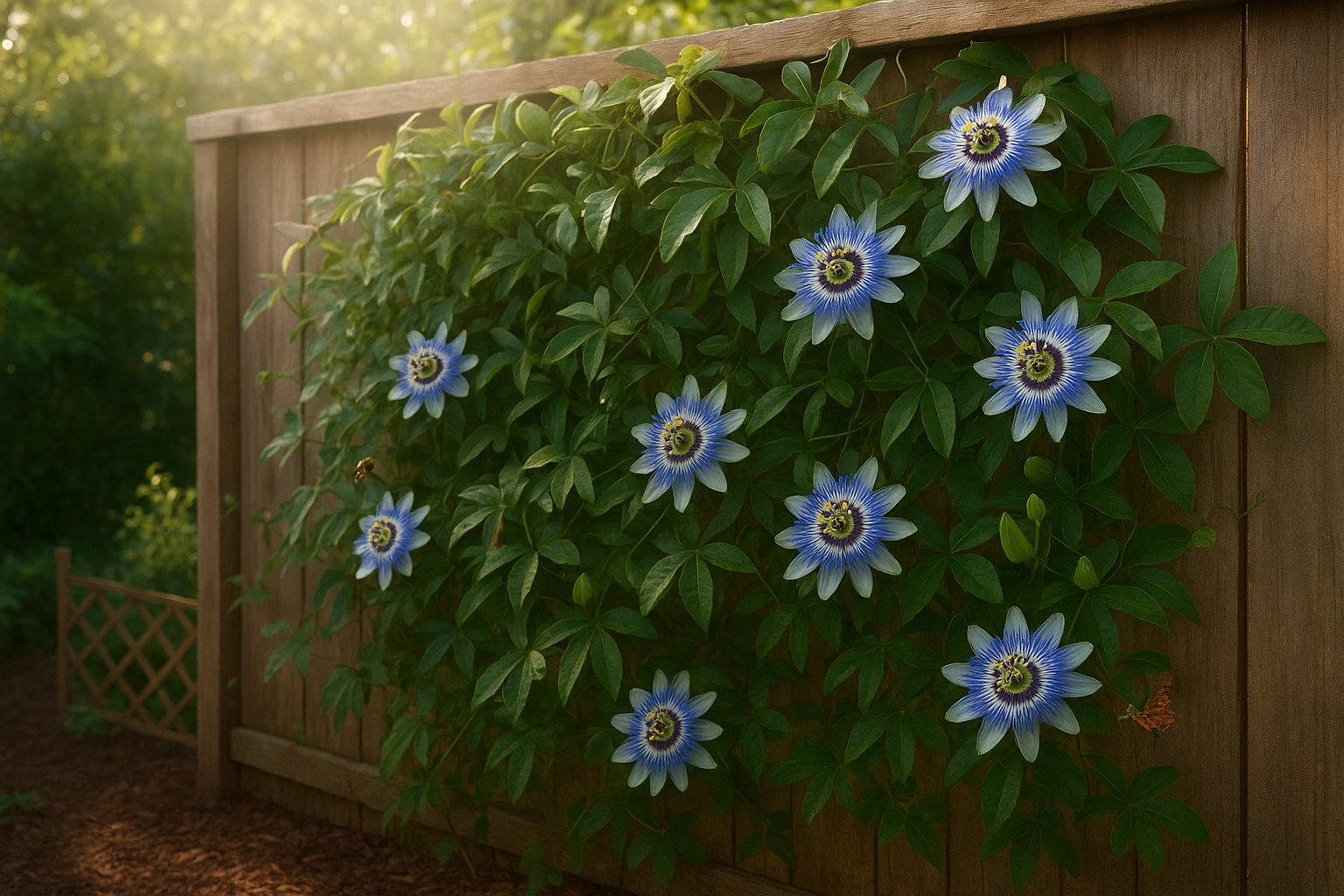
The best-known garden variety is Passiflora caerulea, often called blue passionflower. It is popular because it is vigorous, relatively hardy in the right climate, and produces showy blue-and-white flowers. In milder areas, it can be evergreen or semi-evergreen, while in cooler places it usually dies back in winter and returns in spring.
Before you buy, check the mature size of the variety you’re choosing. Some passionflowers stay manageable, while others grow with real enthusiasm and need regular pruning. If your goal is coverage, choose a type known for strong vine growth and reliable flowering.
Also think about your local conditions:
- Sun: Most passionflowers flower best in full sun or very light shade.
- Soil: They prefer well-drained soil that doesn’t stay waterlogged.
- Climate: Some varieties are better suited to warm regions, while others tolerate cooler weather.
How to plant passionflower for fence coverage
To get the best privacy screen, planting position matters. Passionflower wants to grow upward and outward, so place it at the base of the fence where it has room to spread. Give it some distance from other large shrubs so it won’t have to compete too hard for light and water.
Planting steps
- Dig a hole that is about twice as wide as the root ball and roughly the same depth.
- Mix compost into poor soil to improve structure and moisture retention.
- Set the plant in place so the top of the root ball sits level with the surrounding soil.
- Backfill gently and water deeply to settle the roots.
- Add mulch around the base, keeping it a few inches away from the stem.
If you are planting near a fence, start training the main stems early. A young vine is much easier to guide than a mature one that has already decided where it wants to go.
Training the vine without letting it run wild
Passionflower grows quickly, which is both the appeal and the challenge. If you want a tidy privacy screen, you need to help direct the growth in the first season. Use soft garden ties, twine, or plant clips to attach stems loosely to the fence or support. Avoid tying too tightly, since stems need room to thicken.
A simple framework works best. You can encourage the vine to grow horizontally along the fence first, then let side shoots fill in the gaps. This creates a fuller screen instead of a narrow vertical strip.
Pruning helps too. When the vine gets too long or starts wandering, trim it back to keep it dense. Passionflower usually responds well to a light haircut, especially during the growing season.
Good support options
- Wood or metal fences with some texture for tendrils to catch on
- Wire trellis panels mounted in front of a fence
- Arches or pergolas where you want a vertical feature
- Sturdy posts with tension wire for a more open privacy screen
Care tips for healthy, full growth
Once established, passionflower is not especially fussy, but it does appreciate a few basics. Regular watering during dry spells helps keep growth strong, especially in the first year. After that, the plant usually becomes more self-sufficient, though container-grown vines need more frequent watering than in-ground plants.
Feed lightly in spring with a balanced fertilizer or a compost top-up. Too much nitrogen can push leafy growth at the expense of flowers, so avoid overfeeding if you want blooms as well as coverage.
Mulch is helpful for holding moisture and keeping roots cooler. A 2- to 3-inch layer of organic mulch can make a real difference during hot weather. Just keep mulch away from the stem to reduce rot issues.
In colder regions, the vine may die back in winter. Don’t panic if it looks bare; many types come back from the roots once temperatures rise again. In early spring, remove dead stems and wait for new growth before shaping the plant.
Flowers, fruit, and wildlife value
One of the best things about passionflower is that it does double duty. It gives you privacy and ornamental appeal, but it also supports pollinators. The unusual blooms are magnets for bees, and in some gardens they attract butterflies too.
Some varieties also produce orange or yellowish fruits after flowering. These are part of the plant’s charm, but they are not always worth eating unless you know the specific species and ripeness level. If you’re growing passionflower mainly for privacy and ornament, the fruit is a bonus rather than the main event.
This makes the vine especially useful in wildlife-friendly gardens. If you like the idea of a screen that feels alive rather than purely decorative, passionflower fits beautifully into that kind of planting scheme.
Watch-outs before you plant
As lovely as passionflower is, it is not a set-it-and-forget-it plant in every garden. Its vigor means it may need regular maintenance to stay where you want it. In some climates, it can spread more assertively than expected, so it is smart to monitor new shoots and prune before they tangle into nearby plants.
It can also be sensitive to poor drainage. If your soil stays soggy after rain, improve the site first or plant in a raised bed area near the fence. Strong roots need oxygen as much as they need water.
If you live in a very cold region, check hardiness before planting. Some passionflowers are more reliable in mild climates, while others need a sheltered position to make it through winter.
Best uses for a passionflower privacy screen
This vine is especially useful when you want quick coverage without building a huge structure or waiting years for a hedge to mature. It works well for:
- Softening a plain boundary fence
- Hiding a view of bins, sheds, or utility areas
- Separating seating areas from neighboring spaces
- Adding height and interest to a small garden
- Creating a pollinator-friendly vertical feature
If your goal is a living screen that feels lush, seasonal, and full of character, passionflower delivers. With the right support and a little attention, it can turn one of the least exciting parts of your garden into one of the best.
The trick is to start with a strong fence, give the vine room to climb, and prune just enough to keep it dense. Do that, and your passionflower privacy screen can become one of the most useful plants in the garden.