How to Clean a Showerhead with Vinegar
If your showerhead sprays sideways, dribbles weakly, or has chalky white crust around the nozzles, mineral buildup is usually the culprit. The good news: you can often clean a showerhead with vinegar using items you already have at home, and you do not always have to remove the fixture.
This method is best for hard water scale and everyday grime, not for serious plumbing problems. If the showerhead is cracked, leaking at the wall, or badly corroded, cleaning may help a little—but replacement is often the better fix.
Why Vinegar Works on Showerhead Buildup
Most crusty showerhead deposits come from minerals left behind as water dries. White vinegar is mildly acidic, so it helps loosen many common hard water deposits without requiring harsh scrubbing. The EPA’s WaterSense home maintenance guidance also notes that showerheads should be checked for scale buildup and cleaned with a cleaning product or white vinegar when needed. ([epa.gov](https://www.epa.gov/watersense/home-maintenance?utm_source=openai))
Cleaning matters for more than looks. The CDC recommends cleaning showerheads and faucet aerators when you can see buildup, and notes that removing and soaking a showerhead in white vinegar can help remove deposits. ([cdc.gov](https://www.cdc.gov/drinking-water/prevention/preventing-waterborne-germs-at-home.html?utm_source=openai))
What You’ll Need
- White distilled vinegar
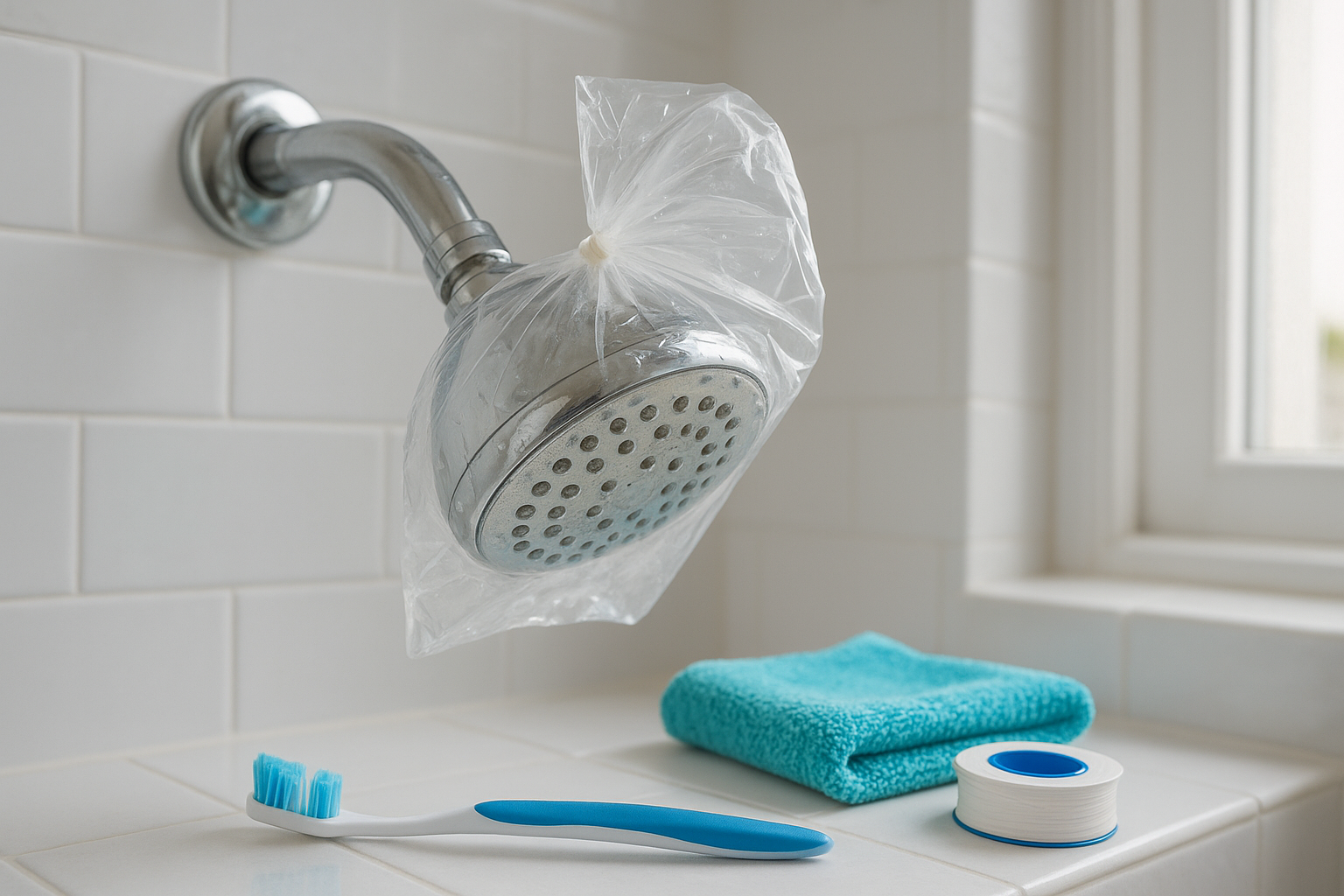
- A sturdy plastic bag, large enough to fit around the showerhead
- Rubber band, twist tie, or zip tie
- Old toothbrush or small soft cleaning brush
- Microfiber cloth
- Toothpick or wooden skewer, optional
- Adjustable wrench, optional
- Plumber’s tape, optional if you remove the showerhead
Before you start: Check the manufacturer’s care instructions if your showerhead has a specialty finish, such as oil-rubbed bronze, unlacquered brass, matte black, or a coated color finish. Vinegar can dull or damage some finishes if left on too long.
Quick Method: Clean a Showerhead Without Removing It
This is the easiest approach for a fixed showerhead with moderate white buildup.
- Wipe the outside first. Use a damp microfiber cloth to remove soap film and loose dust. This lets the vinegar reach the mineral deposits more directly.
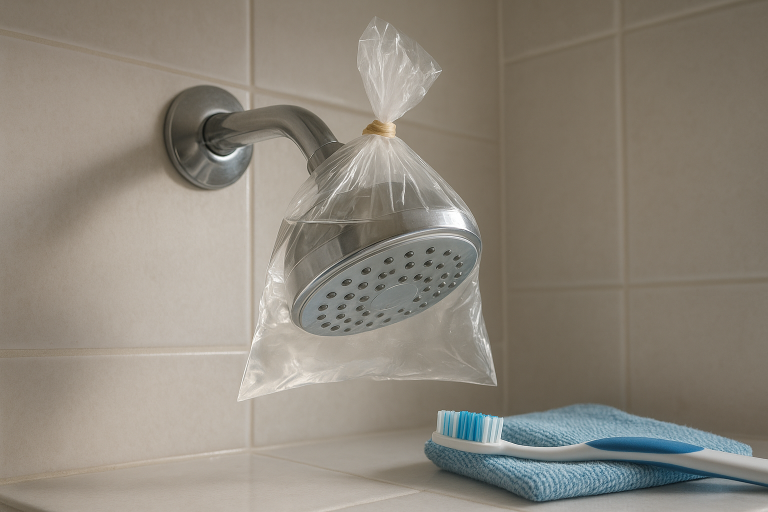
- Fill a plastic bag with vinegar. Add enough white vinegar to cover the spray holes when the bag is lifted over the showerhead. For most showerheads, 1 to 2 cups is enough.
- Secure the bag. Slip the bag over the showerhead and fasten it tightly with a rubber band, twist tie, or zip tie. Make sure the nozzles are submerged.
- Soak. Let it sit for 30 minutes to 2 hours for a standard chrome or stainless-looking showerhead. For delicate finishes, start with 10 to 15 minutes and check often.
- Remove and scrub gently. Take off the bag, pour the vinegar down the drain, and scrub the nozzles with an old toothbrush.
- Run hot water. Turn the shower on for 1 to 2 minutes to flush loosened debris. Aim the spray away from your face at first in case small flakes of scale come out.
- Polish dry. Wipe the showerhead with a clean microfiber cloth to reduce water spots.
Deep-Clean Method: Remove and Soak the Showerhead
If the bag method does not fix uneven spray, remove the showerhead for a deeper clean. This also lets you rinse debris from the threaded connection and inspect the washer or screen.
- Turn the shower off completely. You usually do not need to shut off the home’s water supply, but the faucet must be firmly off.
- Unscrew the showerhead. Try turning it counterclockwise by hand. If it is stuck, use an adjustable wrench and protect the finish with a folded cloth.
- Check for a small screen or washer. Many showerheads have a rubber washer or filter screen inside the connection. Remove it carefully if it comes out easily, and remember how it fits.
- Soak in vinegar. Place the showerhead in a bowl of white vinegar. A 10- to 20-minute soak may be enough for light deposits; heavier scale may need longer. University of Michigan Health’s patient cleaning guidance recommends removing hard water deposits first and describes soaking a showerhead in white vinegar for 10 to 20 minutes or until deposits dissolve. ([med.umich.edu](https://www.med.umich.edu/1libr/PedDialysis/CleaningShowerHeads.pdf?utm_source=openai))
- Brush the nozzles. Use a toothbrush to scrub around the spray holes. If a few holes are still blocked, gently loosen deposits with a toothpick or wooden skewer. Avoid metal pins that can scratch or enlarge soft rubber nozzles.
- Rinse thoroughly. Rinse the showerhead under running water, shaking it to remove loosened grit.
- Reinstall. Wrap fresh plumber’s tape clockwise around the shower arm threads if the old tape is worn. Screw the showerhead back on by hand, then tighten gently if needed.
- Test for leaks. Turn on the shower. If water seeps at the connection, tighten slightly or reapply plumber’s tape.
How Often Should You Clean a Showerhead?
For most homes, clean the showerhead whenever the spray looks uneven or you can see mineral buildup. In hard water areas, that may be every 1 to 3 months. In softer water areas, a few times a year may be enough.
If a shower has not been used for a while, flush it before normal use. The CDC advises flushing faucets and showerheads that have not been used in a while, and after water pressure drops, as part of reducing water-related germs at home. ([cdc.gov](https://cdc.gov/drinking-water/prevention/index.html?utm_source=openai))
Important Safety Notes
- Do not mix vinegar with bleach. Combining cleaning products can create dangerous fumes. Use vinegar by itself, then rinse well.
- Be careful with stone surfaces. Vinegar can etch natural stone such as marble, limestone, and travertine. If your shower has stone tile, keep vinegar off the walls and floor as much as possible and rinse splashes right away.
- Limit soaking on special finishes. For black, brass, bronze, gold-tone, or coated fixtures, use a shorter soak and test a hidden spot if possible.
- Do not ignore ongoing low pressure. If every fixture in the bathroom has weak flow, the issue may be plumbing, a valve, or the home’s water supply—not the showerhead.
What If Vinegar Doesn’t Fix the Spray?
If the showerhead still sputters after soaking, try these checks before buying a new one:
- Inspect the flow restrictor or screen. Sediment can collect there. Rinse it gently and reinstall it correctly.
- Look for damaged rubber nozzles. If they are cracked or hardened, cleaning will not fully restore the spray pattern.
- Check the connection for leaks. A poor seal at the shower arm can reduce pressure and waste water.
- Consider the age of the showerhead. If it is old, corroded, or impossible to clean fully, replacing it with a WaterSense-labeled model can improve performance while using water efficiently.
A Simple Maintenance Habit
After each shower, give the showerhead and nearby tile a quick wipe with a towel or squeegee. This small habit reduces the amount of water that dries on the fixture, which slows down new mineral buildup.
You do not need a complicated bathroom-cleaning routine to keep a showerhead working well. A vinegar soak, gentle brushing, and regular flushing are usually enough to restore a cleaner, steadier spray—and make your shower feel better without calling a plumber.