How to Clean Gutters Safely Before Fall Rain
Cleaning gutters is not the most glamorous fall chore, but it is one of the most useful. A few hours spent clearing leaves and checking downspouts can help keep rainwater moving away from your roof, siding, foundation, and basement.
The key is doing the job carefully. Gutters sit at the exact height where a small shortcut can become a serious fall risk, so this guide focuses on a safe, practical method most homeowners can use on a one-story home.
Why Gutters Need Attention Before Fall Rain
Gutters are simple: they catch roof runoff and carry it to downspouts. When they fill with leaves, pine needles, shingle grit, seed pods, or moss, water has nowhere to go. It can spill over the front edge, back up under roof edges, stain siding, wash out mulch, or collect near the foundation.
For many homes, a good routine is to clean gutters at least twice a year: once in spring and once in fall. If your roof is shaded by deciduous trees, pines, or messy seed-dropping trees, you may need to check them more often, especially after windy weather.
Tools and Supplies
Gather everything before you set up the ladder. Fewer trips up and down means less risk and less frustration.
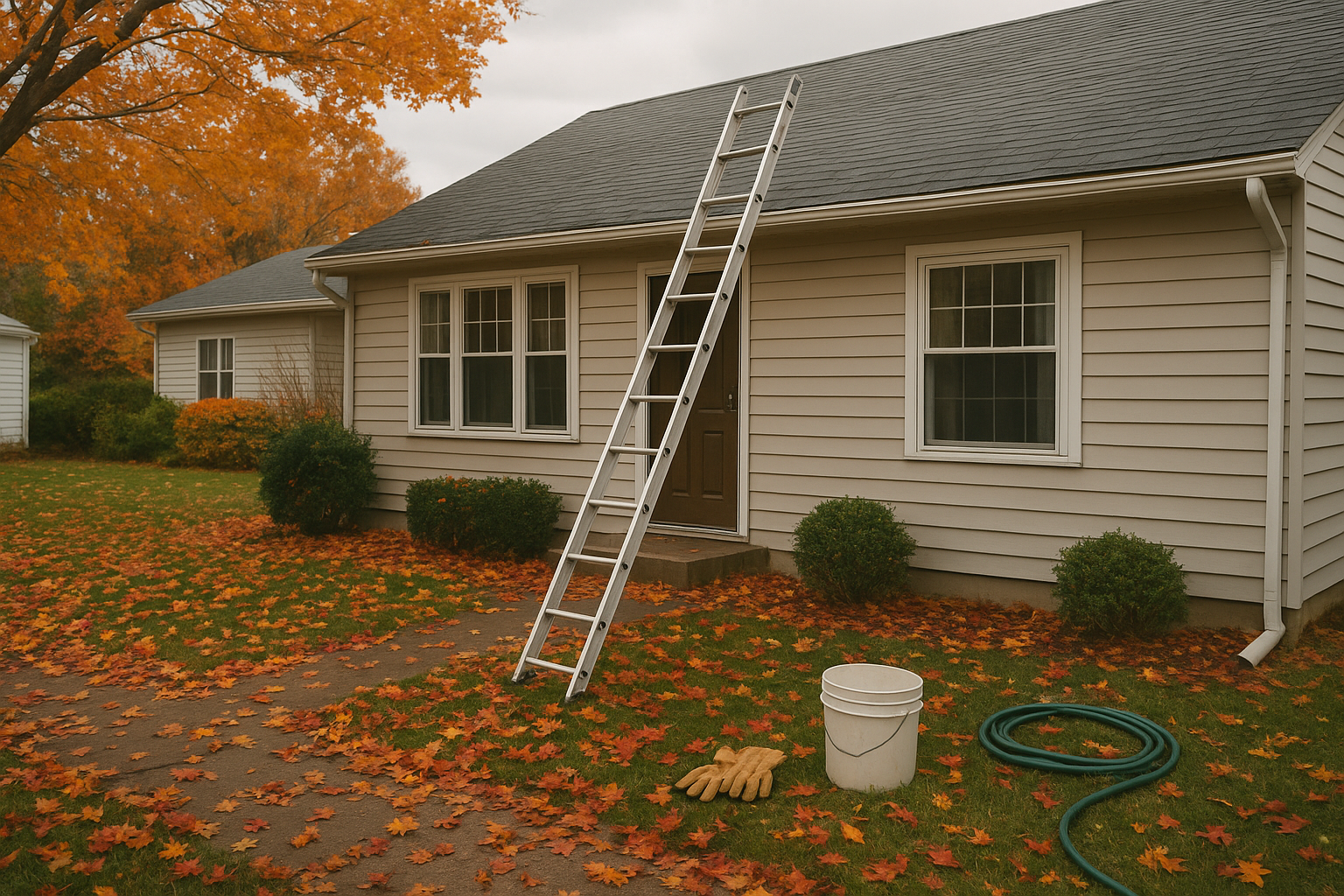
- Sturdy extension ladder for most gutter work; avoid using a wobbly stepladder on uneven ground.
- Ladder stabilizer or standoff if you have one, so the ladder rests more securely and does not crush the gutter.
- Heavy work gloves to protect against sharp metal edges, screws, sticks, and grit.
- Safety glasses, especially when flushing downspouts.
- Small gutter scoop, plastic trowel, or old spatula for removing packed debris.
- Bucket with a hook or a tarp on the ground for collecting leaves.
- Garden hose with spray nozzle for flushing the gutter runs and downspouts.
- Plumber’s snake or drain auger for stubborn downspout clogs.
Start With a Safety Check
Do not clean gutters during rain, high wind, icy weather, or when the ground is soft and slippery. Wear shoes with good traction, and work during daylight when you can clearly see the ladder feet, gutter edge, and debris.
Set the ladder on firm, level ground. For an extension ladder, use the 4-to-1 rule: place the base about 1 foot away from the house for every 4 feet of ladder height. The ladder should extend about 3 feet above the roof edge if you need that extra handhold, and it should rest on a solid surface, not directly against a thin gutter lip whenever possible.
Keep three points of contact as you climb: two hands and one foot, or two feet and one hand. Do not stand on the top rungs, do not lean far to one side, and do not try to “just reach one more spot.” Climb down and move the ladder instead. If the roofline is two stories high, steep, awkward, or close to power lines, hire a professional.
Step-by-Step: How to Clean Gutters Safely
1. Clear the area below
Move patio furniture, planters, hoses, toys, and anything else that could trip you while carrying tools or moving the ladder. If you are dropping debris onto a tarp, spread it below your first work area.
2. Remove loose debris by hand
Put on gloves and start near a downspout. Scoop out leaves, twigs, and mud, placing them in your bucket or tossing them onto the tarp. Work in short sections, cleaning only what you can reach comfortably without shifting your hips outside the ladder rails.
If the gutter is full of wet, heavy muck, remove small amounts at a time. Packed debris can hide sharp screws, roofing nails, wasp nests, or broken gutter pieces.
3. Check the downspout opening
The downspout opening is where clogs often start. Clear leaves from the outlet, then use your gloved hand or scoop to remove any packed material at the top. If your gutter has a small strainer, pull it out, rinse it, and set it aside until the gutter is clean.
4. Flush the gutter with a hose
Once the loose debris is gone, run water through the gutter. Start at the end farthest from the downspout and flush toward it. This rinses away shingle grit and helps show whether water flows smoothly.
Watch for standing water. A small amount after rinsing is not unusual, but a long puddle may mean the gutter is sagging or pitched the wrong way. Also look for drips at seams, corners, or end caps.
5. Flush each downspout
Spray water into the downspout from the top and check that it exits freely at the bottom. If water backs up, stop and look for a clog. Sometimes you can loosen it by spraying upward from the bottom of the downspout. If that fails, use a plumber’s snake carefully.
If the downspout connects to an underground drain, disconnect it first if possible. That keeps a wad of leaves from being forced deeper into the buried pipe.
6. Clean up and test the drainage path
After the gutters and downspouts run clear, check where the water exits. Downspouts should direct water away from the foundation, not dump it beside the house. Add a splash block or downspout extension if needed.
Small Problems to Fix While You Are There
Gutter cleaning is also a good time to spot easy repairs before they become expensive ones. From the ladder, look for:
- Loose hangers or spikes: Gutters should sit tight against the fascia, not pull away.
- Sagging sections: Water should move toward the downspout instead of pooling in the middle.
- Leaky seams: Mark them with painter’s tape and repair once the gutter is dry.
- Rust, cracks, or holes: Small holes may be patchable; widespread damage may mean replacement.
- Rotten fascia boards: Soft wood behind the gutter should be repaired before the gutter loosens further.
Do not try to make repairs while leaning or stretching from the ladder. If a repair takes two hands, awkward pressure, or power tools, it is safer to reset the ladder properly or call a pro.
Should You Use Gutter Guards?
Gutter guards can reduce the amount of leaves and debris that enter the gutter, but they do not make gutters maintenance-free. Fine material such as pine needles, roof grit, seed pods, and small leaves can still collect on top or work through openings.
They are most helpful when your main problem is large leaves from nearby trees. They are less helpful if you have heavy pine needles, roof valleys that dump debris in one spot, or a roofline that is difficult to access. Even with guards, plan to inspect the system seasonally.
When to Call a Professional
Some gutter jobs are not worth the risk. Call a professional if your home is more than one story, the ground is sloped or uneven, the gutters are near electrical service lines, the roof edge is difficult to reach, or you are not steady and comfortable on a ladder.
Also call for help if downspouts are connected to underground drains that keep backing up. The clog may be below ground, where forcing more water into the pipe can make the problem worse.
A Simple Fall Gutter Checklist
- Pick a dry, calm day.
- Wear gloves, safety glasses, and grippy shoes.
- Set the ladder on firm, level ground.
- Remove debris in short, comfortable sections.
- Flush gutters and downspouts with a hose.
- Check for leaks, sagging, loose hangers, and standing water.
- Make sure downspouts drain away from the foundation.
Clean gutters do not just look better; they help your whole drainage system do its job. Take your time, move the ladder often, and treat safety as part of the chore—not an extra step.