How to Winterize Outdoor Faucets Before a Freeze
Outdoor faucets are easy to forget until the first hard freeze is on the forecast. A few minutes of fall prep can help protect your hose bibs, garden hoses, and the short pipes just inside the wall from freeze damage.
The good news: you do not need fancy tools for most homes. This guide walks through how to winterize outdoor faucets step by step, including what to do if you have a frost-free spigot, an indoor shutoff valve, or no shutoff at all.
Why Outdoor Faucets Freeze
Water expands as it freezes. If water is trapped in a hose, faucet, or pipe near an exterior wall, that pressure can crack fittings or split a pipe. The leak may not show up right away; sometimes the pipe thaws later and water starts running inside a wall, crawl space, basement, or garage.
Extension plumbing and winter-weather guidance commonly recommends three basic protections: disconnect garden hoses, shut off and drain water lines to exterior faucets when possible, and insulate exposed outdoor faucets and pipes before freezing weather arrives.
When to Winterize Outdoor Faucets
Do it before your first expected freeze, not the morning after. A good rule is to winterize once you are finished with regular watering for the season and nighttime temperatures are beginning to dip toward freezing.
If you live in a mild climate, you may not need a full winter shutdown for months at a time, but you should still know how to protect faucets before an arctic blast. Homes in the South and lower Midwest can be especially vulnerable because outdoor plumbing may not be built for extended freezing temperatures.
What You’ll Need
- Bucket or towel
- Foam outdoor faucet covers, one for each spigot
- Pipe insulation for exposed pipes, if needed
- Adjustable wrench or pliers, only if a hose is stuck
- Permanent tag or tape to label shutoff valves
- Optional: silicone spray or plumber’s grease for stubborn hose threads
Step-by-Step: How to Winterize Outdoor Faucets
1. Disconnect Every Hose
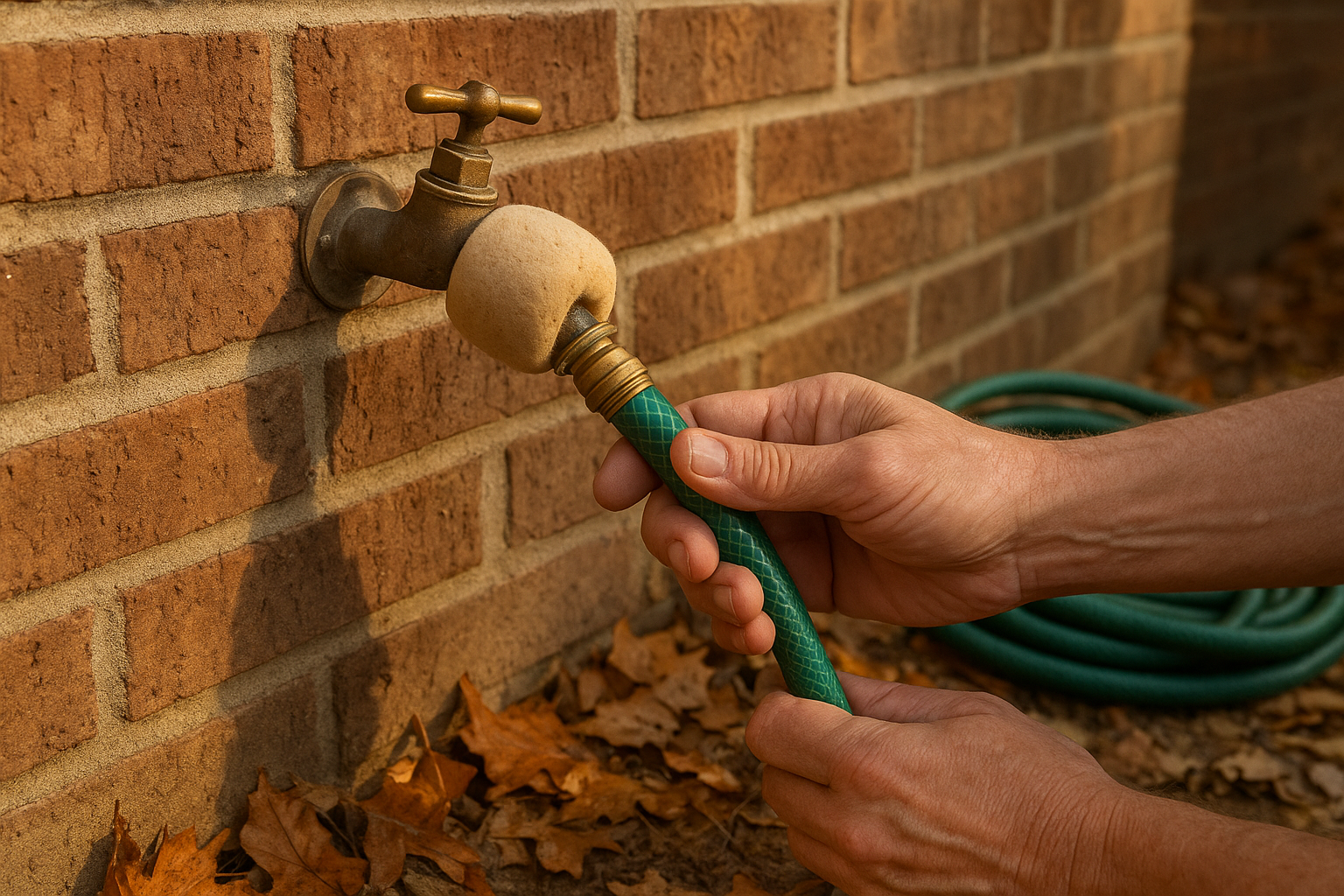
Start by removing all hoses, splitters, timers, spray nozzles, and quick-connect fittings from each outdoor faucet. Do not leave a hose attached, even to a frost-free faucet. A connected hose can trap water at the faucet and keep the spigot from draining properly.
If a hose is stuck, try hand pressure first. If you need pliers, grip gently and avoid crushing the fitting. For badly corroded aluminum hose ends, you may need to cut the fitting off and replace the hose end rather than risk damaging the faucet.
2. Drain and Store Garden Hoses
Lay each hose downhill or stretch it out on the lawn or driveway so water can run out. Then coil it loosely without kinks. Store hoses in a shed, garage, basement, or another sheltered spot if you can.
If outdoor storage is your only option, drain the hose thoroughly first and keep it out of standing water. A hose full of water can freeze, split, and become frustratingly stiff or damaged by spring.
3. Find the Indoor Shutoff Valve
Many homes have a separate shutoff valve for each outdoor faucet. Look inside the house near where the faucet enters the wall. Common locations include the basement, crawl space, utility room, garage, mechanical room, or under a sink near an exterior wall.
The valve may be a round handle that turns several times or a ball valve with a lever. A ball valve is usually off when the handle is perpendicular to the pipe. If you find it, label it now so next year is easier.
4. Shut Off the Water to the Outdoor Faucet
Turn the indoor shutoff valve off. Then go outside and open the outdoor faucet all the way. Water should drain out for a short time and then stop. Leave the outside faucet open for the winter if that is how your plumbing is designed, especially on older standard hose bibs with an interior shutoff.
Some indoor shutoff valves also have a small drain cap or bleeder screw. Hold a bucket under it and open it carefully to release remaining water from the line. Close the bleeder once the line has drained, unless your valve’s instructions say otherwise.
5. Add an Outdoor Faucet Cover
Once the faucet is disconnected and drained, install a foam faucet cover. These inexpensive covers hook over the spigot and tighten against the wall to reduce exposure to cold air.
A cover is not a magic shield for a water-filled pipe, but it is a useful extra layer. It works best after the hose is removed and the line is drained or protected.
6. Insulate Exposed Pipes
If you have visible water pipes in an unheated crawl space, garage, basement corner, or along an exterior wall, cover them with pipe insulation. Pay special attention to areas where cold air can blow through gaps near vents, rim joists, or foundation openings.
Foam pipe sleeves are simple to install: cut to length, slip them over the pipe, and tape seams where needed. For very cold areas or repeated freeze problems, ask a plumber whether heat cable is appropriate for that location and pipe type.
What If You Have Frost-Free Outdoor Faucets?
Frost-free faucets, also called frost-proof sillcocks, are designed so the actual shutoff point sits farther inside the warm wall or house. When installed with the correct slight downward pitch, they drain water out of the exterior portion after you turn them off.
Even so, you should still disconnect hoses and attachments before freezing weather. A hose left on a frost-free faucet can trap water where it should be able to drain. That defeats the purpose and can still lead to damage.
If your frost-free faucet leaks, drips, or seems to hold water after shutoff, have it checked. It may be installed at the wrong angle, have a worn washer, or be damaged inside the wall.
What If You Can’t Find an Indoor Shutoff?
Some homes do not have dedicated indoor shutoff valves for outdoor faucets. In that case, remove the hose, make sure the faucet is fully turned off, install a foam cover, and insulate any exposed pipe you can access.
If your area gets hard freezes every winter, consider having a plumber add an indoor shutoff with a drain port. It is a practical upgrade, especially for older homes, detached garages, workshops, and faucets on windy exterior walls.
During a Hard Freeze
For a short cold snap, check that all outdoor faucets are covered and all hoses are off. Indoors, open cabinet doors under sinks on exterior walls so warmer room air can reach the plumbing.
During prolonged freezing weather, many emergency-prep guides recommend letting hot and cold water trickle from vulnerable indoor faucets connected to exterior-wall plumbing. A small, steady flow can help reduce freezing risk because moving water is less likely to freeze and pressure has somewhere to escape.
Do not use open flames, torches, or high-heat guns to thaw pipes. If you suspect a frozen pipe, shut off water if needed, use gentle heat such as warm towels or a hair dryer, and call a plumber if you cannot safely access the area.
Common Mistakes to Avoid
- Leaving a hose attached: This is the big one. It can trap water and damage even frost-free faucets.
- Relying only on a foam cover: Covers help, but they cannot drain a pipe that is full of water.
- Forgetting hose splitters and timers: Remove all attachments, not just the hose.
- Closing the outdoor faucet after draining: If you shut off water inside and drain the line, leaving the outside faucet open can help prevent trapped pressure in many standard setups.
- Ignoring crawl spaces and garages: Pipes in unheated areas often freeze before pipes in finished rooms.
Quick Outdoor Faucet Winterizing Checklist
- Remove hoses, nozzles, timers, and splitters.
- Drain hoses completely and store them out of the weather.
- Find and label the indoor shutoff valve for each outdoor faucet.
- Turn off the indoor valve, if your home has one.
- Open the outdoor faucet to drain the line.
- Open the bleeder cap on the indoor valve if present, using a bucket.
- Install foam faucet covers.
- Insulate exposed pipes in crawl spaces, garages, and exterior-wall areas.
When to Call a Plumber
Call a plumber if an outdoor faucet will not shut off, the indoor valve leaks, you see water stains after a freeze, or you cannot tell whether a faucet is frost-free. It is also worth getting help if you have repeated freeze problems in the same spot; that often points to missing insulation, air leaks, poor pipe placement, or a faucet that was installed incorrectly.
Winterizing outdoor faucets is one of those small fall jobs that can save a big headache later. Disconnect, drain, cover, and label things now, and your spring setup will be much easier too.