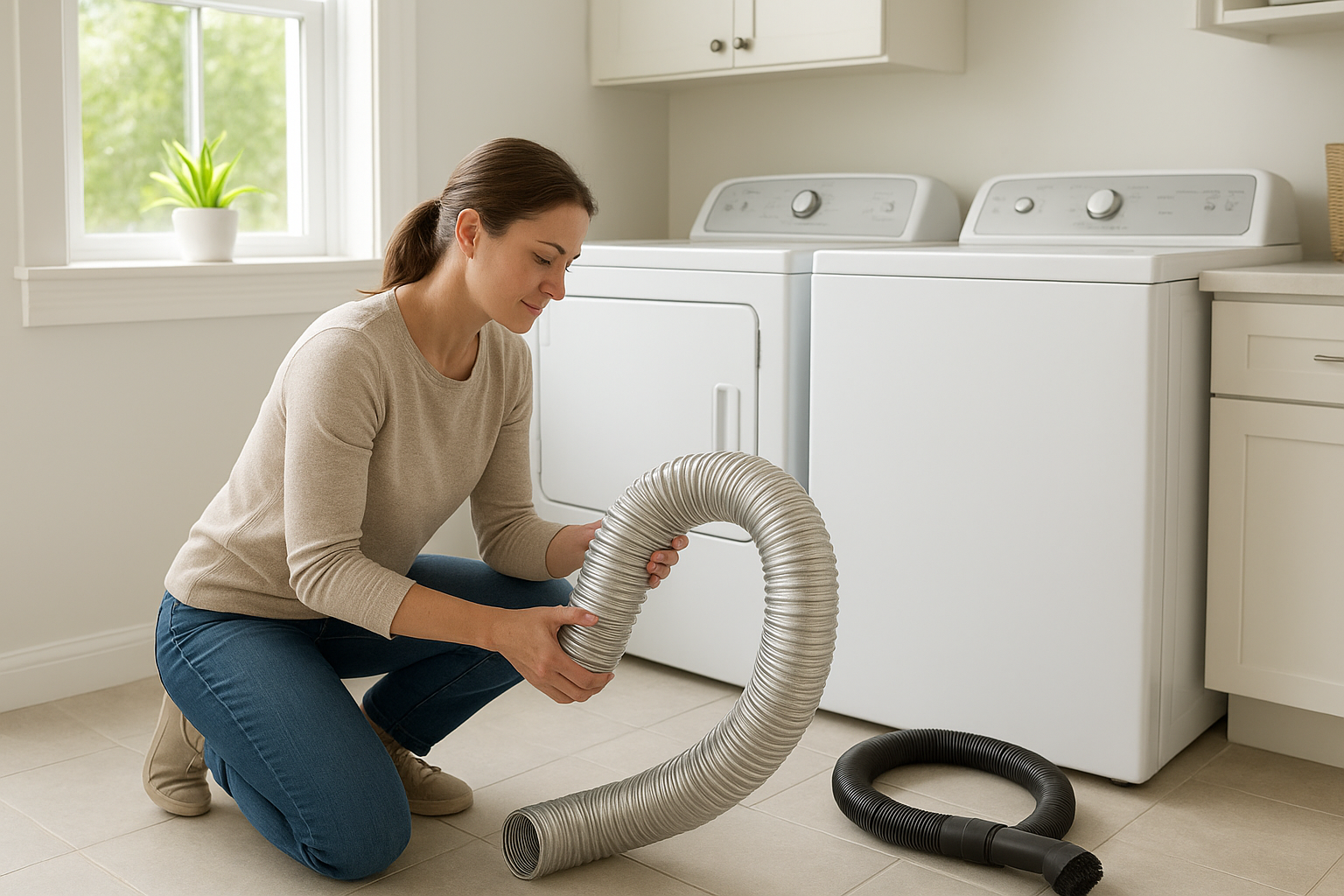
How to Clean a Dryer Vent Without Making a Mess
If your towels take forever to dry or the laundry room feels unusually hot, your dryer vent may be overdue for a cleaning. Learning how to clean a dryer vent is a practical home task that can help your dryer work better and lower the risk of lint-related trouble.
This is a once-or-twice-a-year job for many homes, and it is especially worth doing before heavy winter laundry season. The U.S. Fire Administration warns that clogged lint filters and vents increase dryer fire risk, and it recommends checking the venting system so it is not crushed, damaged, or restricted. ([usfa.fema.gov](https://www.usfa.fema.gov/downloads/pdf/publications/clothes_dryer_fire_safety_flyer.pdf?utm_source=openai))
Why Dryer Vent Cleaning Matters
A dryer works by moving hot, moist air out of the machine and through a vent to the outdoors. When lint builds up inside that path, airflow drops. The dryer has to run longer, heat can build up, and damp laundry may come out feeling clammy even after a full cycle.
The National Fire Protection Association reported that, in 2014–2018, fire departments responded to an estimated average of 13,820 home structure fires per year involving dryers, and failure to clean was a leading cause. Lint, dust, or fiber was the first item ignited in a significant share of dryer fires. ([content.nfpa.org](https://content.nfpa.org/-/media/Project/Storefront/Catalog/Files/Research/NFPA-Research/US-Fire-Problem/osdryer.pdf?utm_source=openai))
There is an everyday benefit, too: ENERGY STAR notes that cleaning the lint filter after every load improves airflow and dryer efficiency, and recommends scrubbing the lint filter monthly if dryer sheets leave a film behind. ([energystar.gov](https://www.energystar.gov/products/clothes_dryers?utm_source=openai))
Signs Your Dryer Vent Needs Cleaning
You do not have to wait for a serious problem. Watch for these common clues:
- Clothes take longer than usual to dry.
- The dryer or laundry room feels hotter than normal.
- Clothes come out very hot but still damp.
- You notice a warm, dusty, or slightly scorched smell while the dryer runs.
- Lint collects behind the dryer or around the outside vent.
- The outside vent flap barely opens when the dryer is running.
- The dryer shuts off mid-cycle or seems to overheat.
If you smell burning, stop the dryer immediately, unplug it if you can do so safely, and do not run it again until the issue is found. If you see smoke or flames, leave the house and call emergency services.
What You Need
For a basic dryer vent cleaning, gather:
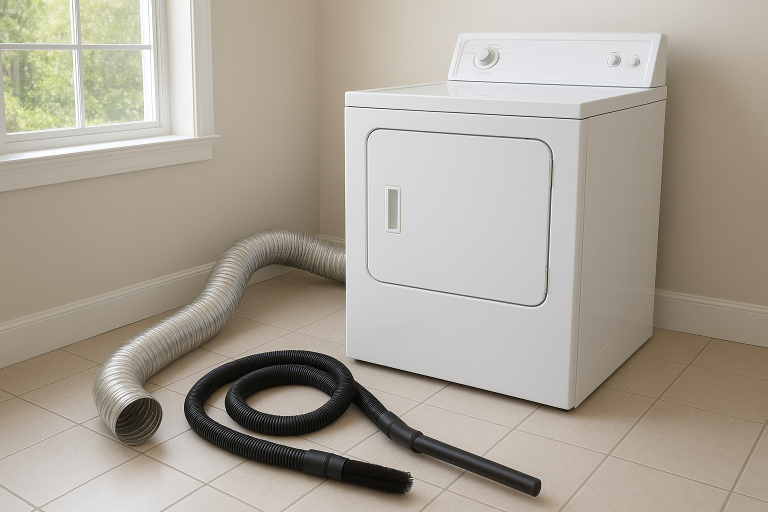
- Vacuum with a hose attachment
- Dryer vent brush kit or long flexible lint brush
- Screwdriver or nut driver, depending on your clamp
- Work gloves
- Flashlight
- Foil HVAC tape, if a duct joint needs resealing
- Broom or small dustpan
Skip flimsy plastic or vinyl venting if you discover it behind your dryer. Building America guidance favors smooth, rigid metal ducting for dryer exhaust because it supports better airflow and reduces lint-catching surfaces; it also warns against screened exterior dryer vent covers because screens can trap lint. ([basc.pnnl.gov](https://basc.pnnl.gov/resource-guides/proper-clothes-dryer-venting?utm_source=openai))
How to Clean a Dryer Vent Step by Step
1. Unplug the Dryer
For an electric dryer, unplug it before you begin. For a gas dryer, unplug the cord and be careful not to strain or kink the gas line when moving the appliance. If the gas connection must be disconnected, call a qualified professional instead of doing it yourself.
2. Pull the Dryer Away From the Wall
Move the dryer out slowly, just far enough to reach the vent connection. Do not yank it forward. If your laundry closet is tight, work in small movements and use a flashlight to see what is happening behind the machine.
3. Disconnect the Vent Hose
Loosen the clamp where the vent hose attaches to the back of the dryer. Slide the hose off gently. Expect lint to fall out, especially if the vent has not been cleaned in a long time.
4. Vacuum the Dryer Outlet
Use the vacuum hose to remove loose lint from the dryer outlet. Do not force the hose deep into the machine or jab at internal parts. A narrow crevice tool is helpful here.
5. Clean the Vent Hose or Duct
If you have a short flexible metal transition duct, take it outside or hold it over a trash bag and brush it out. If it is crushed, torn, packed with lint, or made of plastic or vinyl, replace it with a safer metal option that matches your dryer manufacturer’s instructions.
For a longer in-wall duct, feed a dryer vent brush into the duct and rotate it gently as you push. Pull it back often to remove lint instead of packing the lint deeper. Vacuum as you go. If your brush kit attaches to a drill, use a slow speed and follow the kit directions carefully.
6. Check the Outside Vent
Go outdoors and find the dryer exhaust vent. Remove lint from the hood and make sure the flap opens freely. The U.S. Fire Administration specifically recommends making sure the outdoor vent covering opens when the dryer is operating. ([usfa.fema.gov](https://www.usfa.fema.gov/downloads/pdf/publications/clothes_dryer_fire_safety_flyer.pdf?utm_source=openai))
If you see a screen over the vent, that is a problem for most dryer exhausts because lint can clog it quickly. Use a proper dryer vent hood with a damper or louvers instead.
7. Reconnect Everything Securely
Slide the vent hose back onto the dryer outlet and tighten the clamp. Keep the hose as short and straight as practical. Avoid crushing it when you push the dryer back into place. If a rigid metal duct joint needs sealing, use foil HVAC tape rather than regular cloth duct tape, which can dry out and fail.
8. Test the Airflow
Plug the dryer back in and run it on an air-only or low-heat setting for a few minutes. Go outside and check that air is moving strongly through the exterior vent and that the flap opens. If airflow is still weak, there may be a clog deeper in the line.
How Often Should You Clean a Dryer Vent?
A good rule for many households is to clean the dryer vent at least once a year. Clean it more often if you do a lot of laundry, have pets, dry bulky towels or bedding often, or notice drying times getting longer. The Building America Solution Center notes that annual dryer duct cleaning can help clothes dry faster, save energy, and reduce fire risk. ([basc.pnnl.gov](https://basc.pnnl.gov/diy-guides/clean-dryer-exhaust?utm_source=openai))
The lint screen is different: clean it before or after every load. Once a month, wash the screen with warm water, a drop of dish soap, and a soft brush if you use dryer sheets. Rinse, dry completely, and put it back before using the dryer.
When to Call a Professional
Some dryer vents are simple and short. Others run up through walls, across ceilings, or out the roof. Call a professional if:
- The vent run is long, hidden, or exits through the roof.
- You cannot get strong airflow after cleaning.
- The duct is damaged inside the wall.
- You have a gas dryer and need the gas line moved or disconnected.
- You see signs of birds, rodents, or nesting material in the vent.
- The dryer continues to overheat after the vent is cleaned.
It is also smart to call for service if the dryer itself has lint inside the cabinet, makes unusual noises, or shuts off repeatedly. Vent cleaning helps airflow, but it cannot fix a failing thermostat, damaged heating element, worn belt, or electrical problem.
Simple Habits That Keep the Vent Clear Longer
- Clean the lint screen every load. It takes seconds and makes the biggest day-to-day difference.
- Do not overload the dryer. Packed loads shed more lint and dry unevenly.
- Keep the area behind the dryer clean. Vacuum dust and lint before it gets pulled into the machine.
- Use the shortest safe vent path. Long, twisty ducts collect more lint.
- Check the outside vent seasonally. Leaves, snow, pests, and lint can block the flap.
- Dry rubber-backed rugs and oily fabrics carefully. Follow fabric care labels, and avoid drying items that have been exposed to flammable liquids.
A Safer, Faster Laundry Routine
Cleaning a dryer vent is not glamorous, but it is one of those small home tasks that pays you back right away. Your dryer can breathe better, laundry may dry faster, and you will know that hidden lint is not building up unchecked.
Put it on your home maintenance calendar once a year, then keep up with the lint screen after every load. That simple rhythm is the easiest way to keep your laundry room running smoothly.