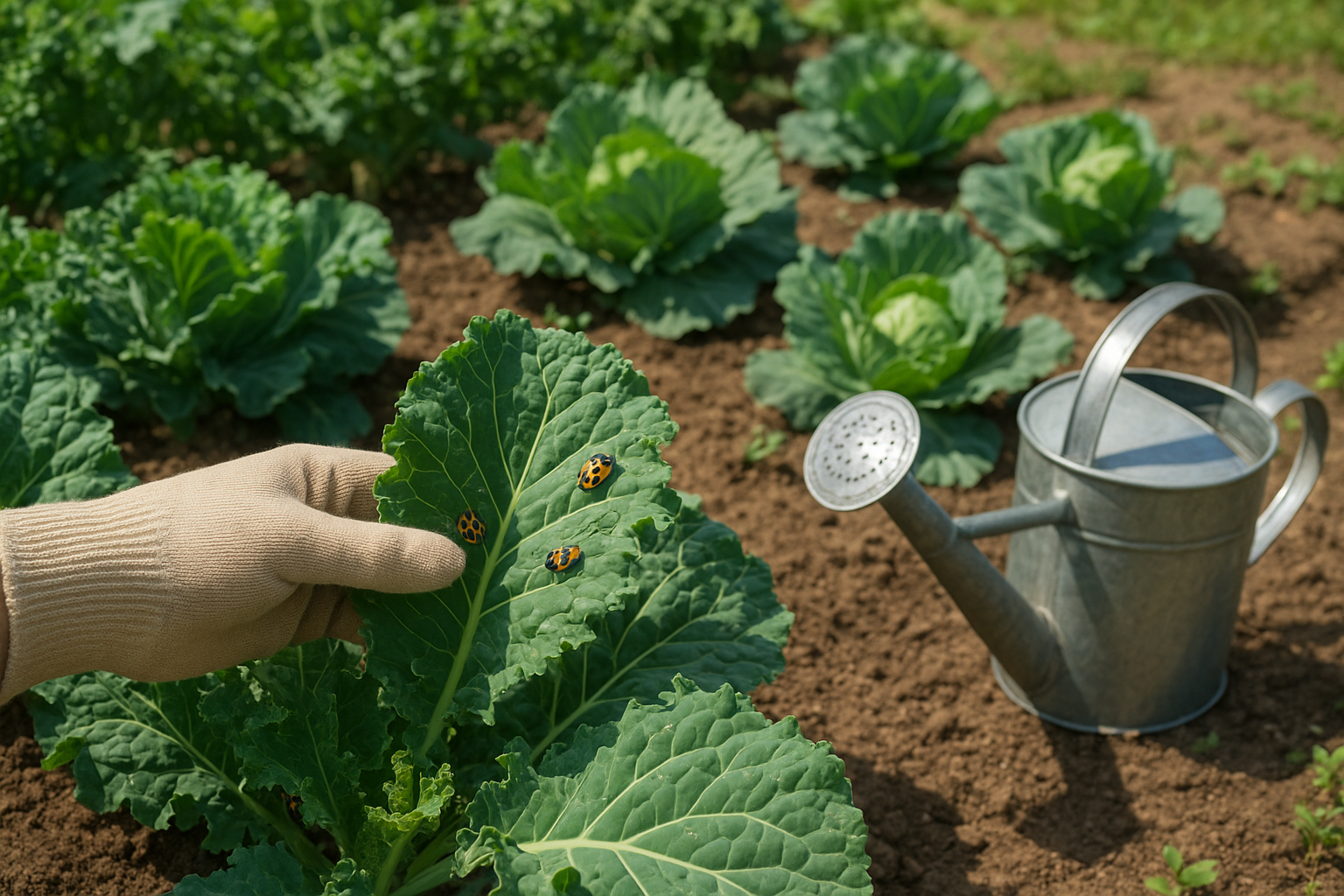
Harlequin Cabbage Bug: ID and Organic Control Tips
If your cabbage, kale, or broccoli suddenly starts looking speckled, wilted, or misshapen, a small but destructive pest may be to blame. The harlequin cabbage bug is easy to overlook at first because of its bright, almost decorative coloring, but it can do serious damage fast once it settles into a bed of brassicas.
The good news is that you do not need harsh chemicals to get it under control. With regular scouting, a few simple habits, and timely organic treatments, you can protect your vegetables and keep the pest from multiplying season after season.
What is a harlequin cabbage bug?
The harlequin cabbage bug is a shield-shaped stink bug in the brassica-loving family of garden pests. Adults are strikingly patterned, usually with black and reddish-orange markings that make them look almost painted. Nymphs are smaller, more rounded, and often darker with red or orange markings that change as they grow.
These bugs feed by piercing plant tissue and sucking out juices. Their favorite hosts are members of the cabbage family, including:
- cabbage
- kale
- broccoli
- cauliflower
- collards
- Brussels sprouts
- mustard greens
They can also move onto other related plants when brassicas are scarce, so it helps to watch nearby weedy areas and leftover crop debris as well.
How to identify them in the garden
Spotting the insect early is one of the best ways to limit damage. Adults are about the size of a small bean, with a flattened body and bold, high-contrast markings. Nymphs look more rounded and do not yet have fully developed wings.
Signs of feeding damage
Rather than chewing holes, harlequin cabbage bugs leave behind puncture damage. Look for:
- yellow or pale spots on leaves
- wilting during hot parts of the day
- stunted growth
- twisted or rough-looking leaves
- poorly formed heads on cabbage or broccoli
Heavy feeding can weaken plants enough that they recover slowly, even if the bugs are removed later. Young seedlings are especially vulnerable, so early detection matters.
Where to look first
Check the undersides of leaves, along stems, and in the folds near the center of the plant. Eggs are usually laid in neat clusters on the underside of leaves and can be easy to miss if you only glance at the top of the plant. If you notice damage but cannot spot the culprit right away, inspect in the early morning when bugs are often slower and easier to see.
Why they are such a problem for brassicas
Harlequin cabbage bugs do not just nibble a little here and there. Their feeding can reduce plant vigor, lower yields, and make crops more vulnerable to heat stress and disease. In a home garden, that can mean loose cabbage heads, stringy broccoli florets, or kale that never seems to bounce back after a few weeks of attack.
They are especially troublesome in warm weather and can complete multiple generations in a season in some climates. That means a small population can become a larger one if it is ignored. Overwintering adults may also survive in protected spots, then move into the garden when temperatures rise.
Organic ways to control harlequin cabbage bug
The most effective approach is to combine several simple methods rather than relying on a single treatment. Think of it as making your garden less inviting while also removing bugs you find right away.
1. Hand-pick regularly
For small gardens, hand-picking is one of the easiest and most reliable methods. Wear gloves, inspect plants closely, and drop bugs into a container of soapy water. Check plants every few days during peak season, because missing just a handful of adults can allow the problem to continue.
2. Remove eggs and nymphs
Egg clusters are a big opportunity for control. Crush them on the leaf or remove the leaf section if needed. Nymphs are less mobile than adults and easier to eliminate, so catching them early can prevent the next wave of damage.
3. Use row covers early in the season
Floating row covers can be a valuable barrier when placed over young brassicas before bugs arrive. Secure the edges well so pests cannot crawl underneath. This works best before plants begin to flower and before repeated pest pressure builds up.
Remember to uncover plants when needed for pollination if you are growing crops that require it. For leafy brassicas, though, covers can stay on longer as long as the plants still receive enough light and water.
4. Keep the garden tidy
At the end of the season, remove spent brassica plants and clean up crop debris where pests might shelter. Weedy mustard-family plants nearby can also serve as host plants, so keeping the area around the garden bed trimmed can reduce hiding places and food sources.
5. Rotate crops
Avoid planting brassicas in the same spot year after year if possible. Crop rotation does not eliminate the pest, but it helps reduce the odds that surviving bugs or eggs will find the same crop in the same place each season.
6. Encourage beneficial insects
Birds, predatory insects, and parasitic wasps can help keep pest populations lower. A garden with flowers, herbs, and a variety of plant heights tends to support more beneficial life than a bare, overly tidy space. Dill, alyssum, yarrow, and other nectar-rich plants can help make your garden more inviting to helpful insects.
What about sprays?
If hand-picking is not enough, organic sprays may help, especially on nymphs. In many home gardens, insecticidal soap can be useful when it makes direct contact with the pest. Neem-based products may also help disrupt feeding and life cycles, but they work best as part of a broader plan.
When using any spray, follow the label carefully and apply it in the cooler parts of the day to reduce stress on plants. Always test on a small section first if you are treating tender greens, and avoid spraying open flowers when beneficial insects are active.
Sprays are most effective when you can hit the insects directly. If bugs are hiding deep in leaf folds or under dense foliage, pruning a few outer leaves or gently spreading the plant canopy can improve coverage.
How to prevent future outbreaks
Prevention begins before the first bug appears. A few garden habits can make a major difference:
- inspect brassicas twice a week in warm weather
- start row covers early
- remove old plant material promptly
- avoid leaving volunteer brassicas in beds
- watch for bugs on nearby weeds and wild mustard family plants
If harlequin cabbage bugs are common in your area, consider planting brassicas in the cooler shoulder seasons when pest pressure may be lower. Fast-growing greens can often be harvested before populations build up too much.
When to take action immediately
Act fast if you notice any of these signs:
- multiple adults on a single plant
- clusters of eggs on leaf undersides
- wilting seedlings with visible spotting
- new damage appearing daily
In small home gardens, early action is usually enough to keep the problem manageable. Waiting until plants are heavily damaged makes recovery much harder, especially for slow-growing crops like cabbage and Brussels sprouts.
A simple weekly checklist
- Walk the brassica bed and inspect leaf undersides.
- Remove any adults, nymphs, or egg clusters you find.
- Check for yellow speckling or wilting.
- Refresh row covers and secure the edges.
- Clear weeds and old debris around the bed.
With this routine, you are much more likely to catch the harlequin cabbage bug before it turns a healthy patch of greens into a struggling one. Consistent scouting and gentle organic control methods are usually enough to keep brassicas productive all season long.