8 Indoor Plants That Stay Gorgeous All Year Long
When the garden starts to look tired and the heat has browned the edges of everything outside, indoor plants can keep your home feeling fresh and alive. The best choices are the ones that stay attractive with ordinary care, tolerate typical household conditions, and still look polished in every season.
If you want greenery that earns its keep, choose plants with sturdy leaves, forgiving watering needs, and a reputation for adapting well to indoor life. The eight options below are dependable, stylish, and practical for everyday homes.
What Makes a Houseplant a Great Year-Round Choice?
The most reliable indoor plants usually have a few things in common: they do well in pots, forgive missed waterings, and keep their shape without constant pruning. Many also handle indoor light better than fussier tropicals, which means you get a lush look without turning your home into a greenhouse.
Before bringing any new plant home, make sure it has:
- Drainage so roots do not sit in water
- The right light for its needs, not just the brightest spot available
- A pot that fits the root ball without leaving too much extra soil
- A simple watering routine based on soil moisture rather than the calendar
8 Year-Round Houseplants That Stay Beautiful Indoors
1. ZZ Plant
The ZZ plant is one of the easiest ways to add a clean, modern look to a room. Its glossy leaves stay attractive even when care is minimal, and it can tolerate lower light better than many popular houseplants. It is a strong choice for hallways, offices, and living rooms that do not get direct sun.
Best care: Let the soil dry out almost completely before watering again. Overwatering is the biggest mistake with this plant.
2. Snake Plant
Snake plant brings height and structure to a space, making it especially useful in corners or next to furniture. Its upright leaves hold their shape beautifully and work well in both modern and traditional homes. It is also known for handling dry indoor air better than many leafy plants.
Best care: Water sparingly and keep it in a pot with drainage. Bright indirect light is ideal, but it can adapt to lower light too.
3. Pothos
Pothos is one of the easiest trailing plants to grow, and it adds instant softness to shelves, bookcases, and hanging baskets. The vines can be trimmed to stay compact or allowed to trail for a fuller, more dramatic effect. Its variegated leaves can brighten up a room even when outdoor plants are fading.
Best care: Water when the top inch of soil feels dry. Rotate the pot occasionally so growth stays even.
4. Peace Lily
Peace lily gives you a more elegant look, with deep green leaves and white blooms that appear throughout the year when conditions are right. It is a favorite for spaces that need a softer, more refined feel. It also responds clearly when it needs water, which makes it easier for beginners to read.
Best care: Keep the soil lightly moist but not soggy. It prefers medium to low indirect light.
5. Monstera
Monstera is popular for good reason: its large, split leaves create instant visual impact. Even a young plant can make a room feel more styled and intentional. As it grows, it becomes a statement piece without needing flowers or complicated grooming.
Best care: Give it bright indirect light and a support pole or stake if it starts climbing. Let the top layer of soil dry before watering.
6. Philodendron
Philodendrons are dependable, adaptable, and available in many forms, from trailing varieties to upright self-heading types. They are ideal if you want a plant that looks lush without requiring much attention. Their foliage tends to stay attractive through the whole year when placed in steady indoor conditions.
Best care: Use a loose potting mix and water when the top of the soil dries out. Avoid letting the plant sit in standing water.
7. Rubber Plant
Rubber plant is a strong pick if you want something bold and sculptural. Its broad, leathery leaves have a polished look that suits contemporary spaces especially well. It can grow into a striking indoor tree with very little fuss.
Best care: Place it in bright indirect light and wipe the leaves occasionally so they stay glossy and dust-free.
8. Cast Iron Plant
As the name suggests, cast iron plant is tough. It is a useful choice for darker rooms or for gardeners who want a plant that does not demand constant attention. Its long, arching leaves create a relaxed, graceful look that blends into almost any décor style.
Best care: Water moderately and avoid moving it around too often, since it prefers consistency.
Simple Care Tips That Keep Indoor Plants Looking Their Best
You do not need a complicated system to keep these plants thriving. A few basic habits go a long way:
- Check the soil before watering. Push a finger into the soil or use a moisture meter. If it still feels damp, wait.
- Use pots with drainage holes. Decorative cachepots are fine, but the inner pot should allow extra water to escape.
- Match the plant to the light. Bright windows are not best for every species. Many houseplants prefer indirect light rather than direct afternoon sun.
- Keep leaves clean. Dust can block light and make plants look dull. A soft cloth or gentle rinse helps.
- Watch for stress signs. Yellow leaves, mushy stems, or crispy edges often point to watering or light issues.
How to Style Houseplants So They Look Intentional
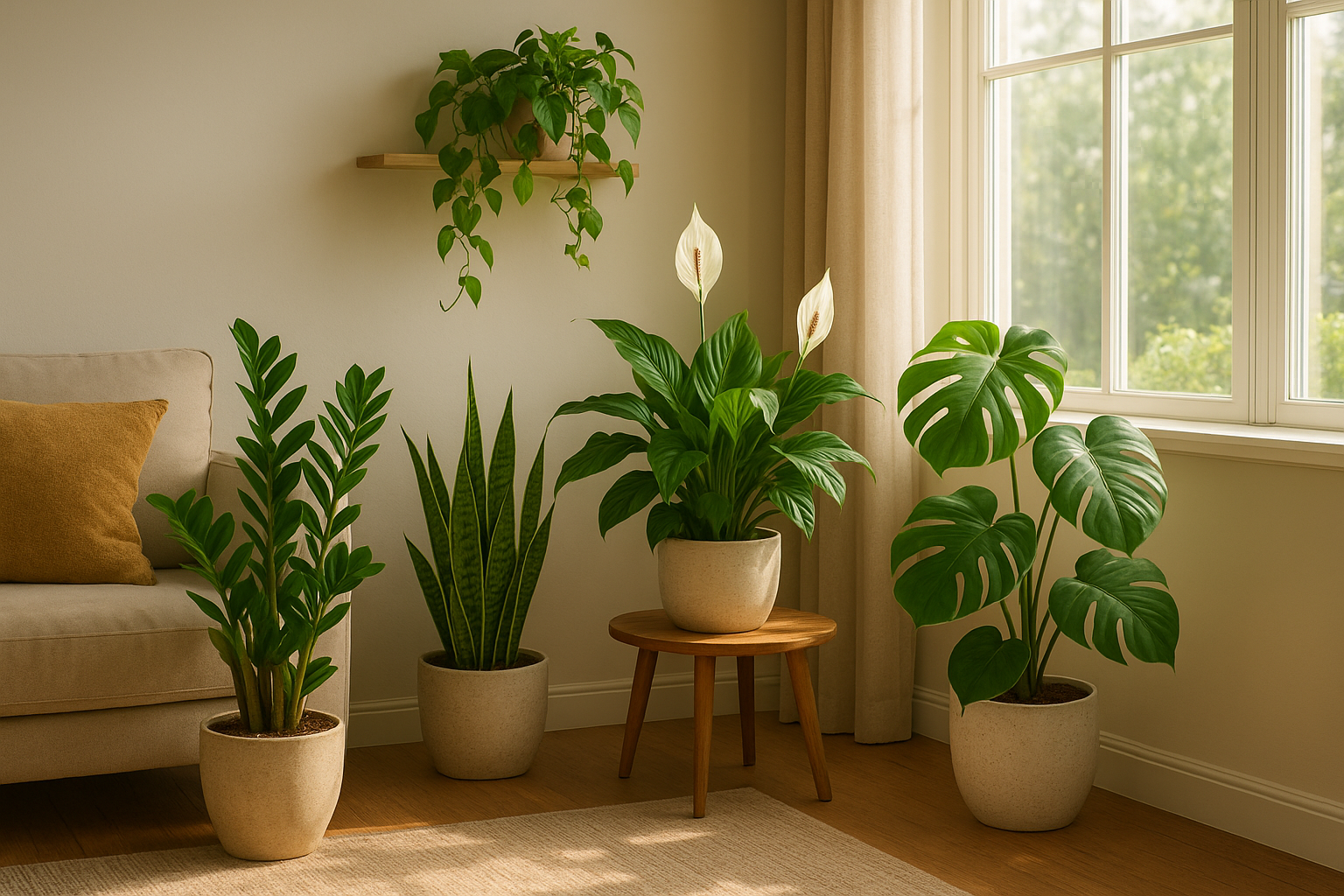
Year-round houseplants do more than survive; they help a room feel finished. Group plants in odd numbers, vary the heights, and mix leaf shapes for a more natural look. A tall snake plant beside a trailing pothos and a rounded peace lily creates balance without feeling crowded.
For a cleaner look, choose pots in a shared color family. Neutral ceramic, matte black, woven baskets with liners, and terra-cotta all work well. If your space is small, use shelves, plant stands, and hanging pots to add greenery without taking up floor space.
Common Problems to Avoid
Even easy houseplants can struggle if a few basics are ignored. The most common issues are too much water, poor drainage, and placing plants in direct sun when they prefer softer light. Hot air from vents or air-conditioning can also dry out leaf tips, so keep plants away from blasting airflow when possible.
If fungus gnats appear, let the soil dry more between waterings and remove any decaying plant matter from the pot surface. If leaves yellow rapidly, check the roots and soil moisture before changing anything else.
Build a Lush Indoor Space That Lasts
The best year-round houseplants are the ones that fit your actual home, your schedule, and your comfort level. Start with one or two dependable varieties, learn their routines, and build from there. With the right plant choices, your indoor space can stay green, polished, and welcoming long after the outdoor landscape has started to fade.
In other words, you do not need a perfect green thumb to enjoy a beautiful home full of living plants. You just need the right plants and a little consistency.